

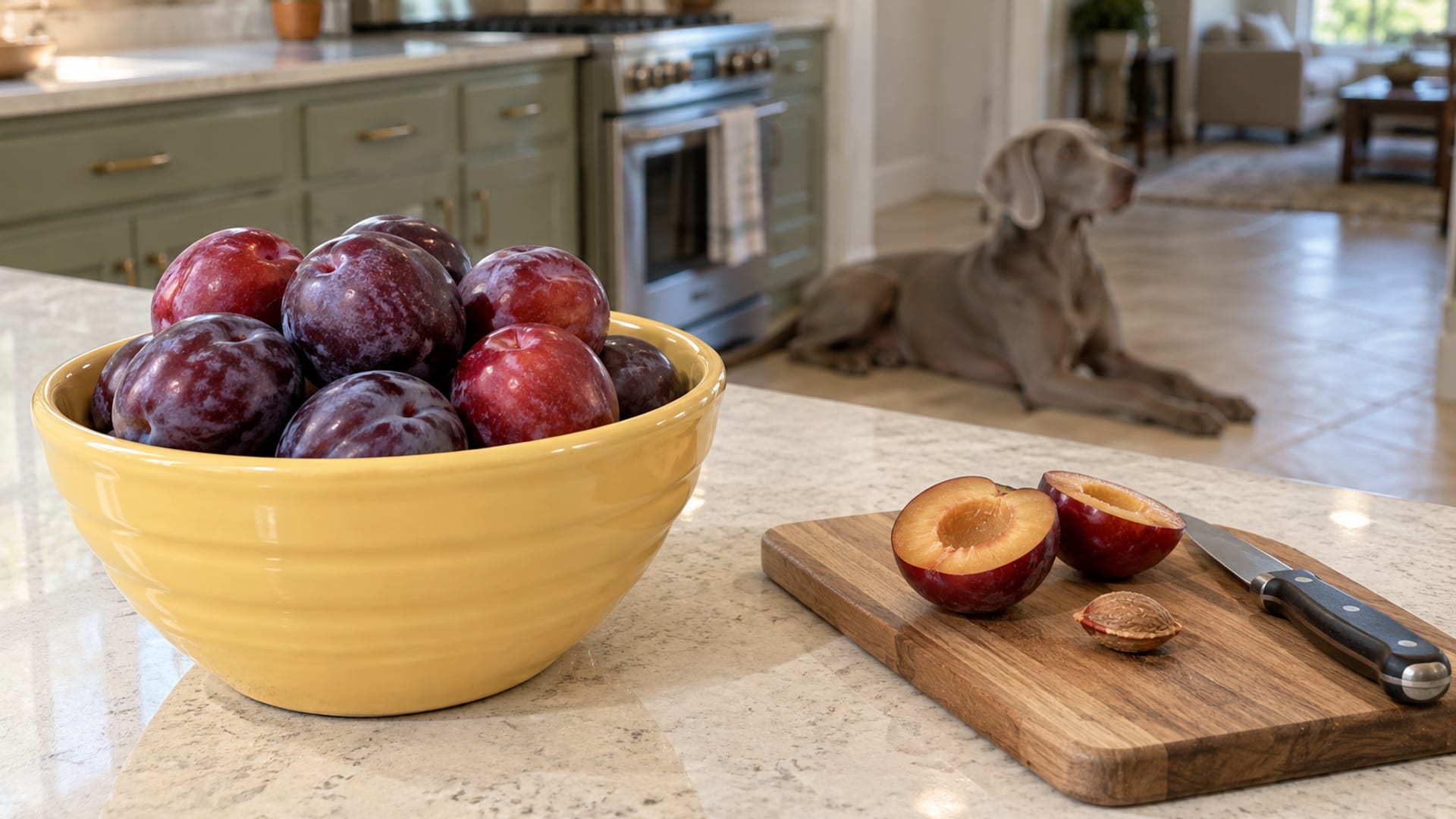
Yes, a small piece of the fresh flesh is fine for most dogs, once the pit, stem and leaves are out of the picture. The ASPCA lists the plum plant as toxic to dogs because its stems, leaves and seeds contain cyanide. The flesh is not the part those warnings are about.
If your dog ate some plum flesh and no pit, watch as usual. If a pit went down, whole or chewed, or your dog got into plum leaves, stems or a plum-filled dessert, call your vet or a poison line now and say what happened.
Key takeaways
Tap a card to bring it forward.
- Ripe plum flesh, with the pit out, is low risk in a small amount.
- The hard pit can choke a dog or get stuck in the gut.
- The seed inside the pit, and the leaves and stems, can release cyanide when chewed or crushed.
- Cyanide signs can start within minutes to an hour: fast breathing, bright red gums, weakness, collapse.
- Prunes and prune juice are concentrated sugar and fiber, a different question from fresh plum.
Your dog ate a plum: next steps
Tap or hover a row to highlight it.
| What happened | What to do |
|---|---|
| What happenedA few bites of flesh, no pit | What to doWatch for a loose stool. Nothing else is needed. |
| What happenedA whole plum, pit swallowed | What to doCall your vet. The pit can lodge in the gut. |
| What happenedA pit chewed or cracked | What to doCall now, even if your dog seems fine. |
| What happenedLeaves, stems or twigs from a plum tree | What to doCall now. They carry cyanide-releasing compounds. |
| What happenedPrunes, jam, plum sauce or baked goods | What to doRead the label for xylitol, chocolate, alcohol or raisins and call if any are listed. |
| What happenedPlum wine or liqueur | What to doCall now. Alcohol is its own danger. |
Pet Poison Helpline's advice after a possible poisoning is to call them or your vet for next steps, and not to make your dog vomit or give any treatment until someone tells you to. If your dog already has signs, it says to take them to the nearest veterinary hospital right away.
Have your dog's weight ready, along with how many plums or pits, whether the pit was chewed, and when it happened. Clear away the rest of the fruit before you pick up the phone.
The pit, the seed and the flesh: which parts matter
Tap or hover a row to highlight it.
| Part | Okay for dogs? | Why |
|---|---|---|
| PartRipe flesh | Okay for dogs?Yes, a little | WhyNot the part that holds the cyanide compounds |
| PartSkin | Okay for dogs?Yes | WhyNo source flags ordinary plum skin; wash the fruit |
| PartPit (stone) | Okay for dogs?No | WhyA choking and blockage risk |
| PartSeed inside the pit | Okay for dogs?No | WhyReleases cyanide when chewed or crushed |
| PartLeaves and stems | Okay for dogs?No | WhyContain cyanide (ASPCA) |
| PartCooked flesh, pit removed | Okay for dogs?A little | WhyNo plum-specific hazard, but take the pit out before cooking |
| PartPrunes | Okay for dogs?Skip them | WhyDried and concentrated |
The Merck Veterinary Manual explains how this works. The seeds and leaves hold cyanogenic glycosides that turn into cyanide once the seed or leaf is chewed or ground. A seed swallowed whole may pass without releasing any, and Merck notes that the seeds of fruit sold for people carry low levels, so poisoning from them is rare.
The pit has a second way to cause harm, too. A plum stone is big and hard, and the American Kennel Club lists fruit pits among the objects that can block a dog's gut. A stone that slides through a large dog takes up far more of a small dog's gut.
How to share plum with your dog
No veterinary source gives a plum serving by dog size. Treat it as a taste: a small piece of fresh flesh now and then.
- Wash the plum and slice the flesh off the pit, well away from your dog.
- Throw the pit away in a bin your dog cannot open.
- Cut the flesh into small cubes.
- Give fresh plum, and leave prunes, jam and plum desserts off the menu.
- Keep plum wine and plum liqueur out of reach.
If you have a plum tree, fallen fruit comes with pits, stems and leaves. Rake windfalls up before your dog finds them, especially with a puppy that picks up everything.
Signs to watch for, and how soon
Merck says signs from cyanogenic plants often show within 10 to 60 minutes, and its pet owner guide gives a range of 15 to 20 minutes to a few hours. Watch for:
- fast or hard breathing, or heavy panting
- bright red or brick-red gums
- wide pupils and a racing heart
- drooling, vomiting or diarrhea
- weakness, collapse or seizures
Pet Poison Helpline warns that severe cyanide signs can move quickly and that death can follow within an hour once they start. Go straight to an emergency vet if you see any of these.
A stuck pit looks different and comes on later. Repeated vomiting, trying to vomit with nothing coming up, not eating, belly pain, straining, constipation or tiredness can all point to a blockage, which can need surgery. Call your vet for any of them.
"My dog swallowed a plum pit once and passed it fine"
Many dogs do, and yours may have. A pit that goes through whole releases little cyanide, and a larger dog has more room for it to move along. That result depended on that pit, that dog and that day. A second pit might get chewed, might be one of several, or might stop partway down, and a blockage can take a while to show itself. A smaller dog or a young puppy has less room for the same stone. When a pit goes down, the call is still worth making.
Prunes, plum products and fruits called plums
- Prunes: dried plums, much denser in sugar and fiber than fresh fruit, according to USDA FoodData Central. Skip them.
- Prune juice: a processed drink with no dog-safe amount on record. Not a remedy to reach for.
- Plum jam, plum sauce and pastries: sugar, and sometimes xylitol, alcohol or chocolate. Read the label.
- Plum wine and plum liqueur: alcohol is dangerous for dogs in its own right.
- Damson, greengage, mirabelle, cherry plum and Japanese plum: all plums or close relatives. The pit rule is the same.
- Hog plum, Spanish plum and jocote: tropical fruits called plums that come from a different plant family. Identify the fruit before relying on this page.
- Cherries, apricots and peaches: relatives with the same pit and leaf concerns. See can dogs eat cherries?, can dogs eat apricots? and can dogs eat nectarines?
Check what you learned
Quick check
Questions about dogs and plums
Can dogs eat plum flesh?
Yes, a small amount of plain fresh flesh, with the pit, stem and leaves removed. The cyanide compounds sit in the seed, leaves and stems.
What if my dog swallowed a plum pit?
Call your vet or a pet poison line promptly. The pit can choke a dog or block the gut, and a chewed pit can release cyanide. Do not make your dog vomit or give anything unless you are told to.
Is one plum pit poisonous to a dog?
A whole pit usually releases little cyanide, and Merck calls poisoning from store-bought fruit seeds rare. The pit can still get stuck, especially in a small dog, and a cracked one is more of a worry.
Can dogs eat prunes?
Prunes are best skipped. They pack far more sugar and fiber than fresh plums.
Are plum trees poisonous to dogs?
The leaves, stems and seeds contain cyanide-releasing compounds, according to the ASPCA. Keep your dog from chewing on branches, clippings and fallen fruit.
What signs mean a plum is an emergency?
Trouble breathing, heavy panting, bright red or blue gums, weakness, collapse or seizures. Repeated vomiting, belly pain or no stool after a swallowed pit also need a vet.
Sources
Checked September 25, 2026.
- ASPCA Animal Poison Control Center, Plum
- Pet Poison Helpline, Toxic Plants to Pets: This Plant or That Plant?
- Merck Veterinary Manual, Houseplants and Ornamentals Toxic to Animals
- Merck Veterinary Manual, Cyanide Poisoning
- American Kennel Club, Intestinal Blockage in Dogs
- USDA FoodData Central, Plums, dried (prunes), uncooked