

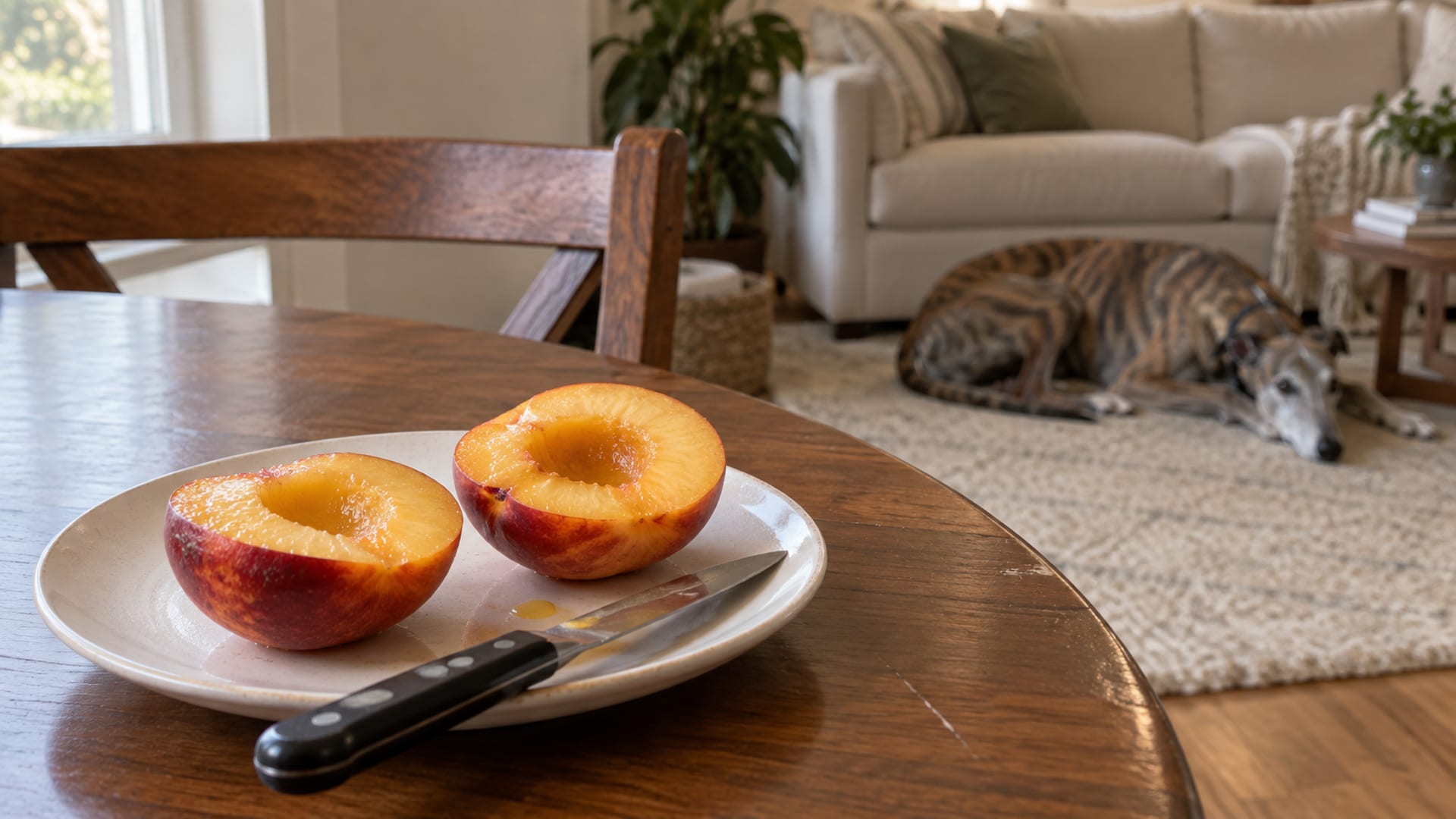
Yes. A dog can eat a little ripe nectarine flesh once the pit has been cut away. The pit is what needs your attention: Pet Poison Helpline warns that a pit of this kind can block the stomach or intestine, especially in a small dog, and chewing it can free cyanide from the seed.
If your dog grabbed a few pieces of flesh off a plate, keep an eye out for a loose stool and carry on with your evening. If a pit went down, whole or in pieces, or your dog chewed leaves or twigs from a nectarine tree, call your vet or a pet poison line now.
Key takeaways
Tap a card to bring it forward.
- Ripe nectarine flesh, pit removed, is low risk in small amounts.
- A swallowed pit can choke a dog or block the gut, and small dogs face the higher risk.
- The seed inside the pit, plus the leaves and stems, hold compounds that can release cyanide.
- Any swallowed or chewed pit is a reason to call your vet now, even if your dog looks normal.
- Dried, canned and jam forms pile on sugar, and anything made with xylitol is an emergency.
Your dog ate nectarine: match what happened to your next step
Tap or hover a row to highlight it.
| What happened | Next step |
|---|---|
| What happenedSome flesh, pit left behind | Next stepWatch for vomiting or a loose stool. No call needed while your dog stays normal. |
| What happenedA whole pit, swallowed | Next stepCall your vet or a poison line now, even if your dog seems fine |
| What happenedA pit chewed or cracked open | Next stepCall now. Chewing exposes the seed. |
| What happenedLeaves, twigs or stems from the tree | Next stepCall now, with your dog's weight and a rough amount |
| What happenedJam, canned fruit, pie filling or juice | Next stepRead the ingredient list. Xylitol means call right away. |
For any suspected toxic exposure, the ASPCA tells owners to reach its poison control center or a local vet as soon as possible. Before you dial, have four things ready: your dog's weight, how many pits, whether they were gulped or crunched, and about what time it happened.
Go straight to a vet if your dog is struggling to breathe, has bright red or bluish gums, starts trembling, collapses or has a seizure.
Which parts of a nectarine are safe
Tap or hover a row to highlight it.
| Part | Okay for dogs? | Reason |
|---|---|---|
| PartRipe flesh | Okay for dogs?Yes, a little | ReasonFleshy fruit is generally low in cyanide-forming compounds (Merck) |
| PartSkin | Okay for dogs?Yes | ReasonIt is part of the fruit; wash it, and peel it for a dog with a touchy stomach |
| PartPlain cooked flesh, no pit | Okay for dogs?Yes, a little | ReasonCooking does not turn the flesh into a problem |
| PartPit | Okay for dogs?No | ReasonA choking and blockage hazard |
| PartSeed inside the pit | Okay for dogs?No | ReasonContains amygdalin, a compound that can release cyanide |
| PartLeaves and stems | Okay for dogs?No | ReasonListed by the ASPCA as containing cyanide, especially when wilted |
A nectarine is a smooth-skinned form of the peach, *Prunus persica*, so the ASPCA's peach listing applies to it: stems, leaves and seeds contain cyanide. The Merck Veterinary Manual names nectarine among the *Prunus* plants that carry cyanogenic glycosides, and says seeds and leaves usually hold more of them than the flesh does. A review of plant cyanogenic compounds by Yadav and colleagues reports amygdalin in nectarine kernels specifically.
Cooking the fruit does not make a pit, seed, leaf or stem safe. Those stay out of the bowl whatever you do to them.
How much nectarine to share, and how to prep it
Keep it to a few small pieces as an occasional extra, and fewer for a small dog. The AKC says fruit and vegetables should add to a balanced diet and never replace it.
- Wash the nectarine.
- Slice the flesh off the stone on the counter, where your dog cannot reach.
- Drop the pit straight into a bin with a lid.
- Cut the flesh into pieces small enough for your dog to chew.
- Leave out the stem and any leaves.
Sweet fruit and dogs with diabetes or a history of pancreatitis are worth a quick question to your vet first, especially for dried or canned nectarines.
Signs to watch for after a pit, leaves or stems
A pit can cause two separate problems, and they show up on different timelines.
Cyanide poisoning comes on fast. According to Merck, signs generally appear within 15 to 20 minutes to a few hours after a dog eats enough of the plant material:
- fast breathing and a racing heart
- drooling, watery eyes or vomiting
- muscle tremors or spasms, and weakness
- gums that turn bright red, then bluish
- collapse or seizures
Severe cyanide poisoning can kill a dog, which is why a chewed pit or a mouthful of leaves calls for help right away.
A blockage tends to show up later. Watch for vomiting, belly pain, straining without passing stool, and a dog that seems flat or tired. Any of these after a pit is a reason to call.
"My dog has eaten nectarine pits before and nothing happened"
That can be completely true. Dogs usually swallow pits whole, and Pet Poison Helpline says a pit that is not chewed thoroughly makes cyanide poisoning unlikely. Plenty of pits simply pass.
It still does not make pits safe as a habit. Pet Poison Helpline lists the amount eaten, the size of the animal and the individual as the things that decide whether a dog gets sick. A pit that slides through a Labrador can lodge in a dachshund. A pit crunched into pieces releases what a whole one keeps sealed in. And a blockage can surface after an evening when everything looked normal. The next pit, or the next dog, deserves its own phone call.
Dried, canned and other nectarine products
- Dried nectarine: drying packs the sugar and calories into less fruit, and packaged versions may add sugar or sulfites. Best skipped.
- Canned nectarines, jam, preserves and pie filling: heavy on sugar and sometimes sweeteners. Check for xylitol, and call right away if it is listed.
- Nectar and juice: nectar is a sweetened drink or syrup made from the fruit, and it has none of the fiber. Water is the better choice.
- Powders and supplements: leave them alone unless your vet has checked every ingredient.
- Peaches: the same species with fuzzy skin, so the same rules apply. Can dogs eat peaches? goes through peach pits and canned peaches.
- Apricots: a different *Prunus* species with its own pit and seed concerns. Can dogs eat apricots? covers it.
- Plums and cherries: other stone fruits, where the pit warning carries over even though the exact chemistry differs.
Check what you learned
Quick check
Questions about dogs and nectarines
Can dogs eat nectarine skin?
Yes. The skin is part of the edible fruit. Wash it well, and peel it if your dog tends to get an upset stomach from new foods.
What if my dog swallowed a nectarine pit?
Call your vet or a pet poison line now. A pit can get stuck in the stomach or intestine, and if it was chewed, the seed inside can release cyanide.
Are nectarine leaves and stems poisonous to dogs?
Treat them as unsafe. The ASPCA says the leaves and stems of the peach plant, which includes nectarines, contain cyanide, and wilted leaves are the worst.
Can dogs eat dried or canned nectarines?
Fresh, plain flesh is the better choice. Dried and canned versions concentrate sugar and can come with added ingredients, so read the label and skip anything with xylitol.
What does cyanide poisoning look like in a dog?
Fast breathing, a racing heart, drooling, vomiting, muscle spasms, red or bluish gums, collapse and seizures. Merck says these can begin within 15 to 20 minutes to a few hours.
Are nectarines safe for cats?
The flesh is not the worry, but the same parts are. Pet Poison Helpline says a pit can block a cat's gut, and the ASPCA lists the peach plant's seeds, stems and leaves as toxic to cats too.
Sources
Checked September 24, 2026.
- ASPCA Animal Poison Control Center, Peach
- Pet Poison Helpline, Peach Pits
- Merck Veterinary Manual, Cyanide Poisoning in Animals
- Merck Veterinary Manual, Cyanide Poisoning
- American Kennel Club, Fruits and Vegetables Dogs Can or Can't Eat
- Yadav et al., Plant cyanogenic glycosides: from structure to properties and potential applications