
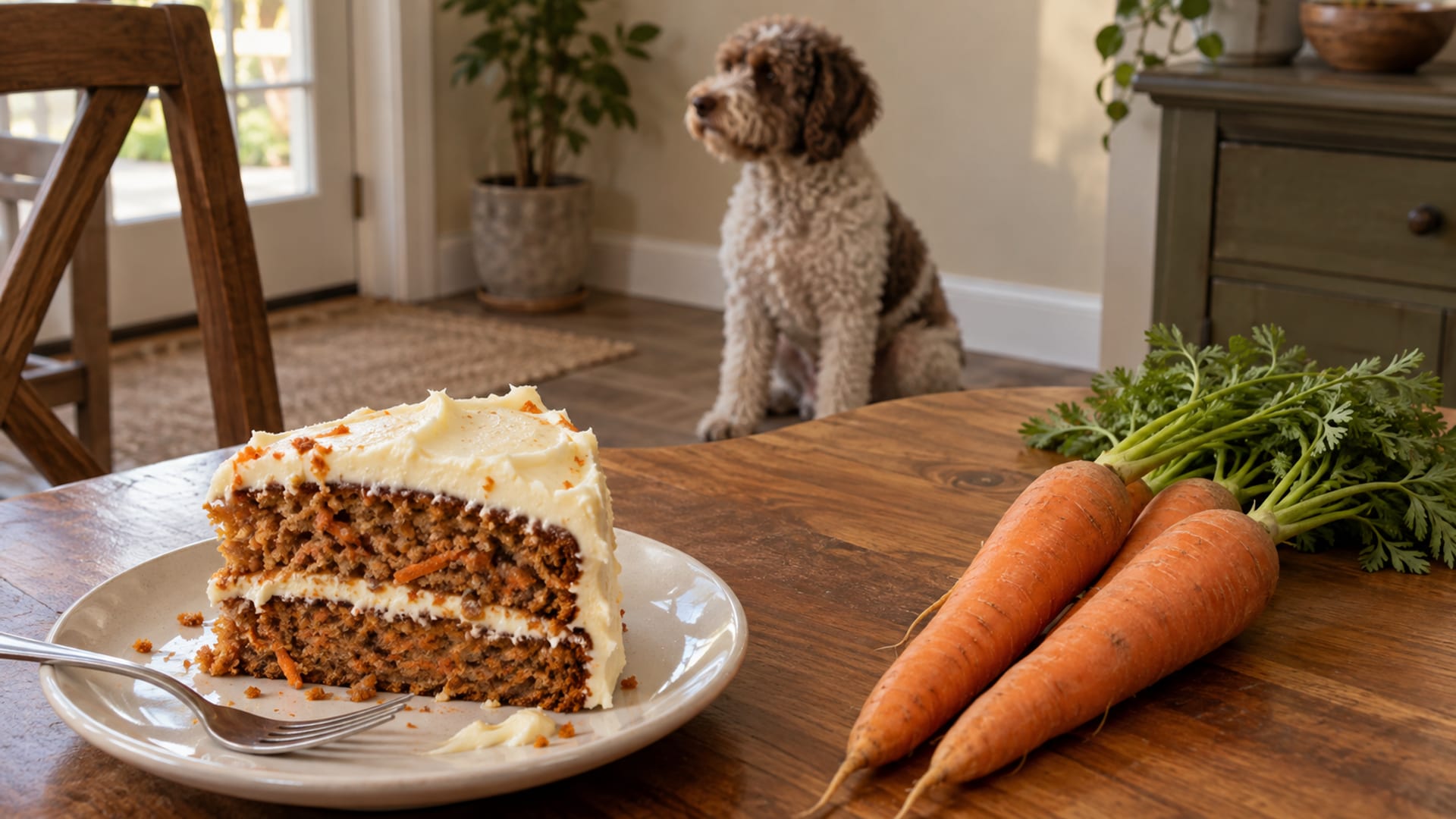
Carrots are safe for dogs, but carrot cake is a rich, sugary cake, and whether a slice means a mild stomachache or a poisoning depends on what went into the batter and the frosting. A small bite of plain cake may only upset the stomach, while raisins, grapes, currants, xylitol, chocolate or macadamia nuts can make it seriously dangerous.
If your dog already ate some, find the recipe or the box first. If the cake had any of those ingredients, or you can't tell what was in it, call your vet or a pet poison line right away, even if your dog is acting normal. Kidney damage from raisins can take a day or more to show, and treatment works best when it starts early.
Key takeaways
Tap a card to bring it forward.
- Plain carrot is safe for dogs. The risk in carrot cake comes from what else the recipe adds.
- Raisins, sultanas, currants, grapes, xylitol (also sold as birch sugar), chocolate or macadamia nuts in the cake or frosting mean calling your vet or a poison line now.
- A recipe you can't check gets the same call, especially for a small dog or one with health problems.
- Plain cake can still cause vomiting or diarrhea, and its fat and sugar can contribute to pancreatitis.
- To share the carrot part, give plain raw or cooked carrot in bite-size pieces.
What to do if your dog already ate carrot cake
These steps gather what the vet will ask you.
- Move the rest of the cake out of reach. A second helping, even crumbs, makes everything worse.
- Find the recipe, box or bakery label. Look for raisins, sultanas, currants, grapes, xylitol or birch sugar, chocolate or cocoa, and macadamia nuts. Read the frosting separately, because a sugar-free or keto frosting can contain xylitol even when the cake does not.
- Work out how much is gone and when. The time tells the vet which signs could still be coming.
- Have your dog's weight ready. The published risk figures for raisins and xylitol are based on body weight, so the same slice is a bigger dose for a small dog.
- Call if a risky ingredient is possible. The ASPCA advises contacting your veterinarian or a poison control center right away when you suspect a toxic exposure. Call before signs appear, because raisin damage to the kidneys can build while your dog still looks fine.
- Hold off on home remedies. Don't give medicine or home treatment unless the vet or poison line tells you to. Depending on the ingredient and timing, their plan may include an exam, blood sugar checks, clearing the stomach, IV fluids, or kidney and liver monitoring.
If the recipe had none of those ingredients, the bite was small and nothing seems off, an emergency call may not be needed; watch and call if signs show up. A large amount of cake, frosting, butter, oil or nuts is worth a call even when the recipe is plain.
Which parts of carrot cake are the problem
The carrot is the easy part. The ASPCA lists the garden carrot as non-toxic to dogs, and the AKC says plain raw or cooked carrot is safe. The trouble is in what turns carrot into dessert: flour, sugar, oil, butter and frosting bring fat and sugar, and some recipes add ingredients that are toxic to dogs.
Raisins are the ingredient I'd check for first, because a few in a slice are easy to miss. The Merck Veterinary Manual explains that grapes, raisins, sultanas and Zante currants can cause acute kidney injury in dogs, with tartaric acid as the suspected cause. Xylitol turns up in sugar-free, keto and diabetic cakes and frostings, and the Merck Veterinary Manual's liver toxin page describes how it triggers a rapid insulin release in dogs that can drop blood sugar and damage the liver.
The ASPCA's list of people foods to avoid explains that chocolate contains theobromine and caffeine, which affect the gut, heart and nervous system, and that macadamia nuts can cause stomach and nerve signs. Nutmeg worries people too, but Pet Poison Helpline says the small amount in a recipe is very unlikely to cause serious toxicity; it takes very large amounts to cause myristicin poisoning.
Sharing the carrot part, and how much cake is a concern
To include your dog in the celebration, give the carrot and skip the cake. The AKC recommends raw or cooked carrot in bite-size pieces to lower the choking risk, washed well and peeled if you like. The ASPCA suggests keeping snacks to no more than 5% of daily calories and warns that high-fat or high-sugar foods can contribute to pancreatitis. Our carrots entry covers the plain vegetable.
We don't give a cake serving size, because recipes vary too much for one number to hold, and a cake with any risky ingredient shouldn't go to a dog at all. For the ingredients with published figures, this is what vets work from.
Tap or hover a row to highlight it.
| Ingredient | Published figure | Source |
|---|---|---|
| IngredientRaisins or grapes | Published figureMore than one per 10 lb (4.5 kg) of body weight may carry enough tartaric acid to risk kidney effects. A risk estimate; fruit and dogs vary. | SourceMerck Veterinary Manual |
| IngredientXylitol | Published figureAs little as 0.1 g per kg has caused low blood sugar and liver damage in some dogs. Responses vary. | SourceMerck Veterinary Manual |
| IngredientNutmeg | Published figureVery large amounts needed for serious toxicity; no dependable per-weight threshold. | SourcePet Poison Helpline |
| IngredientFat and sugar | Published figureNo single toxic amount; pancreatitis risk depends on the amount, the dog, its diet and history. | SourceMerck Veterinary Manual |
Skip the math at home. Give the vet your dog's weight, what the cake contained and roughly how much is gone.
The Merck Veterinary Manual's pancreatitis page lists eating food outside the normal diet as a common risk factor, along with severely high blood triglycerides, generally 500 mg/dL or more. Dogs with a pancreatitis history, obesity or diabetes are a bigger concern after rich cake, and a dog with kidney disease is a bigger concern if raisins were in it.
Signs to watch for, and for how long
After a small bite of plain cake, many dogs show nothing, and others have brief vomiting, diarrhea, gas or a sore belly. The risky ingredients cause different signs, and some take longer to appear.
Tap or hover a row to highlight it.
| Ingredient | Signs to watch for | Timing |
|---|---|---|
| IngredientRaisins, grapes, currants | Signs to watch forVomiting or diarrhea, then tiredness, poor appetite, belly pain, more thirst, dehydration, tremors | TimingVomiting often within 6 to 12 hours; kidney failure may develop within 24 to 72 hours |
| IngredientXylitol | Signs to watch forVomiting, tiredness, weakness, wobbly walking; low blood sugar can lead to seizures | TimingLiver injury may develop within 12 to 24 hours |
| IngredientChocolate | Signs to watch forVomiting, diarrhea, restlessness, fast or irregular heartbeat, tremors, seizures | TimingWatch from the first hours |
| IngredientNutmeg, large amounts | Signs to watch forDisorientation, hallucinations, fast heart rate, high blood pressure, belly pain, seizures | TimingSigns can last up to 48 hours |
| IngredientRich, fatty cake | Signs to watch forVomiting, diarrhea, belly pain, poor appetite, pancreatitis | TimingSevere pancreatitis can be life-threatening |
The raisin timeline catches people out. The Merck Veterinary Manual notes that once a dog's kidneys stop producing urine, most dogs die or are euthanized, which is why the call belongs at the start. If the cake had raisins or you couldn't confirm the recipe, keep watching through those first three days.
Call right away for vomiting, diarrhea, weakness, stumbling, tremors, seizures, belly pain, collapse, extra thirst or changes in peeing.
My dog ate it before and was fine
That happens, and I believe it. Plenty of dogs have cleaned frosting off a birthday plate with no trouble, and that outcome was real. It just can't tell you what this cake will do to this dog.
That piece may have been small, or the dog large, so the dose per pound was low. The cake may have had no raisins, xylitol or chocolate at all. The Merck Veterinary Manual describes grape and raisin effects as variable, since tartaric acid levels in the fruit differ and individual dogs respond differently, and Merck notes the same individual variation with xylitol. A dog that seemed fine the evening it ate raisin cake may not stay fine, because kidney problems can build over the next days.
Cake mixes, frostings and look-alikes to check
Each form of carrot cake changes where you look for the ingredients.
- Homemade: Check the actual recipe, including any raisins added on the fly.
- Bakery or party cake: Ask the bakery or the host, or read the box. If nobody knows, treat the recipe as unknown.
- Cupcakes and muffins: The same batter, often with more frosting per bite.
- Boxed cake mix: Mixes can include dried fruit, chocolate chips or artificial sweeteners, so read the package.
- Cream cheese frosting: Plain cream cheese is a different food from frosting, which may add xylitol, chocolate, raisins or a lot of fat and sugar.
- Sugar-free, keto or diabetic cake: These may use xylitol, also listed as birch sugar. "Sugar-free" says nothing about whether it's safe for a dog.
- Walnuts and pecans: These add fat. See our walnuts and pecans entries.
- Nutmeg and pumpkin spice: Pet Poison Helpline notes that spice blends usually mix cinnamon, ginger, nutmeg, cloves and allspice and that small amounts in baked goods differ from concentrated powders or oils. Cinnamon has its own entry.
Two name mix-ups matter. Zante currants are dried grapes with the same kidney risk as grapes and raisins, while true currants from the *Ribes* plant have not been linked to kidney injury in Merck's review. Carob is a different ingredient from cocoa, so a carob topping is a different risk from chocolate, though you still need the label to know which you have.
Check what you learned
Three questions on the points that matter most.
Quick check
Questions about dogs and carrot cake
These tend to come up once the first worry has passed.
My dog only licked the frosting. Does that matter?
It can. Frosting is where xylitol, chocolate and extra fat are most likely to be, so check its ingredients on their own. If it was sugar-free, chocolate or unknown, call your vet or a poison line.
Is carrot cake a problem for cats too?
Plain carrot is non-toxic to cats too, and Merck notes only anecdotal reports of raisin problems in cats. If your cat ate cake with risky ingredients, call your vet anyway.
My dog has had pancreatitis before and ate some cake. What now?
Call your vet, even if the recipe was plain, because a dog with that history has less room for a slip. Tell them how much your dog ate and when.
Does the carrot peel or the leafy top matter?
Wash the peel well or peel it. The ASPCA lists the carrot plant as non-toxic but notes it contains psoralens that can irritate skin, so keep the leafy tops away from your dog.
Sources
Checked September 25, 2026.
- ASPCA, The Poisons We Pack: Pet Hazardous Items Lurking in Your Bag
- ASPCA, Carrot Flower
- American Kennel Club, Can Dogs Eat Carrots?
- Merck Veterinary Manual, Grape, Raisin, and Tamarind Toxicosis in Dogs
- Merck Veterinary Manual, Hepatotoxins in Small Animals
- ASPCA, People Foods to Avoid Feeding Your Pets
- Pet Poison Helpline, Nutmeg and Cinnamon Toxicity
- ASPCA, Sharing is Caring: Foods You Can Safely Share with Your Pet
- Merck Veterinary Manual, Pancreatitis in Dogs and Cats
- Pet Poison Helpline, Pumpkin Spice Poisonous To Pets