

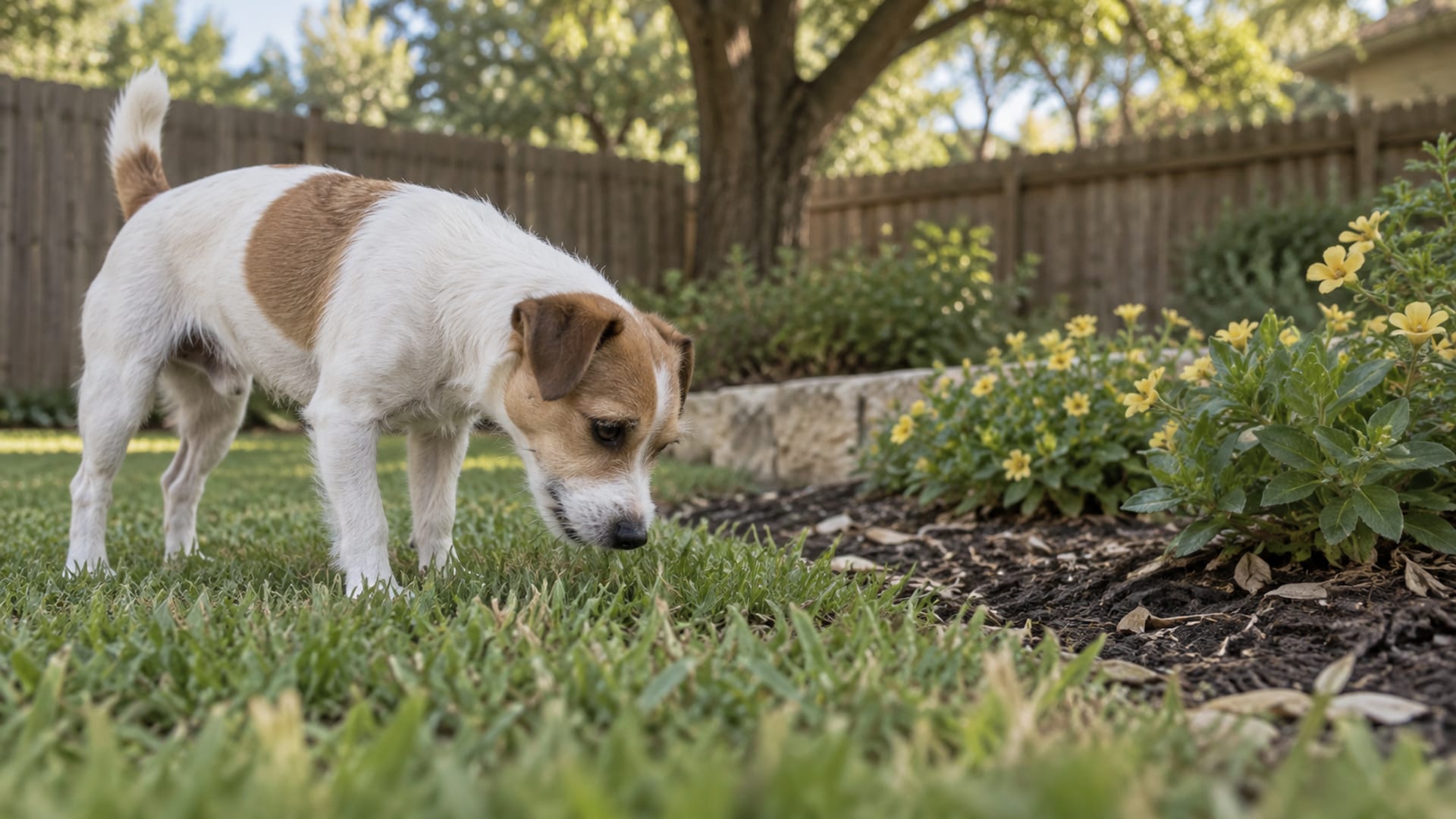
Dogs eat grass a lot, and a dog who grazes now and then but eats, plays and acts like themselves is usually showing ordinary dog behavior, not a sign of illness. Nobody has pinned down one reason for it. What changes the answer is a pattern: sudden or frantic grazing, repeated vomiting, a dog who won't eat, diarrhea, weight loss, or a lawn that may have been treated. Any of those is a reason to call your vet today rather than wait.
If you're watching your dog tear at the lawn right now, I get why it's unsettling. Below is how to tell everyday grazing from the kind that needs a phone call, and how to cut it down on walks without a tug-of-war.
Key takeaways
Tap a card to bring it forward.
- Occasional grass eating in a dog who is otherwise acting normal is common and doesn't by itself mean your dog is sick.
- In a 2008 survey of 1,571 dog owners, only 9% said their dog often looked ill before eating plants, and 22% said their dog often vomited afterward.
- In a controlled study, dogs vomited twice across 374 grass-eating events, so most grazing doesn't end in vomiting.
- Call your vet if the grazing is sudden or frantic, comes with repeated vomiting, diarrhea, poor appetite, weight loss or lethargy, or if the dog may have eaten treated grass, a toxic plant or a foxtail.
- Grass eating alone doesn't point to a missing nutrient, so talk to your vet before changing food or adding fiber.
How common grass eating is, and what dogs actually do when they graze
Grass is the plant dogs eat most, and plant eating shows up in most dogs whose owners were asked about it. The clearest numbers come from Sueda, Hart and Cliff's 2008 study in Applied Animal Behaviour Science, which ran two surveys. In the first, about 79% of 47 owners of healthy dogs with daily access to plants said their dog ate plants. In the second, 3,340 internet surveys came back and 1,571 met the study's criteria. Among those dogs, 68% were reported to eat plants daily or weekly, and grass was the plant eaten most often, reported for 79% of them.
Two smaller controlled studies watched dogs directly instead of asking owners. In Bjone, Brown and Price's 2007 study, 12 healthy dogs were offered two kinds of grass three times a day for six days. They spent more time eating grass before their kibble than after it, and their grazing tapered off as the day went on. In McKenzie, Brown and Price's 2010 study, dogs were watched on a normal diet and then on a diet that briefly gave them loose, watery stools. Across 374 grass-eating events, the researchers recorded two episodes of vomiting.
Tap or hover a row to highlight it.
| Finding | Figure | Study |
|---|---|---|
| FindingOwners of healthy dogs reporting plant eating | FigureAbout 79% of 47 | StudySueda et al., 2008 |
| FindingQualifying survey responses analyzed | Figure1,571 of 3,340 returned | StudySueda et al., 2008 |
| FindingDogs eating plants daily or weekly | Figure68% | StudySueda et al., 2008 |
| FindingDogs for whom grass was the plant eaten | Figure79% | StudySueda et al., 2008 |
| FindingDogs that often looked ill before eating plants | Figure9% | StudySueda et al., 2008 |
| FindingDogs that often vomited afterward | Figure22% | StudySueda et al., 2008 |
| FindingDogs watched in the grass-timing study | Figure12 dogs over 6 days | StudyBjone et al., 2007 |
| FindingVomiting events during grass eating | Figure2 in 374 events | StudyMcKenzie et al., 2010 |
Each has limits. The 2008 survey relied on owner reports and enrolled dogs that already ate plants, so it describes the behavior without proving its cause. The 2007 and 2010 studies watched small groups of dogs under set conditions, not every dog on every lawn.
Does grass eating mean your dog is sick?
Usually not on its own. In the 2008 survey, only 9% of owners said their dog frequently looked unwell before eating plants, which fits with what VCA Animal Hospitals describes: many dogs eat grass, and most of them are healthy. A dog who nibbles grass on a walk, then trots home and eats dinner, is showing a very common habit.
What matters is everything else going on with your dog. Grazing that shows up with vomiting, diarrhea, a skipped meal, low energy, or a dog who seems uncomfortable is a different situation, and VCA's behavior guidance recommends contacting your vet when signs of an upset stomach come along with it. There's no set number of mouthfuls or days that separates normal grazing from a problem, so watch for change. A dog who has always grazed a little is different from a dog who never cared about grass and suddenly can't stop.
Do dogs eat grass to make themselves throw up?
Some do vomit after grazing, but most don't, and vomiting doesn't seem to be the purpose for dogs in general. In the 2008 survey, 22% of dogs were reported to frequently vomit after eating plants, so roughly four in five did not do so regularly. The 2010 controlled study is even more striking: two vomiting events in 374 bouts of grass eating.
That same study tested the upset-stomach idea directly. When the dogs had loose stools from their diet change, they actually ate *less* grass than when their stools were normal. That doesn't rule out every kind of nausea, pain or illness, since the study only tested one mild kind of gut upset. It does mean you can't assume a dog who vomits after grazing was "purging" on purpose, or that grass fixed anything. The vomiting may have come from whatever was already bothering the stomach, or it may be unrelated.
For you, the practical takeaway is this: if your dog vomits once after grazing and then acts normal, eats and drinks, keep an eye on them. If the vomiting repeats, or your dog seems weak or unwell, that's a vet call. DogServ's post on dog vomiting and when it is an emergency walks through those signs in more detail.
Quick check: dogs and grass
Other reasons your dog may be grazing
Several explanations have been proposed, and they differ a lot in how well they hold up. It helps to take them one at a time.
Normal scavenging. Dogs come from animals that ate a varied diet, and grazing is common in healthy dogs. VCA points to this scavenging background. It explains why a well dog might eat grass.
Taste and texture. In the 2007 study, dogs showed preferences between the two grasses they were offered. That makes taste or feel a reasonable explanation for some dogs, though not a proven cause for all of them.
Hunger. This one has the most direct support. The 12 dogs in the 2007 study ate more grass before meals than after, and the authors read that as a sign that feeling full reduces grazing. It was a small study with two kinds of grass, so treat it as a clue rather than a rule.
Boredom. Vet behavior sources often suggest more exercise, play and things to do, and a bored dog may well turn to the lawn. The studies don't show boredom as the cause for any particular dog, though.
Stomach discomfort. Possible for an individual dog on a given day. Across dogs, though, looking ill before grazing was uncommon in the 2008 survey, and the 2010 study didn't find more grazing during the gut upset it tested.
Fiber. VCA mentions roughage as a possibility. That's not the same as proof that your dog is short on fiber, and it isn't a reason to add a supplement on your own.
Pica. Pica means a dog keeps eating things that aren't food, like dirt, fabric or rocks. Grass is plant material, so eating it doesn't make it pica. If your dog also eats dirt or other non-food items, mention that to your vet, because the full list of what they eat matters more than the grass alone.
If you came here wondering what your dog is missing, the answer is that grazing on its own doesn't tell you. The 2008 survey found no link between the type of diet a dog ate and how often they ate plants or which plants they chose, and NC State Extension describes grass eating as generally normal rather than a sign of a diet gap.
When grass eating should lead to a vet call
I'd call your regular vet if the grazing is new, sudden or intense, if it keeps going day after day in a dog who never used to do it, or if it comes with any of these: repeated vomiting, diarrhea, not eating, weight loss, lethargy, belly pain, or behavior that just isn't normal for your dog. The Merck Veterinary Manual notes that the other signs around vomiting are what tell a vet how serious it is, so write down what you've seen before you call.
"Suddenly eating grass like crazy" deserves that call, especially if your dog is gulping it frantically and looks uneasy. It may turn out to be nothing, but a sharp change in behavior is exactly the kind of thing a vet wants to hear about.
Go to an emergency vet now if your dog collapses, is in obvious distress, is choking or gagging, is vomiting repeatedly and seems weak, is having trouble breathing, or may have swallowed something poisonous or an object that could get stuck. Those are emergency signs according to Merck's guide to dog emergencies. If you suspect treated grass, fertilizer, pesticide or a toxic plant, call your vet or a poison-control line promptly, and don't try to make your dog throw up at home unless that professional tells you to. You can find nearby clinics in the DogServ vet directory.
Before you call, it helps to run through a few questions:
- Is this grazing occasional, or a sudden change?
- Is your dog acting normally, eating and drinking?
- Is there vomiting, diarrhea, pain, lethargy or weight loss?
- Was the lawn treated recently?
- Could your dog have eaten a toxic plant, a foxtail, feces or an object?
- Does the grazing keep going even when you supervise and redirect?
What can be in the grass besides grass
The grass itself is only part of the story. What's on it and growing in it can be the bigger risk.
Lawn chemicals and fertilizer. Treated lawns can expose a dog to pesticides, weed killers or fertilizer. How risky that is depends on the product, how much, and how recently it went down, which is why a call to your vet or poison control beats guessing. If you know the product, the Dog Toxin Dose Checker can help you organize what to tell them.
Toxic plants. Other plants grow mixed in with grass, and a dog can eat one when you think they only had lawn. If you can, identify the plant or take a photo. The ASPCA's outdoor safety material covers dangerous plants and chemicals around the yard.
Parasites and contaminated ground. Grass and soil where other animals have left feces can carry parasites and germs. The exact risk depends on where you are and what's there.
Foxtails and other grass awns. These barbed seed heads can lodge in the mouth, throat, nose, ears, eyes or skin and work their way deeper. The ASPCA lists foxtail as toxic to dogs and warns about its sharp seed heads. Sudden sneezing, gagging, head shaking or pawing at the face after a walk through tall grass is worth a vet visit.
Sticks, stones and mulch. Dogs sometimes swallow other things while they graze. If you think your dog swallowed an object, DogServ's post on what to do when your dog ate something bad covers the next steps. For whether a particular plant or food is safe, the Can My Dog Eat entries have the verdicts.
How to cut down on grazing without a fight on walks
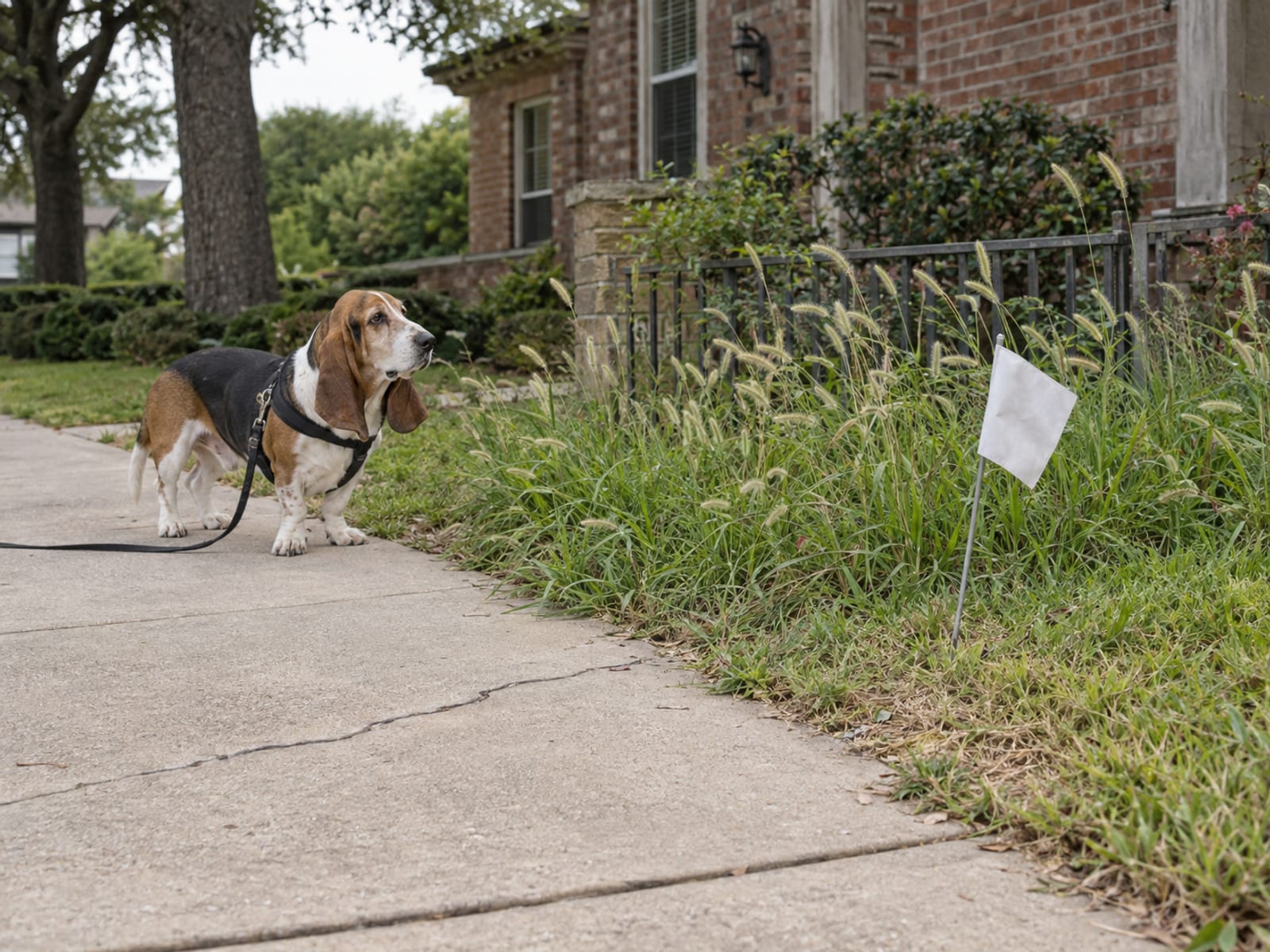
You don't need to stop every blade of grass, but you do want to keep your dog off lawns that may be treated or dirty. VCA's behavior guidance leans on redirection and reward rather than scolding, and that approach also keeps walks pleasant.
Start by supervising. Know which lawns on your route get sprayed and steer around them, and keep the leash short enough near those spots that your dog can't reach the edge.
Redirect before your dog gets there. Changing direction, asking for a behavior your dog already knows, or using a "leave it" cue works best when you act a step early, not once the mouth is full. When your dog turns away from the grass, reward that right away with a treat or praise. DogServ's guide to positive reinforcement dog training explains how to build that habit, and How to Train a Dog covers teaching the basic cues.
Give your dog more to do. More age-appropriate exercise, time to sniff, play, and chew or food-puzzle toys may cut down on grazing if boredom is part of it. If you're unsure how much walking your dog needs, How Often Should You Walk Your Dog? is a good starting point. A trainer can help if redirection isn't sticking, and the DogServ trainer directory lists them.
A small patch of grass you know is untreated and clean can be fine, but it doesn't replace a vet visit when grazing is new or comes with signs of illness.
Questions owners ask about dogs and grass
These are the questions that come up most after the first answer.
What should I give my dog if he is eating grass?
Nothing, unless your vet recommends it. Grazing alone doesn't tell you your dog needs extra fiber, a supplement or a new food, so bring up any diet change with your vet. What you can give is supervision, more exercise and play, and a reward for turning away from the lawn.
What is my dog missing when he eats grass?
Grass eating doesn't show that a dog is missing a nutrient. In the 2008 survey of 1,571 dogs, diet type wasn't linked to how often dogs ate plants or which plants they picked. If your dog is also losing weight or eating dirt and other non-food items, that's a reason to see your vet.
Should I stop my dog from eating grass?
Stop it where the grass could be treated, dirty or mixed with other plants, and redirect gently rather than yanking the leash. Occasional grazing on clean grass by a healthy dog isn't something you have to fight. If it's sudden or frantic, call your vet instead of just blocking it.
Do dogs eat grass when they feel sick?
Some may, but most grazing dogs aren't sick. In the 2008 survey only 9% of dogs often looked ill beforehand, and in the 2010 study dogs actually ate less grass during a mild stomach upset. If your dog looks unwell before or after grazing, treat that as the signal to call.
Is it the same thing when my dog eats dirt?
Not quite. Eating dirt, rocks or fabric falls under pica, the habit of eating things that aren't food, while grass is plant material. A dog doing both is worth a vet visit so they can look at the whole pattern.
Your next step
If your dog grazes now and then and is otherwise eating, playing and acting normal, keep them off treated lawns, redirect with a reward, and give them more to do on walks. If the grazing is sudden, frantic or paired with vomiting, diarrhea, poor appetite, weight loss or low energy, or if you think they got into chemicals, a toxic plant or a foxtail, call your vet today. For emergencies, don't wait: find the nearest clinic in the DogServ vet directory and head there.

Sources
- ASPCA: ASPCA lists foxtail
- ASPCA: ASPCA's outdoor safety material
- content.ces.ncsu.edu: NC State Extension
- Merck Veterinary Manual: Merck Veterinary Manual
- Merck Veterinary Manual: Merck's guide to dog emergencies
- sciencedirect.com: McKenzie, Brown and Price's 2010 study
- sciencedirect.com: Sueda, Hart and Cliff's 2008 study in Applied Animal Behaviour Science
- une.edu.au: Bjone, Brown and Price's 2007 study
- VCA Animal Hospitals: VCA Animal Hospitals
- VCA Animal Hospitals: VCA's behavior guidance