

Mississippi Rabies Law for Dog Businesses: The Schedule, the Certificate and the Records to Keep at Intake
By Cal Hewitt · Published
Business guides

Mississippi requires dogs to be vaccinated against rabies after they reach three months of age, again at one year, and at least every three years after that with a three-year vaccine. A licensed veterinarian or a person specifically permitted by the State Board of Health gives the shot. At intake, ask the owner for the rabies certificate, check that it shows the dog's breed, sex, markings and tag serial number, and confirm it matches the dog and the tag. The law puts the vaccination duty on the owner. What your business does when proof is missing is your own written policy.
Key takeaways
Tap a card to bring it forward.
- Mississippi schedule: after three months of age, again at one year, then at least every three years with a three-year vaccine.
- One-year rabies vaccines are not allowed for dogs in Mississippi, per the Mississippi Board of Animal Health.
- The certificate must show breed, sex, markings and the tag serial number under Mississippi Code 41-53-9.
- The tag shows the serial number and year, stays on the collar and cannot move to another dog under 41-53-7.
- Your refusal rule, extra vaccines and record retention are your own written policy, not state law.
- Suspected rabies exposure: call the MSDH Office of Epidemiology at 601-576-7725, or 601-576-7400 after hours.
What should a Mississippi dog business ask for at intake, and which part is the law?
If you run boarding, daycare, grooming or pet sitting in Mississippi, you probably want two things at the front desk: to say yes to good clients without a fuss, and to avoid accepting a dog that turns into a health or liability problem later. The quickest way to get there is to keep two lists separate in your head.
The first list is state law. Mississippi requires the owner, or the person who has the dog, to get it vaccinated against rabies. It also says who may give the vaccine, what the certificate must show and how the tag works. The second list is your policy. Asking for a copy of the certificate, refusing a dog without proof, requiring Bordetella or wanting records three days before check-in are all choices your business makes. They are reasonable choices, and you can enforce them, but they belong to you.
That split matters when you talk to clients. "Our policy requires a current rabies certificate" is accurate. "State law says we can't take your dog" usually is not, unless a local rule in your city or county says so.
What Mississippi requires: the schedule and who may vaccinate
The Mississippi State Department of Health (MSDH), in a page last reviewed September 26, 2025, says state law requires the rabies vaccination "to be given by a licensed veterinarian to all dog and cats over three months of age, again at one year of age, and at least every three years thereafter." The requirement itself sits in Mississippi Code 41-53-1.
Tap or hover a row to highlight it.
| Step | Mississippi rule | Source |
|---|---|---|
| StepFirst vaccine | Mississippi ruleAfter three months of age | SourceMSDH, reviewed September 26, 2025 |
| StepFirst follow-up | Mississippi ruleAt one year of age | SourceMSDH, reviewed September 26, 2025 |
| StepAfter that | Mississippi ruleAt least every three years with a three-year vaccine | SourceMSDH, reviewed September 26, 2025 |
| StepWho vaccinates | Mississippi ruleLicensed veterinarian or a person specifically permitted by the State Board of Health | SourceMississippi Board of Animal Health |
The Mississippi Board of Animal Health adds two points worth knowing at the desk. Vaccination must be done by a licensed veterinarian or another competent person with a permit from the State Board of Health, which matches Mississippi Code 41-53-5. And one-year rabies vaccines are not allowed for dogs and cats in Mississippi; the state requires the three-year vaccine under the Rabies Compendium guidelines.
In practice, that means a dog older than a year should show either its one-year shot or a later three-year vaccine. If a certificate looks off from that pattern, it is a question for the owner's veterinarian, not something your staff should decide on the spot.

What the rabies certificate must show under Mississippi Code 41-53-9
Mississippi Code 41-53-9 says the person who vaccinates the dog must give the owner a certificate that identifies:
- The dog's breed.
- The dog's sex.
- The dog's markings.
- The serial number of the tag attached to the dog.
The vaccinating party also has to keep records showing the owner, breed, sex, markings and tag serial number. That is the veterinarian's record, and it is the one to go back to when something does not line up.
Your intake form can ask for more than those four fields. Many businesses want the vaccine product, the date given, the due date, the veterinarian's signature and the clinic's phone number, and some accept electronic records from the clinic. All of that is fine to require. Just describe it as what your business asks for, since the statute's list is the four identifying fields above.
What the tag shows, how it is worn and why it is only a checkpoint
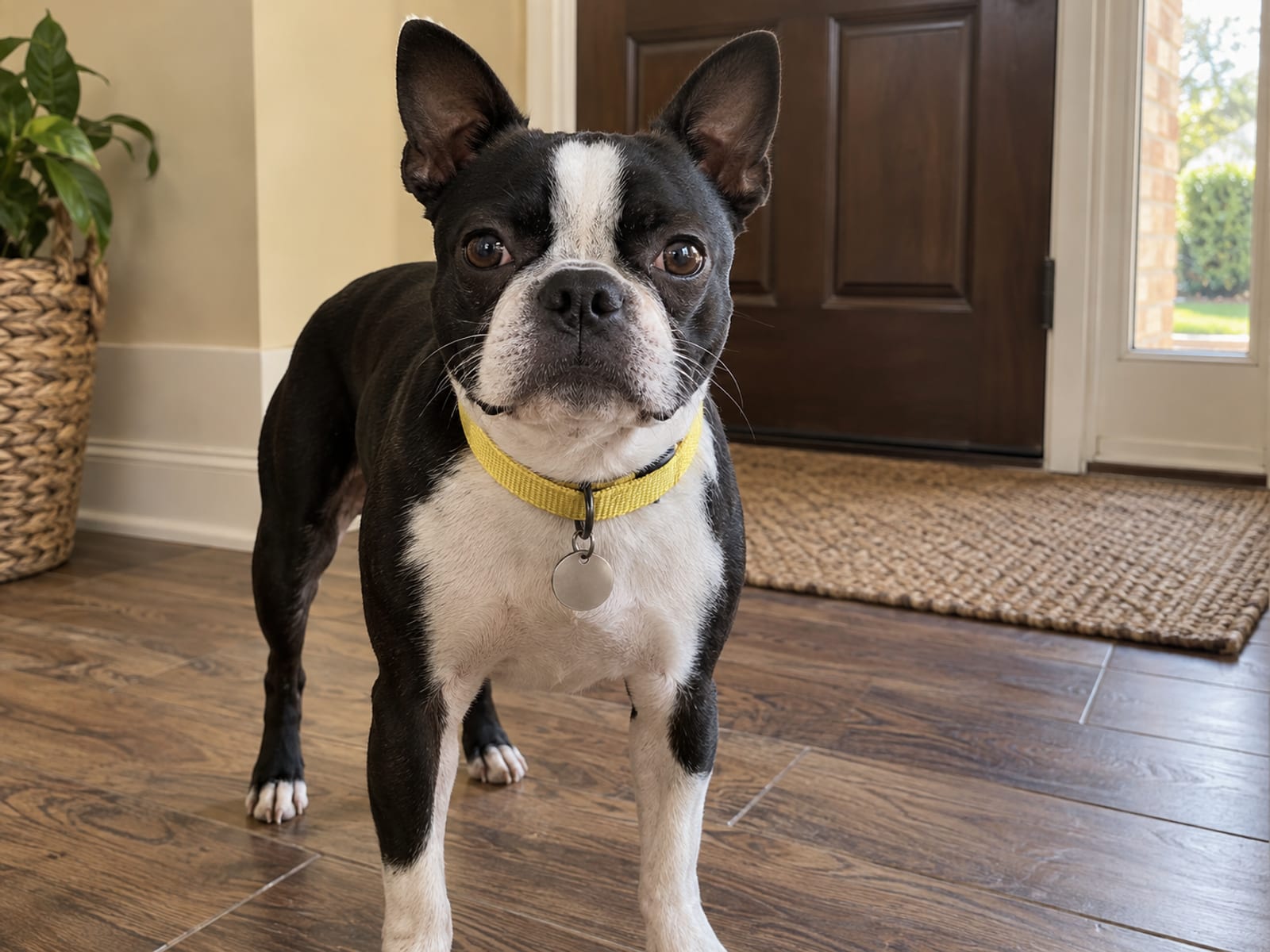
Under Mississippi Code 41-53-7, the rabies tag shows the vaccination serial number and the year. The owner attaches it securely to the dog's collar or another device, and the dog wears it at all times. The tag is not transferable, so it cannot be moved from one dog to another.
Mississippi also gives sheriffs, conservation officers and county or municipal peace officers authority under Mississippi Code 41-53-11 to take up a dog over three months old that is running at large without the required collar and tag. That is one more reason owners should keep the tag on.
For your business, treat the tag as a quick identity and status check, not as a stand-in for the certificate. The tag carries a number and a year. The certificate ties that number to a specific dog by breed, sex and markings. You want both pieces to agree.
What staff check at intake, and how to record it
A good intake check takes a couple of minutes once your team has done it a few times. Based on what 41-53-9 requires on the certificate, a workable routine looks like this:
- Match the dog in front of you to the breed, sex, markings and owner on the certificate.
- Compare the tag serial number on the certificate to the tag on the dog's collar.
- Check the vaccination date and that the dog is current under the Mississippi schedule.
- Write down the date you received the document and the name of the staff member who reviewed it.
- Send any mismatch back to the owner's veterinarian, or to local animal control if the tag itself is in question.
- Apply your written policy the same way for every client.
Keep a copy of the certificate and the tag number in the client file. That is your business record. It is not the veterinarian's statutory record, so don't present it as one if someone asks.
Setting stricter rules as your own written policy
You can ask for more than the state requires. A boarding or daycare business can require a copy of the certificate, a matching tag on the collar, records sent ahead of the first visit, or other vaccines such as Bordetella, distemper or parvovirus. Mississippi's rabies law covers rabies; the other vaccines are your choice to require unless a local ordinance says otherwise. If you want a separate illness policy, our post on kennel cough in dogs covers what owners usually ask.
Put the policy in writing so every staff member gives the same answer. A useful written policy covers:
- Which services it applies to (boarding, daycare, grooming, in-home sitting).
- The minimum age and which rabies documents you accept, including electronic records.
- Whether you require both the certificate and the tag.
- Which certificate fields must match the dog.
- What happens when records are missing, expired or inconsistent.
- Any other vaccines you require.
- Exceptions, such as young puppies or a veterinarian's medical note, and who can approve them.
- How you handle bites and possible exposures.
- How long you keep records, who can see them and how a client can ask for a correction.
Some of your Mississippi clients may search in Spanish, with phrases like "certificado de vacuna contra la rabia" or "¿qué necesita mi perro para hospedarse?" A short Spanish version of your policy, built from the same rule, saves a lot of back and forth at check-in. If you translate it yourself, keep it tied to the MSDH rule and link the original state source.

When proof is missing, expired or doesn't match, and puppies under three months
When paperwork is missing or does not match, a simple three-step response keeps it calm:
- Pause acceptance under your written policy. You are not accusing anyone; you are following your process.
- Ask the owner to get a corrected or replacement record from the veterinarian who gave the vaccine. The clinic keeps the owner, breed, sex, markings and tag number on file.
- If the tag is disputed or the dog's legal status is unclear, have the owner contact local animal control.
Puppies are a separate decision. Mississippi's vaccination requirement starts after three months of age, so a younger puppy may not have a rabies vaccine yet. Whether you accept puppies under three months, for which services and with what other records, is a call your written policy should make in advance, not something staff decide at the door.
After a bite or suspected rabies exposure
If a bite happens or you think a person or animal may have been exposed to rabies, the first steps are practical. Separate people and animals from further contact. Secure the dog without creating another bite. Direct anyone who was exposed to prompt medical care.
Then call the MSDH Office of Epidemiology at 601-576-7725. After hours, on weekends and on holidays, the number is 601-576-7400. MSDH says an Animal Bite/Exposure Questionnaire should be completed for every reported exposure, and that the Office of Epidemiology must approve specimens before they go to the Mississippi Public Health Laboratory for rabies testing.
One distinction helps here. In Mississippi, an animal bite or exposure is not by itself a reportable condition, but confirmed or suspected rabies in a person or an animal is a Class 1 reportable condition, according to MSDH's reportable disease page. Your local animal control handles bite reports, observation or quarantine, and where a dog must be confined, so call them and follow their instructions.
While it is fresh, write down the date, time, people, animals, location and what happened. Pull the dog's certificate and tag number into the same file. For background on why bites happen in group settings, see why do dogs bite.

Local rules and how long to keep client records
State law sets the floor. Mississippi Code 97-41-16(8) says nothing in that section limits a municipality or board of supervisors from adopting more restrictive ordinances, so your city or county may add its own rules. The Mississippi Secretary of State's One Stop guide puts it plainly: "Different locations have different requirements." Local permits can include business licenses, tax permits, zoning, home-business occupational permits, building, health, signage and alarm permits.
Match the question to the office:
- City clerk or municipal revenue office (or the county tax collector outside city limits): business or privilege license and tax certificate.
- City or county planning and zoning: kennel use, home occupation, conditional use, setbacks, noise, number of dogs, parking and construction.
- Animal control or the county sheriff's office: dog licenses on top of the rabies tag, bite reports, quarantine and local animal limits.
- Fire or building department: occupancy, alarms, fencing and changes to the building.
Jackson's animal ordinance is one example of a city with its own rules on rabies tags and animals. When you call any of these offices, give them your exact address, the services you offer, the maximum number of dogs, your hours, whether dogs stay overnight and whether you run from home or a commercial space. For the broader rules on running a facility here, see dog boarding and daycare rules in Mississippi, and for storm season, the Mississippi Gulf Coast hurricane plan for dog businesses.
On records, Mississippi's rabies statutes require the vaccinating veterinarian to keep vaccination records, and they set no retention period for a boarding, daycare, grooming or sitting business. Pick one yourself, in writing, with your insurer and attorney, and check whether a local rule or a contract sets one for you. A secure client file can hold the certificate, tag number, the dog's description, owner contact details, the signed policy, any exceptions and incident notes. Insurance questions are covered in dog business insurance.
Questions Mississippi dog business owners ask about rabies records
Short answers on rabies records, reporting and who may vaccinate.
Is the rabies tag alone enough to accept a dog?
Mississippi law requires a certificate that identifies the dog, and the tag only shows a serial number and year. Most businesses ask for both and check that they match. Requiring both is your written intake policy, which you are free to set.
Does Mississippi law make my business refuse a dog without proof?
The state rabies law places the vaccination duty on the owner or the person possessing the dog. Turning a dog away without proof is a policy your business may choose. Check whether your city or county ordinance adds anything.
Does a dog bite at my business have to be reported to the state?
A bite by itself is not a reportable condition in Mississippi, but suspected or confirmed rabies is a Class 1 reportable condition. Call the MSDH Office of Epidemiology at 601-576-7725 about a suspected exposure, and contact local animal control, which handles bite reports and quarantine.
Can a staff member or groomer give the rabies shot?
No, unless they hold a specific permit. A licensed veterinarian or a person specifically permitted by the State Board of Health must give the vaccine.
Your next step
Write your intake policy this week, even if it fits on one page. Start with the Mississippi schedule, the four certificate fields, the tag match and the MSDH numbers, then add your own rules for puppies, other vaccines and record keeping. After that, make one call to your city clerk or planning and zoning office with your address and services, so you know which local rules apply to you. If you are still setting up, how to start a dog boarding business and how to start a dog grooming business cover the startup steps, and your grooming intake can use the same rabies check described here.
Sources
- law.justia.com: Mississippi Code 41-53-1
- law.justia.com: Mississippi Code 41-53-11
- law.justia.com: Mississippi Code 41-53-5
- law.justia.com: Mississippi Code 41-53-7
- law.justia.com: Mississippi Code 41-53-9
- law.justia.com: Mississippi Code 97-41-16(8)
- library.municode.com: Jackson's animal ordinance
- mbah.ms.gov: Mississippi Board of Animal Health
- ms.gov: Mississippi Secretary of State's One Stop guide
- msdh.ms.gov: Mississippi State Department of Health (MSDH)
- msdh.ms.gov: MSDH Office of Epidemiology
- msdh.ms.gov: reportable disease page