
Hurricane Plan for Dog Boarding in Mississippi: When to Move Dogs, Where They Go and How Owners Reclaim Them
By Cal Hewitt · Published
Business guides
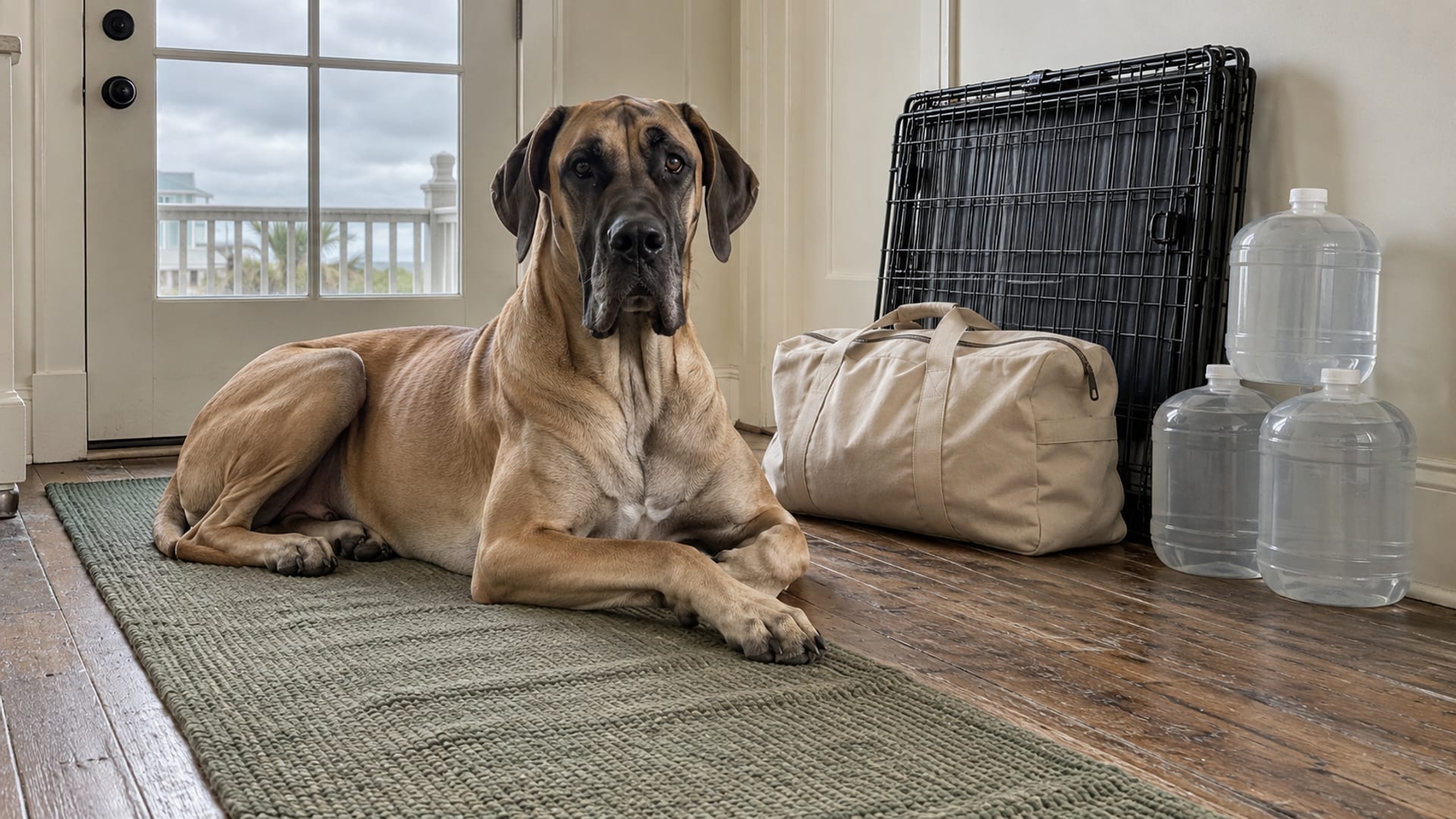
A Mississippi dog boarding, daycare or sitting business should have a written hurricane plan before June 1. That plan says when the dogs move, where they go, who drives them, how food, water, medications, rabies records, crates and owner contacts travel with each dog, and how owners or the people they authorize get their dogs back. MEMA recommends a three-to-five-day disaster supply kit and publishes evacuation-zone maps for Hancock, Harrison and Jackson counties. MSDH says only selected public emergency shelters accept pets, and the Mississippi Board of Animal Health (MBAH) advises picking routes and sheltering sites before an emergency.
Key takeaways
Tap a card to bring it forward.
- Write the plan before June 1: trigger, destination, transport, supplies, records and owner contacts.
- Tie your move decision to official instructions, your surge zone, flooding, power loss and road access, not to a feeling on the day.
- Only selected public shelters take pets, so confirm a primary destination, a backup and a veterinary option ahead of time.
- Every dog travels with its own record: owner and emergency contacts, authorized pickup person, rabies certificate, medications and diet notes.
- Release a dog only after an identity check, a signed release and a time-stamped handoff.
- Local permits, zoning, sales tax and insurance sit beside the plan; ask the named office for a ruling.
What a Gulf Coast dog business settles before June 1
When a storm turns toward the coast with other people's dogs in your care, owners want proof that you already decided, not a general promise that the facility is prepared. So, the plan comes down to six answers you can write on a page and hand to staff. When do you stop taking new dogs and start moving the ones you have? Where do they go, and where do they go if that place is full? Who drives, in what vehicles, with how many crates? What supplies travel, sized for your real dog count? Which records go with each dog? How do you reach owners, and how do they reclaim their dogs?
The SBA says a business disaster plan should fit the business's own risks and operations and be practiced with staff. I'd hold a boarding plan to that standard, then send owners the parts that affect them before the season starts.
When to move the dogs: a written trigger, not a judgment call at midnight
MEMA says the Atlantic hurricane season runs June 1 through November 30; its 2026 preparedness notice used June 1, 2026 through November 30, 2026. Storms can form outside those dates, so the plan stays in force year-round, with the heaviest attention in those months.
Your trigger is the line that means dogs move. Tie it to things you can check:
- Official instructions for your county or city, including any evacuation order for your zone.
- Your storm-surge exposure on the current county map.
- Flooding at the site or on your route.
- Loss of power, or a forecast you cannot ride out safely without it.
- Road access, because coastal roads, fuel and communications can become unreliable before landfall.
- Whether your destination has confirmed space.
Should a facility move dogs before an official order? Your written trigger answers that for your business. MBAH warns that going back to retrieve animals may be dangerous, and it advises identifying evacuation routes and sheltering sites in advance.
Add a second line: the point where you stop accepting new dogs during a storm watch.
Which MEMA evacuation zone applies in Hancock, Harrison and Jackson counties
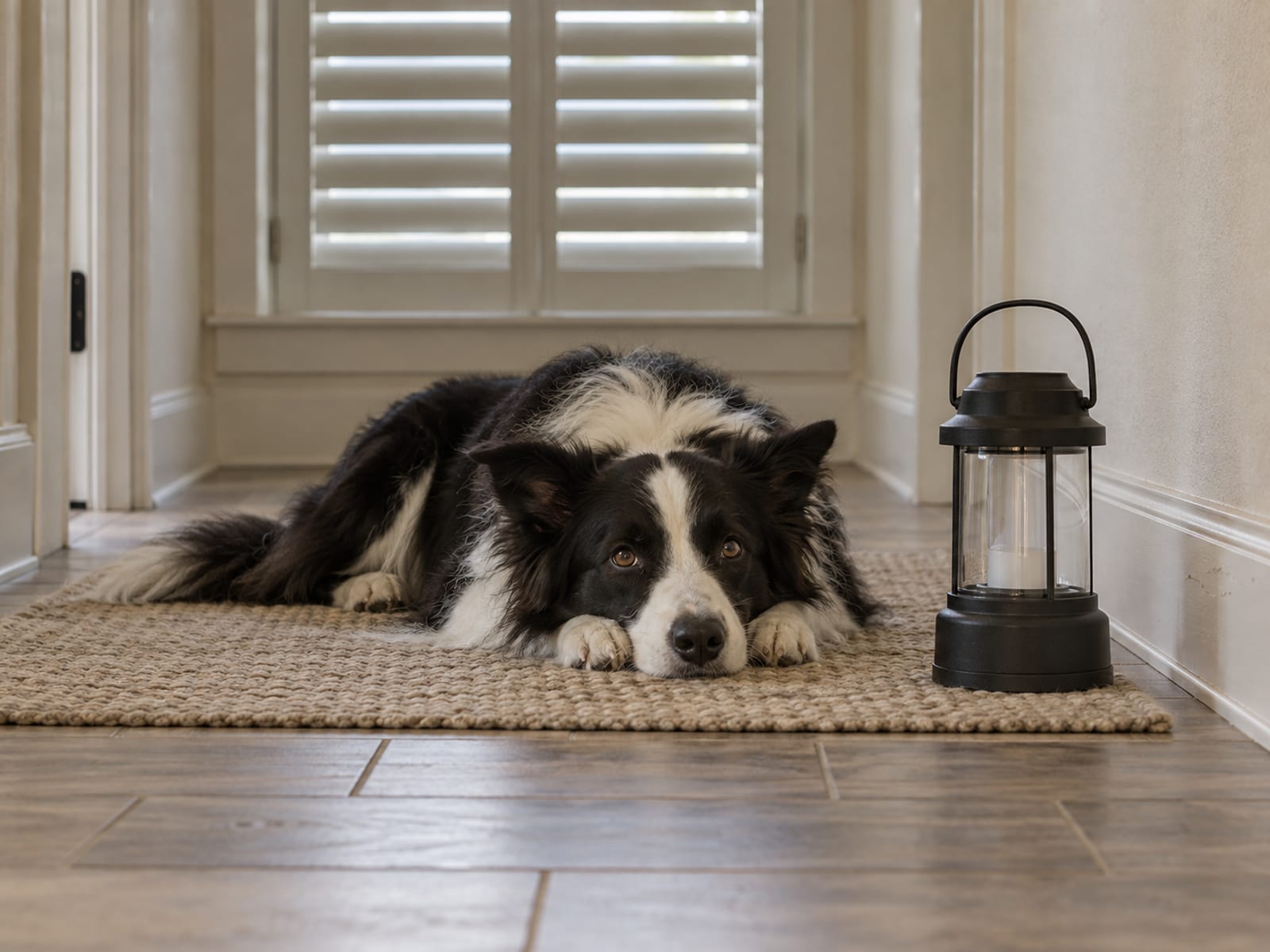
MEMA publishes evacuation-zone maps for Hancock County, Harrison County and Jackson County, plus storm-surge mapping for all three. The zones reflect surge potential and conditions specific to each county, so a category number on the news does not tell you what your address faces.
Look up your facility on the current county map, write the zone into the plan, and check it each spring. Check your destinations too; one inside the surge area does not solve much. An old file such as the Hancock County zone map dated May 2010 does not replace the current MEMA map. When the county map and local instructions point one way, follow them. For a sitting business, the zone that matters is the client's address.
Where the dogs go: a primary site, a backup and a veterinary option
MSDH says pets are allowed only in selected public emergency shelters, and MBAH says pet-friendly shelters may be limited and recommends alternative sheltering when possible. Plan as though the nearest public shelter will not take your dogs.
Your plan needs three named places, each with an address and a contact:
- A primary destination outside your surge zone that agrees in advance to take your dogs.
- A backup destination, in case the first is full, flooded or cut off.
- A veterinary option. MBAH recommends arranging veterinary-clinic boarding during the event for animals that need intensive medical care.
MSDH suggests contacting local animal shelters, humane societies, veterinarians or emergency-management offices before an emergency. Confirm each destination before you load a single crate.
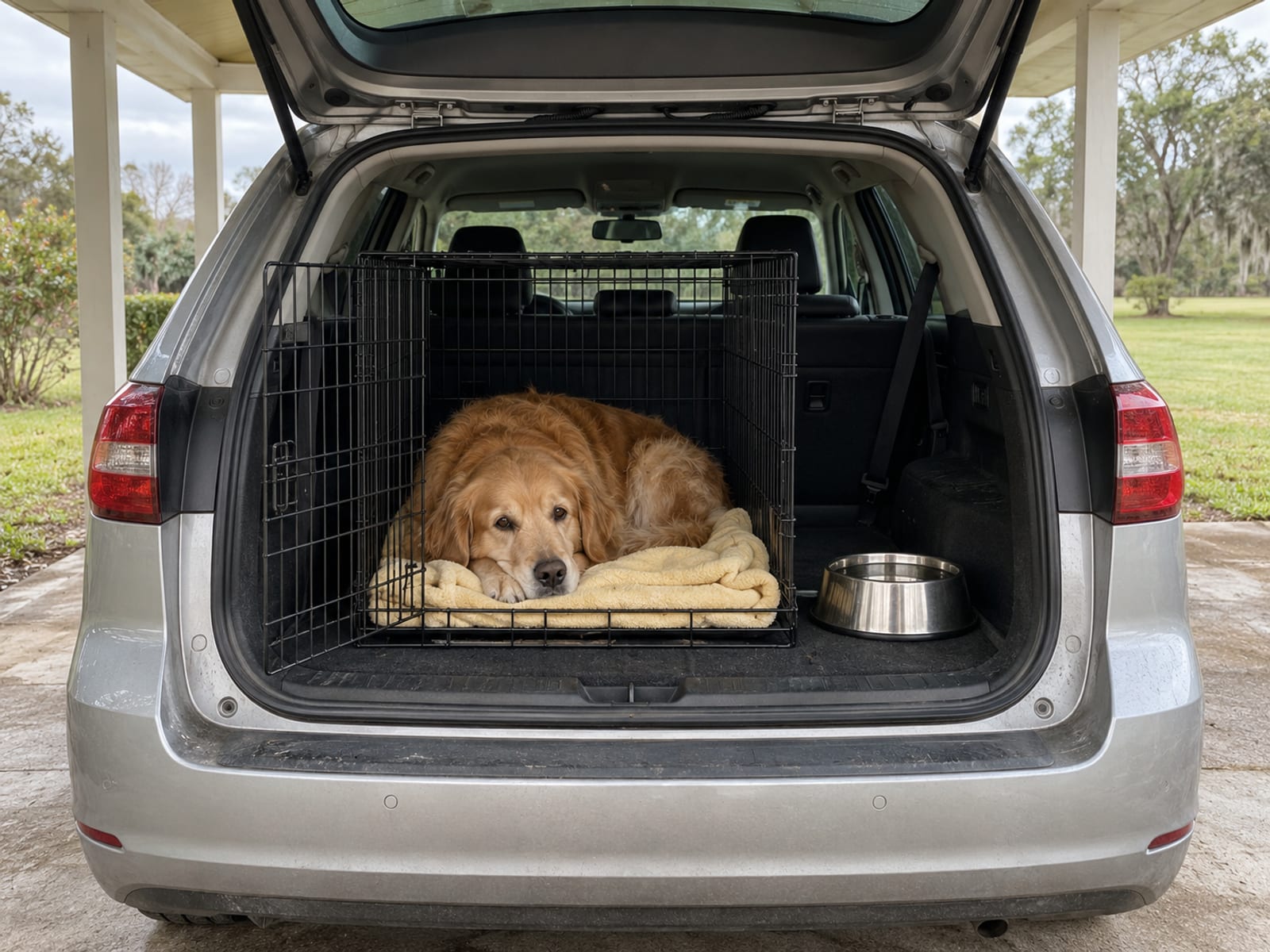
For transport, count your crates against your largest likely headcount, list which vehicles you can use, and decide whether you have a backup vehicle. MBAH's guidance calls for a carrier or cage large enough for the dog to stand, stretch and turn around.
What travels with every dog
Each dog needs a record that is waterproof or backed up digitally. Build it at intake:
- Owner name and contact information, plus an out-of-state contact if the owner has one.
- An emergency contact and the authorized pickup person.
- Dog name, description, recent photograph, microchip number and tag details.
- Rabies certificate and other vaccination records.
- Veterinarian contact, medical history and allergies.
- Medications with the owner's or veterinarian's written instructions, and the supply on hand.
- Special diet instructions.
- Behavior, handling, travel and separation notes.
- The boarding agreement and the emergency authorization.
MBAH lists what a pet-friendly shelter expects at intake: written proof of vaccinations, current rabies identification, identification on the animal and belongings, a suitable carrier or cage, a leash, food, water, bowls, necessary medications, waste-handling supplies, familiar items and clear labeling with owner and pet information. A rabies tag alone does not cover that list. For the rabies side, see our Mississippi rabies law guide for dog businesses.
On supplies, MEMA's three-to-five-day kit is a household figure. A kennel has to do its own math: food, water, medications, sanitation materials and staff needs for the number of dogs you actually hold, plus travel time to the destination. Add crates, collars, leashes and harnesses, bowls, bedding, waste bags, gloves, towels, cleaning supplies, first-aid supplies, labels and cage cards, flashlights, batteries, chargers and a radio.
Tap or hover a row to highlight it.
| Data point | Figure | Source and date |
|---|---|---|
| Data pointAtlantic hurricane season | FigureJune 1 through November 30 | Source and dateMEMA, accessed September 30, 2026 |
| Data pointGeneral disaster supply kit | FigureThree to five days | Source and dateMEMA |
| Data pointMSDH preparedness kit range | FigureThree to seven days | Source and dateMSDH Disaster Supplies Calendar |
Power loss and flooding: when staying stops being the safer choice
A generator does not settle a power outage by itself. It does not give you safe ventilation, a fuel supply, fire safety, cooling, sanitation, staffing or flood protection. Each needs its own line in the plan, with drinking water and lighting for night checks. For the heat side of an outage, our heat safety guide for dog businesses covers the warning signs.
MSDH advises bringing animals inside before severe weather and never leaving them outside or tied up during a storm. In flood conditions it points to areas with access to higher surfaces where animals can get above rising water, and it says to keep dogs and cats in separate areas. Mark a safe interior area for a tornado warning that comes with little notice.
Write down what moves you from sheltering in place to leaving: cooling you cannot sustain, water entering the building or access road, fuel running short, or too few staff to check every dog.
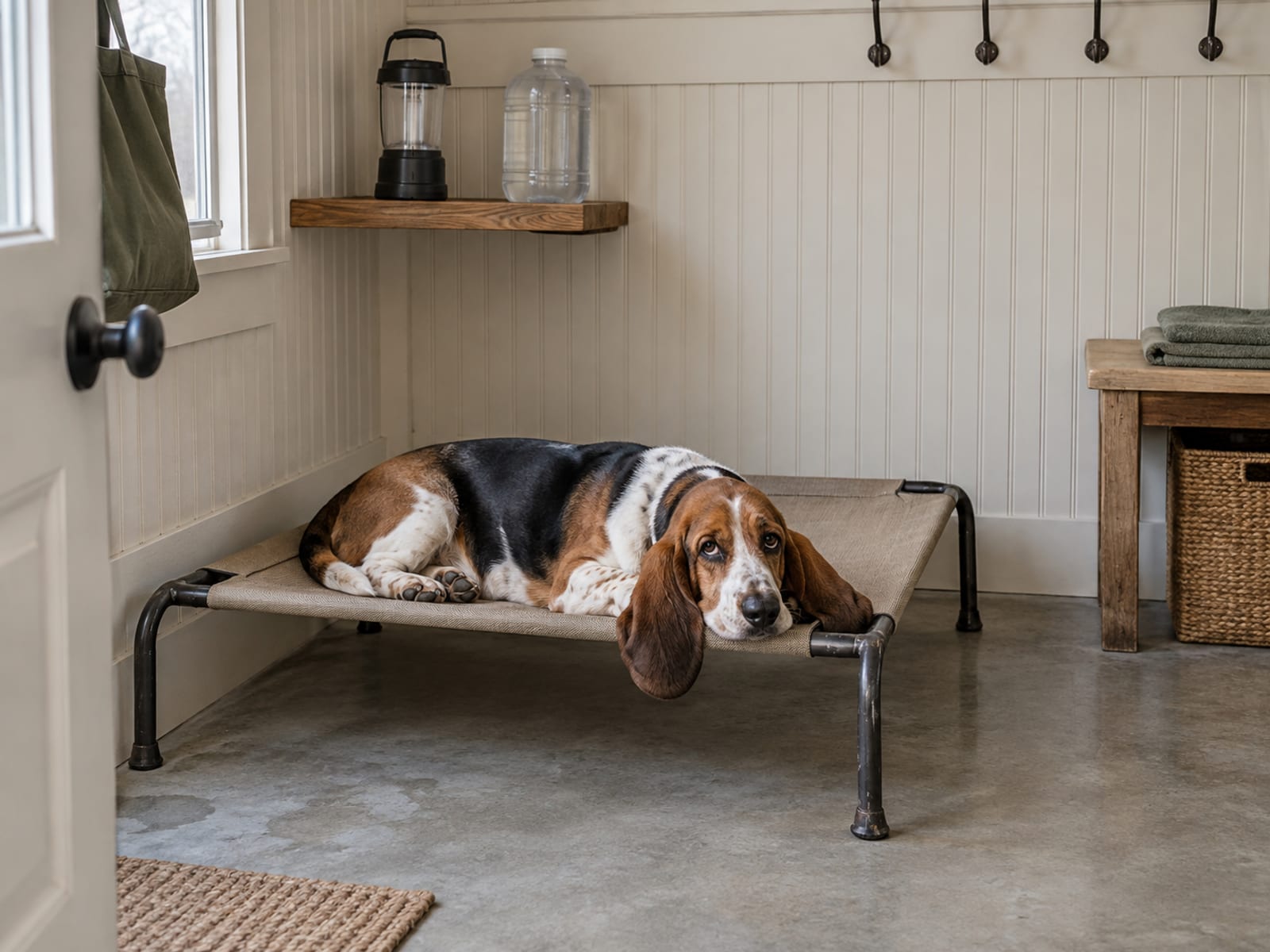
How to reach owners before, during and after the storm
Owners want to hear from you at set points. Plan for these messages:
- Before the season: your trigger, destinations, what you need from them and a request to update contacts.
- At the trigger: that dogs are moving, and when.
- On arrival: the destination and how to reach staff there.
- Status updates on a schedule you state in advance.
- After the storm: pickup instructions that follow official re-entry and road-safety instructions.
Cell service can fail, so write down how many contact attempts you make, by which channels, before you turn to the emergency contact.
Some of your clients may read Spanish more easily than English. MEMA publishes Spanish-language disaster materials, including a Spanish Hurricane Guide with pet evacuation material on food, water, medications, records, identification, carriers, routes and confirming that a hotel or shelter accepts pets. Send that link before the season, and put your own trigger, destination, emergency contact, release and pickup instructions in Spanish too.
Reunification when an owner cannot get back
Owners get stranded outside Mississippi, roads stay closed and phones go dark. A written procedure lets you hand a dog to the right person without guessing. It should hold:
- The owner's phone, email and out-of-state contact.
- At least one named emergency contact.
- A list of people authorized to receive the dog.
- Permission to transport the dog if evacuation is required.
- Permission to contact a veterinarian if emergency care is needed.
- Medication, diet and handling instructions.
- How the owner will be told the dog's new location.
- An identity check at pickup.
- A signed release showing who received the dog, when, where and under whose authority.
- A copy of the dog's identification and vaccination records.
- Steps for failed contact attempts and delayed pickup.
- A rule that pickup follows official re-entry and road-safety instructions.
Pet Sitters International recommends that client emergency materials include a recent photo, veterinary and vaccination records, written permission for emergency veterinary treatment, and notes on how the pet reacts to other animals, travel and stress. MBAH's companion animal sheltering plan uses registration, cage cards, intake records, leashes and identification outside containers, and signed entrance and exit paperwork, which is a sound model for your own log. Record each dog's departure, destination, status and release with a time stamp.
When you need outside help, MBAH lists the county emergency-management office as a key contact, and animal protection requests during an event go through the county emergency operations center. Call Hancock County Emergency Management, Harrison County Emergency Management or Jackson County Emergency Management, depending on where you operate, and your city's emergency-management office if you are inside a municipality. MSDH advises keeping dogs leashed after a disaster, since familiar landmarks and scents may have changed.
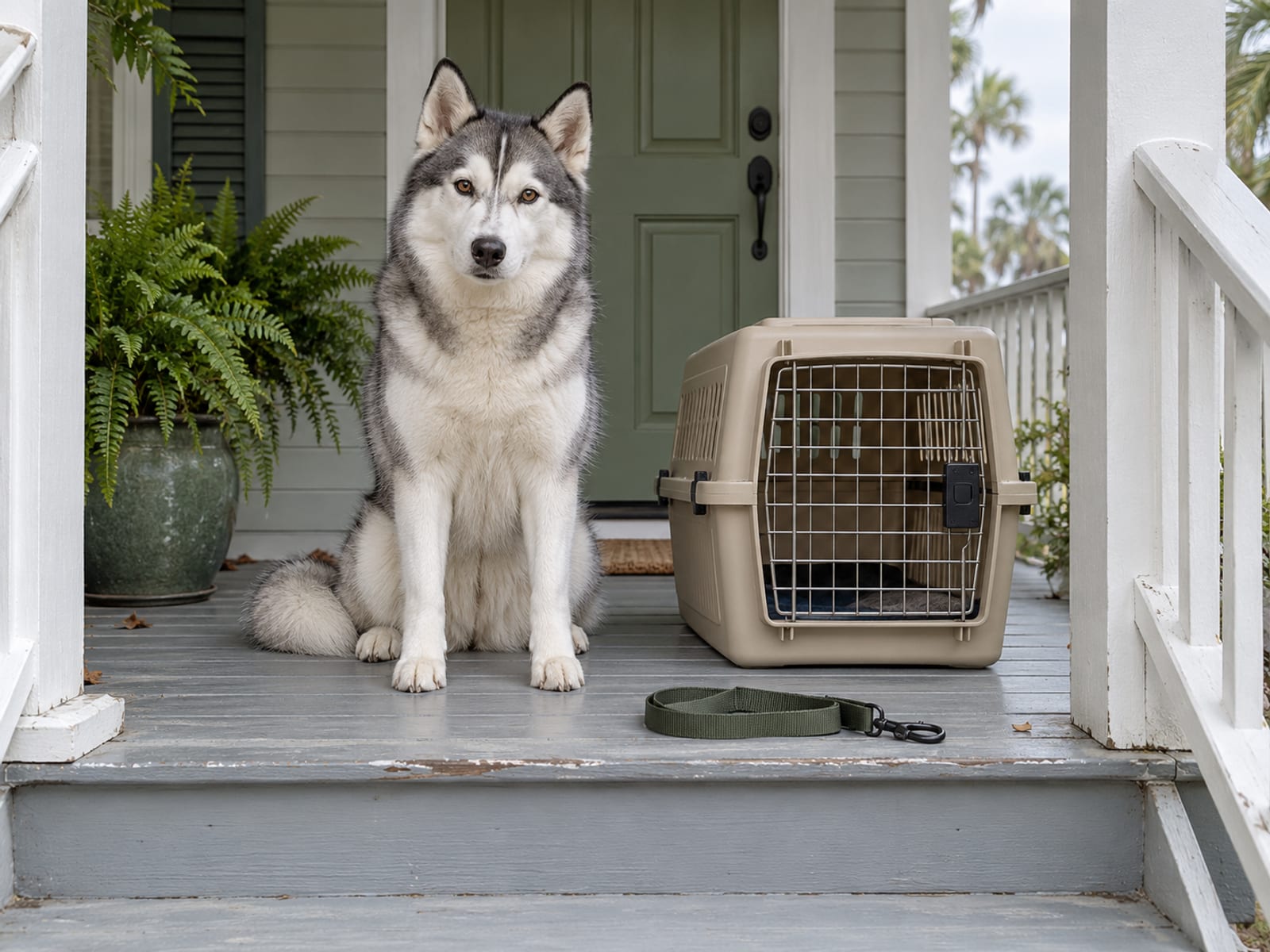
Permits, sales tax and insurance questions that sit beside the plan
Permits for a Mississippi dog business come from more than one office. The Mississippi One Stop business guide sends owners to state, city and county offices, because local requirements differ. It lists business licenses or tax certificates from the city or county clerk or revenue department, building and zoning permits from the building and planning department, health permits from the health department, and occupational permits for some home-based businesses as separate matters. A general business license does not answer a zoning question.
Ask your city and county whether boarding, daycare or sitting is allowed at your address, whether a kennel permit or dog limit applies, whether floodplain or fire approvals are required, and whether an evacuation destination needs its own permit. Call the city or county clerk or revenue office, planning and zoning, animal control and the fire marshal where applicable. Our Mississippi dog boarding and daycare rules guide goes deeper on the local side.
On tax, the Mississippi Department of Revenue applies sales tax by statutory classification. The general rate is 7 percent, but whether a specific dog-business charge is taxable is a question to confirm with DOR.
The IRS recommends that an emergency plan include copies of key records and financial information; keep insurance policies, financial records and an inventory in waterproof or electronic form. The SBA advises assessing coverage with an insurance professional. A standard liability policy does not automatically cover every storm loss, so ask specifically about flood, wind, business interruption, animals in your care and dogs in your vehicles.
Questions Gulf Coast boarding and sitting businesses ask about hurricanes
Short answers for your own plan.
How should a Gulf Coast boarding or pet sitting business plan for a hurricane?
Put it in writing before June 1, practice it with staff, and review it each spring against the current MEMA county map. Keep a copy of every dog's record off-site or in digital form so the plan still works if the building floods.
When should boarded dogs be moved?
Move them when your written trigger is met: an official instruction for your zone, surge exposure, flooding, power loss, road access or a confirmed destination opening. MBAH warns that going back for animals may be dangerous, so a trigger that uses open roads and daylight is easier to carry out than a late one.
What should owners be told before the season?
Tell them your trigger, where dogs will go, how you will update them and what you need from them: current contacts, an emergency contact, an authorized pickup person, rabies and vaccination records, medications with written instructions and permission for emergency transport and veterinary care. Spanish-speaking clients should get the MEMA Spanish Hurricane Guide and your own instructions in Spanish.
Does Mississippi have one statewide kennel license?
The Mississippi One Stop guide says local permits and licenses vary by city and county. Ask your city or county clerk, revenue office, planning and zoning office and animal-control authority what applies at your address.
Does ordinary business insurance cover hurricane losses?
That depends on the policy. The SBA advises assessing your risks with a licensed insurance professional, so ask directly about property, liability, wind, flood and business-interruption coverage, and about dogs in your care and in transport.
Your next step this week
Pull up the current MEMA map for your county, write your zone at the top of a blank page, and fill in the trigger, two destinations and a vet option under it. Then update your intake form so every dog arriving from now on comes with the emergency contact, authorized pickup person and emergency authorization the plan depends on. When the plan is ready, you can show owners it exists: your DogServ directory listing is a good place to tell clients you have a written hurricane plan and how to ask for a copy.
Sources
- dor.ms.gov: Mississippi Department of Revenue
- irs.gov: IRS
- mbah.ms.gov: MBAH's companion animal sheltering plan
- mbah.ms.gov: Mississippi Board of Animal Health
- ms.gov: Mississippi One Stop business guide
- msdh.ms.gov: MSDH Disaster Supplies Calendar
- msdh.ms.gov: MSDH
- msema.org: MEMA
- msema.org: MEMA
- msema.org: Spanish Hurricane Guide
- petsit.com: Pet Sitters International
- sba.gov: SBA
- sba.gov: SBA