
Hip Dysplasia in Dogs: Signs, Diagnosis, Treatment and Costs
By Cal Hewitt · Published , updated
Health
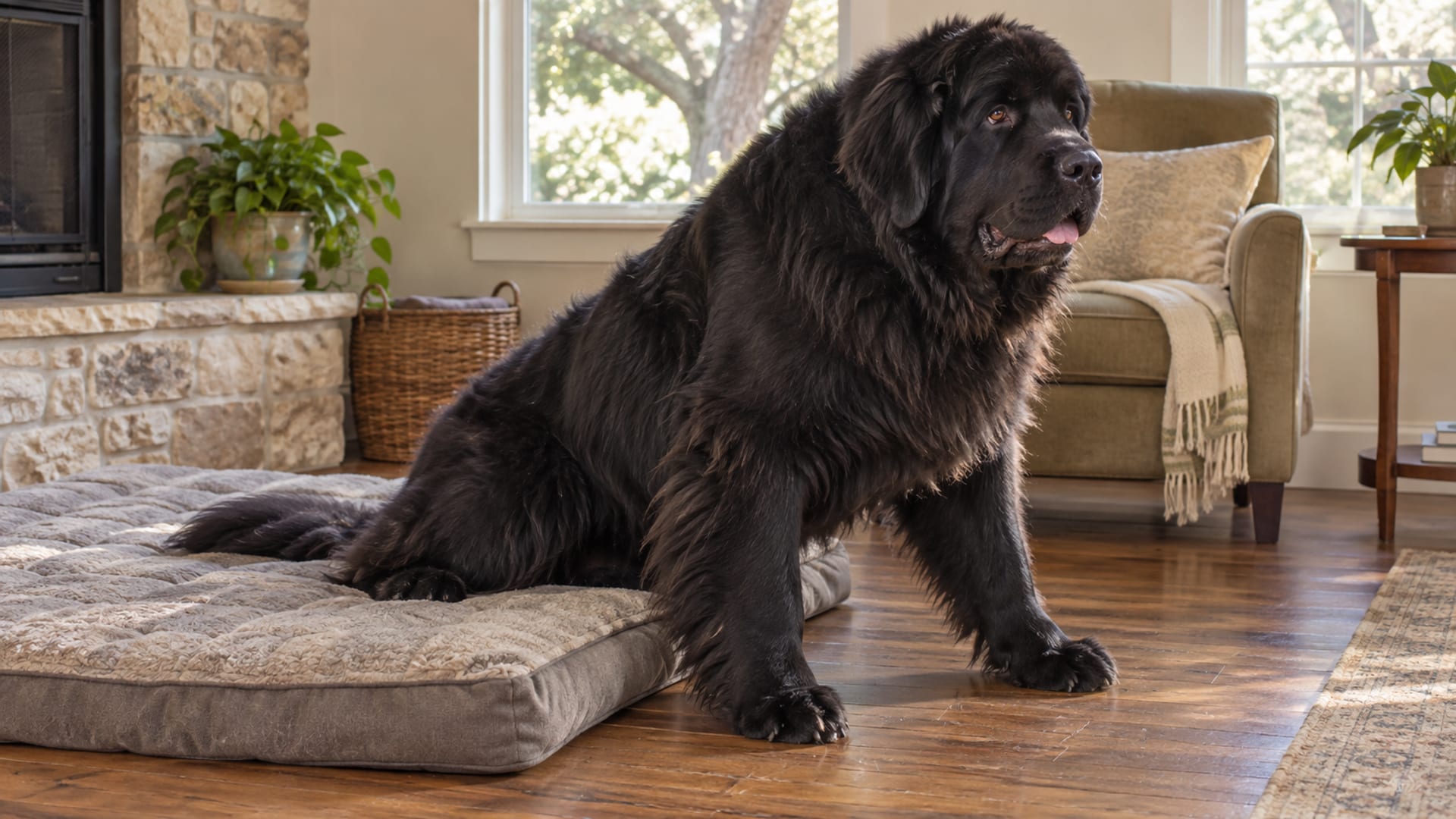
If your dog is bunny-hopping, stiff after resting or struggling to get up, book a vet exam soon, and go to an emergency vet today if your dog cannot stand or walk, is in severe pain, has turned suddenly weak or has been injured. Hip dysplasia is abnormal looseness and development of the hip joint, and the American College of Veterinary Surgeons (ACVS) explains that it begins during growth and can lead to pain, stiffness, hind-leg lameness and arthritis. The first signs often show up in puppies, but they can appear at any age, and some dogs show very few signs at all. A vet exam matters because how a dog moves and what the X-rays show don't always match. Care ranges from weight control, controlled exercise, rehabilitation and veterinary pain management to surgery chosen by age and disease stage.
Key takeaways
Tap a card to bring it forward.
- Hip dysplasia is a loose, poorly formed hip joint that can lead to pain and arthritis; it is most common in large dogs, but any dog can have it.
- Common signs are bunny-hopping, stiffness after rest, trouble rising, reluctance to jump or climb stairs, and hind-leg limping.
- Go to an emergency vet if your dog cannot stand or walk, is in severe pain, turns suddenly weak or was injured.
- Never give ibuprofen, naproxen or acetaminophen; human pain relievers can poison dogs.
- PennHIP can test puppies from about 16 weeks, while final OFA hip certification needs a dog older than 24 months.
- Lean weight, controlled low-impact movement and rehab help many dogs, and some surgeries only work in young puppies, so timing matters.
My dog is stiff, bunny-hopping or struggling to rise: what should I do today?
Watching your dog struggle to get up is unsettling, but you don't need to figure out the cause tonight. Today's job is to keep your dog comfortable, write down what you're seeing and get a vet appointment booked.
Start with a short record. Note which signs you've seen (bunny-hopping, stiffness, limping, trouble getting up), when they started, and whether they look worse after rest or after activity. Those details help your vet. Until your dog is examined, keep activity controlled and low impact: calm leash walks rather than fetch, jumping or rough play.
Please don't reach for your own medicine cabinet. ASPCA Animal Poison Control and Pet Poison Helpline warn that human drugs such as ibuprofen, naproxen and acetaminophen can seriously poison dogs. If your dog already swallowed one, call your vet or one of those poison lines right away.
Recurring mobility changes deserve a regular appointment, even if your dog still plays. Urgent care is the right call if your dog cannot stand or walk, seems to be in severe pain, becomes weak all of a sudden, or the problem followed a fall or other trauma. You can find a clinic in the DogServ veterinarian directory or, after hours, the emergency vet directory. If you're not sure the problem is in the hips at all, my guide to why a dog is limping covers the wider set of causes.
What hip dysplasia is, and what causes it
In a healthy hip, the ball at the top of the thigh bone (the femoral head) sits snugly in the socket of the pelvis (the acetabulum). In a dysplastic hip, that fit is loose or poorly formed. The ball moves abnormally in the socket, which damages cartilage over time and eventually leads to osteoarthritis. Vets call this looseness "laxity."
The cause is a mix of genes and growth. The ACVS describes it as multifactorial, with heredity the biggest single risk factor, and notes that rapid weight gain and excessive nutrition can make development worse. The Orthopedic Foundation for Animals (OFA) describes it as polygenic, meaning many genes are involved, and says environmental factors such as caloric intake and exercise affect how severe it becomes.
Large and giant breeds are affected most. VCA Animal Hospitals names German Shepherd Dogs, Labrador Retrievers, Golden Retrievers and Bulldogs among the commonly reported breeds, and mixed-breed dogs can have it too. If you're feeling guilty, this part is worth knowing: normal exercise doesn't simply cause hip dysplasia, and diet can't change the genes a dog was born with. What growth and body weight can do is add to or ease the mechanical stress on the joint.
Signs in puppies and in adult dogs
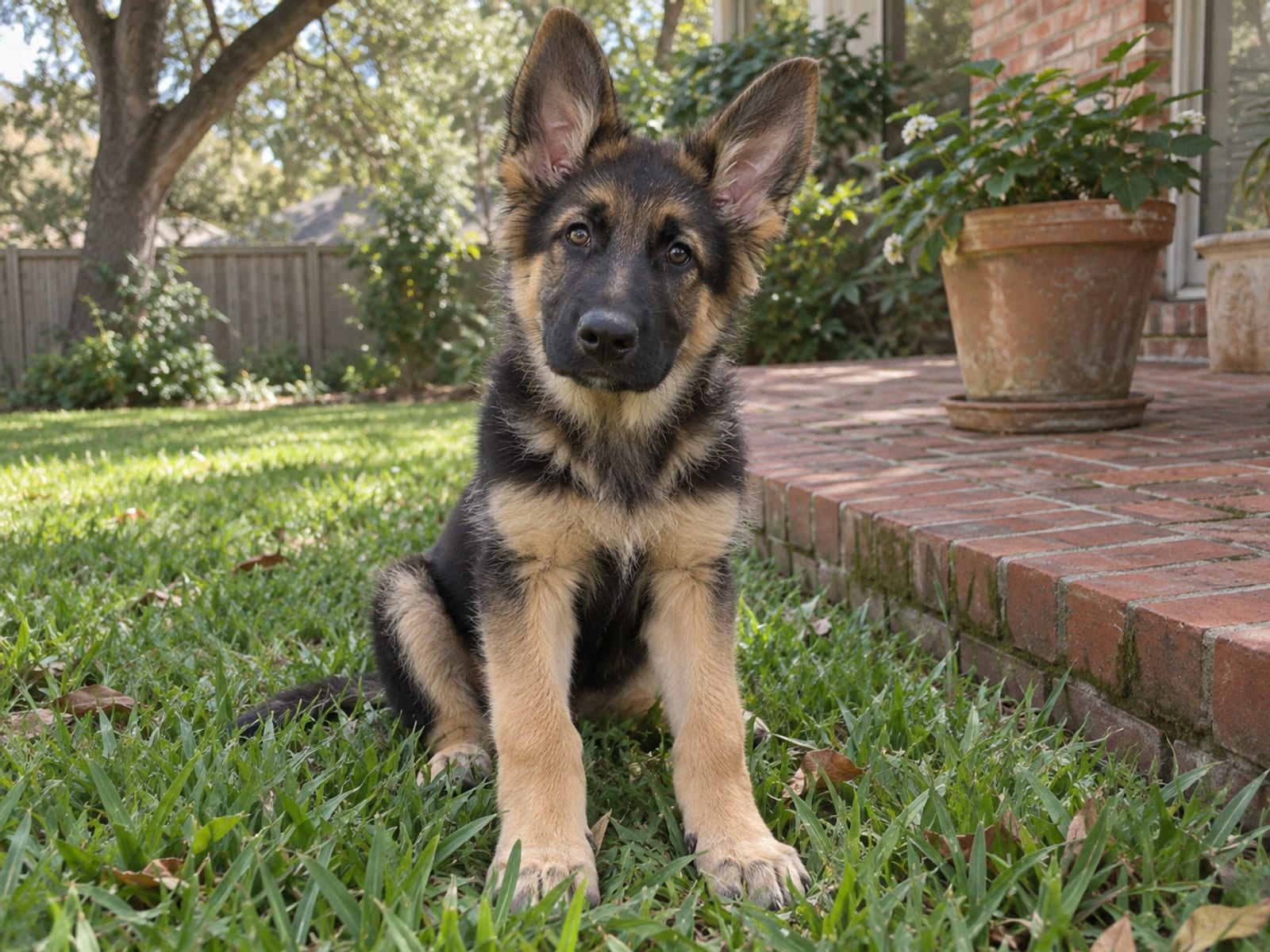
According to the ACVS, puppies may have loose hips without obvious pain. When signs do show in a young dog, they can include:
- Limping in the back legs that comes and goes
- Bunny-hopping, with both hind legs moving together
- Reluctance to run or jump
- Trouble getting up
- Swaying while walking, or a narrow stance in the back
- Pain when the hips are moved
In adult dogs, the usual pattern is stiffness after rest, difficulty rising, reluctance to use stairs or jump, less interest in activity, and hind-leg lameness. Many dogs lose muscle in the back legs and shift their weight forward onto the front end. Signs may appear at any age. My senior dog care guide covers age-related changes, but hip dysplasia is a developmental condition that can affect young dogs as well. For a baseline of normal movement, see signs of a healthy dog.
One thing surprises many owners. The ACVS notes that some dogs have severe arthritis on X-rays and seem nearly normal, while others are clearly painful with milder X-ray changes. So, a dog who still plays can still be hurting, and a scary X-ray doesn't automatically mean a miserable dog.
How it is diagnosed, and what OFA grades and PennHIP results mean
Your vet will combine your dog's history, a look at the gait, an orthopedic exam and a feel of the hips. The ACVS describes the Ortolani test, which checks for laxity and is usually done under light sedation. It may be detectable in young puppies, often around 10 to 16 weeks. A positive result supports abnormal looseness, but a negative result can be falsely reassuring.
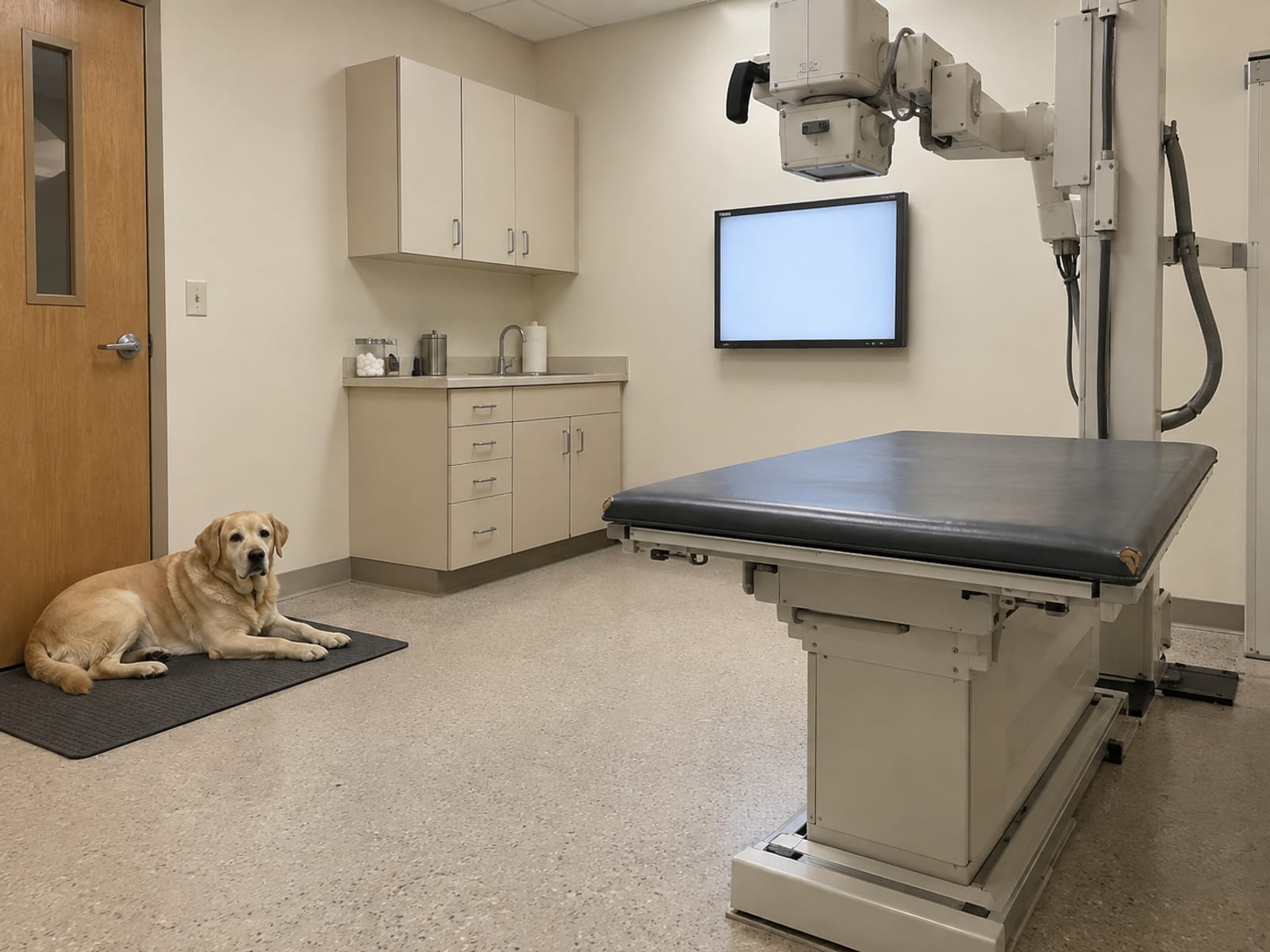
X-rays need careful positioning and often sedation. They show the shape of the hip, partial dislocation (subluxation) and arthritis, but they don't perfectly predict pain or how the condition will progress.
Two screening systems measure different things:
OFA evaluates a standard hip X-ray taken with the dog on its back. OFA grades hips as Excellent, Good, Fair, Borderline, Mild, Moderate or Severe. Excellent, Good and Fair are within normal limits, Borderline is inconclusive, and Mild, Moderate and Severe are dysplastic. Final certification requires a dog older than 24 months. OFA preliminary evaluations are available from four months, but a preliminary grade isn't the same as adult certification.
PennHIP, from the University of Pennsylvania, measures laxity with special distraction X-rays and gives a number called the distraction index. It is available from about 16 weeks of age. A higher distraction index means looser hips and a greater risk of osteoarthritis, and a trained PennHIP provider interprets the result for your dog.
Screening helps estimate risk and guides breeding decisions. It doesn't promise a dog will never become painful.
What helps without surgery: weight, movement, rehab and pain management
For many dogs, day-to-day management carries most of the load. The ACVS and a canine osteoarthritis consensus paper point to the same core pieces.
Keep your dog lean. Extra weight puts more stress on a loose, arthritic joint. Measure meals, avoid extra calories and ask your vet what body condition to aim for.
Keep moving, but in a controlled way. Stopping exercise completely isn't the goal. Regular, low-impact activity is part of standard management, while uncontrolled running, jumping and repeated high-impact play are what to cut back. Your vet can set how long and how often to walk. My article on how much exercise a dog needs covers general needs.
Rehabilitation. Physical rehab helps maintain range of motion, strength and function. Hydrotherapy, or exercise in water, may be part of it where a rehabilitation professional considers it appropriate for your dog. Hip braces and home setups aren't addressed in the veterinary sources behind this page, so those are good questions to bring to your vet or rehab therapist.
Veterinary pain management. Vets often prescribe nonsteroidal anti-inflammatory drugs (NSAIDs), sometimes with other classes of pain medication depending on the dog. When a dog takes these long term, follow-up exams and sometimes blood monitoring are part of the plan to watch for side effects. The drug, the amount and the schedule all come from your vet.
Supplements, and what the evidence shows
The evidence on supplements is fairly clear. A 2022 systematic review and meta-analysis of diets and nutraceuticals for canine osteoarthritis found meaningful evidence for omega-3-enriched diets and omega-3 supplements, though study quality and results varied. The same review found a marked lack of effect for glucosamine-chondroitin products. The canine osteoarthritis consensus paper likewise supports considering omega-3 fatty acids and rates the evidence for glucosamine and chondroitin as weaker or insufficient.
These studies look at arthritis support. A supplement doesn't tighten a loose hip or change how the joint formed, and it doesn't replace an orthopedic exam. If you're thinking about omega-3s, ask your vet whether they fit your dog's plan and in what form.
The surgery options, by age, size and disease stage
Surgery isn't right for every dog, and the options depend heavily on age and how far the disease has progressed. The ACVS describes four main procedures. Some only work in young puppies, so an early exam matters for a large-breed puppy with signs.
Juvenile pubic symphysiodesis (JPS) is for very young puppies with abnormal laxity, generally before 18 weeks. It closes a growth plate in the pelvis so the pelvis develops with better coverage of the ball. ACVS describes it as minimally invasive with generally low complication rates, but timing is everything.
Double or triple pelvic osteotomy (DPO or TPO) is for immature dogs, usually under about 8 to 10 months, that have laxity but no established arthritis on X-rays. The pelvis is cut and rotated to cover the ball better. ACVS reports generally good to excellent long-term function, with possible complications including screw loosening, changes in range of motion and narrowing of the pelvic canal.
Femoral head ostectomy (FHO) can be done at various ages. It removes the ball of the thigh bone so a functional false joint forms. Its main purpose is pain relief rather than restoring normal hip mechanics. ACVS notes that results depend strongly on size and rehab, and smaller dogs often adapt more readily.
Total hip replacement (THR) is for mature dogs with painful, advanced disease or dogs that aren't candidates for joint-preserving surgery. Both the ball and the socket are replaced to restore more normal function. ACVS describes a strong chance of markedly better limb function, with results depending on patient selection, surgeon experience and aftercare. Possible complications include infection, dislocation, implant loosening, nerve injury and fracture, as the University of Missouri Veterinary Health Center and VCA also describe.
A board-certified veterinary surgeon is the right person to say which of these, if any, fits your dog.
What diagnosis and treatment may cost, and pet insurance
Costs vary by region, hospital, dog size, one hip or two, anesthesia, imaging, complications and rehab. No single national price is authoritative, so each figure below carries its date and type:
Tap or hover a row to highlight it.
| Item | Figure | What kind of number it is |
|---|---|---|
| ItemOFA preliminary hip evaluation | Figure$35 | What kind of number it isOFA fee schedule, accessed September 2026 |
| ItemOFA final hip evaluation (dogs over 24 months) | Figure$45 | What kind of number it isOFA fee schedule, accessed September 2026 |
| ItemFemoral head ostectomy (FHO) | FigureAbout $1,500 or more | What kind of number it is2026 commercial estimate, not a vet fee schedule |
| ItemTotal hip replacement | FigureAbout $6,000 to $10,000 or more per hip | What kind of number it is2026 commercial estimates from Paw Protected and VetPriced, not vet fee schedules |
The OFA fees cover only OFA's review. They don't include the vet exam, sedation, X-rays or travel. Ongoing care (exams, medication monitoring, prescriptions, rehab and hydrotherapy) is very location-specific, and I found no reliable national range for it. Ask any hospital for a current, itemized quote before surgery or a rehab program.
Insurance timing matters. Conditions diagnosed before enrollment or during a waiting period may be excluded as pre-existing. My guide to pet insurance for dogs explains how exclusions and waiting periods work.
Reducing the risk in puppies
You can't remove inherited risk, but you can ease the stress on a growing hip. The OFA and ACVS support these steps:
- Choose a puppy whose parents have documented hip screening, knowing that screening lowers risk rather than guaranteeing normal hips.
- Check public OFA records, and note whether results are preliminary or final.
- Feed a properly formulated large-breed puppy diet if your puppy is a large breed, and skip extra calcium supplements.
- Measure meals, keep your puppy lean and avoid rapid weight gain.
- Use age-appropriate, controlled exercise during growth, and limit repeated high-impact activity.
- Talk with your vet early if a large-breed puppy shows stiffness, bunny-hopping or limping.
That last step ties to surgery timing: JPS is generally done before 18 weeks, so a puppy's early months count.
Questions dog owners ask about hip dysplasia
Short answers to the questions owners ask most.
How long can a dog live with hip dysplasia, and is it fatal?
The veterinary sources behind this page describe hip dysplasia as a joint disease whose effects are pain, stiffness and arthritis, and they don't give a life expectancy figure. Their focus is comfort and mobility, which weight control, controlled exercise, rehab, vet pain management and, for some dogs, surgery are meant to protect.
What are the first signs of hip dysplasia?
Early signs often include bunny-hopping when running, trouble getting up, reluctance to jump or climb, and hind-leg limping that comes and goes. The ACVS notes that puppies can have loose hips without obvious pain, so a lack of signs doesn't rule it out.
At what age do dogs usually show hip dysplasia?
It develops during growth, and signs can appear in puppies or at any age later. Vets can sometimes detect laxity in puppies around 10 to 16 weeks with the Ortolani test, and PennHIP screening starts at about 16 weeks, per the University of Pennsylvania.
Which breeds are most affected?
Large and giant breeds, especially fast-growing ones, carry the most risk. German Shepherd Dogs, Labrador Retrievers, Golden Retrievers and Bulldogs are commonly reported, per VCA, but the ACVS notes any dog can be affected.
Can hip dysplasia go away on its own?
Management can't reverse how the joint formed, according to the ACVS, but treatment can reduce pain and improve function. Some surgeries, such as JPS and pelvic osteotomy in young dogs, aim to give the hip more normal mechanics.
Your next step
If your dog is showing any of these signs, the next step is a vet exam. Bring your notes on when the signs started and what makes them better or worse, and ask whether hip X-rays, an Ortolani check, PennHIP or OFA screening makes sense for your dog's age. If surgery or rehab comes up, ask for an itemized estimate. In the meantime, keep your dog lean, keep activity calm and low impact, and leave pain medicine to your vet. You can find a clinic near you in the DogServ veterinarian directory, and if your dog can't stand or is in severe pain, head to the emergency vet directory now.
Sources
- American College of Veterinary Surgeons: American College of Veterinary Surgeons (ACVS)
- ASPCA: ASPCA Animal Poison Control
- ofa.org: OFA fee schedule
- ofa.org: OFA preliminary evaluations
- ofa.org: OFA
- ofa.org: Orthopedic Foundation for Animals (OFA)
- pawprotected.com: 2026 commercial estimate
- Pet Poison Helpline: Pet Poison Helpline
- PubMed Central: 2022 systematic review and meta-analysis
- PubMed Central: canine osteoarthritis consensus paper
- VCA Animal Hospitals: VCA Animal Hospitals
- VCA Animal Hospitals: VCA
- vet.upenn.edu: University of Pennsylvania
- vetpriced.com: VetPriced
- vhc.missouri.edu: University of Missouri Veterinary Health Center