

Do Dogs Dream? Twitching, Whimpering and How to Tell a Dream From a Seizure
By Cal Hewitt · Published
Health
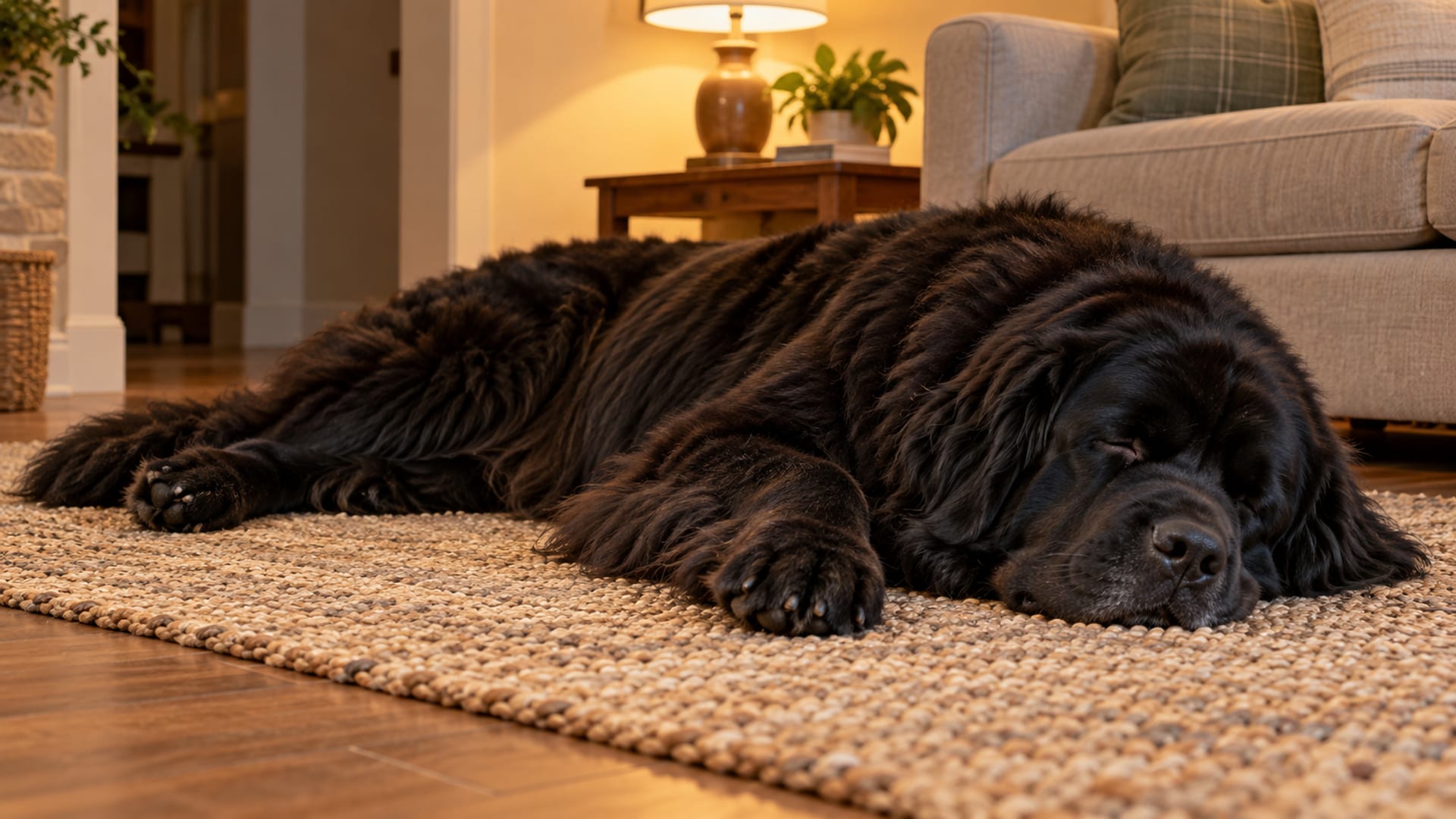
Yes, dogs probably dream. Dogs enter REM sleep, the stage linked with dreaming in people, and canine EEG studies show sleep-related brain activity. During REM sleep a dog may briefly twitch its paws, paddle its legs, move its eyes, whimper or bark, and those movements are usually normal when they are brief and relaxed. Don't touch or shake a sleeping dog, because a startled dog may scratch or bite. If the body turns rigid, the movements are violent or go on and on, the dog can't be roused, or there is drooling, loss of bladder control or confusion afterward, I'd call a veterinarian. A video helps the vet judge what happened.
Key takeaways
Tap a card to bring it forward.
- Dogs have REM sleep and sleep-related brain activity, so dreaming is the best explanation for brief, relaxed twitching, paddling, whimpers and barks.
- Nobody has recorded what a dog dreams about; chasing squirrels is a guess, and a bark does not prove a nightmare.
- Rigid or violent movement, no response to your voice, heavy drooling, loss of bladder or bowel control or confusion afterward are reasons to call a vet.
- A seizure lasting more than five minutes, or seizures that repeat without normal recovery, is an emergency.
- Let a sleeping dog sleep; if you must wake it, use its name or a sound from a short distance, never a hand near the face.
- New nighttime waking or pacing in an older dog deserves a vet visit, not a "bad dreams" label.
Is my twitching, whimpering dog dreaming?
Most likely, yes, if the movement is brief and the body looks loose. AKC and VCA both describe paw twitches, leg paddling, small yips and whimpers as common during REM sleep. Facial movements, a flicking tail and eyes moving beneath closed lids belong on that list too.
Watch for a few seconds. Does the twitching come in short bursts and then fade? Does the dog settle back into ordinary sleep? That pattern is the usual one. I'd leave the dog alone, keep an eye on the clock and let it finish.
A whimper or a bark does not prove your dog is scared. Small sounds show up in normal REM sleep, and they tell you very little about what the dog is experiencing.
Dream or seizure: how do I tell, and when do I call?
I'd check this first, because it changes what you do next. The table sets the two patterns side by side, drawn from AKC, VCA and AAHA.
Tap or hover a row to highlight it.
| More consistent with normal dreaming | Needs veterinary attention |
|---|---|
| More consistent with normal dreamingBrief, intermittent movements | Needs veterinary attentionRigid or violent movements |
| More consistent with normal dreamingRelaxed body | Needs veterinary attentionStiff body |
| More consistent with normal dreamingDog resumes normal sleep | Needs veterinary attentionUnresponsive to voice or touch |
| More consistent with normal dreamingNo major drooling | Needs veterinary attentionHeavy drooling or foaming |
| More consistent with normal dreamingNo loss of bladder or bowel control | Needs veterinary attentionUrination or defecation |
| More consistent with normal dreamingNo confusion afterward | Needs veterinary attentionDisorientation, pacing or blindness afterward |
| More consistent with normal dreamingHappens during sleep | Needs veterinary attentionHappens while awake or around waking |
These signs do not let you diagnose a seizure at home. They are reasons to contact a veterinarian, and a vet is the one who can sort out what happened.
Call your regular veterinarian for episodes that repeat, get worse, look violent, seem unusual or leave you unsure, and for new restlessness at night. Go to an emergency clinic when a seizure lasts more than five minutes; VCA calls that status epilepticus and a life-threatening emergency. Go too when seizures repeat without normal recovery, the dog is unresponsive, it has trouble breathing or is hurt, or it shows severe weakness or strange behavior afterward. AAHA lists unresponsiveness, disorientation, uncontrollable shaking, drooling and tremors among the signs that can need immediate care.
If it may be a seizure, don't wake, restrain or hold your dog, and keep your hands away from its mouth. Move hazards out of the way, time the episode and video it if that is safe. Our seizures in dogs article carries the full guidance, so I won't repeat it here. To find help near you, use our veterinarians and emergency veterinarians directory pages.
Should I wake a dreaming dog?
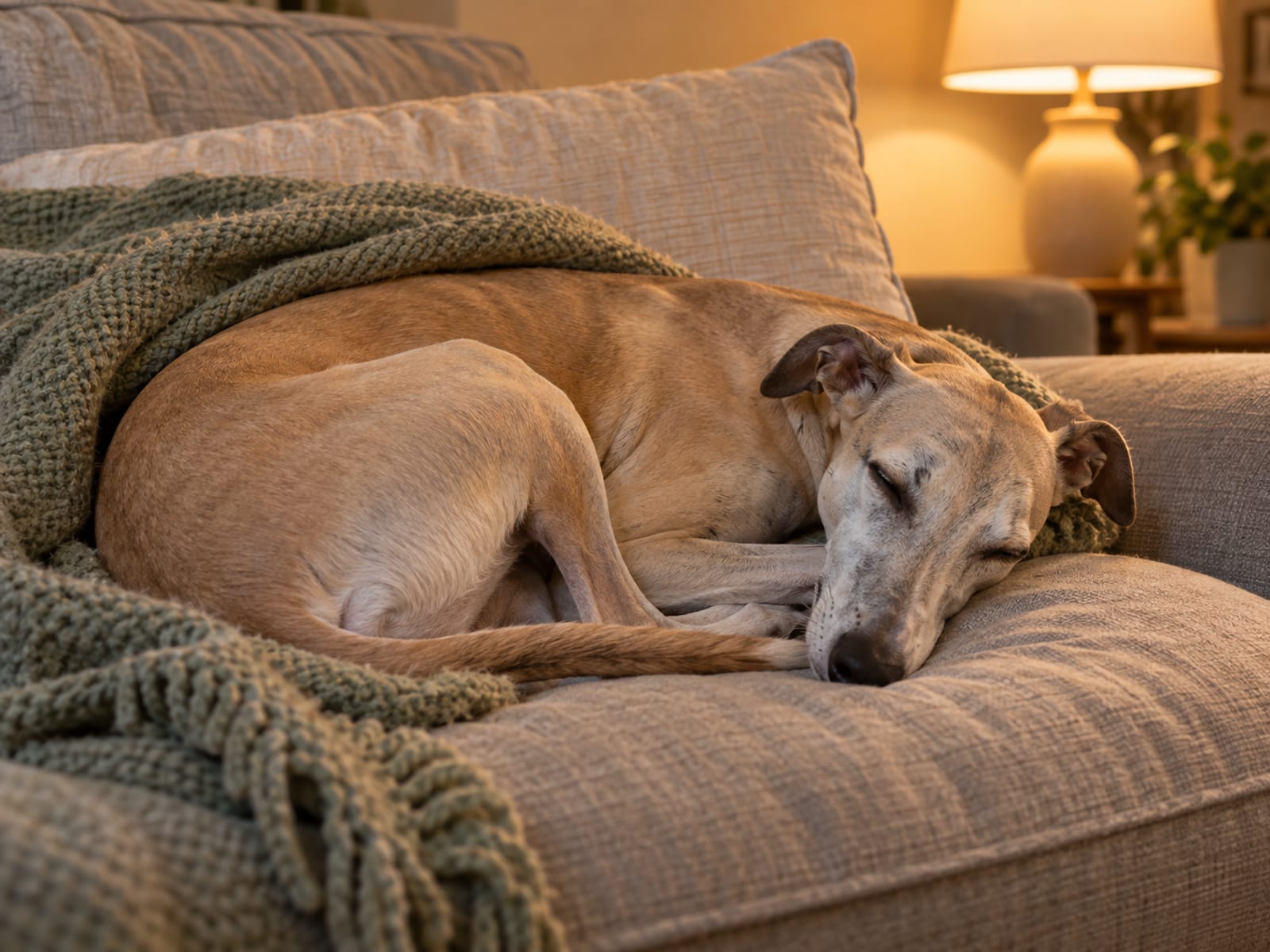
Usually, let the dog sleep. Touching, shaking or picking up a sleeping dog can startle it, and a dog that wakes suddenly may be confused and may scratch or bite without meaning to. AKC warns about this, and the AVMA puts it in its bite-prevention material for families: "Let a dog sleep. Never wake up a sleeping dog by poking, pushing or hitting it."
If there is a real reason to wake your dog, say its name or make a sound from a short distance. Keep your hand away from its face, and give it a moment to figure out where it is before you touch it.
Children need this rule more than anyone. Teach them to give a sleeping dog space. If you have a dog-safety lesson in mind for the household, a dog trainer can teach everyone how to respect a dog's rest. Our dog body language article covers the stiffness, avoidance and stress signals a dog may show right after waking.
How do we know dogs dream?
Start with what can be measured. Dogs cycle through wakefulness, drowsiness, non-REM sleep and REM sleep, and researchers can tell those stages apart on an EEG. A Hungarian study recorded 15 adult dogs with polysomnography and scored each stage in 20-second epochs. A 2017 study by Kis and colleagues followed 15 adult pet dogs through three-hour recordings. Dogs that had learned new commands showed different sleep EEG patterns afterward, and some REM and non-REM measures were linked to how well they performed after sleeping. That supports sleep-related memory processing in dogs. It did not record a dream. A 2018 study by Kovács and colleagues looked at rapid eye movement density in dogs and found REM features broadly comparable to other mammals.
The best-known dream evidence comes from rats, not dogs. Louie and Wilson, in Neuron in 2001, recorded hippocampal neurons while rats ran a track and again during later REM sleep. The analysis covered three rats. Their REM activity replayed patterns from the earlier run, which is evidence of memory replay. Ji and Wilson, in 2007, found coordinated replay between the hippocampus and the visual cortex. Neither study shows that a rat had a conscious, visual dream, and neither involved a dog.
So, here is what is supported: dogs enter REM sleep, EEG identifies the stages, and sleep is tied to memory-related brain activity. A dog can't tell us it dreamed, and that is why I say "probably."
What do dogs dream about?
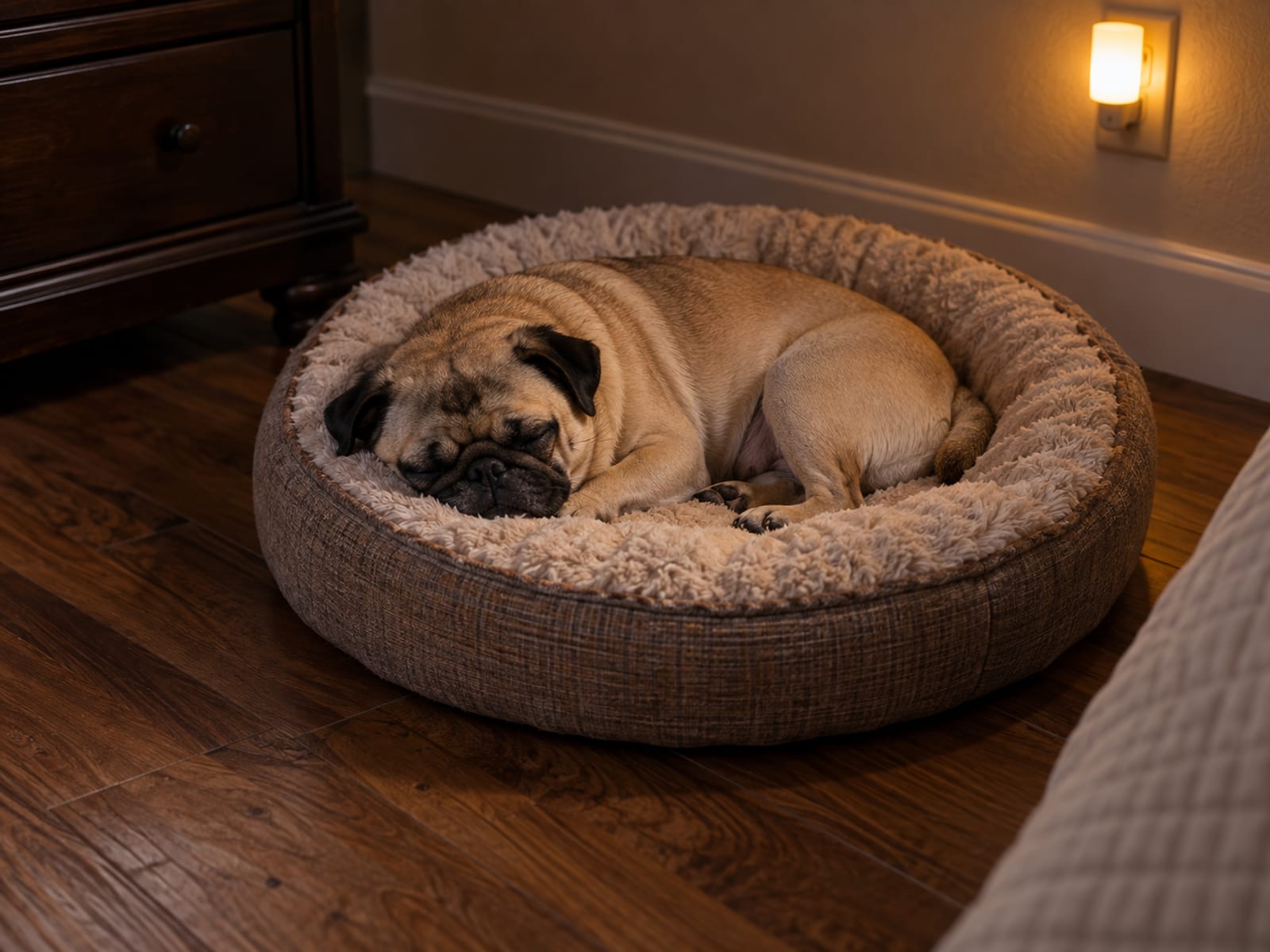
No one knows. No study has recorded a dog's dream content. Everyday experiences such as moving, playing, meeting people and practicing learned tasks are a reasonable theory, because dogs show memory-related changes in sleep and rats replay their days. A theory is all it is.
That means a twitching paw does not tell you your dog is chasing a rabbit, and a bark does not tell you it saw a squirrel. It also means a whimper is not proof of a bad dream. If the episode is brief and relaxed, I'd enjoy the show and let your dog be.
Why do dogs twitch, paddle, whimper or bark in sleep?
During REM sleep the body's muscles go quiet, but not completely, and small bursts of movement slip through. That is why you see paw twitches, leg paddling, facial movement, tail movement, eyes moving under the lids, whimpers and little barks. REM sleep also comes with lower muscle tone and irregular breathing, so don't be surprised by a few quick breaths.
The first REM period often starts around 20 minutes after a dog falls asleep, though the timing varies with age, size and surroundings. Adult dogs sleep at least about half of each day, according to VCA, and puppies roughly 10 to 14 hours.
Puppies often look especially twitchy, and some senior dogs move more in their sleep too. One explanation is that the systems that limit big muscle movements during REM are still developing in puppies and become less efficient with age. That is a theory, not a full answer for every dog. VCA says puppies may make small yipping sounds and twitch, and that violent, prolonged or unusual episodes still deserve a call to the vet.
My older dog wakes or paces at night. Is that dreaming?
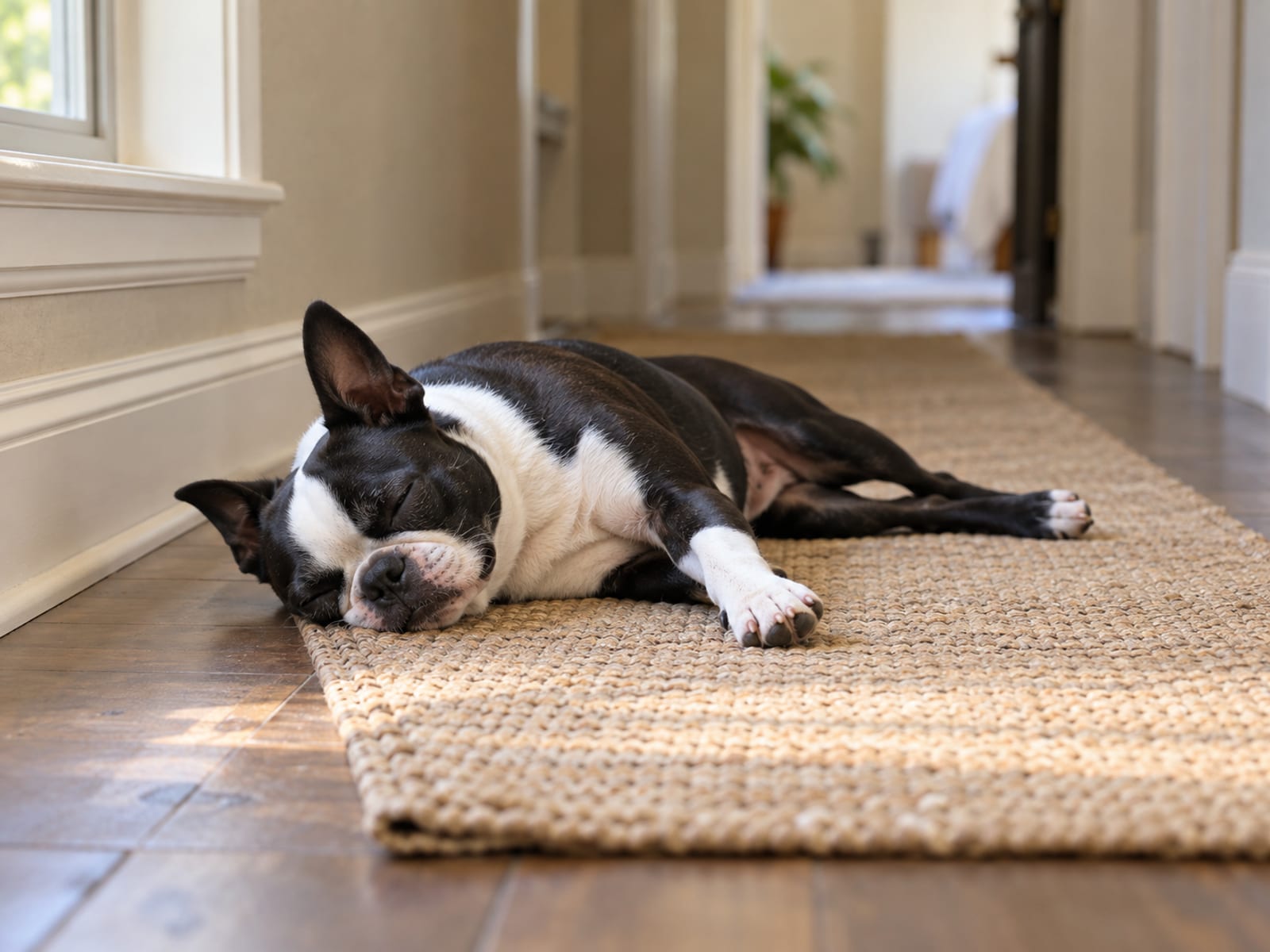
Not automatically. Older dogs may sleep more during the day and wake more at night, and new or worsening nighttime waking, pacing, vocalizing or confusion should not be filed under "dreams." AAHA's senior-care guidance lists daytime sleeping, nighttime restlessness and altered sleep-wake cycles among the signs of canine cognitive dysfunction, which it puts at roughly 14 to 22.5 percent of dogs older than eight. Pain, sensory decline, organ disease and other neurologic problems can look the same.
A veterinarian should look at a pattern that is new or getting worse. Our dog dementia article explains the night-time changes to watch for, and senior dog care covers comfort and age-related changes. It also helps to know your dog's normal baseline, and signs of a healthy dog shows you what to compare against. For everyday sleep sounds that are not movement at all, read why dogs sigh.
What should I record for the vet?
If an episode leaves you unsure, record it, as long as it is safe to do so. Keep your hands away from the mouth, and move furniture and sharp objects out of the way first. Then note these details so your vet can work with them:
- How long it lasted, timed on a clock.
- Whether the dog responded to your voice, without touching it.
- Body position and whether the body looked relaxed or rigid.
- The movement pattern, such as twitches, paddling or full-body shaking.
- Breathing changes.
- Drooling, urination or defecation.
- Whether it happened during sleep or while the dog was awake.
- How your dog acted afterward, including confusion, pacing or trouble standing.
Questions dog owners ask about dreaming
Do puppies dream more than adult dogs?
Puppies often show more sleep twitching, but no one has established how often every puppy dreams. Brief, relaxed twitching and small yips are normal for a puppy. Call your vet if an episode is violent, long or unusual.
What do dogs dream about when they whimper?
Researchers can't know. A whimper in REM sleep can come with normal small vocalizations and does not show fear or a nightmare. If the dog keeps crying, stiffens or can't be roused, treat it as a possible medical event and call your vet.
Why does my dog bark in its sleep?
Small barks and whimpers can happen in REM sleep and do not by themselves prove a nightmare. A bark that comes with a rigid body, heavy drooling or confusion afterward is a different situation, so check the table above.
Can I tell a dream from a seizure by waking my dog?
I wouldn't try. A dog in a seizure may not respond to your voice or touch, and a startled sleeper may scratch or bite. Watch, time it, video it if safe, and use the warning signs to decide whether to call.
Your next step
Watch the episode from a safe distance, time it, and let brief, relaxed movement run its course. If any warning sign from the table shows up, call your vet, and if a seizure lasts more than five minutes or keeps repeating, head to an emergency clinic right away. You can read more about seizures in dogs now, so you know the steps before you ever need them, or find a veterinarian and keep the number handy.
Sources
- American Animal Hospital Association: AAHA's senior-care guidance
- American Animal Hospital Association: AAHA
- American Kennel Club: AKC
- American Kennel Club: AKC
- American Veterinary Medical Association: AVMA
- doi.org: 2018 study by Kovács and colleagues
- nature.com: Ji and Wilson, in 2007
- PubMed: Louie and Wilson, in Neuron in 2001
- PubMed Central: 2017 study by Kis and colleagues
- PubMed Central: scored each stage in 20-second epochs
- VCA Animal Hospitals: VCA
- VCA Animal Hospitals: VCA
- VCA Animal Hospitals: VCA
- VCA Animal Hospitals: VCA