
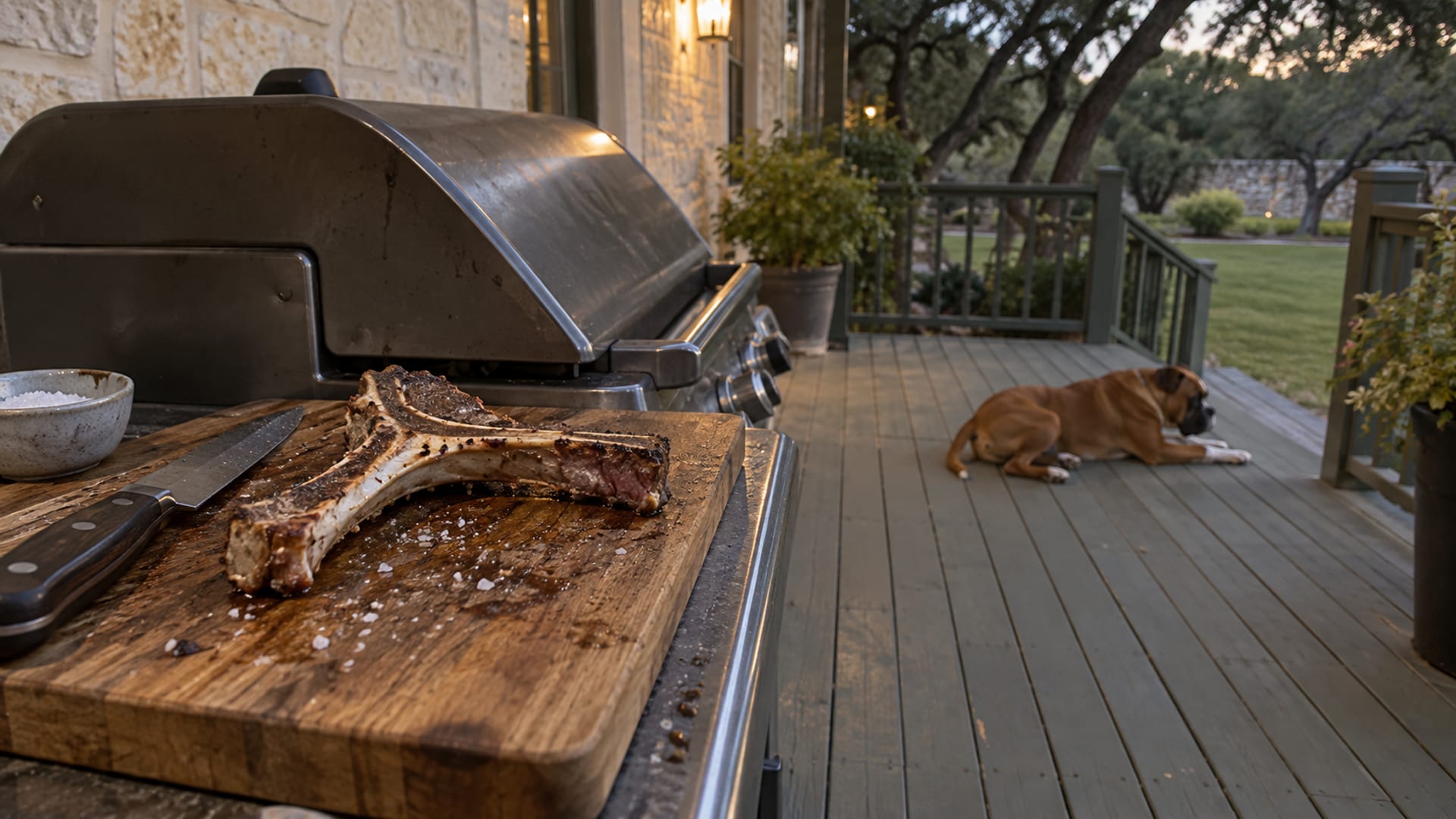
Not a cooked one. The bone from a grilled T-bone, a pan-seared ribeye or a leftover porterhouse is brittle, and the American Kennel Club warns that cooked bones can splinter into shards that choke a dog or damage the mouth, throat and intestines. A raw steak bone is less brittle, yet it can still lodge in the throat, crack a tooth, block the gut or carry bacteria, and vets disagree about whether dogs should have raw bones at all.
If your dog snatched a steak bone and swallowed any of it, call your vet for advice even if your dog looks fine. After a cooked bone, the AKC's advice in its bones guide is to "give your veterinarian a call for advice or schedule an appointment to rule out any serious outcomes." Choking, trouble breathing, repeated vomiting or collapse means emergency care right away.
Key takeaways
Tap a card to bring it forward.
- Grilled, pan-seared, roasted, smoked or fried steak bones are cooked bones. Keep them from your dog.
- Cutting a steak bone into small pieces makes choking more likely, according to the AKC.
- Raw steak bones splinter less, but they can still choke a dog, break teeth, block the gut and carry germs.
- The fat, drippings, butter and rubs on a steak bone bring their own problems, from pancreatitis to garlic.
- If your dog swallowed any of a cooked steak bone, call your vet without waiting for signs.
Right now: what to do when your dog has the steak bone
Tap or hover a row to highlight it.
| What is happening | What to do |
|---|---|
| What is happeningChoking, gagging, struggling to breathe, collapse | What to doEmergency vet now. Call on the way if you can. |
| What is happeningSwallowed a chunk or fragment of a cooked bone | What to doCall your vet now for advice, even if your dog seems normal. |
| What is happeningThe whole bone is gone | What to doCall your vet now. |
| What is happeningSwallowed part of a raw steak bone | What to doCall your vet promptly, especially for a small dog or a big piece. |
| What is happeningOnly licked the bone or ate meat off it; bone is whole | What to doTake the bone away and watch for the signs below. |
| What is happeningThe steak had a garlic or onion rub, sauce or marinade | What to doTell your vet, or call a pet poison line about the seasoning. |
When you call, have ready your dog's weight, which cut it was, whether it was raw or cooked, how much of the bone is missing, what was on it, and when it happened.
Pet Poison Helpline explains that when a pet is already showing trouble and needs to be seen, it may tell you to head to a veterinary clinic right away and call from the road or after you arrive. A poison line is most useful for what came with the bone, such as garlic, onion or a sauce. It does not replace a vet visit for choking or signs of a blockage.
T-bone, ribeye, porterhouse: cooked versus raw
Tap or hover a row to highlight it.
| Form | Verdict | What to know |
|---|---|---|
| FormAny cooked steak bone: grilled, pan-seared, roasted, smoked, fried | VerdictAvoid | What to knowCooking makes the bone brittle and prone to splintering |
| FormSteak bone cut into small pieces | VerdictAvoid | What to knowThe AKC calls cut-up bone pieces a more immediate choking hazard |
| FormRaw steak bone from the butcher | VerdictCaution | What to knowLess brittle; still choking, blockage, tooth and bacteria risks |
| FormFat, marrow and drippings on the bone | VerdictCaution | What to knowRich fat can trigger stomach upset and pancreatitis |
| FormButter, salt rub, garlic, onion, sauce | VerdictAvoid | What to knowGarlic and onion can be toxic; salty or fatty extras add illness risk |
The AKC's cookout food guide covers grilled steak directly and says not to hand over the cooked bones. The cooking method does not change that answer: a smoked or pan-seared bone is still a cooked bone.
What coats the bone can matter as much as the bone. Garlic and onion are toxic to dogs; see can dogs eat garlic and can dogs eat onions if your steak had either. A plain piece of lean steak meat, cut away from the bone and fat, is a separate question from the bone.
The raw bone debate, and the careful choice
The AKC lays out both sides. Supporters of raw feeding say raw meaty bones are digestible and do not splinter the way cooked ones do. The opposing view holds that dogs should get no bones, raw or cooked, because the potential harm outweighs any benefit. The AKC itself warns that raw bones can carry Salmonella or E. coli and that hard raw bones can damage teeth, and it tells owners to ask their own veterinarian.
Three facts shape the careful choice:
- A raw bone is still a foreign object. The Merck Veterinary Manual makes no raw versus cooked distinction when it describes how swallowed objects can partly or fully block the gut, tear through it, or need removal with a scope or surgery.
- Raw means germs in the kitchen. In the FDA's sampling of raw pet foods, 7.7% tested positive for Salmonella and 16.3% for Listeria, and the agency cites a study in which half of the dogs fed a Salmonella-contaminated raw diet shed the bacteria. Those numbers come from commercial raw foods, not steak bones.
- The fridge does not clean it. Freezing or refrigerating does not kill Salmonella or Listeria, according to the FDA.
So, the careful choice is no cooked steak bones ever, and no raw one unless your own vet has weighed in for your dog. Raw avoids the brittleness of cooking. It keeps the rest.
Signs that mean call now
Tap or hover a row to highlight it.
| What you see | What it can mean |
|---|---|
| What you seeChoking, gagging, coughing, heavy drooling, trouble swallowing, mouth pain | What it can meanA piece in the mouth or throat, or an injury there |
| What you seeRepeated vomiting or bringing food back up, not eating, tiredness | What it can meanA blockage in the stomach or intestines |
| What you seeBelly pain or swelling, diarrhea, dehydration, weakness | What it can meanA blockage, or pancreatitis from the fat |
| What you seeStraining to poop with little or nothing coming out | What it can meanBone in the lower gut |
| What you seeCollapse or extreme weakness | What it can meanPossible shock: go now |
VCA Animal Hospitals points out that bones are not very digestible and can block the intestine, and names drooling, lost appetite, vomiting and straining to poop as reasons to call your vet. Merck notes that the signs of a blockage vary with where it is, how long it has been there and whether it is partial or complete, so there is no fixed number of hours to wait out. Left untreated, a blocked gut can lose its blood supply, and the tissue can die, leading to shock and death.
Fatty trimmings bring a separate risk. The Merck Veterinary Manual's pancreatitis chapter names dietary indiscretion, such as a dog eating rich food it does not normally get, as a common trigger, with vomiting, tiredness, diarrhea, poor appetite and belly pain among the signs.
"My dog has had steak bones at every cookout"
That may well be true, and for that dog, on those nights, nothing went wrong. It still is not a promise for the next steak or a different dog.
A lot of those good nights have simple explanations. The dog may have only licked the bone or pulled off the meat. It may never have swallowed a dangerous piece, or it may have passed a small smooth one; Merck notes that some small, smooth objects pass without surgery, while large round ones can block the gut completely. A raw bone behaves differently from a charred one. A Great Dane and a pug face the same bone very differently. And a dog can pick up bacteria from a raw bone and carry it without ever looking ill, per the FDA.
What cannot be seen in advance is which bone breaks sharp, which piece gets stuck, or which rich meal tips a dog into pancreatitis. Past cookouts do not predict that.
Dogs that need extra caution around steak bones
- Small dogs. Merck notes that even very small objects can block the gut of a small patient.
- Young large-breed dogs. Merck reports they are more likely than older dogs to end up with a foreign-body blockage in general.
- Dogs prone to pancreatitis. Merck lists high blood triglycerides, Cushing's disease (hyperadrenocorticism), diabetes and other illness among the things vets weigh. Skip the fat, marrow and drippings for these dogs.
- Homes with a pregnancy or a newborn. The FDA names pregnant people and newborns among those at higher risk from Listeria, one more reason to keep raw bones out of the house.
- Cats. Merck notes dogs swallow foreign objects more often than cats do, but cats can still choke on bones or get blocked. Keep the plates out of their reach as well.
Grill nights, doggy bags and related items
Steak bones usually go missing during cooking, at a cookout, or while the table is being cleared. Put bones straight into a lidded trash can, and keep restaurant leftovers in a closed container until you have taken the bone out.
- Beef bone broth and bone marrow are separate from a solid bone. Broth has no shards, though what went into it still matters, and marrow is mostly fat.
- Marrow, knuckle and soup bones are covered in beef bones.
- Other leftover bones from the same kind of meal: pork rib bones, pork bones, chicken bones and lamb bones. The overview of bones for dogs compares them all.
Check what you learned
Quick check
Questions about dogs and steak bones
Can dogs eat cooked steak bones?
No. The AKC says cooked bones are brittle and can splinter into shards that choke a dog or damage the mouth, throat and intestines.
My dog swallowed a cooked steak bone. Should I wait for symptoms?
No. The AKC advises calling your vet for advice or an appointment after a cooked bone, and blockage signs can take time to show depending on where the piece ends up.
Are raw steak bones safe because they don't splinter?
Not reliably. The AKC describes the raw bone debate but also warns that raw bones can carry Salmonella or E. coli and that hard raw bones can fracture teeth. The FDA documents bacteria in raw pet food and the risk to people in the home. Ask your vet first.
Can the fat on a steak bone cause pancreatitis?
It can be a concern, especially for dogs that have had pancreatitis or have high blood fats. Merck lists eating unusual rich food as a common risk factor. Trim the fat and skip the drippings.
Can my dog have a bite of the steak itself?
A small piece of plain, cooked, lean steak cut off the bone is a different matter from the bone. Leave off the fat, butter, salt rub, garlic and onion.
Sources
Checked September 24, 2026.
- American Kennel Club, Is It Safe for My Dog to Eat Steak Bones?
- American Kennel Club, Can Dogs Eat Bones? Be Careful Before Giving Your Pup a Bone
- American Kennel Club, Hazardous Cookout Foods for Dogs
- Pet Poison Helpline, Animal Poison Control Center: What to Expect
- Merck Veterinary Manual, Gastrointestinal Obstruction in Small Animals
- Merck Veterinary Manual, Pancreatitis in Dogs and Cats
- VCA Animal Hospitals, Summer Fun and Follies
- U.S. Food and Drug Administration, CVM Issues Assignment to Collect Official Samples of Raw Foods for Dogs or Cats
- U.S. Food and Drug Administration, Get the Facts! Raw Pet Food Diets can be Dangerous to You and Your Pet
- U.S. Food and Drug Administration, Think Food Safety and Be Salmonella Safe