
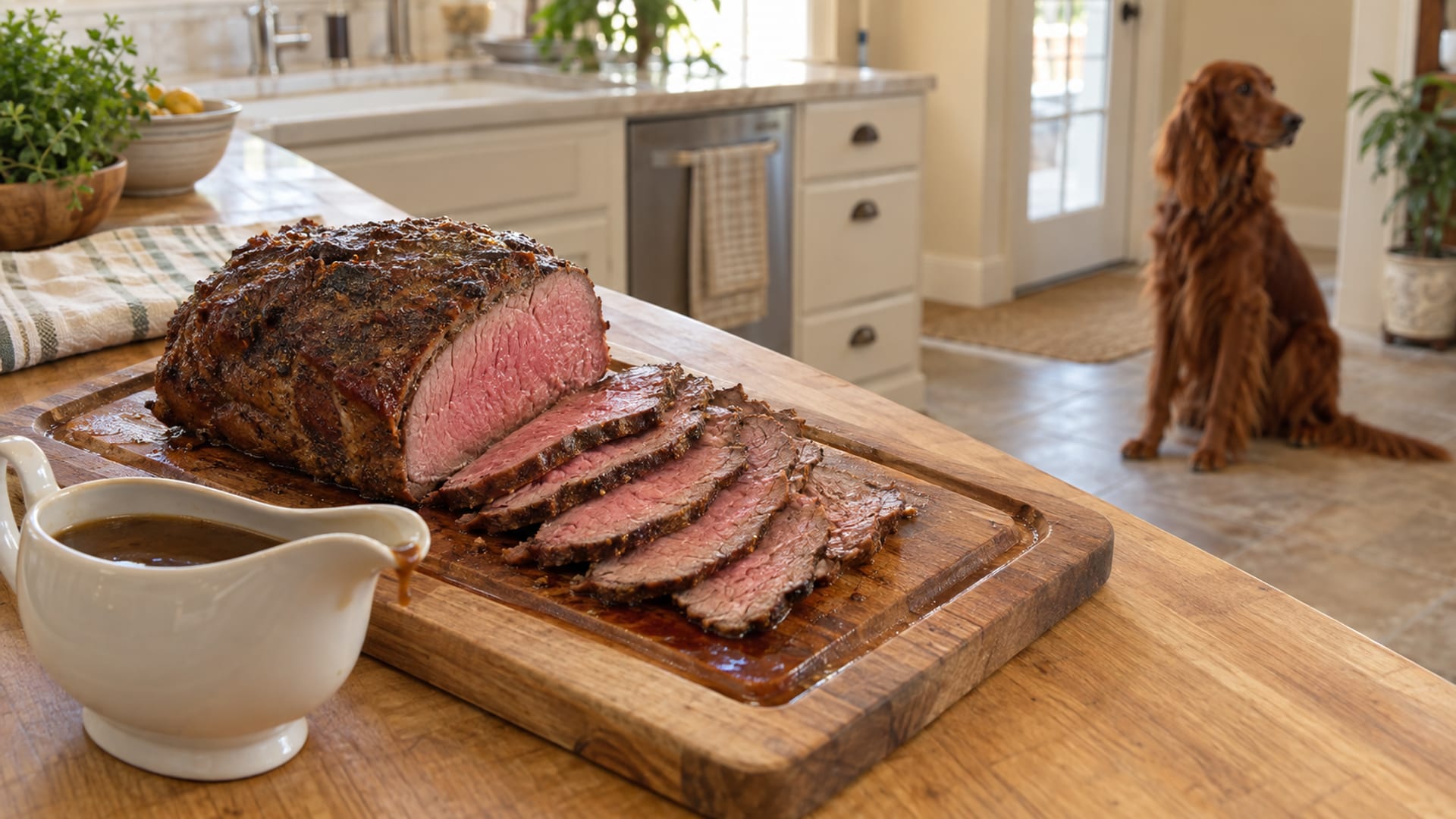
Yes, a small piece is fine if it is plain, lean, boneless and fully cooked. The trouble comes from what tends to ride along with roast beef: the fat cap, drippings and gravy, salt, onion and garlic, rare or raw meat, and the bone.
If your dog already grabbed a slice off the carving board or cleaned up a plate of leftovers, work out which of those it got. One lean bite usually just means keeping an eye on your dog. A fatty or seasoned plate, deli slices, raw beef, a bone or a large amount is worth a call to your vet today, and because Pet Poison Helpline reports that vomiting after a fatty meal usually starts 1 to 4 days later, keep watching for most of the week.
Key takeaways
Tap a card to bring it forward.
- A small piece of plain, lean, boneless, fully cooked roast beef is generally fine for a healthy dog.
- Fat, drippings and gravy can bring on vomiting, diarrhea or pancreatitis, sometimes 1 to 4 days later.
- Onion, garlic, heavy salt, raw meat and bones each carry their own risk on top of the beef.
- Call your vet for a large amount, a fatty or seasoned plate, deli or raw beef, any bone, or any sign of illness.
- Small dogs, Miniature Schnauzers and dogs that have had pancreatitis need extra care with fatty food.
If your dog already ate roast beef, start here
These questions sort a harmless nibble from a plate worth calling about, and they are the same details your vet will ask for.
- Put the rest out of reach. Clear the board, the gravy boat and any bones in the trash, so a second helping doesn't make things worse.
- Name the kind of roast beef. Home roast, pot roast, deli slices, a sandwich, raw beef and dried beef carry different risks, and the recipe or label shows whether onion, garlic or a lot of salt went in.
- Estimate how much, and how much was fat. A lean slice is a different meal from a fat cap or a bowl of drippings, and the same piece counts for more in a small dog.
- Look for a missing bone. A cooked bone can splinter, lodge in the throat or block the gut, which turns watching into calling.
- Write down the time. Signs from a fatty meal can arrive days later, and your vet will count from the meal.
- Call before you treat anything at home. Pet Poison Helpline asks owners to speak with them or a veterinarian before giving any medicine or home treatment, and its first-aid advice steers owners away from oil, grease, butter and salt.
For one small piece of plain, lean, cooked roast beef in a dog acting like itself, a poison-control call usually isn't needed. Watch your dog over the next few days, and call your vet if signs appear or if your dog has had pancreatitis or another condition that limits its diet.
Which kinds of roast beef are lower risk and which are not
Plain cooked beef has nothing in it known to be toxic to dogs, and the AKC recommends plain, fully cooked meat without salt, oils or seasoning. The risk climbs with each thing added.
Tap or hover a row to highlight it.
| Form | What to do | Why |
|---|---|---|
| FormPlain, lean, boneless, fully cooked | What to doFine in a small piece | WhyNot toxic to dogs |
| FormFat cap, trimmings, drippings | What to doCaution | WhyVomiting, diarrhea or pancreatitis |
| FormGravy or pan sauce | What to doCaution | WhyFat and salt, often onion or garlic |
| FormPot roast | What to doCaution | WhyOften onion, garlic, gravy and fatty drippings |
| FormDeli roast beef or a sandwich | What to doCaution | WhyAdded salt, preservatives, sauces, seasonings |
| FormRare or raw beef, including freeze-dried raw | What to doCaution | WhySalmonella, harmful E. coli, parasites |
| FormStore-bought beef jerky | What to doCaution | WhyOften salty or seasoned |
| FormBeef cooked with onion or garlic | What to doAvoid | WhyOnion and garlic are toxic to dogs |
| FormCooked roast bone | What to doAvoid | WhyCan splinter, choke, block or tear the gut |
| FormRaw bone | What to doCaution | WhyBlockage, broken teeth, gut injury, germs |
Fat is the usual trouble at a family dinner. Pet Poison Helpline explains that fatty table foods usually aren't poisonous but can cause stomach upset or pancreatitis, a painful inflammation of the pancreas that can be severe and sometimes fatal. Drippings and trimmed fat are that risk in concentrated form, and gravy adds salt and often onion or garlic.
Raw and rare beef bring germs instead. The Merck Veterinary Manual lists Salmonella, harmful E. coli and parasites among the risks of raw meat and notes that freezing and freeze-drying don't kill all of them. A 2018 study in Veterinary Record found bacteria and parasites that can pass to people in raw meat-based diets for dogs and cats. The Raw meat entry goes further.
Bones are a separate hazard, however plain the meat was. The Pet Poison Helpline food guide lists choking, blockage and gut injury among bone hazards; see Beef bones for roast and soup bones. For seasoning, the AKC lists onion and garlic among foods dogs shouldn't eat, and how much reached your dog depends on the recipe, so have it handy when you call. The Onions and Garlic entries cover each one.
Sharing a plain piece, and when the amount starts to matter
To share, cut a piece from the lean middle before any gravy goes on, trim every bit of visible fat and check for bone. The AKC suggests small, bite-sized amounts of plain human food. Keep it an occasional extra, since roast beef doesn't replace a complete and balanced dog food, and ask your vet first if your dog is on a weight-loss or low-fat plan.
That advice covers plain cooked meat only. Once the beef is fatty, seasoned, raw, salt-preserved or on the bone, the question becomes whether to call, and two numbers help.
Tap or hover a row to highlight it.
| What | Figure | Source |
|---|---|---|
| WhatSalt (sodium chloride) eaten | Figure1.5 g per pound of body weight, about 3.3 g per kg | SourcePet Poison Helpline |
| WhatVomiting after a fatty meal | FigureUsually 1 to 4 days after eating | SourcePet Poison Helpline |
The salt figure from Pet Poison Helpline describes salt itself, so it only helps with salty deli meat, jerky or salt-preserved beef when you know the product's sodium content. For fat, raw beef and seasoning, call with the details ready: your dog's weight, what the roast beef was, roughly how much is gone and when.
A small dog gets a bigger dose for its body weight from the same piece. Pet Poison Helpline names Miniature Schnauzers as more prone to pancreatitis than other breeds, though any dog can develop it after a big enough fatty meal. The Merck Veterinary Manual links pancreatitis in dogs with diabetes and high blood fats (hypertriglyceridemia), so those dogs, or dogs with past pancreatitis, should get their vet's advice before any roast beef.
Signs to watch for over the next few days
Mild reactions look like an ordinary upset stomach: vomiting, diarrhea, gas, a smaller appetite or a tired dog.
Fat follows a delayed pattern. Pet Poison Helpline reports vomiting that usually begins 1 to 4 days after a fatty meal, often with belly pain, diarrhea that may contain blood, poor appetite and low energy. Salt poisoning, according to Pet Poison Helpline, brings vomiting, diarrhea and thirst, then stumbling, confusion, tremors, seizures and collapse, and it can be fatal. Raw beef can cause diarrhea from Salmonella, and the Merck Veterinary Manual notes the infection can spread into the blood, called septicemia.
Call your vet or an animal poison line right away for any of these:
- Vomiting that keeps coming back
- Bloody diarrhea
- Belly pain, or a dog that is suddenly very weak or dull
- Stumbling, tremors, seizures or collapse
- Choking, gagging or trouble breathing, especially if a bone is missing
My dog ate roast beef before and was fine
If your dog has stolen roast beef before and been fine, that really happened. It just can't serve as a rule, because the next plate can differ in ways that matter.
That time, the amount may have been small, or your dog big enough that the slice was a low dose for its size. The piece may have been lean, plain and boneless, with little salt or fat. With raw beef, that portion may not have carried enough germs to cause illness. Dogs also differ from one another. And since fatty-meal signs can start 1 to 4 days later, a sick day midweek may never have been tied to the Sunday roast. Each new plate gets judged on what was actually in it.
Deli meat, pot roast and other things called roast beef
"Roast beef" covers several foods. Check the label or recipe for whether it was raw, cooked, salt-preserved, dried, seasoned, boneless and low in fat.
- Deli roast beef often has added salt, preservatives, broth and flavorings; see Lunch meat.
- Roast beef sandwiches can bring bread, sauces, cheese, onion or garlic.
- Pot roast is often cooked with onion, garlic and potatoes in fatty drippings and gravy.
- Corned beef and pastrami are salt-preserved, high-salt and usually heavily seasoned; see Corned beef and Pastrami.
- Beef jerky is dried and often salty or seasoned; see Beef jerky.
- Freeze-dried raw beef treats still count as raw meat for germs.
- "Roast beef flavor" dog foods and treats may contain flavoring instead of beef, so read the ingredient list.
Check what you learned
Three quick questions to check.
Quick check
Questions about dogs and roast beef
A few that come up after the first worry passes.
Is gravy okay if it was made without onion or garlic?
It still carries fat and usually plenty of salt, so it's a poor choice for sharing. If your dog got into jar or packet gravy, check the label for onion, garlic, salt and any additives containing xylitol before you call your vet.
Does raw roast beef matter more for a pregnant dog?
It can. The Merck Veterinary Manual notes that pregnant animals with salmonellosis may abort, so a pregnant dog that ate raw or rare beef is worth a call even without signs.
Can raw beef my dog ate affect my family?
The Merck Veterinary Manual explains that some dogs shed Salmonella while looking healthy, which can expose people at home. Wash your hands after cleanup and pick up the yard promptly.
Is roast beef a problem for cats too?
The same broad risks apply. The Merck Veterinary Manual describes raw-meat germs in both species, and fat and bones can cause stomach, pancreas and gut trouble in cats as well.
Sources
Checked September 25, 2026.
- American Kennel Club, Which Human Foods Can Dogs Eat and Which Are Dangerous?
- Merck Veterinary Manual, Dog and Cat Foods
- Merck Veterinary Manual, Salmonellosis in Animals
- Merck Veterinary Manual, Pancreatitis in Dogs and Cats
- Pet Poison Helpline, Is Table Food Poisonous for Dogs?
- Pet Poison Helpline, Pet Poison First Aid Misconceptions
- Pet Poison Helpline, Salt Is Toxic To Pets
- Pet Poison Helpline, Should You Give Salt to Your Dog?
- Pet Poison Helpline, Thanksgiving Pet Safety Tips
- Pet Poison Helpline and Nationwide, Toxic & Hazardous Food Guide for Pets
- Veterinary Record, Zoonotic bacteria and parasites found in raw meat-based diets for cats and dogs