

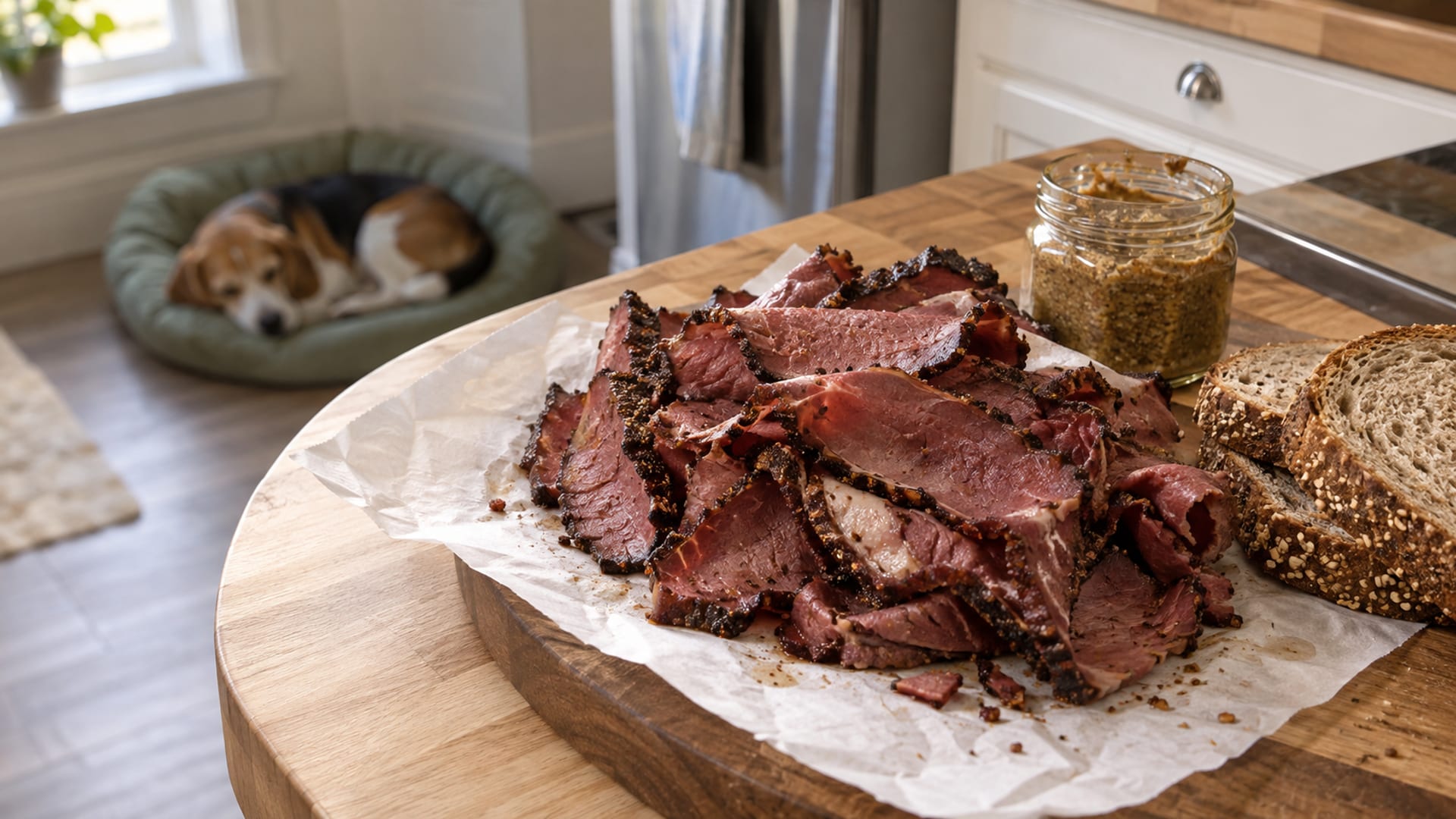
A bite of pastrami is unlikely to poison a healthy dog, but it is a meat to keep for yourself. Pastrami is cured, and the USDA's nutrient data lists about 1,010 milligrams of sodium in every 100 grams of beef pastrami. Salt is the reason a bigger helping can turn into a problem.
If your dog just pulled a sandwich off the coffee table, find out what was in it along with the meat: bread, cheese, pickles, sauce, onion. Estimate how much pastrami is gone and roughly when it happened. One slice in a healthy medium or large dog is usually a matter of watching at home with water nearby. A whole package, a small dog, or any sign of sickness is a reason to call your vet.
Key takeaways
Tap a card to bring it forward.
- A slice of pastrami is a low-risk accident for most healthy dogs.
- Salt is the main concern, with fat and seasoning close behind.
- Turkey pastrami is just as salty and gets the same caution.
- A sandwich brings extra risks from its bread, pickles, sauces and any onion or garlic.
- Thirst, vomiting, stumbling, tremors or seizures after a big helping need a vet.
My dog ate pastrami: what to do now
- Gather the evidence. Keep the package or wrapper and note whether it was beef or turkey, sliced thin or thick, plain or in a sandwich.
- Estimate how much and when. A slice is a very different event from half a pound.
- Weigh your dog, or use the last vet weight. Salt risk is worked out per kilogram of body weight.
- Put out plenty of fresh water. The Merck Veterinary Manual links salt poisoning most closely to too much sodium when water is limited.
- Call your vet or a pet poison line for a large or unknown amount, a whole package, dried or heavily seasoned pastrami, a very small dog, or any symptoms.
The ASPCA tells owners who suspect their pet ate very salty food to note the amount and contact a vet or poison control. There is no home fix to try first. Pet Poison Helpline explains that care depends on the dog's condition, blood sodium level, how much was eaten and how long ago, which only a vet can check.
Beef, turkey, sandwich or spice rub: which pastrami matters most
Tap or hover a row to highlight it.
| What your dog ate | How concerned to be | Why |
|---|---|---|
| What your dog ateA slice of beef pastrami | How concerned to beLow for a healthy dog | WhyCured and salty, but a small amount |
| What your dog ateTurkey pastrami | How concerned to beSame as beef | WhyCured the same way and just as salty |
| What your dog ateSeveral slices or a whole package | How concerned to beCall your vet | WhyThe salt adds up fast, especially in a small dog |
| What your dog atePastrami jerky or dried scraps | How concerned to beCall your vet | WhyDrying packs more salt into each bite |
| What your dog ateFatty ends and trimmed fat | How concerned to beAvoid; call for a dog with pancreatitis history | WhyFatty food can upset the stomach and may bring on pancreatitis |
| What your dog ateThe spice rub on its own | How concerned to beCall if a lot was eaten | WhyMay hold salt, garlic, onion, pepper and sugar |
| What your dog ateA pastrami sandwich or pizza | How concerned to beCall your vet for a whole one | WhyBread, cheese, pickles and sauce add salt and other risks |
| What your dog ateWrapper, plastic or string | How concerned to beCall your vet | WhyCan choke a dog or block the gut |
Pastrami rubs differ from deli to deli, and some include garlic or onion. Both can harm a dog's red blood cells, so read the ingredients or ask where it came from. The entries on onions and garlic explain the signs.
For turkey pastrami, USDA FoodData Central data put a generic product at about 1,123 milligrams of sodium per 100 grams, so the switch to turkey does not lower the salt. Brands vary, which is why the package matters when you call.
How much pastrami is too much?
Pastrami differs too much in salt from one brand to the next for anyone to name a safe number of slices. The published figures are for table salt, and here is what they say. Merck reports that dogs can show signs of salt poisoning after about 2 to 3 grams of salt per kilogram of body weight, with about 4 grams per kilogram as a lethal dose. Pet Poison Helpline uses 1.5 grams per pound, close to 3.3 grams per kilogram.
A pastrami label shows sodium, and sodium is only part of salt, so the label number cannot be dropped straight into those formulas. Your vet can do that conversion with the package in hand. Keep the per-kilogram idea in mind, though: a Chihuahua reaches a risky dose on a fraction of what a Great Dane can take.
A few things push the risk up:
- A small body. The same slice is a far bigger dose for a toy breed.
- Little water. Merck names limited water as a key factor in salt poisoning.
- Dried or concentrated pastrami. Less water in the meat means more salt per bite.
- A dog on a low-salt diet for kidney or heart disease may handle salty food less well. Call before sharing anything salty.
- A history of pancreatitis. The ASPCA warns that high-fat foods can cause stomach upset and possibly pancreatitis.
Signs to watch for, and when they show up
Tap or hover a row to highlight it.
| When | What you may see | What to do |
|---|---|---|
| WhenFirst few hours | What you may seeThirst, peeing more, vomiting | What to doCall your vet if the amount was large or your dog is small |
| WhenWithin about 12 hours | What you may seeDiarrhea, low energy, weakness, wobbly walking | What to doCall your vet today |
| WhenAny time after a big amount | What you may seeTremors, seizures, odd behavior, collapse, trouble breathing | What to doEmergency vet now |
Merck notes that vomiting may start within several hours of too much salt. The ASPCA says signs of excess salt usually appear within 12 hours, and that dogs who recover typically do so within 24 to 72 hours. In severe cases, salt poisoning can cause brain swelling, seizures, coma and death, which is why a large amount deserves a call before any signs appear.
"My dog grabs pastrami off my plate all the time and is fine"
That may be exactly right for your dog, and a thin slice now and then in a big dog with a full water bowl is a small amount of salt. It is still not a rule for every dog or every day:
- The amount changes. A scrap is not the whole pound you brought home from the deli.
- The dog changes. A small dog, a puppy or a dog with kidney trouble takes more from each slice.
- The pastrami changes. Sodium differs by brand and cut, and dried pastrami concentrates it.
- Water changes. A dog without easy access to water handles salt worse.
- Signs take time. A dog that looks fine at dinner can be vomiting by morning.
- You may be guessing. It is easy to underestimate how much went missing from a plate.
A piece of plain cooked beef or turkey, with no seasoning, gives the same happy face at a fraction of the salt.
Pastrami, corned beef and other deli look-alikes
- Corned beef: a related cured beef with its own recipe, and often just as salty.
- Smoked meat: "smoked" describes how it was cooked. Check the sodium and ingredients.
- Roast beef and deli turkey: other deli meats, each with its own salt level. Read the label.
- Pastrami sandwich or pizza: the bread, cheese, pickles and sauces each count. See can dogs eat pickles? and can dogs eat bread?
- Pastrami-flavored dog treats: the flavor name tells you nothing about the salt. Judge the whole label.
- Raw brisket waiting to become pastrami: it is raw meat, with the germ concerns that come with it.
- Other salty cured meats: see can dogs eat ham? and can dogs eat salami?
Check what you learned
Quick check
Questions about dogs and pastrami
Can dogs eat one piece of pastrami?
A single piece is unlikely to reach a dangerous salt level in a healthy dog. It is still a poor treat, because pastrami is heavily salted and the amount varies by brand.
What if my dog ate a whole pastrami sandwich?
Write down how much, when, your dog's weight and everything in the sandwich, then call your vet or a pet poison line. Bread, cheese, pickles, sauces, onion, garlic and the wrapper all add to the picture.
How much pastrami is toxic to a dog?
There is no pastrami count that works for every dog. Merck's figures are for salt, about 2 to 3 grams per kilogram for signs and about 4 grams per kilogram as a lethal dose, and your vet can compare them with your package.
Can dogs eat turkey pastrami?
It carries the same concern. USDA data show generic turkey pastrami at about 1,123 milligrams of sodium per 100 grams, so keep it off the treat list too.
What symptoms can pastrami cause?
Too much salt can cause thirst, extra peeing, vomiting, diarrhea, weakness, tremors and seizures, and it can be fatal. The ASPCA says signs usually appear within 12 hours.
Sources
Checked September 24, 2026.
- USDA Agricultural Research Service, National Nutrient Database, Sausages and Luncheon Meats (Pastrami, beef, 98% fat-free)
- USDA Agricultural Research Service, FoodData Central
- Merck Veterinary Manual, Salt Toxicosis in Animals
- ASPCA, People Foods to Avoid Feeding Your Pets
- Pet Poison Helpline, Should You Give Salt to Your Dog?
- Pet Poison Helpline, Can Dogs Have Sea Salt?