
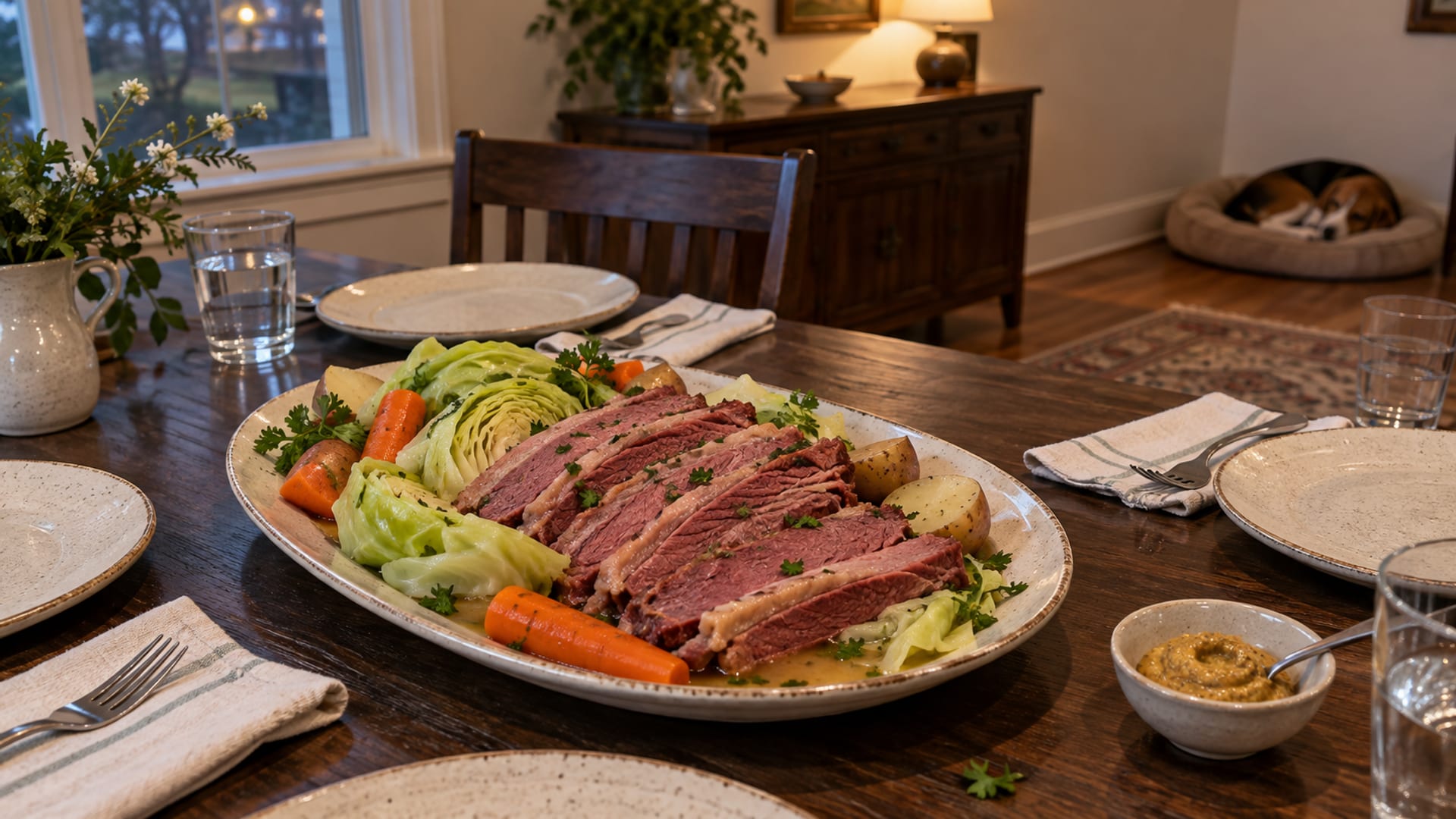
Corned beef should not be on your dog's treat list, but a small bite that slipped off the platter is unlikely to hurt a healthy dog. The "corned" part means the beef was cured in salt, and a USDA nutrient listing puts cooked corned beef brisket at about 973 mg of sodium and nearly 19 grams of fat in every 100 grams.
If your dog just ate some, work out what it was and how much. A slice of plain meat in a medium or large dog is usually something to watch at home. A pile of slices, a bowl of hash, a drink of the cooking brine, or a small dog is a reason to call your vet or a poison line.
Key takeaways
Tap a card to bring it forward.
- Corned beef is beef cured in salt. The salt and fat are the concern, and the beef itself is fine for dogs.
- One small bite is rarely a problem. Large amounts, brine, hash and dried or canned versions raise the risk.
- Small dogs, puppies and dogs with kidney disease or past pancreatitis need a call sooner.
- Salt poisoning signs usually appear within 12 hours: vomiting, thirst, weakness, stumbling, tremors.
- Plain cooked beef with no salt is the better way to share.
My dog ate corned beef: what to do now
- Check your dog first. Choking, gagging or trouble breathing needs a vet right away.
- Figure out what was eaten. Plain slices, fatty trimmings, a sandwich, hash, canned corned beef and cooking liquid each carry different risks.
- Estimate the amount and note the time and your dog's weight. Keep any package so you can read the sodium and ingredient lists.
- Call your vet or a poison line if it was more than a small taste, if your dog is small or has kidney or pancreas problems, or if a bone, onion, garlic or unknown seasoning was involved. Pet Poison Helpline advises calling a poison line or getting veterinary care if you think your pet ate something toxic.
- Make sure fresh water is available. The Merck Veterinary Manual ties salt poisoning closely to how much water a dog can drink.
Do not give salt, hydrogen peroxide or medicine at home unless a vet tells you to.
Slices, hash, cans and brine: which is worse
Tap or hover a row to highlight it.
| What your dog ate | How concerned to be | Why |
|---|---|---|
| What your dog ateA small bite of cooked corned beef | How concerned to beLow for a healthy dog | WhyA little salt and fat for the dog's size |
| What your dog ateSeveral slices, or leftovers from the platter | How concerned to beCall your vet, especially for a small dog | WhySalt and fat add up |
| What your dog ateThe fat cap or fatty trimmings | How concerned to beWatch; call if your dog has had pancreatitis | WhyFat can upset the stomach and may trigger pancreatitis |
| What your dog ateCooking liquid or brine | How concerned to beCall your vet | WhyBrine can hold even more salt than the meat |
| What your dog ateCanned corned beef | How concerned to beRead the label; call for a large amount | WhySodium, fat and seasoning vary by product |
| What your dog ateCorned beef hash | How concerned to beCall your vet if it was a lot | WhyCan add onion, garlic, extra salt and fat |
| What your dog ateRaw corned beef | How concerned to beAvoid; call for a large amount | WhyStill salty, and raw meat can carry *Salmonella* and *E. coli* |
| What your dog ateDried corned beef or corned beef jerky | How concerned to beCall your vet | WhyDrying packs more salt into each bite |
| What your dog ateA bone from the roast | How concerned to beCall your vet | WhyBones can choke, splinter or block the gut |
Onion and garlic are separate hazards that turn up in hash and some sandwiches. Can dogs eat onions? and can dogs eat garlic? explain the red blood cell damage they cause. If a bone went down, can dogs eat beef bones? covers what to watch for.
How much corned beef is too salty
Merck reports that dogs can show signs of salt poisoning after about 2 to 3 grams of salt per kilogram of body weight, and that about 4 grams per kilogram can be fatal. Those figures are for salt, and a corned beef label lists sodium, which is a different number. Water access, how fast the food went down, age and health all move the line as well.
What the figures make clear is that size matters. The same three slices are a much bigger salt dose for a 10-pound dog than for a 70-pound one. Dogs with kidney disease handle sodium and water less well, so the same meal is more worrying for them.
Fat is the second concern. For dogs with high blood triglycerides or pancreatitis that keeps coming back, a 2025 review in the Journal of the American Veterinary Medical Association notes that a low-fat diet is recommended. If your dog is on one, a fatty slice of corned beef is worth a call even without signs.
Signs of salt trouble and when they start
Tap or hover a row to highlight it.
| When | What you may see | What to do |
|---|---|---|
| WhenWithin several hours | What you may seeVomiting, diarrhea, drinking or peeing much more than usual | What to doCall your vet |
| WhenUsually within 12 hours of a large amount | What you may seeWeakness, low energy, stumbling, confusion, tremors, seizures | What to doSee a vet now |
| WhenA day or more after a fatty meal | What you may seeRepeated vomiting, belly pain, not eating, low energy | What to doPossible pancreatitis; call your vet |
The ASPCA says signs of salt toxicity usually show within 12 hours, and that dogs who recover typically do so within 24 to 72 hours. Merck notes that vomiting can come first, followed by weakness, diarrhea, muscle tremors and seizures. Pet Poison Helpline advises contacting your vet as soon as any of those signs appear.
"We always give the dog a slice on St. Patrick's Day"
That can be true, and plenty of dogs have had a holiday slice without a problem. One slice of lean meat in a big, healthy dog with water nearby is a small amount of salt for its body weight. Another corned beef, another cut, or another dog can turn out differently. Brands differ in salt. A slice from the fatty end carries more fat. A small dog, a puppy, or an older dog with weak kidneys gets less room for error. Salt signs also take hours to build, so a dog that looks fine as the table is cleared may not be finished. So, if a holiday slice is a tradition in your house, keep it small and lean, and put the brine and the hash where your dog cannot reach them.
The USDA notes that corned beef and cabbage is a St. Patrick's Day staple, which is why a lot of dogs meet it in March.
Pastrami, Reubens and other look-alikes
- Fresh beef brisket that has not been cured is a different food. Plain, lean, cooked brisket is covered in can dogs eat brisket?
- Pastrami is cured beef that is also seasoned and smoked, and it is just as unsuitable as a treat.
- Reuben and corned beef sandwiches add bread, cheese, dressing and sauerkraut, and sometimes onion or garlic.
- Canned corned beef and canned beef products differ from deli corned beef, so read that label's sodium and ingredients.
- Beef jerky and dried beef can be saltier by weight. Can dogs eat beef jerky? covers them.
- Ham and hot dogs are other cured meats with the same salt concern. See can dogs eat ham? and can dogs eat hot dogs?
Check what you learned
Quick check
Questions about dogs and corned beef
Can dogs eat a small piece of corned beef?
A tiny piece is unlikely to hurt a healthy dog. It is still a poor treat, because salt and fat vary from one corned beef to the next.
What if my dog drank corned beef brine?
Brine can be saltier than the meat. Call your vet or a poison line for a noticeable or unknown amount, especially for a small dog or if any signs start.
Can dogs eat canned corned beef?
It is best avoided. Canned corned beef is a processed product, and its sodium, fat and seasoning depend on the label.
Can dogs eat corned beef hash?
Avoid it. Hash can combine a lot of salt and fat with onion or garlic, which can damage a dog's red blood cells.
What signs mean corned beef made my dog sick?
Vomiting, diarrhea, unusual thirst, weakness, low energy, stumbling, tremors, seizures, collapse or odd behavior. Any of these after corned beef needs a call to your vet right away.
Sources
Checked September 24, 2026.
- USDA Agricultural Research Service, Beef, cured, corned beef, brisket, cooked (nutrient data)
- Merck Veterinary Manual, Salt Toxicosis in Animals
- ASPCA, People Foods to Avoid Feeding Your Pets
- Pet Poison Helpline, Salt
- Pet Poison Helpline, Sodium Toxicity Symptoms in Pets
- Journal of the American Veterinary Medical Association, High fat, high risk? Evaluating the strength of evidence linking dietary fat and pancreatitis in dogs (2025)
- U.S. Department of Agriculture, Corned Beef and Cabbage