
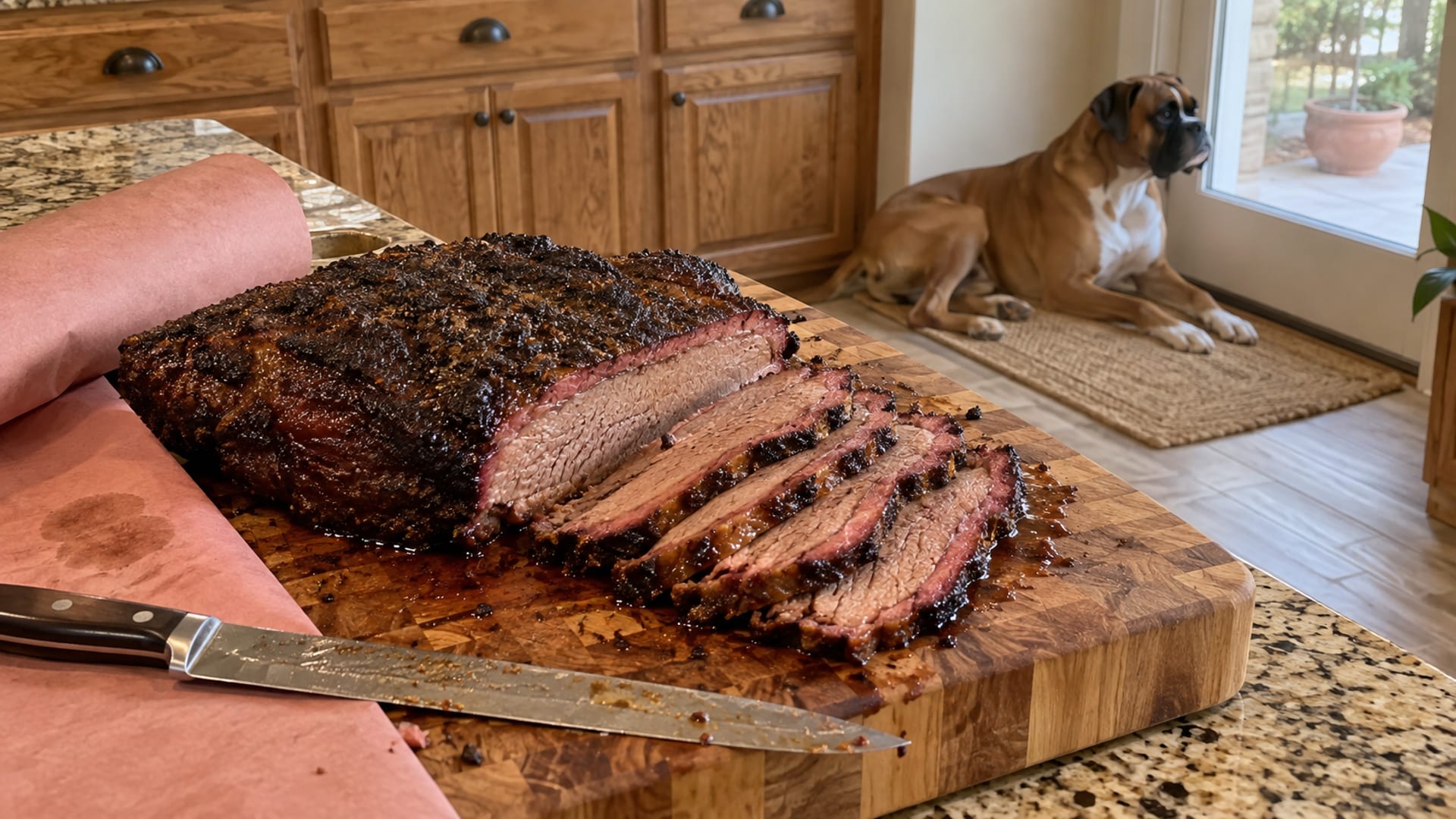
A small piece of lean, plain, cooked brisket is fine for most dogs as an occasional treat. Beef brisket has no ingredient that is toxic to dogs. The trouble comes from how it is usually cooked and served: the ASPCA warns that fatty barbecue food can trigger pancreatitis and that onion and garlic in rubs and sauces are toxic to dogs.
If your dog just helped itself at the cutting board, work out what it got. A lean slice with no bark or sauce is usually a watch-at-home event. A pile of fat trimmings, a rub or sauce with onion or garlic, a bone, raw meat, or a small dog is a reason to call your vet.
Key takeaways
Tap a card to bring it forward.
- Lean, plain, cooked, boneless brisket is a low-risk bite for most dogs.
- The fat cap, trimmings and drippings are the biggest worry because fat can set off pancreatitis.
- Brisket rubs and barbecue sauces often contain onion or garlic powder, which harm red blood cells.
- Raw brisket can carry *Salmonella* and *Listeria*, and bones can choke or block the gut.
- Dogs that have had pancreatitis, and breeds prone to it, should skip brisket fat entirely.
My dog got into the brisket: what to do now
- Check for choking first. Gagging, pawing at the mouth or trouble breathing after gulping a big piece or a bone needs a vet right away.
- Put the rest out of reach and look at what is missing: lean slices, fat, bark, sauce, drippings or bones.
- Find out what went into the rub, marinade or sauce. Onion, garlic and a lot of salt each change the answer.
- Note the amount, the time and your dog's weight.
- Call your vet or a poison line for a large or unknown amount, a lot of fat or grease, anything with onion or garlic, a heavily salted or cured brisket, a bone, or a dog with a history of pancreatitis. Pet Poison Helpline advises calling if you think your pet ate something toxic.
A dog that ate a small piece of plain cooked brisket and seems normal can usually be watched at home. Call your vet if any signs start.
Lean slice, fat cap, bark and bones: what matters
Tap or hover a row to highlight it.
| What your dog ate | How concerned to be | Why |
|---|---|---|
| What your dog ateA bite of lean, plain, cooked brisket | How concerned to beLow | WhyBeef with little fat and no seasoning |
| What your dog ateThe fat cap or a pile of trimmings | How concerned to beCall your vet if it was a lot | WhyFatty food may trigger vomiting, belly pain or pancreatitis |
| What your dog ateDrippings, grease or au jus | How concerned to beCall your vet if it was a lot | WhyConcentrated fat, and sometimes salt and onion |
| What your dog ateBark or slices with a rub | How concerned to beCheck the rub | WhyRubs often use onion powder, garlic powder and salt |
| What your dog ateBrisket with barbecue sauce | How concerned to beCheck the sauce | WhySauces can hold onion, garlic and salt |
| What your dog ateRaw brisket | How concerned to beAvoid | WhyRaw beef can carry *Salmonella* and *Listeria* |
| What your dog ateFreeze-dried or dehydrated raw brisket treats | How concerned to beRead the label | WhyStill a raw product unless the label shows a germ-killing step |
| What your dog ateA brisket bone | How concerned to beCall your vet | WhyBones can choke, injure the mouth or block the gut |
The CDC does not recommend raw animal protein for pets because of germs like *Salmonella* and *Listeria*, and it counts freeze-dried and dehydrated raw foods in that group. The ASPCA identifies garlic as toxic to dogs. Can dogs eat onions? and can dogs eat garlic? explain what those seasonings do, and can dogs eat beef bones? covers the bone risk in more detail.
How to share brisket, if you choose to
No vet source gives a brisket serving size by weight. The ASPCA's cookout advice is to share only small amounts of food that has no toxic ingredients. For brisket, that means:
- Cut a small piece from the lean end, with no bark, rub, sauce or fat.
- Make sure it is fully cooked and has no bone in it.
- Keep it occasional, and smaller for a small dog.
- Skip it for dogs on a low-fat diet, dogs that have had pancreatitis, and dogs with diabetes or high blood fats unless your vet says otherwise.
The Merck Veterinary Manual lists eating things they should not, high blood triglycerides, diabetes and certain breeds among pancreatitis risk factors. The AKC names Miniature Schnauzers and some small toy and terrier breeds as higher risk.
Signs to watch for after brisket
Tap or hover a row to highlight it.
| When | What you may see | What it can mean |
|---|---|---|
| WhenRight away | What you may seeGagging, drooling, pawing at the mouth, trouble breathing | What it can meanA piece of meat or bone is stuck. See a vet now. |
| WhenWithin hours | What you may seeVomiting, diarrhea, low appetite | What it can meanUpset stomach from fat or rich food |
| WhenOver the next few days | What you may seeRepeated vomiting, belly pain, lethargy, fever, can't keep water down | What it can meanPossible pancreatitis or blockage; call your vet |
| WhenSeveral days later | What you may seeWeakness, pale gums, panting, fast heartbeat, red urine | What it can meanRed blood cell damage from onion or garlic; call your vet |
| WhenHours after a very salty cut | What you may seeTremors, stumbling, seizures | What it can meanSalt poisoning; see a vet now |
Merck notes that severe pancreatitis can spread inflammation through the body and can be fatal. Onion and garlic damage builds slowly, which is why a dog that ate heavily seasoned bark needs watching for several days.
"My dog gets the brisket trimmings every cookout"
That can be true, and many dogs have eaten cookout scraps without a problem. A few trimmings in a big, healthy dog may simply pass as a small amount of fat. That does not make the habit safe. Merck notes that many pancreatitis cases have no clear cause, so one dog's clean record says little about the next meal. A smaller dog, an overweight dog, or one of the prone breeds can react to the same plate. A new rub may carry garlic the last one did not. Pancreatitis and onion damage can take days to show, and dogs can carry *Salmonella* or *Listeria* from raw meat without looking sick, according to the FDA. So, if cookout scraps are a tradition, trade the trimmings for a small piece of plain lean meat.
Corned beef, deli brisket and other look-alikes
- Corned beef is brisket cured in salt. Can dogs eat corned beef? covers the salt risk.
- Pastrami and deli brisket are cured or seasoned and are poor treats.
- Brisket jerky or dried beef made for people can be salty and seasoned. See can dogs eat beef jerky?
- "Brisket flavor" dog treats may not contain plain brisket at all, so read the full label and check for recalls.
- Brisket broth changes with what went into it; onion, garlic, salt and fat all matter.
Check what you learned
Quick check
Questions about dogs and brisket
Can dogs eat cooked brisket?
Yes, a small piece of lean, plain, fully cooked brisket with no bone. Trim off the fat and any rub or sauce first, and keep it occasional.
Can dogs eat brisket fat?
It is best avoided. Fatty food can cause vomiting, diarrhea and belly pain, and may contribute to pancreatitis, especially in dogs that have had it before.
What if my dog ate brisket with onion or garlic?
Call your vet or a poison line, especially for a large or unknown amount. Both seasonings can harm red blood cells, with signs that may not show for several days.
Can dogs eat raw brisket?
The CDC does not recommend feeding raw animal protein to pets, because raw beef can carry *Salmonella* and *Listeria*. Cook it plain first if you share it.
What if my dog ate a brisket bone?
Call your vet for advice. Bones can choke a dog, injure the mouth or gut, or cause a blockage, and the right next step depends on the size of the bone and the dog.
Sources
Checked September 24, 2026.
- ASPCA, What BBQ Staples are Dangerous to My Pet?
- ASPCA, Be On the Lookout at Your Cookout
- ASPCA, Garlic
- Centers for Disease Control and Prevention, About Pet Food Safety
- U.S. Food and Drug Administration, Get the Facts about Listeria
- Merck Veterinary Manual, Pancreatitis in Dogs and Cats
- American Kennel Club, Pancreatitis in Dogs
- Pet Poison Helpline, Salt