
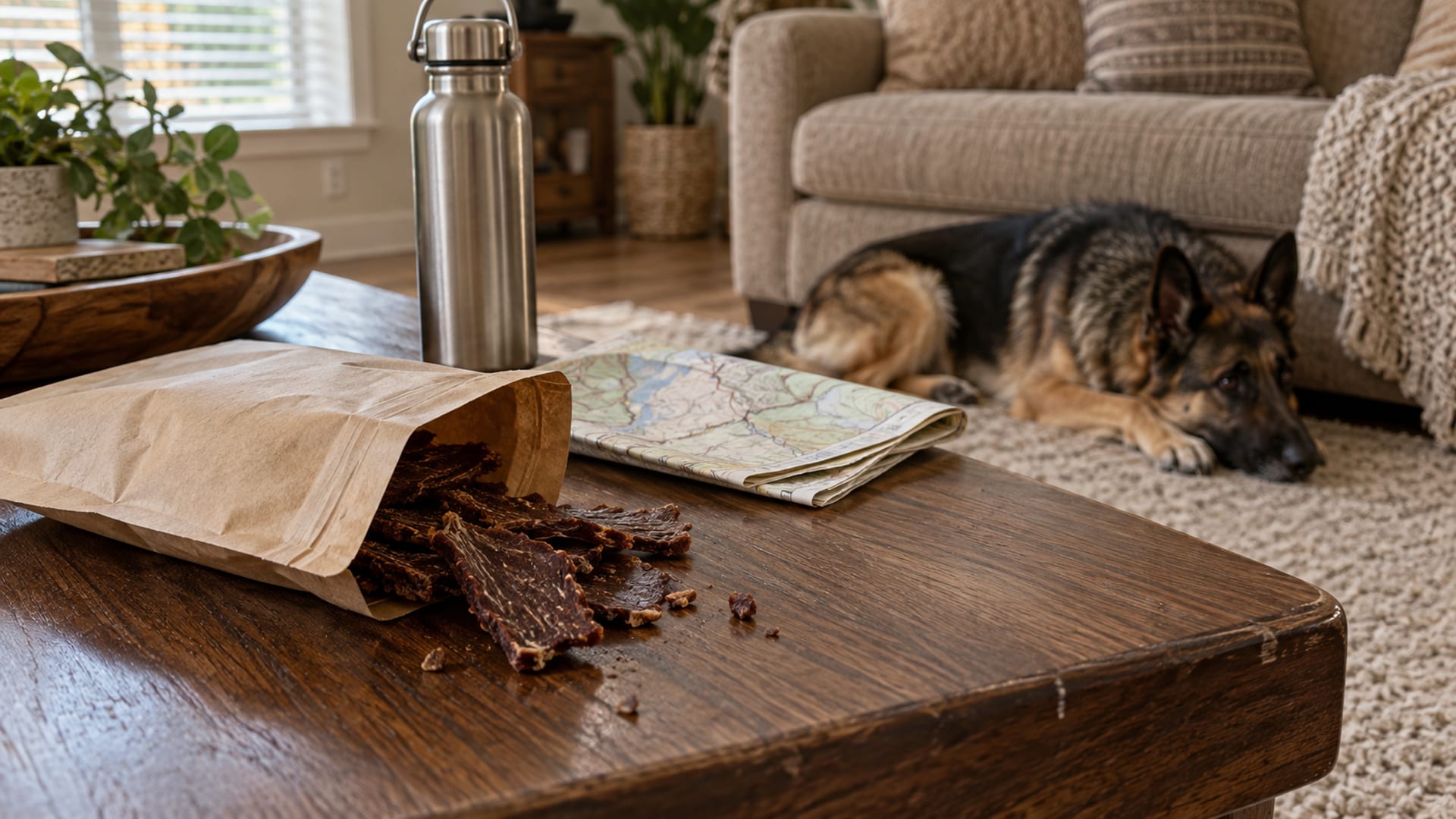
A small piece of plain beef jerky will probably not hurt a healthy dog, but human jerky is a poor snack to share. Beef on its own is not toxic to dogs. The concern is everything the recipe adds: the ASPCA warns about salty foods, onion and garlic, and many jerky seasonings use onion or garlic powder.
If your dog just ate jerky, find the bag and read the ingredient list first. Onion or garlic in any form, a whole bag gone, a small dog, or any vomiting or wobbliness means it is time to call your vet or a poison line.
Key takeaways
Tap a card to bring it forward.
- Plain beef is fine for dogs. Human jerky adds salt, fat and seasonings that change the picture.
- Onion and garlic powder are concentrated forms of foods that damage red blood cells.
- A whole bag in a small dog is a salt problem worth a phone call, even before signs appear.
- Dog jerky treats are not automatically safe; the FDA has investigated illnesses tied to some of them.
- Keep the package. The ingredient list and lot number help your vet decide what to do.
My dog ate beef jerky: what to do now
- Make sure your dog is not choking. Gagging, pawing at the mouth or trouble breathing after gulping a big strip needs a vet right away.
- Keep the package. Look for onion, garlic, xylitol, raisins, chocolate or alcohol on the ingredient list, and note the brand and lot number.
- Estimate how much is gone and write down the time and your dog's weight.
- Call your vet or a poison line for a large or unknown amount, any onion or garlic seasoning, a very salty product, or any signs of illness. The ASPCA's advice is to note the amount eaten and contact your vet or poison control.
- Leave fresh water out. The Merck Veterinary Manual explains that salt poisoning is more likely when a dog eats too much salt without enough water to drink.
Skip hydrogen peroxide, salt and any medicine unless your vet or the poison line tells you otherwise.
Store-bought, homemade and dog jerky compared
Tap or hover a row to highlight it.
| What your dog ate | How concerned to be | Why |
|---|---|---|
| What your dog ateA bite of plain, unseasoned beef jerky | How concerned to beLow for a healthy dog | WhyBeef is not toxic; a small amount of salt |
| What your dog ateA bag of regular human jerky | How concerned to beCall your vet | WhySalt adds up quickly, especially in a small dog |
| What your dog ateJerky seasoned with onion or garlic powder | How concerned to beCall your vet | WhyPowders are concentrated and can harm red blood cells |
| What your dog ateTeriyaki, sweet or flavored jerky | How concerned to beRead the label | WhySauces can add salt, and some products add xylitol |
| What your dog ateHomemade jerky dried from raw beef at low heat | How concerned to beAvoid | WhyRaw or underheated meat can carry germs |
| What your dog ateDog jerky treats | How concerned to beCheck the label and recalls | WhySome jerky treats have been linked to illness |
| What your dog ateA long strip swallowed whole | How concerned to beWatch closely | WhyBig, tough pieces can choke or block the gut |
| What your dog ateJerky with fatty trimmings | How concerned to beWatch, and call if your dog has had pancreatitis | WhyFat can upset the stomach and may trigger pancreatitis |
Jerky sold in stores has to go through a heat step that kills germs, according to the USDA Food Safety and Inspection Service. Homemade jerky dried without that step can still carry bacteria from the raw meat.
On a jerky label, scan for onion and garlic before anything else. Can dogs eat onions? and can dogs eat garlic? explain what they do to a dog's blood.
How much jerky is a concern
The answer depends on the recipe, because the salt, fat and seasoning in jerky change from brand to brand. One USDA nutrient listing puts beef jerky at about 2,081 mg of sodium per 100 grams, and other products will differ.
For salt itself, Merck reports that dogs can show signs after about 2 to 3 grams per kilogram of body weight, and that about 4 grams per kilogram can kill. Those are salt figures, and a jerky label lists sodium, so the math belongs with your vet. What the numbers do show is that a small dog reaches trouble on far less jerky than a large one.
For onion, the Merck Veterinary Manual reports signs in dogs after 15 to 30 grams of raw onion per kilogram, and calls garlic three to five times more toxic than onion. Dried powders pack more into less, and the label will not tell you how much went into the seasoning. If onion or garlic appears on the ingredient list and your dog ate more than a nibble, call.
Signs to watch for, and when
Tap or hover a row to highlight it.
| When | What you may notice | What it may point to |
|---|---|---|
| WhenRight away | What you may noticeCoughing, gagging, pawing at the mouth, trouble breathing | What it may point toA strip is stuck. See a vet now. |
| WhenWithin several hours | What you may noticeThirst, vomiting, diarrhea, weakness | What it may point toToo much salt, or an upset stomach |
| WhenHours after a large amount | What you may noticeStumbling, tremors, seizures | What it may point toSalt poisoning. See a vet now. |
| WhenAbout 1 to 5 days later | What you may noticeTiredness, pale or yellow gums, fast breathing, dark or red urine | What it may point toRed blood cell damage from onion or garlic |
Merck notes that vomiting from too much salt tends to start within several hours and can move on to weakness, diarrhea, tremors and seizures. Onion and garlic work more slowly: red blood cell damage begins within about 24 hours, and the worst of it typically shows three to five days after the meal. A dog that seems normal the evening it ate garlic-seasoned jerky still needs watching through the week.
"My dog gets a bit of jerky on every road trip"
That can be true, and plenty of dogs have shared jerky at a rest stop with no trouble. A small piece in a big dog is a small dose of salt. The bag you had may have carried no onion or garlic at all. None of that transfers to the next bag or the next dog. A small dog gets a much bigger dose from the same strip. A new flavor can bring garlic powder with it. Onion and garlic damage can take days to show, so a dog that looked fine at the car may not be the whole story. So, if jerky is part of your trips, pack a dog treat for the dog and keep your own bag zipped.
Dog jerky treats, beef sticks and look-alikes
The word "jerky" covers a lot of products, and the label decides the risk.
- Dog jerky treats. The FDA investigated reports of vomiting, diarrhea, kidney problems and a Fanconi-like syndrome in dogs that ate jerky pet treats, mostly chicken jerky, and did not find one single cause. Buy treats made for dogs, keep the lot number, and check for recalls.
- Product recalls. In one recall, Merrick pulled some Good Buddy and Backcountry beef treats over possibly high thyroid hormone levels. Brand names alone do not tell you whether a lot is affected.
- Beef sticks, pepperoni, salami and summer sausage are processed meats with their own salt, fat and garlic. Can dogs eat hot dogs? covers a close relative.
- Biltong, carne seca and machaca are dried beef made in different ways, with different seasonings and salt.
- "Meat flavor" on a package does not say which meat or which other ingredients are inside.
If you want to share beef, a small piece of lean, fully cooked, plain beef is the lower-risk choice. UC Davis School of Veterinary Medicine advises that at least 90 percent of a dog's calories come from complete and balanced food, and that treats skip harmful ingredients such as garlic and onion.
Check what you learned
Quick check
Questions about dogs and beef jerky
Can a dog eat one small piece of beef jerky?
Usually without harm, if it was plain. There is no set safe amount, though, and human jerky varies in salt, fat and seasoning, so read the label.
What if the jerky had onion or garlic powder?
Call your vet or a poison line, especially after more than a nibble. Onion and garlic can damage red blood cells, and powders are concentrated. Signs of anemia can take several days to appear.
What should I do if my dog ate a whole bag of jerky?
Call your vet or a poison line with the package, the amount, the time and your dog's weight. Salt poisoning can cause vomiting, weakness, tremors and seizures, and it can be fatal.
Is dog beef jerky safe?
Not automatically. The FDA looked into illnesses linked to jerky pet treats without finding one cause. Choose products with a complete ingredient list and check current recalls.
Can dogs eat homemade beef jerky?
Only if it is plain and fully cooked. Jerky dried from raw beef without a proper heating step can carry bacteria, and home recipes often add salt, onion and garlic.
Sources
Checked September 24, 2026.
- ASPCA, People Foods to Avoid Feeding Your Pets
- Merck Veterinary Manual, Salt Toxicosis in Animals
- Merck Veterinary Manual, Garlic and Onion (Allium spp) Toxicosis in Animals
- U.S. Food and Drug Administration, FDA Investigates Animal Illnesses Linked to Jerky Pet Treats
- U.S. Food and Drug Administration, Merrick Pet Care Voluntarily Recalls Limited Amount of Good Buddy and Backcountry Treats Containing Beef
- USDA Food Safety and Inspection Service, Jerky and Food Safety
- USDA Agricultural Research Service, Beef Jerky nutrient data
- UC Davis School of Veterinary Medicine, Treat Guidelines for Dogs