
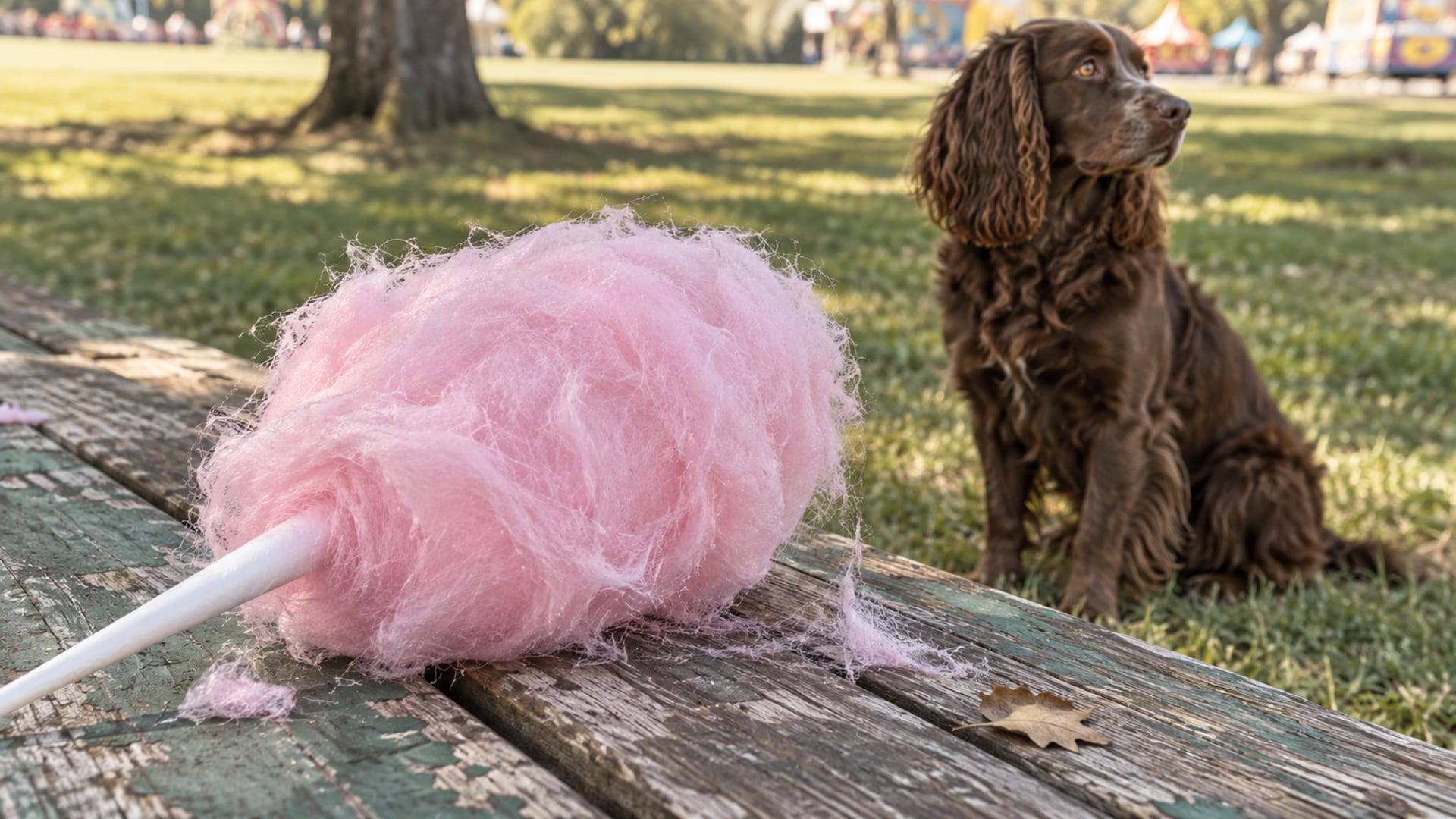
Cotton candy is a caution food for dogs. A small bite of the ordinary kind is mostly spun sugar and is unlikely to poison your dog, but a sugar-free or unknown product may contain xylitol, a sweetener that can drop a dog's blood sugar fast and injure the liver.
If your dog just grabbed a mouthful, take the rest away and check the label for xylitol, birch sugar, wood sugar or birch bark extract. If any of those is listed, the bag says sugar-free, or you can't check, call your vet or a pet poison line now, before signs appear. If it was plain fair cotton candy and only the fluff went down, watching at home is usually enough.
Key takeaways
Tap a card to bring it forward.
- Ordinary cotton candy is sugar, corn syrup, water, coloring and flavoring. A small accidental bite is low concern, though it can upset the stomach.
- Sugar-free, keto and unlabeled products may contain xylitol, which can also appear as birch sugar, wood sugar or birch bark extract.
- If xylitol is possible, call right away. Signs can start within an hour, and liver trouble can show up a day or two later.
- A swallowed stick, plastic tub or wrapper is a separate risk, because it can cause choking or a blockage.
- Cotton candy flavored ice cream, drinks, syrups and cakes are different foods, and each needs its own label check.
What to do if your dog already ate cotton candy
Each step gives your vet or the poison line something they will ask for.
- Take the rest away. The total amount matters, and dogs go back for more.
- Find the package and read the ingredients. The FDA lists xylitol, birch sugar, wood sugar and birch bark extract as names to look for, and a sugar-free label is the cue to read closely. With no bag, ask the vendor whether it was regular sugar; if nobody knows, treat it as unknown.
- Write down the amount, the time and your dog's weight. The MSD Veterinary Manual measures xylitol risk per kilogram of body weight, so a vet needs all three.
- Look for the stick, tub or wrapper. The FDA's list of dangerous items for pets notes that swallowed non-food objects can block the gut.
- Call now if xylitol is possible. The FDA says to call your vet, an emergency clinic or an animal poison control center right away, and Pet Poison Helpline says to reach your vet or the helpline as soon as possible. Don't wait for signs; low blood sugar can come on quickly.
- If it was plain spun sugar, watch your dog and skip home remedies. Keep the package, give nothing, and watch for stomach upset over the rest of the day.
Which kinds of cotton candy matter most
Cotton candy from a carnival machine looks like the kind in a sealed keto tub, so the label tells you more than the color does. Iowa's food rules describe ordinary cotton candy as sugar, corn syrup, water, coloring and flavoring, and none of those is a named dog poison. The ingredient that changes the answer is xylitol, which the ASPCA and the FDA both warn can cause low blood sugar and liver damage in dogs.
Tap or hover a row to highlight it.
| Form | Main concern | What to do |
|---|---|---|
| FormPlain spun sugar from a fair, carnival or party | Main concernExtra sugar and a possible upset stomach | What to doTake it away and watch your dog |
| FormBlue, pink or flavored floss | Main concernColors and flavors don't make it toxic; the ingredient list decides | What to doRead the label for xylitol |
| FormSugar-free, keto, low-sugar or "diabetic" cotton candy | Main concernPossible xylitol | What to doCall right away if xylitol is listed or you can't check |
| FormCotton candy flavored ice cream, drinks, syrups, cakes or candy bars | Main concernMay hold xylitol, chocolate, caffeine, alcohol or a lot of fat | What to doCheck the label; call if any of those is listed |
| FormStick, plastic tub, wrapper or bag | Main concernChoking or a blockage in the gut | What to doCall if your dog swallowed it or is choking |
Melted, crushed or powdered cotton candy is the same sugar; the amount and whatever else was mixed in are what change the risk.
Sharing a bite, and how much xylitol is a concern
There's no veterinary serving size for cotton candy, so the plain answer is to keep it to yourself. If you take your dog to a fair, pack your dog's own treats and keep the cotton candy up high. An accidental bite of the ordinary kind is a far smaller worry than a sugar-free product, but it's still sugar your dog doesn't need.
With xylitol, no amount should be treated as safe. The thresholds below describe the amount of xylitol itself per kilogram of body weight. Labels rarely say how much xylitol a product holds, so you can't work out your dog's dose from the cone in your hand.
Tap or hover a row to highlight it.
| Xylitol dose | What it's linked to | Source |
|---|---|---|
| Xylitol doseAbove about 100 mg/kg | What it's linked toLow blood sugar; vets use this level to decide on hospital care and glucose checks | SourceMSD Veterinary Manual |
| Xylitol doseAbove about 500 mg/kg | What it's linked toSevere liver failure; vets use this level to start liver blood tests | SourceMSD Veterinary Manual |
| Xylitol doseAbout 0.1 g/kg | What it's linked toLow blood sugar | SourcePet Poison Helpline |
| Xylitol doseAbout 0.5 g/kg | What it's linked toDeath of liver tissue | SourcePet Poison Helpline |
The MSD Veterinary Manual and Pet Poison Helpline give the same two levels in different units. Vets use them to sort cases; they aren't a limit for owners. Because the risk runs per kilogram, a small dog can reach a harmful dose from far less product than a large dog, according to MSD. What to do with that: when you call, give your dog's weight, the product name and your best guess at how much went down, and let the vet or poison line do the math.
Signs to watch for over the next day
After plain cotton candy, most dogs show nothing, and some have a short bout of vomiting, diarrhea or gas. Call if the vomiting or diarrhea keeps coming back, if your dog seems weak or not like themselves, collapses, chokes or has trouble breathing, or if you think the stick or wrapper went down too.
Xylitol runs on a different clock. The FDA says signs can begin within 10 to 60 minutes, and the MSD Veterinary Manual lists vomiting, weakness, low energy, staggering, poor coordination, collapse, tremors, seizures and coma. MSD adds that low blood sugar is sometimes delayed as long as 12 to 18 hours, especially when the food it came in slows absorption, and that signs of liver injury can appear 24 to 48 hours later, even though liver values may rise sooner. The FDA notes that serious effects can take 12 to 24 hours to show, so a dog that seems fine an hour later still needs a vet's look.
The worst realistic outcome of xylitol poisoning is acute liver failure, bleeding problems, coma or death, per MSD, which is why the call comes before the watching.
My dog ate cotton candy before and was fine
That happened, and I'm not doubting it. It just doesn't make the next cone safe, and the sources point to several reasons one dog came through fine:
- The candy was plain sugar. Ordinary cotton candy has no xylitol, so there was nothing in it to cause poisoning.
- The amount was small. If xylitol was present, the dose may have stayed below the level linked to low blood sugar.
- The dog was bigger. The same piece gives a large dog a much lower dose per kilogram than a small one.
- The signs hadn't started yet. A food that slows absorption can delay low blood sugar by hours, per the MSD Veterinary Manual.
- Dogs respond differently. The Merck Veterinary Manual describes a wide range of individual tolerance to xylitol.
- Some changes don't show on the outside. A dog can look normal while blood tests show liver or sugar changes that come later.
An earlier snack that went fine proves nothing about the next one, especially a sugar-free one.
Cotton candy look-alikes and names to know
Candy floss, fairy floss, spun sugar, sugar floss and algodón de azúcar all name the same spun-sugar treat.
"Cotton candy flavored" is a flavor claim that leaves the recipe unstated. It shows up on ice cream, drinks, syrups, cakes, protein products and gum, and each of those can carry extra hazards such as chocolate, caffeine or xylitol. Sugar-free, low-sugar, keto and diabetic products may use other sweeteners, and the AKC's guide to artificial sweeteners treats xylitol as its own concern apart from sucralose, saccharin, stevia and erythritol, so read which one is listed.
The FDA and the ASPCA also name gum, candy, baked goods, peanut butter, toothpaste and some medicines as places xylitol turns up. The same label check applies to marshmallows, gummy bears and Halloween candy. The AKC's advice on dogs that ate candy comes down to the same two questions: what kind, and how much.
Check what you learned
Three quick questions on the points that matter most.
Quick check
Questions about dogs and cotton candy
These come up once the first few minutes have passed.
Can a puppy have cotton candy?
The same advice applies: skip it. A puppy's small body needs less xylitol to reach a harmful dose, so a sugar-free product means a call right away.
How do I check cotton candy that came without a label?
Ask whoever made it whether it was spun from regular sugar. For a packaged brand, search the exact product name with "ingredients" and "xylitol," since recipes vary. If you can't confirm it, call.
My dog has diabetes or pancreatitis. Does that change anything?
Dogs with diabetes, pancreatitis or kidney disease may need their own diet advice. Call your own vet, who knows your dog's history, even if the candy was plain.
Is cotton candy dangerous to cats too?
Xylitol doesn't seem to cause the same low blood sugar or liver damage in cats; the Merck Veterinary Manual reports none in a small study of six cats. Other ingredients and the packaging can still cause harm, so an unknown product is worth a call.
Why does the vet want to know when my dog ate it?
Low blood sugar can start within an hour or come hours later, and liver changes follow over a day or two, so the time helps the vet decide which tests to run and how long to keep watch.
Sources
Checked September 25, 2026.
- U.S. Food and Drug Administration, Paws Off Xylitol; It's Dangerous for Dogs
- U.S. Food and Drug Administration, Potentially Dangerous Items for Your Pet
- MSD Veterinary Manual, Xylitol Toxicosis in Dogs
- Merck Veterinary Manual, Hepatotoxins in Small Animals
- ASPCA Animal Poison Control Center, People Foods to Avoid Feeding Your Pets
- Pet Poison Helpline, Xylitol in Products
- Pet Poison Helpline, Xylitol Dog Poisoning: Brief Guide
- American Kennel Club, What to Do if Your Dog Ate Candy
- American Kennel Club, Artificial Sweetener Safety for Dogs
- Iowa Administrative Rules, Cotton Candy