

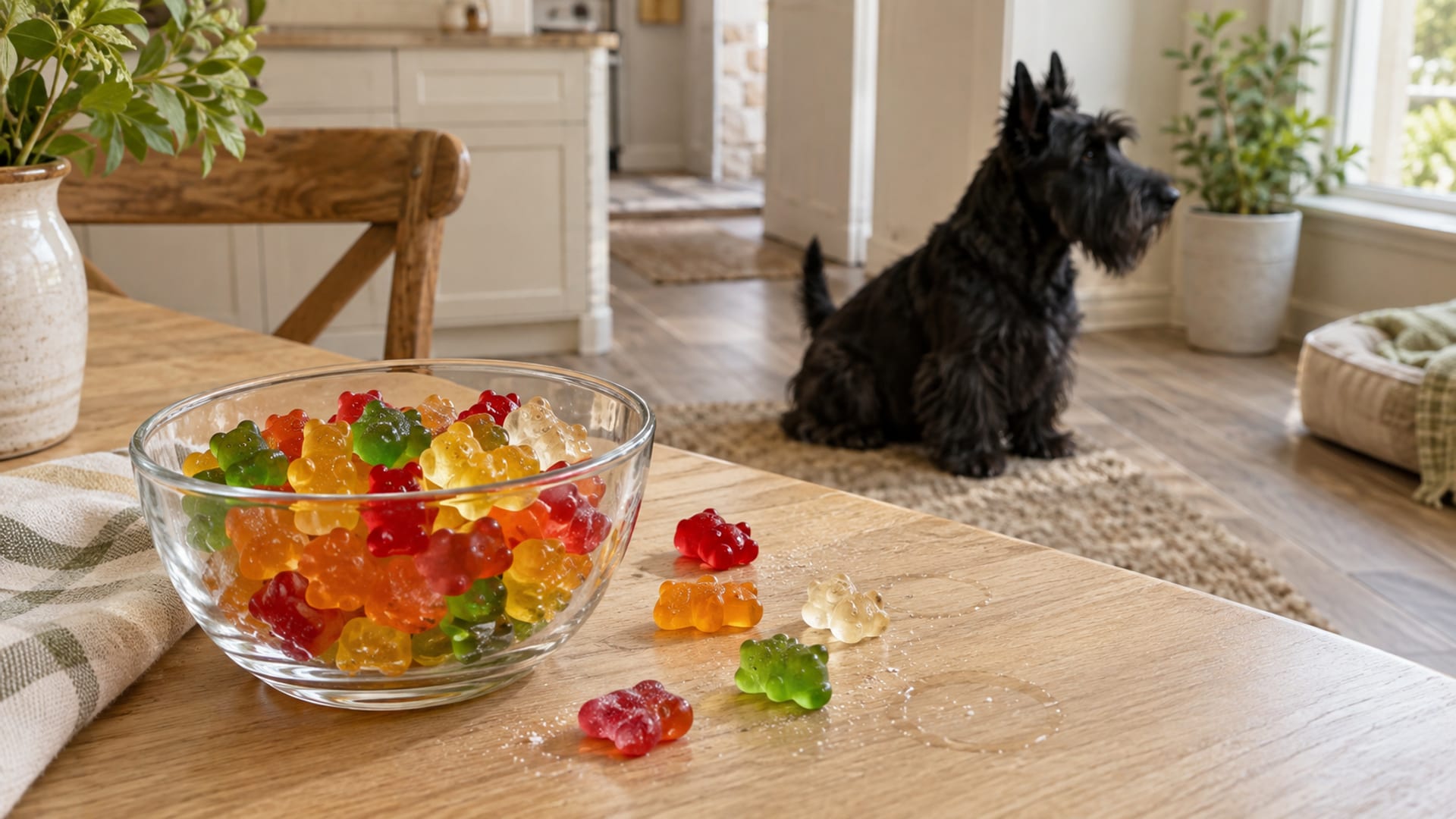
Caution. A few regular sugar gummy bears are unlikely to poison a dog, though they can upset the stomach, while sugar-free gummies may contain xylitol, a sweetener the Merck Veterinary Manual identifies as toxic to dogs because it can cause dangerously low blood sugar and liver injury.
That puts the package in charge of how urgent tonight is. Go get the wrapper first. Call your vet or a poison line right now if the label lists xylitol or birch sugar, if it says sugar-free and you can't read the full ingredient list, or if these were vitamin, melatonin, CBD or THC gummies. The FDA tells owners to call right away when a dog may have eaten something with xylitol, and the ASPCA says to call even when the pet is acting normal, so someone can judge whether the amount is dangerous.
If it were my dog, I'd have the bag in one hand and the phone in the other before reading another line.
Key takeaways
Tap a card to bring it forward.
- The ingredient list decides whether this is an upset stomach or an urgent call, so find the package first.
- Xylitol, also sold as birch sugar or wood sugar, can drop a dog's blood sugar dangerously and injure the liver.
- Call now for any sugar-free gummy you can't confirm, and for vitamin, melatonin, CBD, THC or chocolate gummies, even if your dog seems fine.
- Xylitol signs can start within an hour or hold off for 12 to 18 hours, and liver signs can take a day or more.
- Regular gummy bears are high-sugar candy with little to offer a dog, so they aren't worth sharing on purpose.
What to do if your dog just ate gummy bears
Work through these in order; the first four give whoever you call the facts they will ask for.
- Find the package and keep it. The product name, flavor and ingredients come first on any call, and the Pet Poison Helpline notes that xylitol content varies widely between products.
- Read every ingredient. The FDA lists birch sugar and wood sugar as other names for xylitol, and birch bark extract can appear too, so a glance at the front of the bag can miss it.
- Estimate how many are gone. The amount separates a stomachache from poisoning, and a rough number helps far more than none.
- Know your dog's weight. The Pet Poison Helpline says both the amount eaten and the size of the animal affect how toxic xylitol is.
- Call now if these were anything besides plain sugar candy. That means xylitol on the label, sugar-free with ingredients you can't confirm, gummy vitamins or medications, melatonin, CBD or THC, caffeine, vitamin D, iron, chocolate, or an amount you can't estimate. Several of these do harm before a dog looks sick.
- Call for any signs, whatever the gummy was. Vomiting, weakness, wobbling, collapse, tremors, seizures, trouble standing, yellow eyes or gums, or bleeding all count. The ASPCA says a pet showing signs should go to a veterinarian immediately.
- Ask before you decide to wait it out. For a small, confirmed amount of regular sugar gummies and a dog with no signs, a vet or poison line can tell you whether watching at home is enough. No single number of gummies is safe for every dog.
Which gummies are lower risk and which need a call
The ASPCA points out that gummy products vary and may contain xylitol, melatonin, CBD or other ingredients, so the type matters more than the shape. Ordinary gummy bears are mostly sugar, glucose syrup, gelatin, fruit acids, colors and flavorings, none of them an established dog poison at candy-bag amounts.
Tap or hover a row to highlight it.
| Gummy type | What matters in it | What to do |
|---|---|---|
| Gummy typeRegular sugar gummy bears | What matters in itSugar, glucose syrup, gelatin | What to doSmall amount: watch for stomach upset; ask a vet or poison line if monitoring is enough |
| Gummy typeSour gummies | What matters in itCitric, malic or fumaric acid can irritate the stomach | What to doSame as regular, unless the label shows xylitol or an active ingredient |
| Gummy typeSugar-free, sugarless, keto, "no sugar added" | What matters in itMay contain xylitol | What to doCall now if xylitol is listed or you can't rule it out |
| Gummy typeVitamin, melatonin or sleep-aid gummies | What matters in itXylitol, iron, vitamin D or melatonin | What to doCall now |
| Gummy typeCBD or THC gummies | What matters in itTHC, sometimes xylitol | What to doCall now |
| Gummy typeChocolate-covered, or made with grape or raisin | What matters in itChocolate compounds; possible kidney risk | What to doCall now |
| Gummy typeHomemade gummies | What matters in itWhatever the recipe used | What to doCall if it used xylitol, supplements, essential oils or medication |
Sharing a gummy bear, and how much becomes a problem
Regular gummy bears are high-sugar candy with little nutritional value and no recommended serving size for dogs. One small piece of ordinary candy without xylitol is a lower-risk accident than a whole bag, according to the ASPCA, but regular feeding isn't supported, and sugar-free, vitamin, medication, CBD and chocolate gummies shouldn't be offered at all. Keep gummy bears as people food and zip the bag shut.
Once your dog has helped itself, the number that matters is xylitol. The Merck Veterinary Manual gives these thresholds:
Tap or hover a row to highlight it.
| Xylitol eaten | What it has been linked to | Source |
|---|---|---|
| Xylitol eatenAbove about 100 mg per kg (45 mg per lb) of body weight | What it has been linked toLow blood sugar (hypoglycemia) | SourceMerck Veterinary Manual |
| Xylitol eatenAbove 500 mg per kg (227 mg per lb) of body weight | What it has been linked toPossible severe liver insufficiency or liver failure | SourceMerck Veterinary Manual |
Those are milligrams of xylitol. Content changes with the product and even the flavor, so the figures can't become a gummy count without the label, and Merck notes that outcomes vary. A peer-reviewed review in PubMed Central adds that severe effects may not track the dose neatly. Give your vet or the poison line the product name, how many are missing and your dog's weight, and let them work it out. A smaller dog reaches the same dose per pound with fewer pieces.
A big helping of regular gummies can bring vomiting, diarrhea and belly pain, and the ASPCA notes choking is possible; a sticky wad of candy or the bag itself can also cause a blockage.
Signs to watch for and when they show up
After regular sugar gummies, expect at most vomiting, diarrhea, belly discomfort and a burst of sugar energy that passes. If you're sure of the label, call if those become more than mild or your dog seems weak or unsteady. If you couldn't confirm the ingredients, go by the xylitol timeline, since its signs can be delayed by many hours.
The xylitol signs the FDA and Merck describe include vomiting, weakness, sluggishness, poor coordination, staggering, collapse, tremors, seizures and coma.
Tap or hover a row to highlight it.
| Time after eating | What can happen | Source |
|---|---|---|
| Time after eatingAs soon as 10 to 15 minutes | What can happenLife-threatening low blood sugar is possible | SourcePet Poison Helpline |
| Time after eatingWithin 10 to 60 minutes | What can happenLow blood sugar can begin | SourceMerck Veterinary Manual |
| Time after eatingUp to 12 to 18 hours | What can happenLow blood sugar can be delayed, depending on the product | SourceMerck Veterinary Manual |
| Time after eating4 to 12 hours | What can happenLiver enzymes may rise on bloodwork before anything shows | SourceMerck Veterinary Manual |
| Time after eating24 to 48 hours or longer | What can happenVisible signs of liver injury may appear | SourceMerck Veterinary Manual |
The worst realistic outcome is acute liver failure with bleeding problems, coma and death. A 2006 report in the Journal of the American Veterinary Medical Association documented liver failure and clotting problems in eight dogs after xylitol. Merck cites one study in which 62.5% of dogs with clinical signs of liver injury died or were euthanized despite aggressive treatment, while uncomplicated low blood sugar has a good outlook when treated promptly. That gap is the reason to call before signs appear.
CBD gummies can carry THC as well, which the ASPCA says can cause lethargy, unsteadiness and stomach upset.
My dog ate gummy bears before and was fine
Maybe your last dog cleaned out a Halloween bag and was bouncing around by morning. I believe that happened, and for that dog on that day, it was fine. It just can't stand in for this bag and this dog, for specific reasons:
- It may have been ordinary sugar candy with no xylitol and no active ingredient.
- The dose may have been small, under the amounts Merck links to signs, though nobody can assume that without the label.
- Size changes the math. The same handful is a bigger dose per pound for a 10-pound terrier than for a large retriever.
- Signs can come late. Merck reports low blood sugar can hold off 12 to 18 hours and liver signs 24 to 48 hours or longer.
- Dogs differ. The PubMed Central review notes severe liver injury may not follow dose alone.
A dog that looks normal in the first hour hasn't been cleared of xylitol. The label and a phone call tell you far more tonight.
Gummy products and look-alikes to check
"Gummy bears" can mean a lot of things once the bag came out of someone's purse. These deserve a second look:
- Supplement and medication gummies. Vitamins, melatonin, CBD, electrolyte, probiotic and medication gummies look alike in a bag, as the ASPCA notes.
- Sugar-free wording. "Sugar-free," "sugarless," "keto" and "no sugar added" mean different things, and the FDA warns about xylitol in sugar-free products, so only the ingredient list settles it.
- Other chewy candy. Fruit snacks, gummy worms, sour candy, chewable supplements and children's medicines share the same form.
- Chocolate-covered gummies. These add the risks on our chocolate entry.
- Gummies with grape or raisin. Treat them like grapes and raisins, which can cause kidney failure in dogs.
The ASPCA and the FDA both flag holidays as times pets find candy. For a mixed stash, see Halloween candy, jelly beans and marshmallows.
Check what you learned
Three quick questions on what matters most tonight.
Quick check
Questions about dogs and gummy bears
A few more questions owners ask once the first worry settles.
Can a puppy have a gummy bear?
The same label check applies. Because xylitol risk depends on dose per pound, a small puppy can reach a concerning amount from fewer pieces, as the Pet Poison Helpline notes about animal size.
Are gummy bears a risk for cats too?
The Merck Veterinary Manual doesn't consider cats at risk for the low blood sugar and liver injury xylitol causes in dogs. A gummy can still harm a cat if it holds caffeine, THC, vitamin D, iron or a medication, so a cat that ate a supplement gummy still needs a call.
What if the sugar-free gummies use a different sweetener?
The AKC says dogs should have no xylitol, and describes erythritol, stevia, sucralose and aspartame as generally less dangerous, though some can cause stomach upset. Read the whole list, since some products combine sweeteners.
Can I give my dog one of my gummy vitamins?
Keep them for people. Gummy vitamins may contain xylitol, iron, vitamin D or other active ingredients, and the label and amount decide the risk, according to the ASPCA.
Sources
Checked September 25, 2026.
- ASPCA Animal Poison Control Center, Help! My Dog Just Ate Some Gummies! What Do I Do?
- ASPCA Animal Poison Control Center, Xylitol: The Sweetener That Is Not So Sweet for Pets
- ASPCA Animal Poison Control Center, Updated Safety Warning on Xylitol: How to Protect Your Pets
- ASPCA, Valentine's Day Safety Tips
- Pet Poison Helpline, Xylitol
- Merck Veterinary Manual, Xylitol Toxicosis in Dogs
- U.S. Food and Drug Administration, Paws Off Xylitol; It's Dangerous for Dogs
- U.S. Food and Drug Administration, Paws Off! Xylitol is Toxic to Dogs
- U.S. Food and Drug Administration, Keep Your Dogs and Cats Safe From Holiday Hazards
- American Kennel Club, Artificial Sweeteners: Which Ones Are Safe for Dogs?
- Journal of the American Veterinary Medical Association, Acute Hepatic Failure and Coagulopathy Associated with Xylitol Ingestion in Eight Dogs
- PubMed Central, Pathophysiology and aetiology of hypoglycaemic crises