
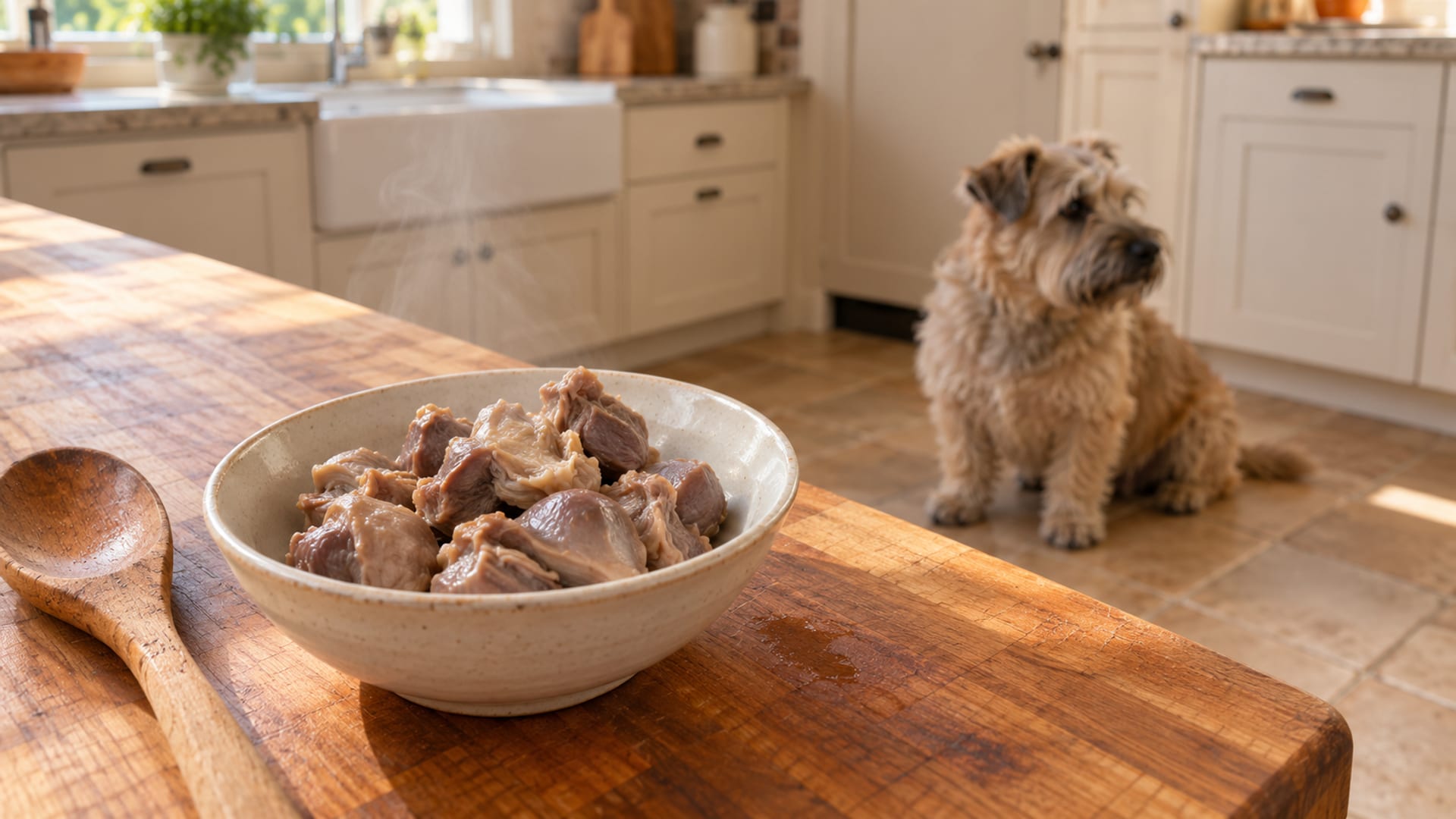
Yes, in small amounts. Plain chicken gizzards cooked through to 165°F are generally fine for dogs as an occasional extra, while raw gizzards can carry germs like Salmonella, and fried or seasoned ones bring fat, salt, onion or garlic along with the meat.
If your dog already ate some, the kind of gizzard decides what comes next. A few bites of plain boiled gizzard usually just means keeping an eye on your dog for several days. Onion or garlic seasoning, a big amount, swallowed packaging or bone, or a dog that starts vomiting means it's time to call your vet.
Key takeaways
Tap a card to bring it forward.
- Plain gizzard cooked to 165°F, with no seasoning, is generally fine as a small, occasional treat.
- Raw gizzards, including frozen, freeze-dried and dehydrated raw ones, can still carry germs like Salmonella and Listeria.
- Fried, breaded and seasoned gizzards add fat, salt, onion or garlic, which cause problems of their own.
- Call your vet for onion or garlic, a large amount, swallowed packaging or bone, or a puppy, senior or sick dog that ate them.
- Watch for vomiting, diarrhea, belly pain, fever or low energy over the next several days, especially after raw gizzards.
What to do if your dog already ate chicken gizzards
Start with what your dog ate and how they're acting right now. Each answer below changes the advice you'll get.
- Find out how the gizzards were cooked. Raw, boiled, fried, dried and seasoned gizzards carry different risks, and your vet will ask first.
- Check for onion and garlic. Look at the recipe, the gravy and the broth as well as the meat, since the Merck Veterinary Manual explains that onion and garlic can poison dogs. If either one was in the pan, the question is no longer about plain gizzard.
- Estimate how much and when. A couple of pieces off your plate and a whole pan off the stove call for different responses, and the timing tells your vet how long to watch.
- Look for packaging, bone or skewers. A foam tray, plastic wrap, a toothpick or attached bone can cause choking or a blockage, a separate problem covered in our Chicken bones entry.
- Think about which dog ate it. Puppies, older dogs, pregnant dogs, dogs with weak immune systems and dogs that have had pancreatitis deserve a lower bar for calling.
- Call if any of this applies. Onion or garlic, a large or unknown amount, swallowed packaging, or a dog that already seems sick means call your vet right away. The ASPCA advises getting help early, even before signs show up, and the FDA lists your vet, an emergency animal hospital or an animal poison control center as places to call.
- Leave the home remedies alone. Don't give medicine or try to make your dog throw up unless your vet tells you to, since the right care depends on your dog's size, health and what was eaten.
For a few bites of plain cooked gizzard and a dog who's acting like themselves, watching is enough. If my own dog got into a takeout box of fried, seasoned gizzards, I'd call the vet that same night.
Which gizzards are fine and which call for caution
A gizzard is the muscular stomach of a chicken, and the meat itself isn't a dog poison. The trouble comes from how it was handled and cooked.
Tap or hover a row to highlight it.
| Form | Verdict | Why |
|---|---|---|
| FormPlain boiled or baked, cooked to 165°F | VerdictFine in small amounts | Why165°F is the USDA safe minimum for poultry giblets |
| FormRaw, fresh from the store | VerdictCaution | WhyCan carry Salmonella, Listeria, Campylobacter and E. coli |
| FormFrozen raw | VerdictCaution | WhyFreezing does not reliably kill bacteria |
| FormFreeze-dried or dehydrated raw | VerdictCaution | WhyDrying reduces germs without removing all of them |
| FormTreats made from cooked gizzard | VerdictUsually fine as a treat | WhyDepends on the label: cooked, with no onion, garlic or heavy salt |
| FormFried or breaded | VerdictCaution | WhyExtra fat and salt; a fatty meal can trigger pancreatitis in some dogs |
| FormRestaurant or seasoned gizzards | VerdictCaution or avoid | WhySalt, fat, sauces, onion, garlic and sometimes bone |
| FormGizzard gravy, broth or powder | VerdictDepends on the ingredients | WhyOnion, garlic, salt, and whether it was cooked |
The USDA Food Safety and Inspection Service sets 165°F as the safe minimum internal temperature for poultry giblets, which is why plain, fully cooked gizzard sits in the lower-risk row. Raw is a different matter. The CDC does not recommend raw pet food for dogs or cats, because raw animal protein can carry Salmonella and Listeria, and it notes that freezing, freeze-drying and dehydrating reduce germs without killing all of them.
The FDA has found these germs in raw pet foods, and the American Veterinary Medical Association opposes feeding dogs animal protein that hasn't gone through a step to kill pathogens. Our Raw chicken entry goes further into raw feeding.
Frying brings a different problem. VCA Animal Hospitals explains that a fatty meal can set off pancreatitis in some dogs, and that severe cases may need a hospital stay. For seasoning, our Onions and Garlic entries explain why those two matter.
How much to share and how to cook it
Plain gizzard works best as a small extra: a few bite-size pieces now and then, and less for a small dog.
To cook gizzards for your dog:
- Boil or bake them plain until the thickest piece reads 165°F on a food thermometer.
- Leave out salt, butter, oil, onion, garlic, seasoning blends and gravy.
- Let them cool, chop them small, and check for bits of bone, cartilage or packaging.
- Serve a small portion as a treat and keep the rest of the bowl as your dog's usual food.
The Merck Veterinary Manual separates complete and balanced diets from single food items, so a treat shouldn't crowd out the meal that covers your dog's needs.
Some dogs need a more careful plan. VCA Animal Hospitals notes that dietary fat matters for dogs with pancreatic disease, so a dog with a history of pancreatitis shouldn't get fried or fatty gizzards without your vet's okay. Dogs with kidney disease, diabetes or other long-term conditions may need their fat, sodium, phosphorus or calories kept in check, so ask your vet before adding organ meat to their bowl.
Signs to watch for over the next several days
The signs below matter most after raw, fried or seasoned gizzards. After raw gizzards that carried germs, the Merck Veterinary Manual describes vomiting, diarrhea, belly discomfort, poor appetite, fever, low energy and dehydration as possible signs, and some dogs carry the bacteria while looking perfectly well. In a study by Finley and colleagues in the Canadian Veterinary Journal, 7 of 16 dogs fed a raw diet contaminated with Salmonella began shedding it one to seven days later, and the shedding lasted one to eleven days, 3.9 days on average. None of those dogs got sick during the study, so the numbers describe germs in stool and don't predict when illness would start.
After fried or fatty gizzards, VCA Animal Hospitals lists vomiting, diarrhea, belly pain and lethargy, with pancreatitis possible in some dogs.
Call your vet now if you see:
- Repeated vomiting or bloody diarrhea
- Belly pain or a dog that won't settle
- Weakness, collapse or fever
- Choking, gagging or trouble breathing
- Any vomiting or diarrhea in a puppy, senior, pregnant or already sick dog
My dog ate gizzards before and was fine
Lots of dogs have eaten gizzards from a family pot or a farm kitchen without a problem, and when that happened, it really happened. It just doesn't set a rule for every batch or every dog.
- The form was different. Plain boiled gizzard is a different food from a raw pack or a fried, salted basket.
- Not every piece carries germs. The CDC treats raw animal protein as a risk because contamination varies from one piece of poultry to the next, so one pack may carry nothing while the next one does.
- Looking fine isn't the same as being germ-free. The FDA warns that dogs can carry and shed Salmonella and Listeria without showing any illness.
- Every dog is different. Age, overall health and immune strength all change how a dog handles the same meal.
- Signs can come later. In the Finley study, shedding started as late as seven days after the meal.
Your dog may truly have handled it well. The next batch still deserves the same check on form, seasoning and amount.
Giblet packs, organ mixes and other look-alikes
Gizzards often come mixed with other parts, so check what's actually in the package before you share.
- Giblets. The USDA Food Safety and Inspection Service describes giblets as the packet of inner parts that comes with a chicken, which can hold the heart, liver, gizzard and sometimes the neck. The neck has bone, so pull it out.
- Chicken liver and heart. These are different organs with different nutrients, so the gizzard advice doesn't automatically carry over to them.
- Chicken organ meat blends. A bag or can labeled organ meat may hold gizzard, liver, heart, kidney, bone or seasoning, each with its own risks.
- Chicken stomach. This is simply another name for gizzard on menus and product listings.
- Gizzard treats and jerky. These can be raw, cooked, freeze-dried, dehydrated, smoked, fried or seasoned. Read the label for whether it was cooked and for onion, garlic, salt, smoke flavor or preservatives.
- Gizzard powder. Check whether it was made from raw or cooked gizzard and what was added.
Check what you learned
Three quick questions on the main points.
Quick check
Questions about dogs and chicken gizzards
These come up after the main question is answered.
Can puppies eat chicken gizzards?
Puppies can have a little plain gizzard cooked to 165°F, but young dogs are more vulnerable to serious foodborne infection. Skip raw and dried raw gizzards for a puppy entirely.
What should I have ready when I call the vet?
The ASPCA suggests sharing your dog's weight, age and health along with the details of what was eaten. For gizzards, add how they were cooked, any seasoning, roughly how much, when, and any signs so far.
Is fried gizzard okay if I peel off the breading?
Peeling off the breading removes some salt and seasoning, but the gizzard was still cooked in oil. For a dog with past pancreatitis, or a large amount, call your vet.
Can my cat have gizzards too?
The same raw-food concern applies to cats. The CDC advises against raw pet food and treats for cats as well as dogs, so plain, fully cooked gizzard is the lower-risk choice for both.
Sources
Checked September 25, 2026.
- Centers for Disease Control and Prevention, About Pet Food Safety
- U.S. Food and Drug Administration, Get the Facts! Raw Pet Food Diets can be Dangerous to You and Your Pet
- U.S. Food and Drug Administration, FDA Cautions Pet Owners Not to Feed Performance Dog Raw Pet Food Due to Salmonella, Listeria monocytogenes
- U.S. Food and Drug Administration, Who Do You Call if Your Pet Has an Emergency?
- USDA Food Safety and Inspection Service, Safe Minimum Internal Temperature Chart
- USDA Food Safety and Inspection Service, Chicken from Farm to Table
- American Veterinary Medical Association, Resolution #5, Raw or Undercooked Animal-Source Protein in Cat and Dog Diets
- Canadian Veterinary Journal, The risk of salmonellae shedding by dogs fed Salmonella-contaminated commercial raw food diets
- Merck Veterinary Manual, Allium Toxicosis in Animals
- Merck Veterinary Manual, Salmonellosis in Animals
- Merck Veterinary Manual, Dog and Cat Foods
- VCA Animal Hospitals, Pancreatitis in Dogs
- VCA Animal Hospitals, Nutrition and Pancreatic Disease in Dogs
- ASPCA, My Pet Ate Something! When Should I Seek Help?
- ASPCA, What to Do If Your Pet Is Poisoned