
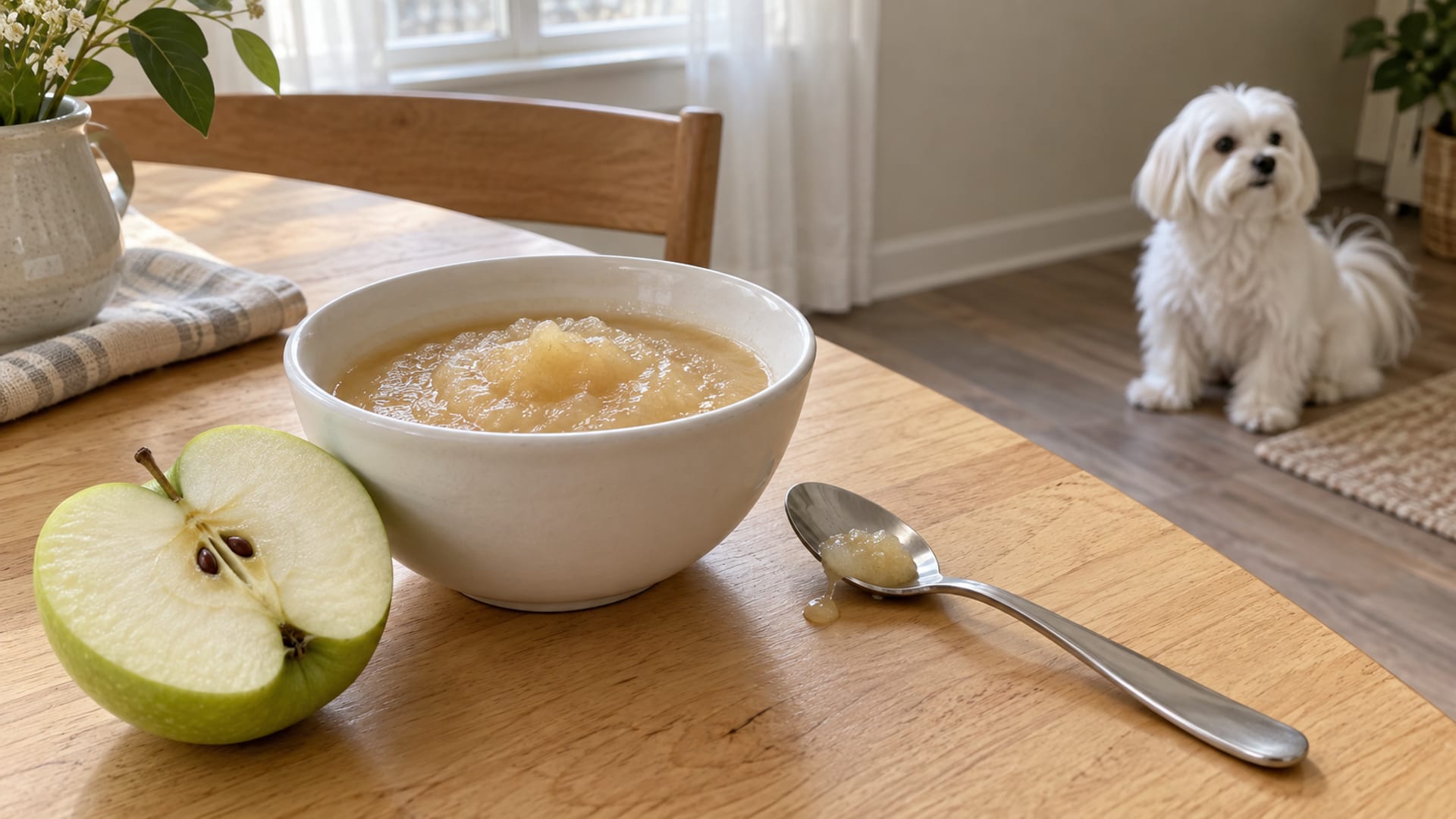
Yes. Plain, unsweetened applesauce is safe for most dogs in a small amount as an occasional treat, and the American Kennel Club recommends keeping it unsweetened and moderate. The label is the first thing to check, because sugar-free applesauce can contain xylitol, which may also be listed as birch sugar or wood sugar, and the FDA warns that xylitol is dangerous for dogs.
If your dog already licked out a cup or chewed open a pouch, the ingredient list tells you what comes next. A plain product usually means watching for a mild upset stomach. Xylitol, or a product you can't identify, means calling your vet or a pet poison line right away, even if your dog seems completely normal.
Key takeaways
Tap a card to bring it forward.
- Plain, unsweetened applesauce is fine for most dogs as a small, occasional treat.
- Read the ingredients for xylitol, birch sugar or wood sugar first; "sugar-free" on the front does not name the sweetener inside.
- Xylitol or an unknown product means calling your vet or a pet poison line now, even if your dog looks fine.
- Xylitol signs can start within 10 to 60 minutes, and serious effects can show up 12 to 24 hours later in some dogs.
- Skip applesauce with nutmeg, apple butter, pie filling, and homemade sauce with seeds or core left in it.
What to do if your dog just ate applesauce
Work through these in order, starting with the container itself. I'd read the back of the package before the front, since the front is where the marketing lives and the back is where the sweetener is named.
- Read the ingredient list. Look for xylitol, birch sugar or wood sugar, which the FDA's page for pet owners lists as names for the same sweetener. A "no sugar added" or "sugar-free" claim doesn't tell you which sweetener was used, so the full list is what counts.
- Call right away if xylitol is there, or if you can't tell what the product was. The FDA advises calling your vet, an emergency clinic or an animal poison control center right away if your dog may have eaten something with xylitol, because blood sugar can drop within 10 to 60 minutes and serious effects can be delayed 12 to 24 hours in some cases. The same call makes sense for a sauce with nutmeg in it, or for a small dog when you don't know how much it ate.
- Watch for the signs that need help now. Weakness, staggering, collapse, seizures, choking, trouble breathing or repeated vomiting all mean getting your dog to a vet or emergency clinic, whatever the label said. These point to something more serious than a sensitive stomach.
- For plain applesauce, expect nothing worse than an upset stomach. The AKC notes that too much apple can bring on a bellyache or diarrhea. If vomiting or diarrhea keeps going or looks severe, call your vet.
If the sauce was homemade, check what's left in the pot for seeds or pieces of core. A couple of apple seeds are unlikely to cause a problem, according to the ASPCA, but a dog that swallowed a lot of seeds, a stem with leaves, or a whole core should be seen by a vet.
Which kinds of applesauce are fine and which are not
The word applesauce covers a plain jar, a flavored snack cup, a baby-food pouch and a lot in between, and the answer for your dog comes from the recipe printed on the label.
Tap or hover a row to highlight it.
| Form | Verdict | Why |
|---|---|---|
| FormPlain, unsweetened | VerdictFine in a small amount | WhyApple flesh is low risk in moderation |
| FormSweetened with sugar or corn syrup | VerdictNot poisonous, but a poor treat | WhyExtra sugar and calories can upset the stomach |
| FormSugar-free with xylitol, birch sugar or wood sugar | VerdictCall your vet or a poison line now | WhyXylitol can drop blood sugar and damage the liver |
| FormNutmeg flavored | VerdictAvoid | WhyNutmeg contains myristicin |
| FormCinnamon flavored | VerdictRead the whole label | WhyThe recipe may add sugar, xylitol or nutmeg |
| FormBaby-food pouches and snack cups | VerdictRead the whole label | WhyRecipes vary by brand and flavor |
| FormHomemade with seeds or core left in | VerdictRemove them first | WhySeeds hold cyanogenic compounds; cores can choke |
Sweetened applesauce isn't poisonous because of ordinary sugar, but it's a weaker choice than plain. The ASPCA's guide to sharing food points out that too much sugar or fat can contribute to digestive upset or pancreatitis, so a sweetened cup is better left on the counter.
Nutmeg is a different matter. The AKC, citing Pet Poison Helpline, explains that nutmeg contains myristicin: small amounts can cause stomach trouble, and very large amounts can cause hallucinations, high blood pressure and seizures. Cinnamon on its own is a separate question, covered on our Cinnamon entry, but a cinnamon-flavored applesauce can carry other ingredients, so the label still decides.
Seeds and cores matter most with homemade sauce or a chunky jar. The Merck Veterinary Manual explains that apple seeds release cyanide only when they're chewed or ground, that seeds swallowed whole aren't expected to release it, and that serious poisoning from store-bought eating apples is rare. Pet Poison Helpline adds that cores and seeds can cause choking or a blockage in the gut, which is the more practical reason to leave them out.
How much applesauce to share and how to serve it
Think of applesauce as a lick off a spoon. The AKC suggests that one or two apple slices are enough to satisfy a dog's craving for apple, and applesauce works the same way: a small taste now and then. For a sense of the calories, UC Davis Veterinary Medical Teaching Hospital lists one tablespoon of applesauce at about 6 kcal, and treats of any kind should stay a limited part of what your dog eats in a day.
A few easy ways to serve it:
- A small dab on a spoon or on top of a regular meal.
- Frozen in an ice cube tray for a hot day, which the AKC suggests as a cool treat.
- Homemade from washed apples, with the seeds, core and stem removed and nothing added.
For puppies, the AKC recommends starting with a small amount and watching for any digestive problems or sensitivity. If your dog has diabetes, carries extra weight, has had pancreatitis, has food sensitivities or eats a prescription diet, talk with your vet before adding applesauce, since the sugar and calories are what matter for those dogs.
Signs to watch for, and how long to keep watching
What you watch for depends on what your dog actually ate, so start with the label and match it to the list below.
Plain applesauce, too much of it. Vomiting, loose stool, diarrhea or a sore belly are the likely signs, and they're usually short-lived. Call your vet if they keep going, get worse, or your dog seems unwell in other ways.
Applesauce with xylitol. The FDA lists vomiting, less activity, weakness, staggering, poor coordination, collapse and seizures, and warns that xylitol can lead to liver failure. Pet Poison Helpline puts the start of signs at roughly 10 minutes to an hour after eating, and says acting immediately is essential. Because the FDA notes that serious effects may not appear for 12 to 24 hours in some cases, a dog that seems fine an hour later still needs the call, and you should keep watching through the next day while you follow your vet's plan.
Seeds, stems or a core. Choking and trouble breathing can happen right away with a core or a large piece. The ASPCA's apple entry lists brick-red gums, dilated pupils, difficulty breathing, panting and shock as signs of poisoning from the stems, leaves and seeds, though Merck notes that serious poisoning from eating apples is rare. Repeated vomiting or clear belly pain after a core can point to a blockage, which needs a vet.
"My dog ate it before and was fine"
That happened, and it counts for something. Plenty of dogs have licked a toddler's applesauce cup with no trouble at all. It just doesn't mean every applesauce is safe for every dog, for a few plain reasons.
- The product was different. The cup your last dog ate may have been plain. A sugar-free cup that looks almost the same can contain xylitol, and that changes everything.
- The amount was different. Merck says severe poisoning from apple seeds is uncommon unless a dog eats a large amount, and the ASPCA says a couple of seeds are unlikely to cause trouble. A lick and a whole jar aren't the same exposure.
- The form was different. Seeds release cyanide only when they're chewed or ground, so a dog that swallowed a seed whole had a different exposure from one that crunched a handful.
- The dog was different. The same amount is a bigger dose for a small dog than for a large one, and dogs vary in how their stomachs handle new foods.
- Some signs come late. With xylitol, the FDA warns that serious effects can take 12 to 24 hours to appear, so "fine" at bedtime isn't the full story.
Pouches, pie filling and other look-alikes
Some of the products that end up in front of a dog look like applesauce, share its name or come from the same apples, and they don't all carry the same answer.
- Snack cups and pouches. Brand names like Mott's, GoGo squeeZ, Musselman's and Tree Top make many different flavors. Read the ingredients on the exact one your dog ate.
- Baby-food applesauce. Often just fruit, but formulas vary, so check for added sweeteners and spices.
- "Sugar-free" or "no sugar added." These claims don't name the sweetener. Xylitol might be in there, or something else.
- Apple butter. A concentrated spread that can hold a lot of sugar, spices and preservatives. It isn't interchangeable with plain applesauce.
- Apple pie filling. It can contain sugar, butter, nutmeg, cinnamon and raisins. Raisins are their own serious concern, covered on our Grapes and raisins entry.
- Apple juice and apple cider. Juice is concentrated liquid sugar and may have added sweeteners. Cider can mean hard cider, which contains alcohol, a different hazard altogether.
- Dried apple. Plain, seedless pieces in small amounts may be fine, but they're dense in calories, and trail mixes can include raisins.
- Crabapples and fresh apples. Crabapples fall under the same apple entry at the ASPCA. For whole fruit, slices and cores, see our Apples entry.
- "Apple pit." Apples don't have a stone pit; people usually mean the core or seeds. Pits from Cherries, Peaches and Plums are a separate question with separate answers.
Check what you learned
Three quick questions to see what stuck.
Quick check
Questions about dogs and applesauce
These come up often once the first worry has passed.
Can I make applesauce at home for my dog?
Yes, and homemade gives you full control over what goes in. Wash the apples, remove the seeds, core and stem, and cook them without sugar, sweeteners or nutmeg. Store it like any leftover food and share it in small tastes.
Is frozen applesauce a good summer treat?
It can be. The AKC suggests freezing plain applesauce in an ice cube tray for a hot day. One small cube at a time keeps it in treat territory.
My cat licked the applesauce too. Is that a problem?
Plain, seedless applesauce is not singled out as a special hazard for cats. The FDA says xylitol doesn't appear to be as dangerous to cats as it is to dogs, but if the product had xylitol, call your vet about the cat as well.
Can a dog with diabetes have applesauce?
Ask your vet first. For dogs with diabetes, extra weight, a history of pancreatitis or a prescription diet, the question is how the product's sugar and calories fit into the plan your vet has set.
Does applesauce help a dog with an upset stomach?
Applesauce is not a recommended remedy for that. If your dog already has vomiting or diarrhea, call your vet rather than adding a new food, since extra food of any kind can make digestive upset worse.
Sources
Checked September 25, 2026.
- American Kennel Club, Can Dogs Eat Apples?
- U.S. Food and Drug Administration, Paws Off Xylitol; It's Dangerous for Dogs
- U.S. Food and Drug Administration, Paws Off! Xylitol is Toxic to Dogs
- ASPCA, Pet Parents: Beware of These Four Fall Toxins
- ASPCA, Sharing is Caring: Foods You Can Safely Share with Your Pet
- ASPCA Animal Poison Control Center, Apple
- Merck Veterinary Manual, Houseplants and Ornamentals Toxic to Animals
- Pet Poison Helpline, Friendly Fall Foods
- Pet Poison Helpline, Xylitol Poisoning Symptoms in Dogs
- University of California, Davis, Veterinary Medical Teaching Hospital, Treats Guidelines for Dogs