

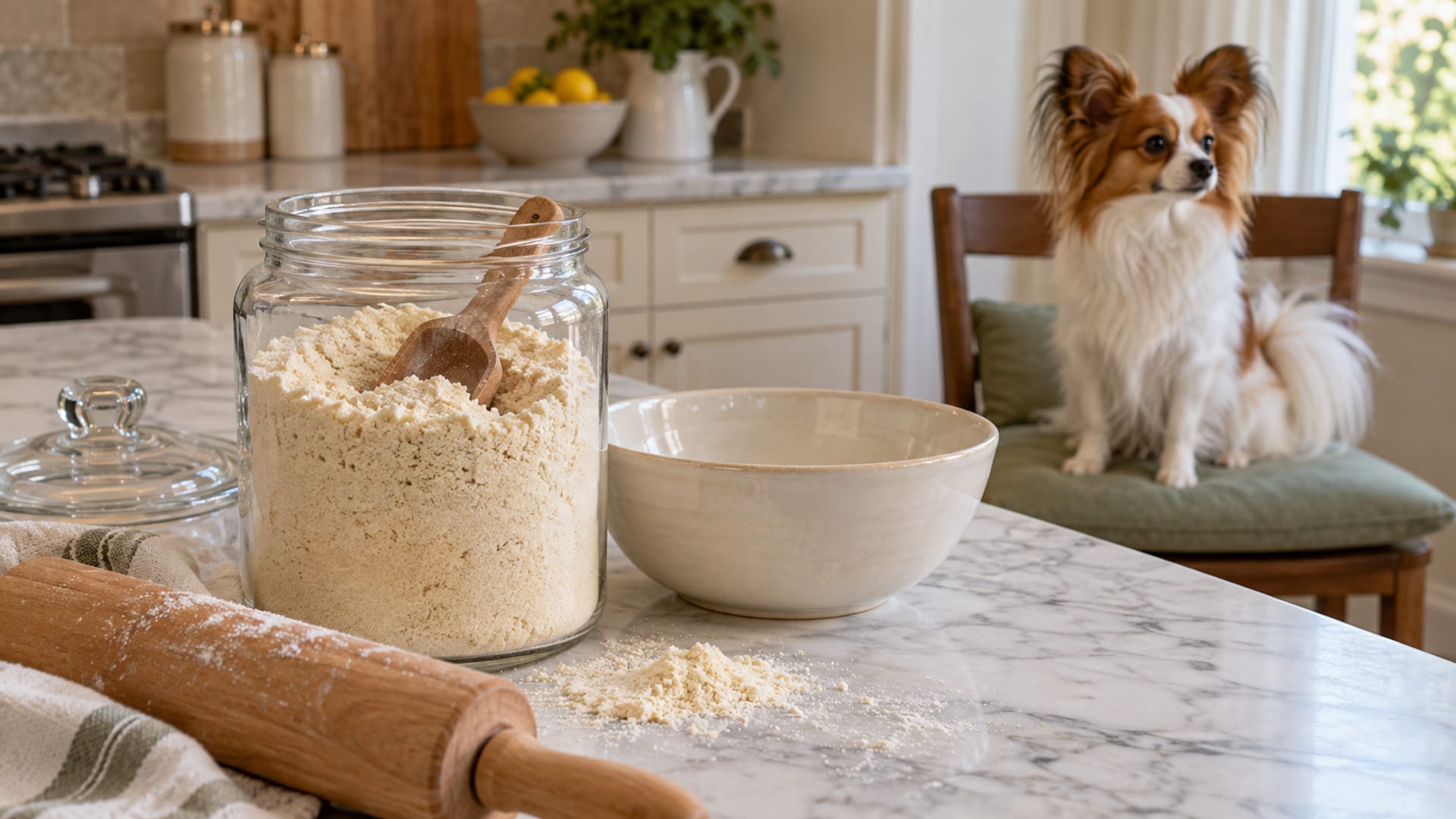
Almond flour is a caution food for dogs. Plain flour ground from ordinary sweet almonds isn't considered toxic, but it's rich in fat and can cause vomiting, diarrhea and possibly pancreatitis; bitter almond flour and recipes with xylitol, chocolate, raisins, macadamia nuts or alcohol are the real concern.
If your dog just licked up a spill, raided a bowl of dough or finished off some cookies, find the bag or the recipe first. The label, how much is gone and your dog's size tell you whether to watch at home or call your vet now.
Key takeaways
Tap a card to bring it forward.
- Plain sweet almond flour isn't a known poison for dogs, but its fat can cause vomiting, diarrhea and possibly pancreatitis.
- Bitter almond flour is a different product. Bitter almonds can contain amygdalin, which can release cyanide.
- In cookies, cakes and dough, the other ingredients often matter more than the flour: check for xylitol, chocolate, raisins, macadamia nuts, alcohol and heavy salt.
- Raw flour and raw dough can carry Salmonella or harmful E. coli, because grinding doesn't kill bacteria.
- Call your vet or a pet poison line for a large amount, a small or fragile dog, a toxic add-in, or repeated vomiting, belly pain or weakness.
What to do if your dog just ate almond flour
Gathering a few facts first makes the phone call shorter and the decision clearer.
- Find the bag, box or recipe. The label tells you whether it's plain sweet almond flour or something else, and what else went into the food.
- Read every ingredient. Keto and sugar-free recipes may contain xylitol, and cookies or cakes can hold chocolate, raisins, macadamia nuts, alcohol or a lot of salt. The ASPCA's list of people foods to avoid feeding pets explains why each of those is a problem.
- Estimate how much is gone and when. A lick off the floor and half a bag lead to different advice, and the time helps a vet judge what to expect next.
- Write down your dog's weight. The same amount is a bigger share of a small dog's body than a large dog's.
- Call your vet or a pet poison line if a warning sign fits. That means the label says bitter almond, you can't identify the product, there's a toxic add-in, your dog ate a lot, or your dog is very small, medically fragile or already sick. Choking, trouble breathing, repeated vomiting, belly pain or swelling, severe weakness, tremors, seizures or collapse all mean call now. The ASPCA Animal Poison Control Center says to call poison control or your veterinarian right away if you think your pet ate something potentially poisonous.
- If none of those fit, watch your dog and keep the label handy. A small amount of clearly labeled plain sweet almond flour in a dog acting normally doesn't always need an emergency call. If you can't tell how much was eaten, a quick call to your regular vet is a sensible middle ground.
Which almond flour products carry more risk
The form of the flour and what it was mixed with change the answer quite a bit.
Tap or hover a row to highlight it.
| Form | Risk level | Main concern |
|---|---|---|
| FormPlain sweet almond flour or almond meal | Risk levelCaution | Main concernHigh fat; stomach upset, possible pancreatitis |
| FormBlanched or superfine almond flour | Risk levelCaution | Main concernSame fat; blanching doesn't turn it into a dog treat |
| FormRaw flour or raw dough | Risk levelCaution, higher | Main concernPossible Salmonella or E. coli, plus raw eggs or other ingredients |
| FormCookies, cakes, breads and muffins | Risk levelDepends on the recipe | Main concernFat, plus any xylitol, chocolate, raisins, macadamia nuts, alcohol or salt |
| FormSugar-free or keto treats | Risk levelRead the label first | Main concernMay contain xylitol |
| FormBitter almond flour | Risk levelAvoid | Main concernAmygdalin, which can release cyanide |
| FormWhole almonds or coarse pieces | Risk levelCaution | Main concernChoking or blockage, especially in small dogs |
Plain almond flour and almond meal are ground almonds. The ASPCA Animal Poison Control Center says sweet almonds, *Prunus dulcis*, aren't toxic to pets but may cause stomach upset, vomiting, diarrhea and possibly pancreatitis. Blanched or superfine flour is the same nut with the skins off or ground finer, so the fat and the caution are the same.
Raw flour adds a second problem. The FDA explains that flour is a raw food, and grinding doesn't kill bacteria, so raw flour can carry *Salmonella* or harmful *E. coli*. Uncooked keto dough may also contain raw eggs. Cooking deals with the bacteria, but the fat and every other ingredient stay put.
Bitter almonds are the one almond that is toxic on its own. The FDA's page on natural toxins in food notes that bitter almonds contain amygdalin, which can break down into cyanide. In an FDA-authored study in the Journal of Forensic Sciences, bitter almond samples held about 1.4 mg of cyanide and 20 to 25 mg of amygdalin per gram, while sweet almond samples showed neither at the levels tested. Those are lab measurements of the nuts, not a dose for dogs, so if the label says bitter almond, call your vet instead of doing the math.
Whole almonds bring their own risk. The American Kennel Club points out that whole almonds can choke a dog or block the gut, and small breeds are more vulnerable. Our entry on almonds covers the whole nut.
Can your dog have almond flour on purpose?
If you do share, the lower-risk version is a small bite of something plain, with no xylitol, chocolate, raisins, macadamia nuts or alcohol, for a healthy dog that isn't on a low-fat diet. Even so, I'd keep almond flour as an ingredient for people and give the dog a regular dog treat.
Almond flour has no established toxic dose for dogs and no vet-recommended serving size by weight, so no portion counts as routine. The AKC advises against feeding almonds at all. If your dog already ate some, your vet can judge the amount once they know the product, the ingredients, roughly how much, when, and your dog's weight. Any bitter almond flour, or any product with xylitol, chocolate, raisins or macadamia nuts, is worth that call on its own.
Dogs that have had pancreatitis, or that eat a fat-restricted diet, need extra care, since almond flour is calorie-dense and high in fat. The Merck Veterinary Manual describes pancreatitis in dogs and how it's managed by a vet, so call sooner for a dog with that history.
Signs to watch for over the next day or two
With plain sweet almond flour, the likely trouble is an upset stomach: vomiting, diarrhea, gas, belly discomfort, eating less and low energy. If the fat triggers pancreatitis, the vomiting tends to keep going, often with belly pain, weakness and a dog that won't eat.
Stomach irritation can show up fairly soon after eating. Pancreatitis can take longer to become obvious, and illness from bacteria in raw flour or dough can also be delayed, so keep watching for the next day or two even if your dog looks fine an hour later.
Tap or hover a row to highlight it.
| What you see | What it may point to | What to do |
|---|---|---|
| What you seeMild vomiting or loose stool, dog otherwise bright | What it may point toStomach upset from the fat | What to doKeep watching; call your vet if it continues |
| What you seeVomiting that keeps going, belly pain, weakness, poor appetite | What it may point toPossible pancreatitis | What to doCall your vet |
| What you seeGagging, choking or trouble breathing | What it may point toPieces stuck in the throat or airway | What to doEmergency vet now |
| What you seeTremors, seizures, collapse or a swollen belly | What it may point toSomething more serious than stomach upset | What to doEmergency vet now |
| What you seeVomiting, diarrhea or low energy after raw dough | What it may point toPossible illness from bacteria in raw flour | What to doCall your vet |
My dog ate almond flour before and was fine
That happens, and I believe you. A dog can clean up a floury spill or snag a cookie and never miss a meal. It just doesn't set a rule for next time, because a few things may have lined up in that dog's favor:
- The amount was small. A lick of flour is far from half a batch of dough.
- The dog was bigger. The same bite is less per pound for a Lab than for a Papillon.
- The flour was sweet almond. Bitter almond flour carries a different risk.
- It was cooked. Cooked flour doesn't carry the bacteria risk of raw dough.
- The recipe had nothing dangerous in it. No xylitol, chocolate, raisins, alcohol, macadamia nuts or heavy salt.
- Dogs differ. Individual sensitivity and plain chance play a part.
- Some signs come later. Pancreatitis and bacterial illness may not show right away.
The same flour in a different recipe, or eaten by a smaller dog, can go another way.
Almond butter, marzipan and other look-alikes
Almond shows up under a lot of names, and the products behind them vary, so read each label.
- Almond meal, ground almonds and almond powder usually mean ground sweet almonds, the same as almond flour.
- Bitter almond flour or bitter almonds are the ones to avoid, because of amygdalin.
- Almond extract is a concentrated flavoring and isn't the same as the flour.
- Almond butter, almond paste, marzipan and almond milk have their own recipes, and sugar, salt, chocolate or xylitol can make them riskier. The same label check applies to peanut butter.
- "Nut flour" can mean almond, coconut, hazelnut, macadamia or another nut. The AKC's guide to acorns and other tree nuts notes that tree nuts tend to be high in fat and can cause choking or blockage; our nuts entry covers the rest.
- Keto and sugar-free treats may contain xylitol even when the flour is plain.
- Almond flour cookies, cakes and breads can also hold chocolate, raisins, alcohol, salt or raw eggs.
Check what you learned
Three quick questions on the points that matter most.
Quick check
Questions about dogs and almond flour
These tend to come up once the first worry has passed.
How can I tell if my almond flour is sweet or bitter?
Start with the label. Regular almond flour, almond meal and ground almonds are made from sweet almonds, and bitter almond products name the bitter almond. If the flour came from a bulk bin or an unlabeled container, treat it as unidentified and call your vet.
Is almond flour a problem for cats too?
The ASPCA Animal Poison Control Center describes nuts as high-fat foods that can cause stomach upset and possibly pancreatitis in pets, and the cyanide risk from bitter almonds applies to any animal. If your cat got into the flour or a baked good, the same label check and the same call apply.
My dog has had pancreatitis. Is a small taste still okay?
Ask your vet before offering any. Almond flour is dense in calories and fat, which is what a dog with that history is supposed to avoid. If that dog already ate some, call instead of waiting for signs.
My dog ate almond flour hours ago and seems normal. Can I stop watching?
Keep an eye on your dog for the next day or two. An appetite that fades tomorrow or vomiting that starts late still counts, so note when you first see anything.
Sources
Checked September 25, 2026.
- ASPCA Animal Poison Control Center, Internet Myths and Rumors: Pet Toxin Edition
- ASPCA Animal Poison Control Center, People Foods to Avoid Feeding Your Pets
- U.S. Food and Drug Administration, Flour Is a Raw Food and Other Safety Facts
- U.S. Food and Drug Administration, Natural Toxins in Food
- Journal of Forensic Sciences (Toomey, Nickum and Flurer, FDA), Cyanide and Amygdalin as Indicators of the Presence of Bitter Almonds in Imported Raw Almonds
- American Kennel Club, Can Dogs Eat Almonds?
- American Kennel Club, Can Dogs Eat Acorns and Other Tree Nuts?
- Merck Veterinary Manual, Pancreatitis in Dogs and Cats