
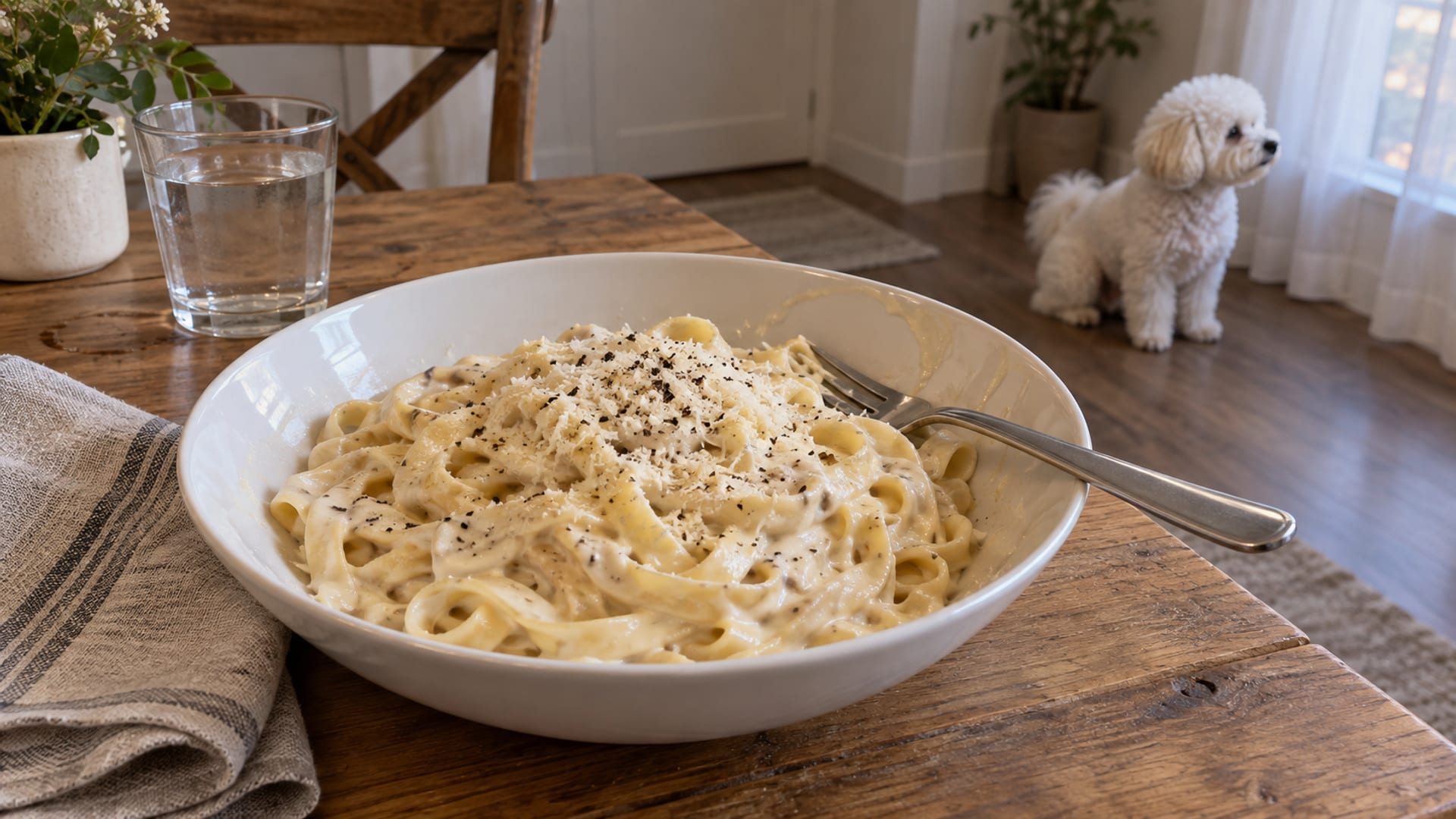
Dogs shouldn't eat Alfredo sauce, and whether a taste matters comes down to two things: whether the sauce had garlic or onion in it, and how much your dog got. A small lick of sauce made without garlic or onion usually means an upset stomach at most, but garlic, onion and their powders can damage red blood cells even after cooking, and a big helping of cream, butter and cheese can bring on stomach trouble or pancreatitis.
If your dog has already eaten some, check the jar or recipe for garlic, onion or seasoning powder, estimate how much went down and when, and call your vet or a pet poison line if any of those were in it or your dog ate a lot. Garlic and onion trouble can take days to show, so a dog who looks fine tonight still needs watching.
Key takeaways
Tap a card to bring it forward.
- Alfredo sauce belongs off the treat list. It's heavy on cream, butter and cheese, and many recipes add garlic or onion.
- Garlic, onion, chives, leeks and shallots can damage red blood cells, raw, cooked or powdered.
- A lick of garlic-free sauce is mostly a stomach question. Garlic, onion or seasoning powder in the sauce is a reason to call.
- Signs of garlic or onion harm can start within a day and often build over three to five days, so keep watching after the first night.
- Akitas, Shiba Inus and dogs with a history of pancreatitis need extra care with any amount.
What to do if your dog just ate Alfredo sauce
Each step gives you a fact the vet will ask for.
- Clear away what's left. Pick up the plate or jar so one lick doesn't become a bowlful.
- Read the label or go over the recipe. Look for garlic, onion, chives, leeks, shallots, green onion, onion or garlic powder, or a dry soup or seasoning mix, since those decide whether this is a possible poisoning or just a rich meal.
- Estimate how much and when. A lick and half a jar are very different, and timing shapes what the vet watches for.
- Note your dog's weight. The same spoonful is a much bigger dose for a small dog than for a large one, so have the number ready.
- Call if garlic, onion or a large amount was involved. The ASPCA's garlic page tells owners to call poison control or their local vet as soon as possible, and Pet Poison Helpline says the same for anything that might be toxic. Waiting for symptoms doesn't work well here, because the Merck Veterinary Manual describes red blood cell damage that often shows up days after the meal.
- Keep the label and keep watching. Save the jar or recipe, and check on your dog for several days.
Which Alfredo sauces carry the most risk
What's in Alfredo varies from one kitchen to the next. The Merck Veterinary Manual reports that onion and garlic cause harm whether raw, cooked, dehydrated or granulated. A long simmer in cream doesn't make them safe, and a powder packs more into each spoonful than fresh cloves do.
Tap or hover a row to highlight it.
| Form | Main concern | What to do |
|---|---|---|
| FormPlain sauce with no garlic or onion | Main concernFat and dairy; stomach upset, possible pancreatitis | What to doWatch the stomach; call if your dog ate a lot |
| FormSauce with fresh or cooked garlic, onion, chives, leeks or shallots | Main concernDamage to red blood cells | What to doCall your vet or a poison line |
| FormSauce with garlic powder, onion powder, flakes or dry soup mix | Main concernConcentrated garlic or onion | What to doCall promptly, especially for a small dog |
| FormDry Alfredo seasoning packet | Main concernMay hold concentrated onion and garlic powder | What to doTreat it as a call unless you can confirm every ingredient |
| FormJarred, restaurant or homemade sauce | Main concernRecipes differ, and salt can run high | What to doRead the label, ask the restaurant, or check every ingredient you used |
| FormChicken, shrimp or broccoli Alfredo | Main concernThe same sauce risks, plus bones, skewers or packaging | What to doCheck whether any bones, skewers or wrappers are missing |
Garlic and onion aren't the only reasons this sauce stays off the treat list. The ASPCA explains that dogs make little lactase, the enzyme that breaks down milk sugar, so milk-based foods can cause diarrhea and other digestive upset. Our entries on milk and cheese carry limits for the same reason. Salt varies too: the FDA's sodium report tracks Alfredo and cream-based pasta sauces as their own category, and only the label tells you what a particular jar holds.
How much Alfredo sauce is a problem
For a sauce you know has no garlic, onion or seasoning powder, I'd still skip sharing it. It adds nothing a dog needs, and no safe serving by dog size has been set. The bigger worry is fat. VCA Animal Hospitals names fatty meals as a possible trigger for pancreatitis, a painful inflammation of the pancreas that can mean a hospital stay, and Pet Poison Helpline's kitchen list flags fatty table food for the same reason. A lick is unlikely to cause that, but a dog who empties a serving dish is worth a call even when the sauce was plain.
For a sauce with garlic or onion, the label won't tell you how many grams went into each spoonful, so you can't work out a dose at home. The one published dog figure is for raw onion: the Merck Veterinary Manual reports that 15 to 30 grams of raw onion per kilogram of body weight has caused signs in dogs. That's an observed exposure rather than a safe line, and powders in a sauce can be far more concentrated than fresh onion. Call with your dog's weight, the product or recipe, and how much was eaten and when, and let the person on the line judge the risk.
Some dogs deserve a lower bar for calling. Pet Poison Helpline notes that risk depends on the amount, the dog's size and the product's concentration, and that Japanese breeds such as Akitas and Shiba Inus are more sensitive. VCA's guidance on nutrition and pancreatic disease recommends low-fat food for dogs with pancreatitis, so a dog who has had it, carries extra weight or has high blood fats shouldn't get rich sauce at all.
Signs to watch for over the next several days
Stomach signs tend to come first: vomiting, diarrhea, nausea, belly discomfort, poor appetite or tiredness, from the fat, dairy, salt, garlic or onion.
Garlic and onion damage runs on a slower clock. The Merck Veterinary Manual gives this timeline:
Tap or hover a row to highlight it.
| Time after eating | What can happen |
|---|---|
| Time after eatingWithin 24 hours | What can happenBlood changes can begin |
| Time after eatingAround 72 hours | What can happenThose changes peak |
| Time after eating3 to 5 days | What can happenRed blood cells typically break down, which brings weakness and pale gums |
So, a dog who seems normal tonight still needs watching all week. Head to a vet right away for any of these signs, which Merck and VCA both treat as reasons for urgent care:
- Pale, white or yellowish gums
- Weakness, collapse or tiring quickly on walks
- Fast breathing or a racing heart
- Dark or bloody urine
- Repeated vomiting or severe diarrhea
- Belly pain
My dog ate Alfredo before and was fine
I believe you. Plenty of dogs have licked a pasta plate and slept it off. That doesn't carry over to the next jar or the next dog, for specific reasons.
The amount may have been too small to cause harm you'd notice. The same spoonful is a far larger dose for a small dog than a big one. The recipe may have been different, since one brand has no garlic while another is built on garlic powder. Individual dogs react differently, and Pet Poison Helpline points to breed, size and amount as factors. Timing matters as well: the Merck Veterinary Manual describes red blood cell damage that can appear several days later, so a little tiredness three days on may never have been linked to the pasta.
The earlier dog's good outcome was real. It just can't tell you how tonight's dog, or tonight's sauce, will turn out.
Other sauces and dishes that raise the same question
A sauce's name doesn't tell you what's in it. Carbonara, béchamel, white sauce, garlic parmesan, cream sauce, ranch and cheese sauce can all look alike, and white color says nothing about garlic, so check the ingredient list the same way.
Garlic powder, granulated garlic, garlic salt, onion powder and dry soup mixes can be concentrated; our pages on garlic and onions cover them in detail. Green onion, scallions, shallots, chives and leeks belong to the same family.
Dishes built on Alfredo carry their own extras. Alfredo pizza often adds more garlic, shrimp Alfredo brings the questions in our shrimp entry, and bone-in chicken Alfredo adds the risks covered under chicken bones.
Check what you learned
Three quick questions to go over the main points.
Quick check
Questions about dogs and Alfredo sauce
A few more things owners ask once the first worry has passed.
Can my dog eat the plain noodles from fettuccine Alfredo?
Noodles lifted out of the dish are still coated in sauce, so they carry the same garlic, onion, fat and salt questions, and toppings can add bones or more seasoning. Plain pasta that never touched the sauce is a separate question.
The label says "natural flavor." Could that include garlic?
It might, and the label may not say how much. If your dog ate a fair amount, call the manufacturer or a veterinary poison service with the full ingredient list.
How long can garlic or onion signs last?
Pet Poison Helpline's kitchen toxins page says signs can begin 24 hours after eating or several days later and may last 10 to 20 days. Tell your vet if your dog seems off at any point in that stretch.
Is Alfredo sauce more dangerous for cats?
Yes. The Merck Veterinary Manual ranks cats as the most sensitive species to garlic and onion, ahead of dogs, and links most cases to concentrated products like powders. If your cat got into garlic Alfredo, call your vet.
My puppy or senior dog ate some. Is that different?
No set Alfredo amount has been shown to be safe for puppies, seniors, pregnant dogs, or dogs with diabetes or kidney disease. Mention the age and health history when you call your vet.
Sources
Checked September 25, 2026.
- ASPCA, People Foods to Avoid Feeding Your Pets
- ASPCA, Garlic
- Merck Veterinary Manual, Garlic and Onion (Allium spp) Toxicosis in Animals
- Pet Poison Helpline, Onions Are Toxic To Dogs
- Pet Poison Helpline, Kitchen Toxins to Pets
- VCA Animal Hospitals, Pancreatitis in Dogs
- VCA Animal Hospitals, Nutrition and Pancreatic Disease in Dogs
- FDA, Sodium in the U.S. Food Supply for Products in 2022