
Dog Scared of Fireworks: What to Do Tonight and How to Help Over Time
By Cal Hewitt · Published
Training
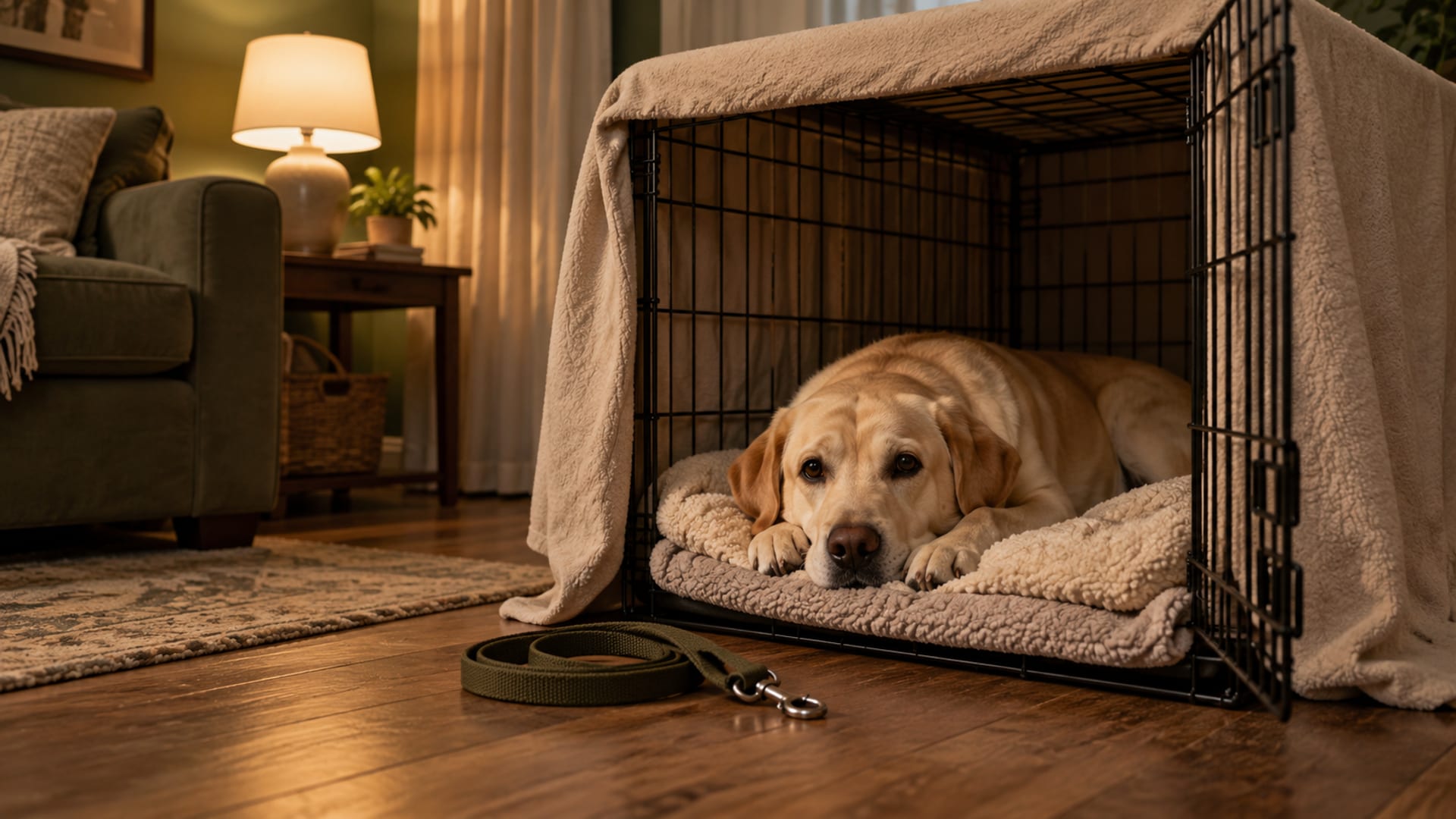
If fireworks are coming tonight, bring your dog indoors before the noise starts, close the windows and curtains, and set up a quiet interior room with familiar bedding. Add soft music, television, or white noise to soften the bangs, keep every door and gate secured, and make sure the tag and microchip details are current.
Let your dog hide or stay near you by choice, and never force contact or punish fearful behavior. If your dog panics, tries to escape, gets hurt, or has a fear that is new or getting worse, call your veterinarian, and do it before the next fireworks event.
Key takeaways
Tap a card to bring it forward.
- Bring your dog inside before dark, walk and toilet them on a leash first, and keep doors, gates, and windows secured.
- Set up an interior refuge with familiar bedding, closed curtains, and music, television, or white noise.
- Follow your dog's lead on contact. Calm company is fine if they seek it; dragging them out of hiding or punishing fear is not.
- Wraps, pheromones, and calming treats are optional extras with limited support, and they don't replace a plan or your vet.
- Only a veterinarian should decide on medicine, after an exam. Human or leftover medicine is not the answer.
- Sound training takes several weeks and ongoing practice, and starts best well before the next holiday.
I'm Cal, and I'm not a veterinarian or a trainer, so what follows comes from veterinary behavior and safety guidance, linked where it matters. You came here worried and probably short on time, so the first section is tonight's plan. The rest covers what fear looks like, what to ask your vet, and what you can start working on so the next holiday goes better.
What should you set up before the noise starts?
Start with the room, because a dog who can't hear and see as much has less to react to. Choose an interior room away from windows, and put familiar bedding, a favorite toy, and water in it. The ASPCA and the AKC both point to an interior room, closed blinds, and a calm setup, and the VCA hospital network adds music and television to cover the sound from outside.
Here is the order that works for most households:
- Take your dog out on a leash for exercise and a toilet break before dark, then keep them indoors once fireworks begin.
- Check collars, tags, doors, gates, windows, and fence access.
- Close windows, curtains, and blinds.
- Turn on soft music, a television, an exhaust fan, or white noise. The goal is to make the outside bangs less prominent, not to drown them out completely.
- Offer a food toy or a treat only if your dog can eat comfortably. If they refuse food, their fear is too high for food right now, so don't push it.
A safe room lowers how much your dog hears and sees, but it may not remove the fear. Stay close enough to notice if things get worse. Also keep fireworks and spent fireworks away from your dog, since the ASPCA warns that swallowing them can cause stomach, blood, muscle, and nervous system problems.
What does fireworks fear look like?
Fear in dogs runs from mild to full panic, and knowing where your dog sits helps you decide what to do. The FDA describes noise aversion as a fear response to sudden, loud, unpredictable sounds such as fireworks, thunder, and gunshots, and VCA lists the signs owners see.
Milder signs include startling, freezing, cowering, trembling, panting, drooling, and refusing food. A dog who is more distressed may pace and be unable to settle, bark, whine, or howl, urinate or defecate indoors, hide again and again, or chew and destroy things. The hardest signs to watch are attempts to escape through doors, windows, fences, or a crate, which can end in injury.
Panic is the point where the dog can't settle, tries to escape in a dangerous way, damages teeth or claws, hurts themselves, becomes physically unwell, or stays distressed long after the noise ends. If you see that, you're past home comfort measures and into a call to your veterinarian. An emergency vet is the right call for injuries, trouble breathing, collapse, or signs that your dog swallowed fireworks.
You're not alone in this. In a peer-reviewed survey of dogs from 17 breeds, owners reported strong or very strong fear of fireworks in 21.17% of dogs, according to Storengen and Lingaas. That was an owner survey in Norway, not a count of American dogs, so read it as a sign that this is common, not as a US rate.
Should you comfort a scared dog?
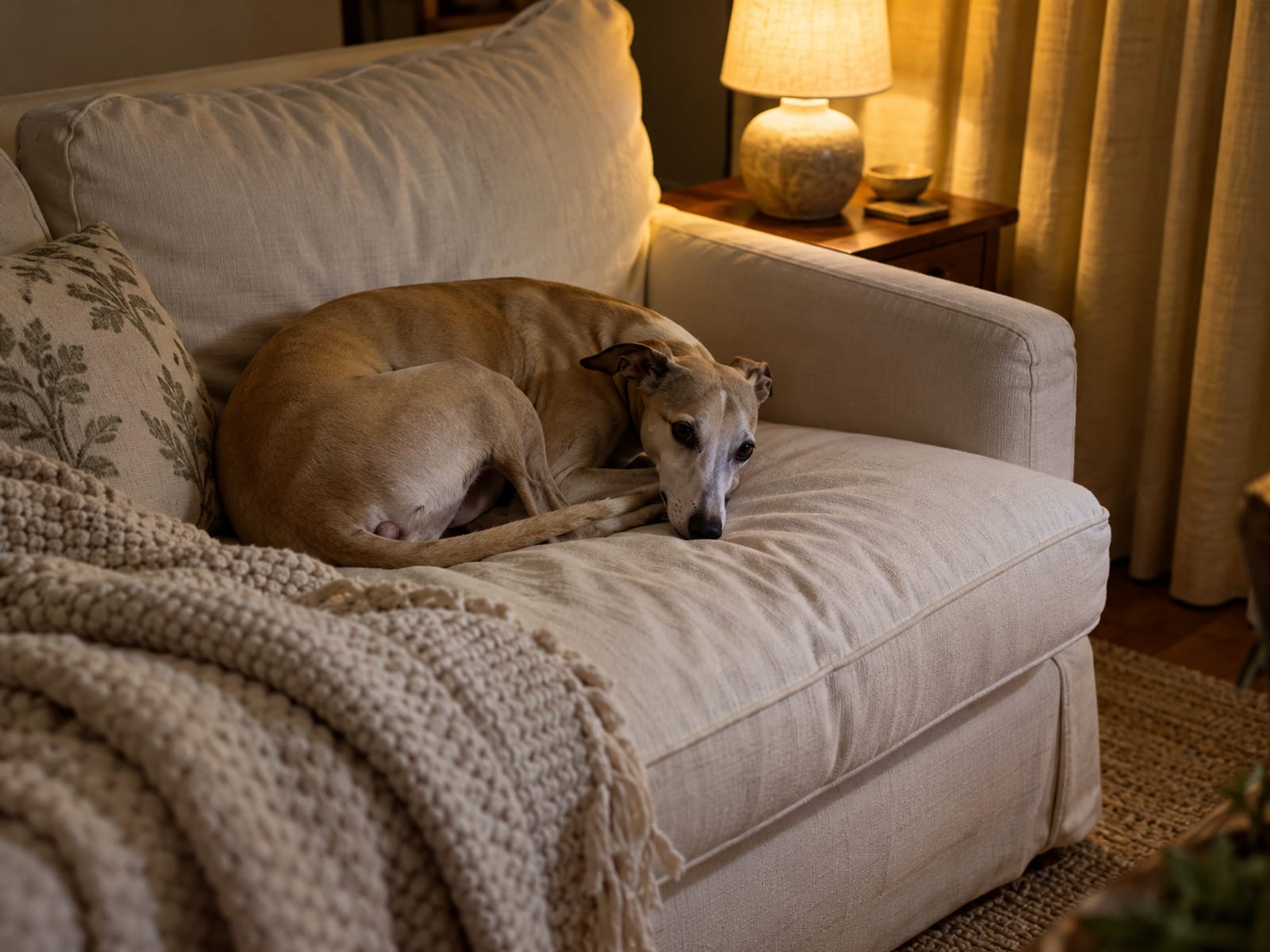
Yes, if your dog comes to you. Veterinary guidance on this has shifted over the years. An older VCA handout warned that fussing might reward fearful behavior, while a 2026 recommendation from the Colegio de Veterinarios de Málaga says calm company is fine when the animal seeks it, and that a dog who prefers to hide should be left alone in the refuge.
The practical rule is simple. If your dog presses against your leg, sit with them and stay calm. If your dog goes under the bed, let them stay there. Don't pull them out, don't corral them for a cuddle, and don't scold them for shaking, panting, or whining. Fear isn't misbehavior, and punishment adds a second thing to be afraid of. Keep your own voice and movements low and steady, because frantic energy from you can make the room feel more alarming.
A crate is only for dogs who already treat theirs as a safe, comfortable place. VCA's guidance on treating fear notes that a panicking dog can injure themselves when confined, so never shut a frantic dog in a crate and walk away.
How do you keep your dog from escaping?
A frightened dog can bolt through a door that is open for two seconds, so this is worth the extra attention. The ASPCA and the Málaga veterinary college both stress identification and supervision.
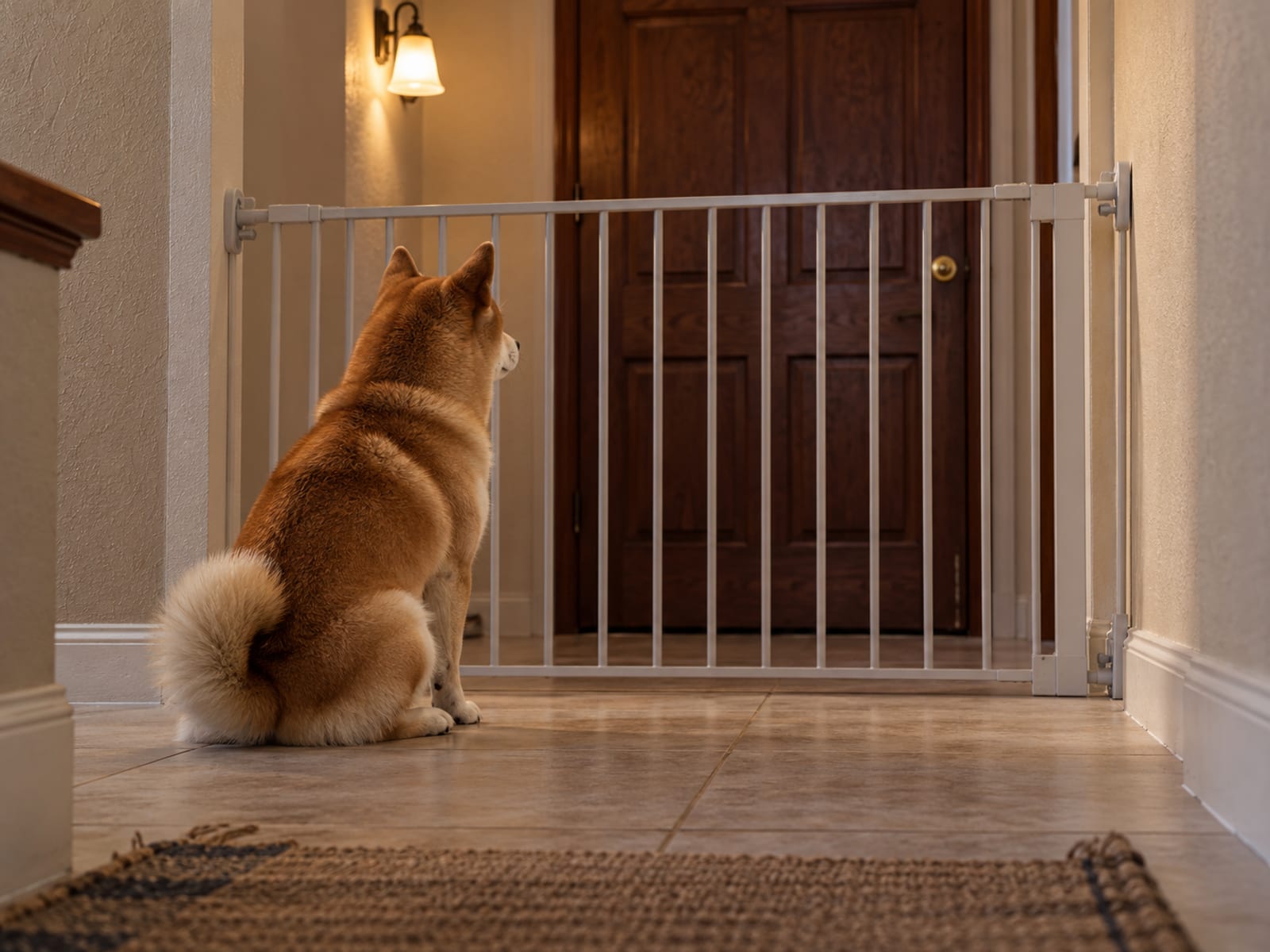
- Walk your dog on a leash before dark and keep outdoor trips to what's needed.
- Secure doors and gates, and ask visitors to use them carefully.
- Check that the collar fits and the tag has your current phone number.
- Confirm your microchip registration and contact details are up to date.
- Supervise doors and gates at peak noise.
If your dog does get out, act quickly and follow our guide on how to find a lost dog. Holidays with fireworks are exactly when this happens.
Do anxiety wraps, pheromones, and calming treats help?
They might help some dogs a little, and they're worth trying only as extras. VCA's page on behavior management products reports minimal data supporting pressure wraps, and another VCA page says some dogs may seem calmer in them. The ASPCA mentions an anxiety vest as an option in some cases. Treat a wrap as one optional piece of the plan.
Pheromone products may help some dogs, but the effect varies, and VCA lists dog-appeasing pheromones as an add-on, not a guaranteed fix. Treats and food toys help most when your dog is calm enough to eat, because they support the counter-conditioning I describe below. Calming treats and supplements, including melatonin, can have side effects or interactions, so talk to your vet before you give any. "Natural" doesn't mean effective or risk-free.
None of these replace a safe room, secured exits, training, or veterinary care. If your dog is still shaking and panting with a wrap on and a diffuser plugged in, move on to the vet conversation.
What medicine can a veterinarian prescribe?
I can't tell you what to give your dog, and I won't give any amounts here. What I can tell you is that medicine for noise fear is a veterinary decision made after an exam, because the right choice depends on your dog's health history and how they respond.
Veterinarians may prescribe options such as dexmedetomidine oromucosal gel (sold as Sileo), which the FDA approved for canine noise aversion, or tasipimidine oral solution (sold as Tessie), which the FDA approved in 2026 for noise aversion and separation anxiety. Vets also choose other anti-anxiety medicines for specific situations, such as trazodone, gabapentin, alprazolam, or clonidine, and some dogs with broader anxiety need an ongoing daily medicine. Our page on gabapentin for dogs gives general background, with no prescribing advice.
Timing matters. VCA's guidance says many event medicines need to be working before panic starts, often at least about an hour before the expected noise, and the FDA describes Tessie as given about an hour before the trigger. The ASPCA suggests trying a prescribed medicine before the big event so you can see how your dog responds, under your vet's direction. Ask your vet exactly how and when to give it.
Two common ideas need a straight answer. Benadryl is an antihistamine, not a fireworks treatment, and human products can contain unsafe ingredients, as the AKC explains. Our page on Benadryl for dogs covers it, including the fireworks question. Acepromazine is a sedative, and the AKC and VCA both describe it as a poor choice for phobias by itself, because a dog can be slowed down and still be terrified. Don't give leftover medicine from a past prescription or any human medicine unless your vet tells you to.
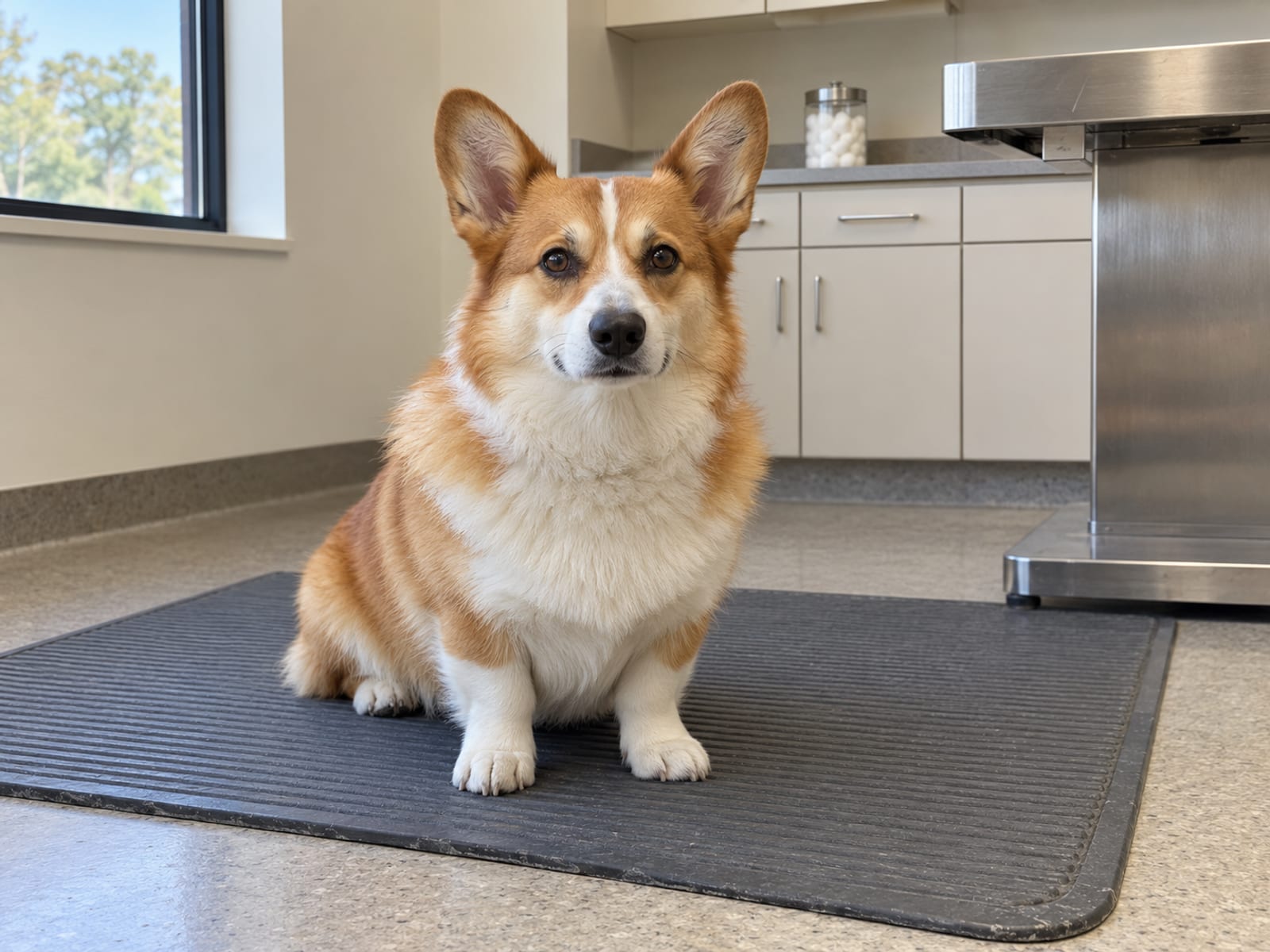
When should you call the vet?
Call your veterinarian when any of these is true:
- Your dog's fear is severe, getting worse, or causing escape attempts.
- Your dog can't recover after the noise ends.
- Your dog injures themselves, damages teeth or claws, or becomes physically ill.
- The fear began suddenly, especially in a senior dog.
- You think medicine might be needed.
- Your dog has other anxiety or behavior problems.
- Home training isn't producing steady progress.
Go to an emergency clinic for injuries, breathing difficulty, collapse, or if your dog may have swallowed fireworks.
New noise fear in an older dog deserves a prompt exam. VCA's page on fear of noises says pain, arthritis, ear disease, and partial hearing loss can change how a dog experiences sound. The AKC summarizes a study where dogs with pain developed noise fear about four years later on average than dogs without pain. A sudden change is not always "just behavior."
Call early, and not on the night itself. If fireworks are weeks away, you have time for an exam, a medicine plan, and a trial run. If fear also shows up when you leave the house, read about dog separation anxiety, since the two conditions can occur together.
How does sound training work over several weeks?
You can teach your dog that the sound predicts nothing scary, but it takes patience. VCA describes two parts working together. Desensitization plays the sound at a level low enough that your dog stays relaxed. Counter-conditioning pairs that sound with something good, such as high-value food, play, or a trained relaxation behavior.
A typical plan looks like this:
- Teach a settle or relaxation behavior when there's no noise at all.
- Play a fireworks or thunder recording at a barely audible volume.
- Pair the sound with food or another reward your dog loves.
- Raise the volume only while your dog stays relaxed.
- If fear appears, lower the volume or stop the session.
- Practice regularly, daily if you can.
- Keep up occasional practice after your dog improves.
Tap or hover a row to highlight it.
| Item | Figure | Source |
|---|---|---|
| ItemSuggested session length | FigureAbout 30 to 45 minutes | SourceVCA |
| ItemTypical program length | FigureSeveral weeks, with ongoing maintenance | SourceVCA |
| ItemDogs with strong or very strong fear of fireworks (Norwegian owner survey) | Figure21.17% | SourceStorengen and Lingaas |
| ItemOwners reporting a fearful noise response (UK owner survey of 4,280 dogs) | Figure25% | SourceBlackwell et al. |
Those timings are a guide, and every dog is different. Real fireworks add unpredictable timing, flashes, vibration, and changing locations, so a recording won't match everything. Start outside fireworks season if you can. Loud, uncontrolled exposure doesn't cure fear and can make it stronger, so never test your dog with full-volume fireworks. If your dog can't stay relaxed at low volume, ask your vet or a veterinary behaviorist for help, and skip pushing harder.
Who can help: trainers, behavior consultants, and veterinary behaviorists?
Start with your veterinarian, who can check for medical causes and prescribe medicine when it's appropriate. Then match the professional to the problem.
- A board-certified veterinary behaviorist is a veterinarian with specialized behavior training, and can address the medical and behavior sides together. This suits severe or complicated cases.
- A certified trainer or behavior consultant helps you carry out a reward-based plan. The CCPDT lists CPDT-KA, CPDT-KSA, and CBCC-KA credentials, and IAABC certifies Certified Dog Behavior Consultants (CDBC) for complex fear, anxiety, and phobia cases.
Dog training isn't licensed. The CCPDT says the industry is "unregulated with no licensing requirements or regulatory oversight," so check credentials, experience, methods, and references yourself. Ask:
- Have you worked with fireworks or noise phobia?
- What methods do you use, and do you use reward-based training?
- What happens if my dog becomes frightened?
- How do you work with my dog's veterinarian?
- Can you share references?
Walk away from anyone who recommends punishment, forced exposure, or harsh tools for a frightened dog. The AVSAB states that only reward-based training should be used and that aversive methods "should not be used under any circumstances." The same goes for correcting fear barking; our page on stopping a dog from barking shouldn't be read as permission to punish a scared dog. To find local professionals, use the DogServ directory for veterinarians, emergency veterinarians, trainers, and behavior professionals. Our guide to dog body language also helps you read stress signals early.
Questions people ask about dogs and fireworks
Short answers to the questions owners ask most come next.
What should I do right now when fireworks start?
Keep your dog indoors in the prepared room, close windows and curtains, turn on music or white noise, and secure doors and gates. Stay calm, and let your dog choose between hiding and staying near you.
Should I cuddle my dog during fireworks?
Yes, if your dog seeks you out, and keep it calm. Don't force cuddling, pull your dog out of hiding, or scold them.
What do vets prescribe for dogs scared of fireworks?
A veterinarian may consider dexmedetomidine oromucosal gel or tasipimidine, along with other short-term or ongoing anti-anxiety medicines. The choice depends on an exam and your dog's health, so ask your vet well before the event.
Do anxiety wraps or a snug shirt help during fireworks?
Some dogs seem calmer, but support is limited. Use one as an extra on top of a safe room and a plan, never in place of veterinary care.
Is there a pill I can give my dog for fireworks?
Not one you should choose on your own. Human medicines and leftover prescriptions can be wrong or unsafe for your dog, and acepromazine can sedate without easing fear, so your vet decides what's right.
How long does it take to train a dog to handle fireworks?
VCA describes several weeks of regular practice, followed by continued maintenance. Progress varies, so keep sessions short and stop at the first sign of fear.
When should I call the vet about fireworks fear?
Call when fear is severe, worsening, linked to escape or injury, or new in an older dog. Call well before the next event.
What is your next step?
If fireworks are tonight, work through the short list: walk your dog before dark, bring them inside, check ID and exits, close the curtains, add sound, and let your dog choose how close to be. Then keep an eye on them rather than on the clock.
If tonight goes badly, or it's already gone badly before, call your veterinarian this week and ask about an exam and a plan before the next holiday. Start low-volume sound practice well ahead of that date, and bring in a certified trainer or veterinary behaviorist if progress stalls. Your dog isn't being difficult. They're frightened, and a calm room, a secured door, and a plan made early give them the best chance to get through it.
Sources
- American Kennel Club: AKC
- American Kennel Club: AKC
- American Kennel Club: AKC
- American Kennel Club: AKC
- American Veterinary Society of Animal Behavior: AVSAB
- ASPCA: ASPCA
- ASPCA: ASPCA
- Certification Council for Professional Dog Trainers: CCPDT
- colegioveterinariosmalaga.es: Colegio de Veterinarios de Málaga
- IAABC: IAABC
- sciencedirect.com: Blackwell et al.
- sciencedirect.com: Storengen and Lingaas
- U.S. Food and Drug Administration: FDA
- VCA Animal Hospitals: behavior management products
- VCA Animal Hospitals: fear of noises
- VCA Animal Hospitals: guidance on treating fear
- VCA Animal Hospitals: VCA handout
- VCA Animal Hospitals: VCA hospital network