
Dog Eye Infection: Symptoms, What to Do Tonight and When to See a Vet Today
By Cal Hewitt · Published
Health
Red, goopy or watery eyes can be conjunctivitis, but they can also signal a corneal ulcer, dry eye, glaucoma, uveitis, allergies or a foreign body. Yellow or green discharge does not prove the cause. If your dog is squinting, holding the eye closed, seems painful, or has a cloudy eye, a sudden change, swelling or an injury, arrange same-day veterinary care.
Until the appointment, gently wipe discharge from the skin around the eye with a clean damp cloth, stop your dog from rubbing with an Elizabethan collar if needed, and use a sterile saline rinse only if a veterinarian has told you to.
Do not put human drops, leftover antibiotic or steroid drops, tea, herbs or homemade salt water in the eye.
Key takeaways
Tap a card to bring it forward.
- Squinting, a closed eye, pain, cloudiness, a sudden change, bulging, swelling or trauma means a vet visit today.
- Yellow or green discharge does not tell you whether bacteria are the cause.
- Tonight you can wipe the skin around the eye with a clean damp cloth and stop the rubbing.
- Human drops, leftover drops, steroid drops, tea, herbs and homemade salt water stay out of the eye.
- Benadryl does not treat an eye infection.
- Ask the clinic for an estimate, because tests and medicine can add to the exam fee.
Does your dog need a vet today?
I know the question you came in with: can this wait until morning? Here is how to sort it. VCA Animal Hospitals lists squinting, cloudiness, severe redness, swelling, bulging, trauma and yellow, green or red drainage as reasons for urgent care. The American College of Veterinary Ophthalmologists adds that corneal ulcers are very painful, commonly cause squinting or a closed eye, and can worsen rapidly.
So, call a clinic today if you see any of these:
- Squinting, blinking a lot, or holding the eye partly or fully closed
- Pawing or rubbing at the eye, which usually means it hurts
- A cloudy or hazy surface on the eye
- A sudden change, like an eye that was fine this morning
- Yellow, green or red drainage
- Marked redness or swelling of the eye or eyelids
- A bulging eye, a visible growth, or a raised third eyelid
- A cut, bite or any other injury to the eye or eyelid
An eyeball out of the socket, or severe trauma, is an emergency. Go to an emergency hospital right away; our directory of emergency vets can help you find one. For a lower-urgency problem, a regular visit from our directory of vets is the place to start. Lethargy with glassy-looking eyes is another reason to call.
If your dog is bright, comfortable, keeps both eyes open and has only a little clear watering, you still need veterinary advice, because owners cannot reliably sort mild irritation from an ulcer, dry eye, glaucoma or uveitis by looking. Phone the clinic, describe what you see, and let them tell you how soon to come in.
Is it an infection, or something that looks like one?
When people say "eye infection," they usually mean conjunctivitis. That is inflammation of the conjunctiva, the tissue lining the eyelids and covering part of the eye. The Merck Veterinary Manual says conjunctivitis has infectious and noninfectious causes and that appearance alone is not enough to tell them apart.
That includes the color of the discharge. The ACVO dry-eye page notes that green or yellow mucus can come from dry eye, so green does not automatically mean bacteria and clear does not automatically mean harmless. A veterinarian has to look at the eye.
Several problems look a lot like an infection from across the room:
- Corneal ulcer: a painful injury to the clear surface of the eye. It can cause squinting, discharge, redness and cloudiness, and it can get worse quickly.
- Glaucoma: raised pressure inside the eye, which can damage vision fast.
- Uveitis: inflammation inside the eye.
- Dry eye: too few tears, which can cause mucus, redness, squinting, rubbing, cloudiness and a secondary infection.
- Allergies: allergic conjunctivitis can cause red, watery or goopy eyes. Our guide to dog allergies covers the wider topic.
- Cherry eye: a prolapsed gland of the third eyelid. See cherry eye in dogs for how it differs from conjunctivitis.
- Foreign bodies and eyelid or eyelash problems: a grass seed, a stray lash or an eyelid that rolls in or out can irritate the eye and cause secondary conjunctivitis.
Cloudiness deserves its own note. It does not automatically mean cataracts, and it can need urgent attention. Our page on cataracts in dogs explains why cloudy eyes have more than one cause.
One eye or two can be a clue, though not a diagnosis. Merck says one eye affected may point to a foreign body, tear-sac inflammation or dry eye. Both eyes can be involved with a viral or bacterial infection, allergies or an environmental irritant.
What you can safely do tonight
Start by calling the clinic or an after-hours line. Then, while you wait for the appointment:
- Wipe the skin around the eye. Use a clean cloth dampened with water and wipe away discharge from the fur and skin gently. VCA describes this kind of cleaning of visible debris around the eye before medication.
- Avoid touching the eye itself. Keep cloth, fingers and applicators off the surface of the eye.
- Stop the rubbing. If your dog is pawing at the eye, an Elizabethan collar (the cone) keeps paws away.
- Use sterile saline only if a veterinarian advised it. For example, VCA's page on follicular conjunctivitis describes veterinarian-directed saline flushing. Ask the clinic whether it fits your dog.
- Keep irritants away. Smoke, dust, grass and harsh chemicals can make a sore eye worse.
That is the whole list. Nothing here treats the cause, and it is not meant to. It keeps your dog more comfortable and the eye from getting worse until a veterinarian can look.
What never goes in the eye
It is tempting to reach for whatever is in the medicine cabinet at 10 p.m. Please don't. These stay out of the eye:
- Human eye drops, especially redness relievers. The ASPCA names oxymetazoline, xylometazoline, tetrahydrozoline and naphazoline as ingredients that can cause serious effects in pets, even in small amounts. Human products may also be wrong for the problem your dog actually has.
- Leftover antibiotic drops. They may be the wrong medicine and may not touch the cause. VCA warns that medication that helped in a previous episode may be ineffective or harmful in a new one, and using it can delay an exam.
- Steroid drops. Veterinarians do use steroids for certain inflammatory eye problems, but only after an exam. A corneal ulcer can worsen quickly, and a steroid started before the vet finds it can threaten the eye.
- Chamomile tea, herbs and homemade salt-water mixtures. They can be contaminated, irritating or mixed at the wrong strength, and they put off real care.
If you are unsure about a product, ask the clinic before it goes anywhere near the eye.
What causes a red, goopy or watery eye
Infectious causes include bacteria and viruses. VCA lists viral causes such as canine distemper virus and canine herpesvirus, and notes that bacteria can be a primary cause or can take advantage of another eye problem.
Noninfectious causes are just as common:
- Allergies
- Smoke, dust and harsh chemicals
- Foreign bodies such as grass or debris
- Dry eye
- Blocked tear ducts
- Eyelid problems such as entropion (an eyelid that rolls in) and ectropion (one that rolls out)
- Abnormal eyelashes, including distichiasis and ectopic cilia, which can rub the eye and cause secondary conjunctivitis
This is why a repeat problem needs a real answer. If the same eye keeps getting red, the cause may be dry eye, allergies or the way the eyelid sits, and a new bottle of drops will not fix that.
You cannot prevent every eye problem, but you can lower the odds of a repeat:
- Keep hair that irritates the eye trimmed, following your groomer's or veterinarian's instructions. Do not trim eyelids or eyelashes yourself.
- Keep dogs away from smoke, dust and harsh chemicals.
- Keep debris out of your dog's eyes during car rides; an open window sends grit straight at them.
- Talk with your veterinarian about allergies if the redness comes and goes.
- Get care for redness or discharge that keeps coming back, since dry eye and eyelid problems are common reasons.
For a broader sense of normal, our page on the signs of a healthy dog is a useful baseline. If your dog also has ear discharge, our guide to dog ear infections covers that.
What the veterinarian will check, and what treatment may follow
Expect a history and a full eye exam. The veterinarian may:
- Look at the eyelids, eyelashes, tear ducts and third eyelid with an ophthalmoscope or other eye equipment
- Run a Schirmer tear test, which measures tear production
- Measure the pressure inside the eye to check for glaucoma or uveitis
- Put fluorescein stain on the eye to look for a corneal injury or ulcer
- Flush the tear duct
- Collect a sample for culture, sensitivity or cytology
- Consider a biopsy or allergy testing when it makes sense
Treatment depends on the cause. It can include antibiotic drops or ointment, anti-inflammatory medication, lubricants, medicine that stimulates tear production for dry eye, treatment for allergies, surgery for eyelid or eyelash problems, and specific treatment for ulcers, glaucoma or uveitis. The medicine, the amount and the schedule are your veterinarian's call, and nothing should be started without that direction.
Some mild irritation, and certain cases of conjunctivitis, may improve on their own. You just cannot tell those apart from an ulcer or glaucoma at home, which is why a painful or changing eye needs an exam. For a superficial ulcer, the ACVO says most superficial corneal ulcers heal within 3 to 5 days.
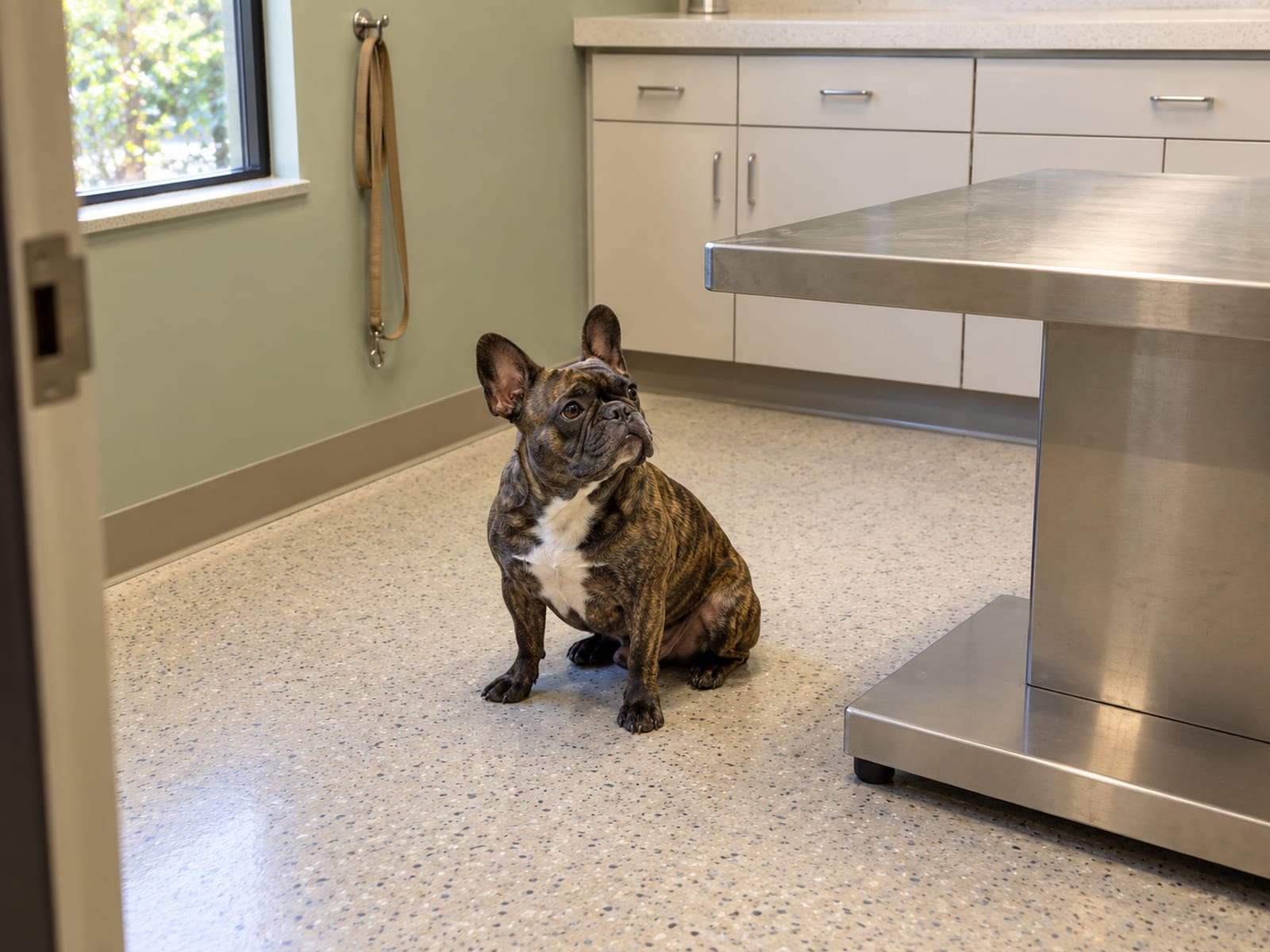
How to give prescribed drops or ointment
Once the veterinarian prescribes something, how you give it matters. This follows VCA's instructions for applying eye drops:
- Wash your hands before and after.
- If you were told to, clean visible debris around the eye with warm water and a clean washcloth.
- Keep the tip of the bottle or tube clean.
- Support your dog's head. A second person helps a lot.
- Gently pull the lower eyelid down to make a small pouch.
- Hold the bottle or tube close, but do not let the tip touch the eye, the eyelids or the fur.
- Give the amount your veterinarian prescribed.
- Let go, so blinking spreads the medicine.
- Reward calm behavior.
- Call the clinic if the eye looks more inflamed or you cannot get the medicine in.
Benadryl and other medicines for people
Benadryl (diphenhydramine) does not treat an eye infection. A veterinarian may suggest an antihistamine for a particular allergy problem, but it does not replace an eye exam. Our page on Benadryl for dogs goes into the antihistamine question.
Be careful with human allergy products. The ASPCA warns that combination products containing decongestants can be dangerous, and says human allergy medication should only be given under direct veterinary supervision. Ask first, every time.
What a visit may cost
Prices vary by clinic, region and whether you see a general practice, an emergency hospital or a specialist. These dated examples show the range:
Tap or hover a row to highlight it.
| Item | Figure | Source and date |
|---|---|---|
| ItemNew-patient exam with tonometry | Figure$285 | Source and dateAnimal Ophthalmology Center, January 15, 2026 |
| ItemNew-patient exam without tonometry | Figure$210 | Source and dateAnimal Ophthalmology Center, January 15, 2026 |
| ItemRecheck | Figure$95 | Source and dateAnimal Ophthalmology Center, January 15, 2026 |
| ItemInitial ophthalmology exam | Figure$285 to $520 | Source and dateUniversity of Wisconsin veterinary care, pricing current January 2024 |
| ItemAverage eye exam | Figure$130 | Source and dateCareCredit, citing a 2025 to 2026 study |
At the Animal Ophthalmology Center, tear testing and fluorescein staining cost extra and medication is not included. These are examples, not a price you should expect. Emergency or specialty care, extra tests, medication and surgery can all raise the total. Ask the clinic for an estimate before they add procedures, and ask which tests they recommend today and which can wait.
Questions dog owners ask about eye infections
How do you treat a dog's eye infection at home?
You can wipe discharge from the skin around the eye with a clean damp cloth and stop your dog from rubbing. Treating the infection itself needs a veterinary exam first, because the same red eye can be an ulcer, dry eye or glaucoma. Use sterile saline only if a veterinarian has advised it.
What does a dog eye infection look like?
Redness, swelling, discharge, watering, crusting, squinting and blinking a lot can all show up. These signs also appear with eye problems that are not infections, so the look alone cannot tell you the cause. Squinting or a closed eye means the vet today.
Can a dog's eye infection heal itself?
Some mild irritation or certain forms of conjunctivitis may improve on their own. Owners cannot reliably tell those from an ulcer, dry eye, glaucoma or uveitis, and those can threaten comfort or vision. A painful or changing eye needs veterinary assessment.
Can you get antibiotic eye drops for dogs over the counter?
Don't pick up drops yourself. The right medicine depends on the cause, and leftover or human drops can be the wrong drug or harmful. Your veterinarian will examine the eye and prescribe what fits.
Will salt water or chamomile tea help?
No. Homemade salt water and chamomile or other herbal rinses can be contaminated, irritating or mixed at the wrong strength. If a veterinarian recommends a rinse, they will point you to sterile saline.
What will a vet give a dog for an eye infection?
It depends on the cause. Treatment can include antibiotic drops or ointment, anti-inflammatory medicine, lubricants, tear-stimulating medicine for dry eye, allergy treatment or surgery for eyelid problems. Your veterinarian sets the medicine and how to give it.
Does Benadryl help conjunctivitis in dogs?
No. An antihistamine does not treat an eye infection, though a veterinarian may use one for a selected allergy problem. Ask your veterinarian before giving any human allergy medicine.
Quick check: dog eye problems
Your next step
If your dog is squinting, holding an eye closed, cloudy-eyed or changed suddenly, call a vet now. Use the DogServ vet directory for a clinic near you, or the emergency vet directory after hours. If the eye is calmer, call anyway and describe what you see; most clinics will tell you how soon to come in. Wipe the skin around the eye gently, keep paws away, and leave the drops in the cabinet. I'm not a veterinarian, and this page does not replace an exam, but a quick call tonight can protect your dog's eye.
Sources
- acvo.org: ACVO dry-eye page
- acvo.org: American College of Veterinary Ophthalmologists
- ASPCA: ASPCA
- CareCredit: CareCredit
- eye-vet.com: Animal Ophthalmology Center
- Merck Veterinary Manual: Merck Veterinary Manual
- uwveterinarycare.wisc.edu: University of Wisconsin veterinary care
- VCA Animal Hospitals: VCA Animal Hospitals
- VCA Animal Hospitals: VCA's page on follicular conjunctivitis
- VCA Animal Hospitals: VCA
- VCA Animal Hospitals: VCA