
Cataracts in Dogs: Cloudy Eyes, When to See a Vet and What Surgery Involves
By Cal Hewitt · Published , updated
Health
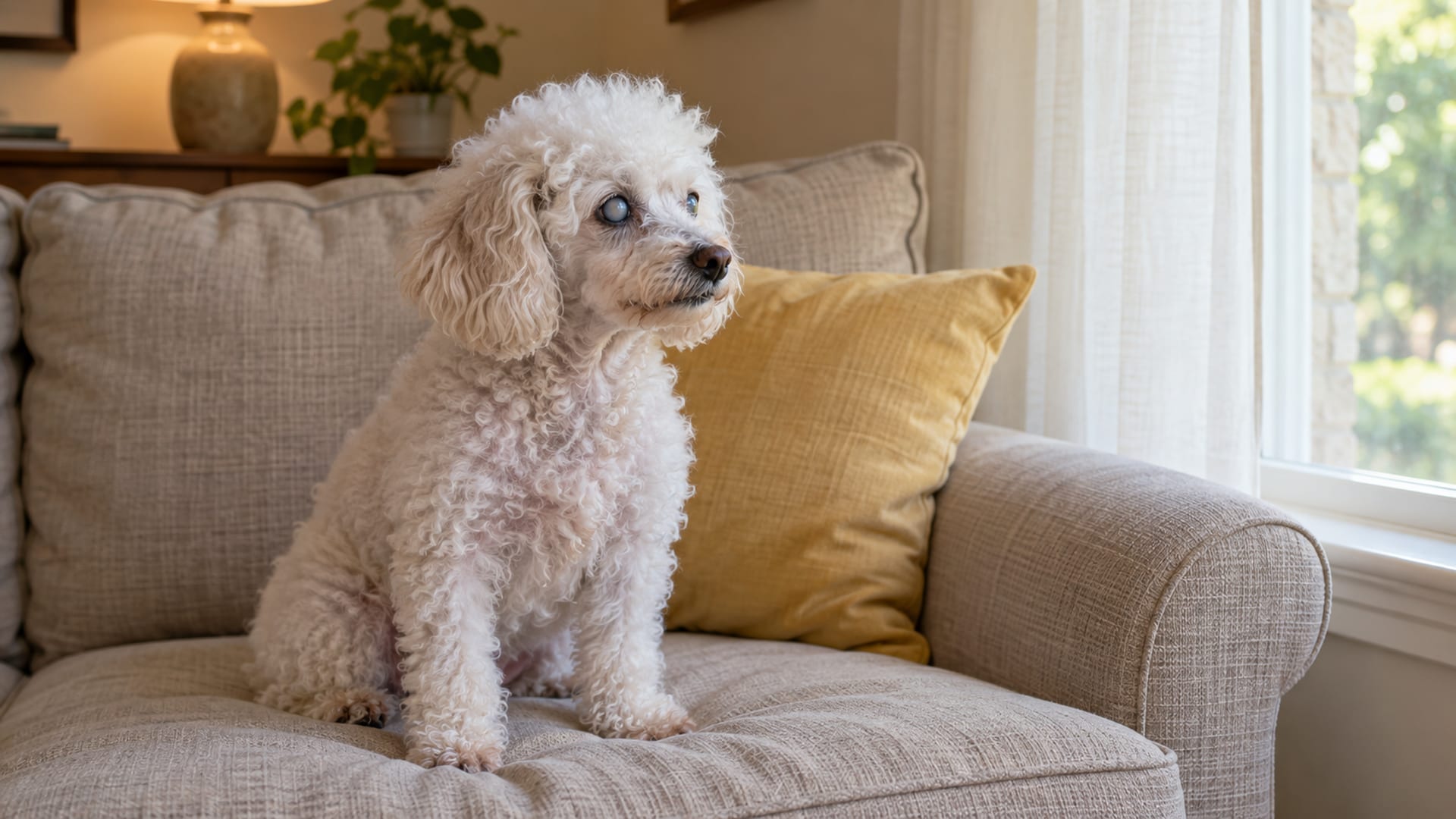
A cloudy eye can be a cataract, but a bluish haze in an older dog may instead be nuclear sclerosis, a normal aging change that usually leaves the dog able to see. A cataract is an opacity in the lens that can reduce vision and, as it spreads, cause blindness. Only a veterinary exam can tell the two apart. If the eye is red, painful or squinting, or your dog suddenly can't see or the eye suddenly looks different, get same-day veterinary care. Surgery can restore useful vision in dogs who are good candidates, and according to the American College of Veterinary Ophthalmologists (ACVO), eye drops do not dissolve cataracts.
Key takeaways
Tap a card to bring it forward.
- A bluish haze in an older dog's eye is often nuclear sclerosis, a normal aging change, and not every cloudy eye is a cataract.
- A red, painful or squinting eye, sudden vision loss, or a sudden change in how the eye looks means a vet visit today.
- Cataracts in diabetic dogs can form fast: in one study, half of 200 diabetic dogs had them by day 170 after diagnosis.
- Surgery (phacoemulsification) can restore useful vision in good candidates, but it needs testing first and weeks of careful aftercare.
- ACVO says no proven medical treatment reverses, slows or prevents cataracts, so drops sold to dissolve them are not supported.
- Dogs who don't have surgery still need eye pressure checks, and most adapt well to low vision in a safe, predictable home.
Is the cloudy eye a cataract or normal aging?
I know the moment. You look at your dog in good light and the middle of the eye has gone blue, gray or milky, and your mind jumps straight to blindness. Take a breath, because this could be one of two very different things.
The first is nuclear sclerosis. The Merck Veterinary Manual describes it as the normal age-related increase in density and hardening of the central lens tissue. Cornell University's College of Veterinary Medicine describes it as a bluish haze deep behind the pupil. It usually does not cause blindness, although a dog's fine-detail vision may decline. This is why so many older dogs seem to have hazy blue eyes and still find their ball in the yard.
The second is a cataract, which is an opacity of the lens or its capsule. It scatters light and blocks it from reaching the back of the eye, so vision drops.
From across the room, and even up close, the two can look alike. A vet may dilate the pupil and use a slit lamp (a bright, magnifying light), look at the back of the eye, and measure eye pressure. Appearance alone is not a diagnosis, and I can't tell you which one your dog has from a description. What I can tell you is that a new cloudy or bluish eye deserves an appointment soon, and the list of changes that come with aging is covered in our Senior Dog Care article if you're sorting through several at once.
What does a cataract do to a dog's vision?
How much a cataract affects sight depends on how much of the lens it covers. ACVO groups cataracts into stages, from least to most severe:
- Incipient: a small opacity in a limited part of the lens. Most dogs see fine.
- Immature: a larger opacity, but some useful vision may remain.
- Mature: the lens is mostly or completely opaque, with major vision loss.
- Hypermature: an advanced cataract where the lens breaks down and may leak material, become inflamed or shrink.
So, can a cataract make a dog blind? Yes, if enough of the lens becomes opaque. But a dog with a cataract is not automatically blind, and ACVO says progression can happen over days, weeks, months or years. Nobody can promise you how fast one will move.
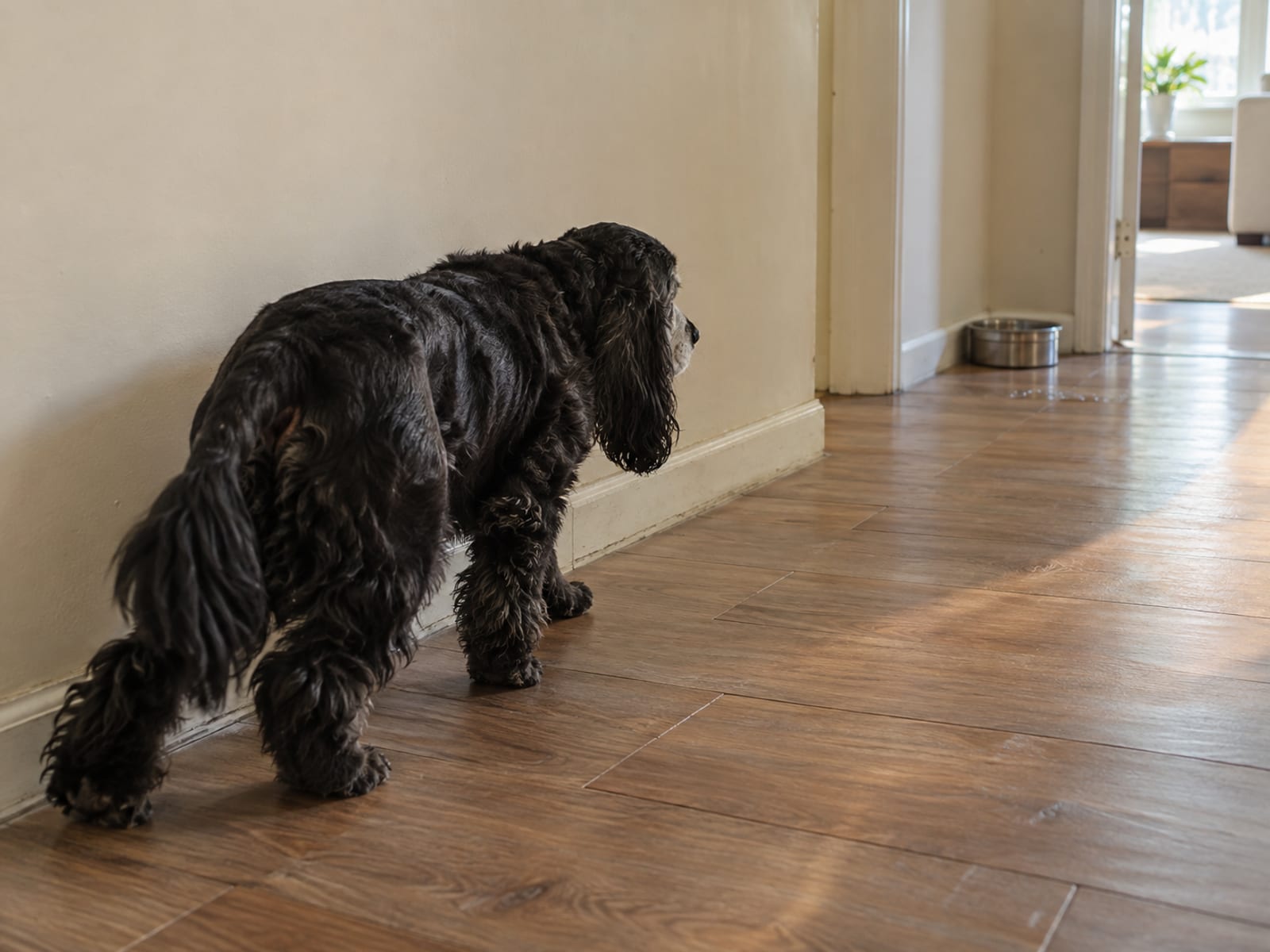
The signs of fading vision are often practical ones: bumping into furniture, hesitating on stairs, missing a toss, startling when touched, or seeming unsure in a dim room or a new place. Those deserve a vet appointment soon, even when the eye looks calm.
Which eye signs mean a vet visit today?
A cataract on its own may mainly cost vision. The trouble is what can come with it. According to Cornell and the Merck Veterinary Manual's owner guide, cataracts can leak lens proteins into the eye and trigger inflammation called lens-induced uveitis. Glaucoma, a rise in eye pressure, can develop and threaten both vision and comfort. The lens can also slip out of place, which is called lens luxation.
Get same-day veterinary care if you see any of these:
- A red or painful eye
- Squinting or holding the eye shut
- Heavy rubbing or pawing at the eye
- Sudden vision loss
- A sudden change in how the eye looks
- Pupils of different sizes
- Obvious swelling, or a dog in clear distress
These signs can come from several conditions, including uveitis, glaucoma, lens luxation, corneal disease or retinal detachment. You don't need to know which one it is. You need someone to look today. If your regular vet can't fit you in, use our emergency vet directory to find urgent care near you. Our Signs of a Healthy Dog article is good background, but a painful or suddenly changed eye isn't something to watch at home.
What causes cataracts, and how fast do diabetic cataracts form?
ACVO states that most canine cataracts have a hereditary basis, although a specific cause can't always be found. Other recognized causes include diabetes, age-related change, injury to the eye, inflammation, congenital disease, poor nutrition, radiation and disease of the retina. Merck lists diabetes, malnutrition, radiation, inflammation and trauma among them.
Diabetes deserves its own mention because of speed. A 2001 retrospective study of 200 diabetic dogs found that 50% had developed cataracts by day 170 after their diabetes diagnosis, 75% by day 370 and 80% by day 470. Merck reports cataracts in more than 85% of diabetic dogs, and Cornell reports roughly 75% to 80% within the first year. The numbers differ because the populations, follow-up times and definitions differ, but they all point the same way: in a diabetic dog, watch the eyes closely.
If your dog is diabetic, or you're wondering whether a sudden cloudy eye could be connected to diabetes, ask your vet whether testing makes sense. Our Diabetes in Dogs article covers the signs, daily care and costs of the disease itself.
What happens at a veterinary eye specialist's evaluation?
Your general vet will usually do the first exam and may refer you to a board-certified veterinary ophthalmologist. You can find a general vet through our vet directory if you don't have one yet.
At the specialist, the exam typically builds in layers. The pupil is often dilated so the whole lens can be seen. A slit lamp shows where the opacity sits and how much of the lens it covers. The back of the eye is examined, and eye pressure is measured with a tool called a tonometer. If surgery is on the table, Cornell notes two more tests are common:
- Ocular ultrasound, which looks behind a cloudy lens to check that the retina is in place and not detached.
- Electroretinography (ERG), which measures whether the retina still works. A new lens can't help a dog see if the retina behind it has failed.
Good questions to bring: Is this a cataract or nuclear sclerosis? Does the retina appear to work? Is the eye pressure normal? Is my dog a surgical candidate, and why or why not?
Cataract surgery: who is a candidate, how well it works, and what aftercare looks like
The standard surgery is phacoemulsification. According to ACVO, surgery is the only known treatment that can restore functional vision. The surgeon uses ultrasound to break up the cloudy lens and remove it through a small incision, and an artificial lens is usually placed when appropriate.
Not every dog is a candidate. Candidacy depends on the health of the eye, the dog's general health and fitness for anesthesia, how well the retina works, the dog's temperament, and whether the family can manage the aftercare. Specialist sources increasingly favor evaluating dogs early, since mature and hypermature cataracts can carry more complications.
The success figures are encouraging, with limits attached:
- Cornell reports success as high as 80% to 90% in ideal candidates.
- Merck reports 90% to 95% success within the first one to two years, as a broad summary rather than one study.
- A 2006 study of 172 dogs and 290 eyes followed dogs long term. Retinal detachment occurred in about 1% to 2%. Glaucoma stayed below 10% until after the first year, and surgical failure stayed below 10% until after three years, but risk rose with time. Hypermature cataracts and some breeds carried higher risk.
- A smaller retrospective comparison of 44 dogs and 77 eyes found better results with surgery than with medical management or no treatment, though its design leaves room for selection bias.
- A study of 520 eyes found lens-capsule disruption in 27.8% of included eyes, linked in some cases to later vision loss.
So, surgery can give a dog real sight back, and it does not guarantee that sight forever. Inflammation, glaucoma, retinal detachment and clouding of the lens capsule can all happen later.
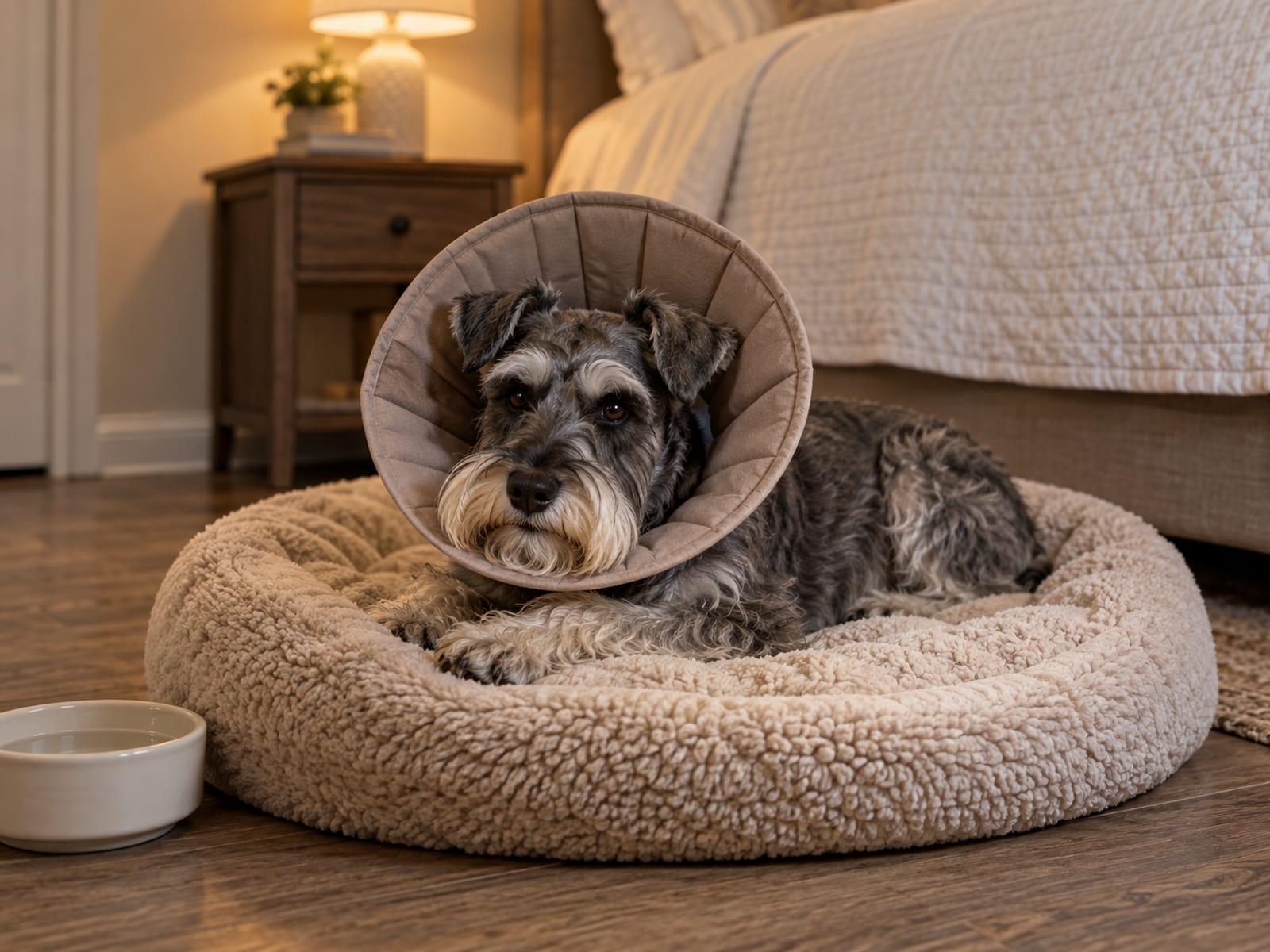
Aftercare is the part people underestimate. Cornell reports hospital stays commonly lasting three to four days. At home, expect several eye medications on a schedule, oral medication, a hard cone (E-collar), restricted activity, frequent rechecks early on, and eye monitoring for the rest of your dog's life. Before you say yes, ask your specialist exactly what the first weeks look like and whether your household can keep up.
What does cataract surgery cost?
I wish I could give you a reliable US price. I couldn't find an openly published US specialist fee schedule to cite, and owner posts online are individual stories, not a price range.
The best dated figure in my research is from the UK. The Royal Veterinary College's specialist price list, accessed in 2026, gave £4,600 to £5,200 for one eye and £5,600 to £6,300 for both. That included consultation, ocular ultrasound, ERG, surgery, hospitalization and hospital medications. It is not a US price, and US costs vary by region and practice.
What you can do is ask for an itemized estimate that lists the consultation, exam, ultrasound, ERG, bloodwork, anesthesia, surgery, artificial lens, hospital stay, medications, rechecks, and treatment of any complications. Consultation fees also vary, depending partly on whether testing is bundled in. If you have pet insurance, coverage depends on your policy terms and pre-existing condition rules; our Pet Insurance for Dogs article walks through what to check.
If you don't choose surgery: medication, monitoring and a safe home
Plenty of families don't go ahead with surgery, whether because of the dog's health, the retina, temperament, age or cost. A dog without surgery still needs care.
The first piece is inflammation control. Veterinary sources describe topical anti-inflammatory treatment to manage cataract-related inflammation, and the drug classes include topical corticosteroids and topical nonsteroidal anti-inflammatory drugs. Your vet chooses whether your dog needs them, which one, and how often; use exactly what they prescribe. Merck says long-term topical anti-inflammatory treatment and monitoring may matter when surgery isn't done, because lens-induced uveitis, glaucoma and a shrunken, nonfunctional eye (phthisis bulbi) can develop.
The second piece is monitoring. Cornell recommends veterinary checks of eye pressure, with one source describing checks every four to six months.
About the drops sold online to dissolve cataracts: ACVO states plainly that "there is no proven medical treatment known to reverse or slow the progression of, or prevent the formation of a cataract." Money spent there is better spent on the exam and pressure checks.
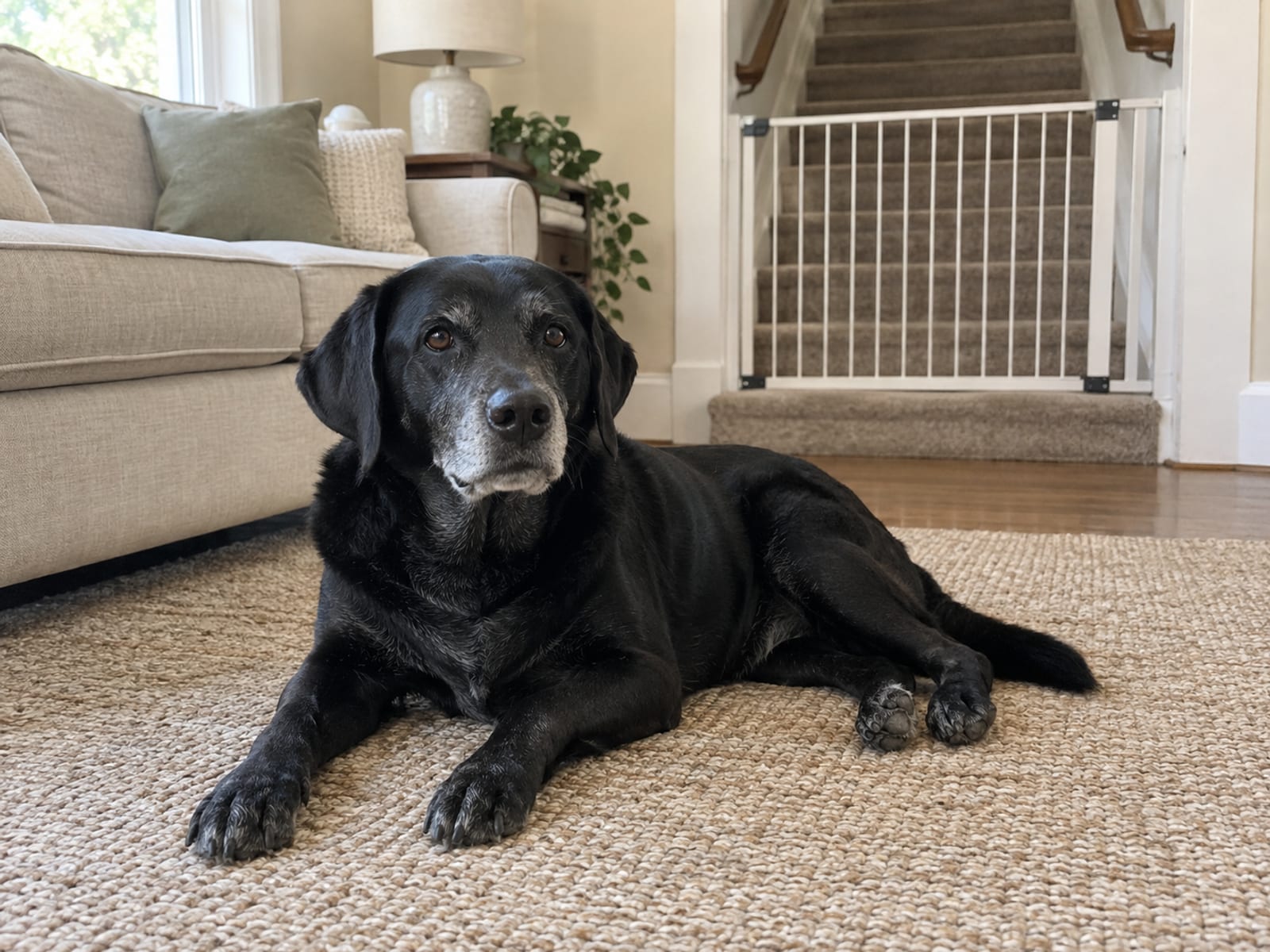
The third piece is home. Cornell says dogs generally adapt well to blindness in a protected, consistent environment, and there's a lot you can do starting today:
- Keep furniture, food bowls, water and beds in the same places.
- Block stairs and pools with gates or barriers.
- Use your voice before you touch your dog, and use the same verbal cues each time.
- Supervise closely in unfamiliar places.
- Avoid rearranging rooms or changing routines suddenly.
These are safety habits, not a treatment plan, but they make daily life easier for a dog whose world has gone dim.
Which breeds have inherited risk, and what is eye screening?
Inherited cataracts are reported or suspected in many breeds. The sources I relied on name Miniature Schnauzers, Boston Terriers, Cocker Spaniels, Poodles and Poodle crosses, Shih Tzus, Siberian Huskies and Yorkshire Terriers, among others. The list isn't complete, and a breed's risk doesn't diagnose any one dog.
For breeding dogs, the screening tool is the OFA Companion Animal Eye Registry (CAER) exam. According to the Orthopedic Foundation for Animals (OFA) and ACVO, a board-certified veterinary ophthalmologist performs it using a slit lamp and indirect ophthalmoscopy. It is a screening exam, not a full eye workup. Certification is valid for 12 months, and annual exams are recommended because inherited disease can show up later in life.
OFA says a cataract may make a dog ineligible for certification, and that breeding is generally not recommended for a dog with partial or complete lens opacity, with some specified exceptions. A passing exam records what the ophthalmologist saw that day. It doesn't prove the dog isn't a carrier. If you're buying a puppy from a breed on that list, it's reasonable to ask whether the parents had current CAER exams.
Questions owners ask about dog cataracts
How long can my dog live with cataracts?
The sources I used focus on vision and eye comfort rather than lifespan. What they make clear is that the risks worth managing are the complications, such as uveitis and glaucoma, which is why regular eye pressure checks matter for a dog who doesn't have surgery. Cornell notes that dogs generally adapt well to blindness in a protected, consistent home.
Is cataract surgery worth it for a dog?
It can be, for the right dog. Cornell reports success as high as 80% to 90% in ideal candidates, and ACVO calls surgery the only known way to restore functional vision. The deciding factors are your dog's retina, eye and general health, temperament, and whether your household can manage weeks of drops, a cone and rechecks.
Is there anything I can do for a dog with cataracts at home?
Yes: keep the home layout consistent, gate off stairs and pools, talk before you touch, and watch for a red, painful or squinting eye that needs same-day care. Keep up with the eye pressure checks your vet recommends, and give only the medications they prescribe. Skip drops that claim to dissolve cataracts, since ACVO says no medical treatment reverses them.
How much does cataract surgery cost for a dog?
A reliable US figure wasn't available in my research. A 2026 UK specialist price list from the Royal Veterinary College gave £4,600 to £5,200 for one eye and £5,600 to £6,300 for both, bundled with testing and hospital care. Ask your specialist for an itemized estimate that includes rechecks and complication care.
What to do next
If the eye is red, painful, squinting, or changed overnight, or your dog suddenly can't see, call your vet today or find urgent care through our emergency vet directory. If the change has been slow and the eye looks comfortable, book a regular exam so a vet can tell you whether it's a cataract or normal aging and whether a referral to a veterinary ophthalmologist makes sense. Either way, you'll leave that first visit knowing what you're dealing with, and that's the start of a plan.
Sources
- acvo.org: ACVO
- acvo.org: ACVO
- acvo.org: American College of Veterinary Ophthalmologists (ACVO)
- Cornell University College of Veterinary Medicine: Cornell University's College of Veterinary Medicine
- Merck Veterinary Manual: Merck Veterinary Manual's owner guide
- Merck Veterinary Manual: Merck Veterinary Manual
- ofa.org: Orthopedic Foundation for Animals (OFA)
- PubMed: 2001 retrospective study of 200 diabetic dogs
- PubMed: 2006 study of 172 dogs and 290 eyes
- PubMed Central: smaller retrospective comparison of 44 dogs and 77 eyes
- PubMed Central: study of 520 eyes
- rvc.ac.uk: Royal Veterinary College's specialist price list