
Acupuncture for Dogs: What It Helps, What a Session Is Like and What It Costs
By Cal Hewitt · Published
Health
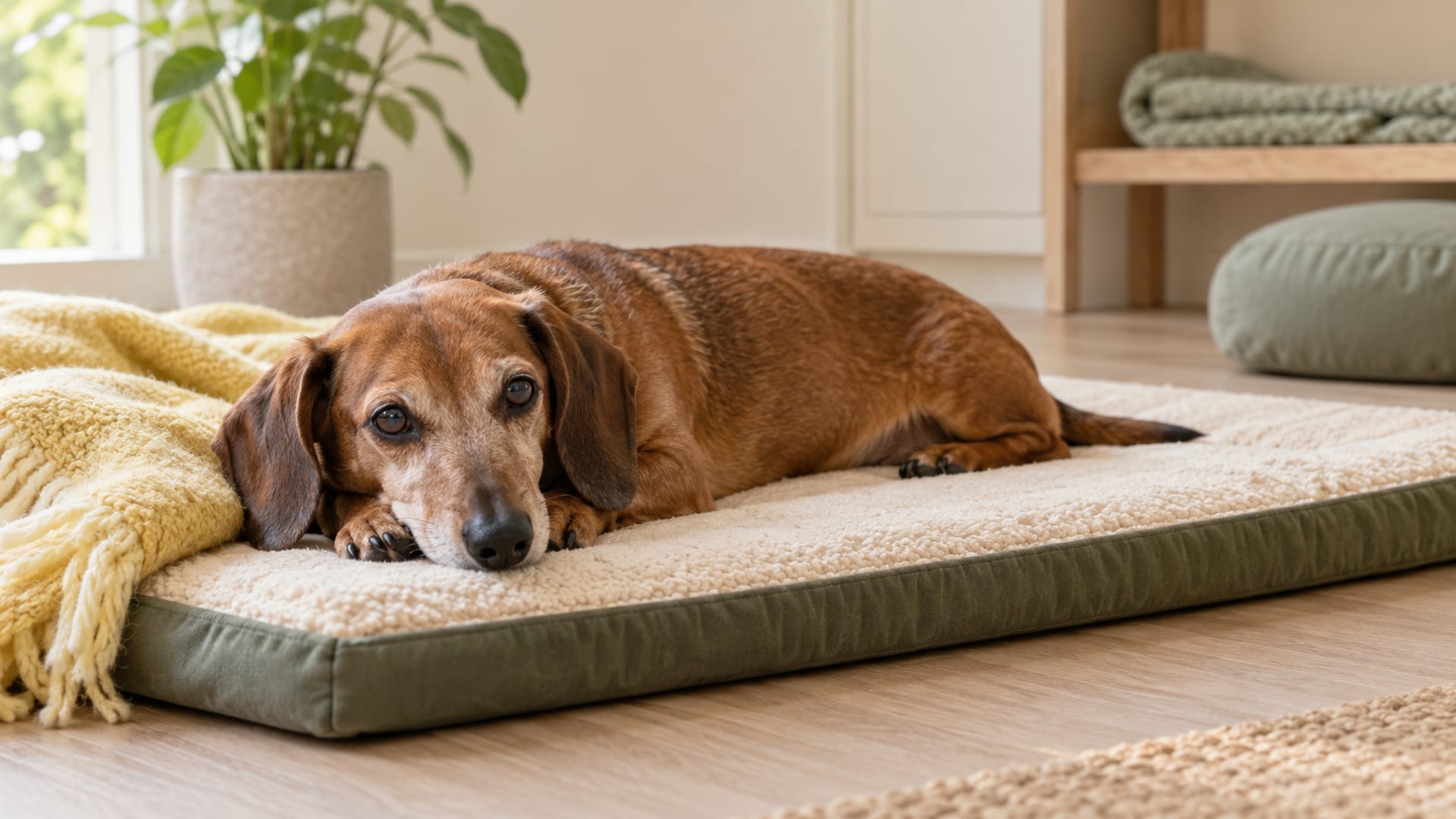
Veterinary acupuncture is a complementary treatment in which a trained veterinarian uses thin, sterile needles or related stimulation methods to address pain, mobility, and some neurologic problems. Vets may consider it for dogs with arthritis, back or disc disease, nerve injury, or chronic pain, usually alongside conventional care and rehabilitation.
A treatment lasts about 20 to 30 minutes, and the evidence depends on the condition, so ask your veterinarian whether it fits your dog's diagnosis and overall care plan.
Key takeaways
Tap a card to bring it forward.
- Acupuncture is complementary care, not a replacement for surgery or other treatment your vet says your dog needs.
- Vets use it for arthritis, disc disease (IVDD), nerve injury, chronic pain, and rehabilitation support, but the evidence is different for each condition.
- A treatment usually lasts about 20 to 30 minutes, often one to three visits a week for several weeks, then less often if your dog improves.
- Published prices put a first visit at about $100 to $150 and follow-ups at about $60 to $120, so a course can reach several hundred dollars.
- Only a licensed veterinarian should treat your dog, and some conditions and situations rule it out.
- Severe pain, sudden weakness, or not being able to walk needs a vet right away, not acupuncture.
If you are reading this, your dog may be slowing down, hurting, or getting over a back problem, and you want to know if this is worth your time and money. I'll give you the plain version so you can decide what to ask your vet. I am not a veterinarian, so the health claims below come from named veterinary sources.
What is veterinary acupuncture, and how do the different types work?
Veterinary acupuncture most often means thin, solid, sterile needles placed at selected spots on the body, as the Merck Veterinary Manual explains. Related methods work a little differently, and it helps to know the names because clinics use them:
- Dry needles: the standard approach, with needles placed and left in for a short time.
- Electroacupuncture: a small electrical current is applied through the inserted needles.
- Laser acupuncture: a laser stimulates the points, with no needle going in.
- Acupressure: pressure instead of needles.
- Moxibustion: heat from a smoldering herb held near a point.
- Aquapuncture: a substance is injected at a point. This is a medical procedure, never something to try at home.
A method without needles is still a veterinary treatment. Laser and electrical versions need the same exam and the same legal authorization as needles. Laser can be a good question to raise if your dog does not tolerate needles.
What do vets use it for?
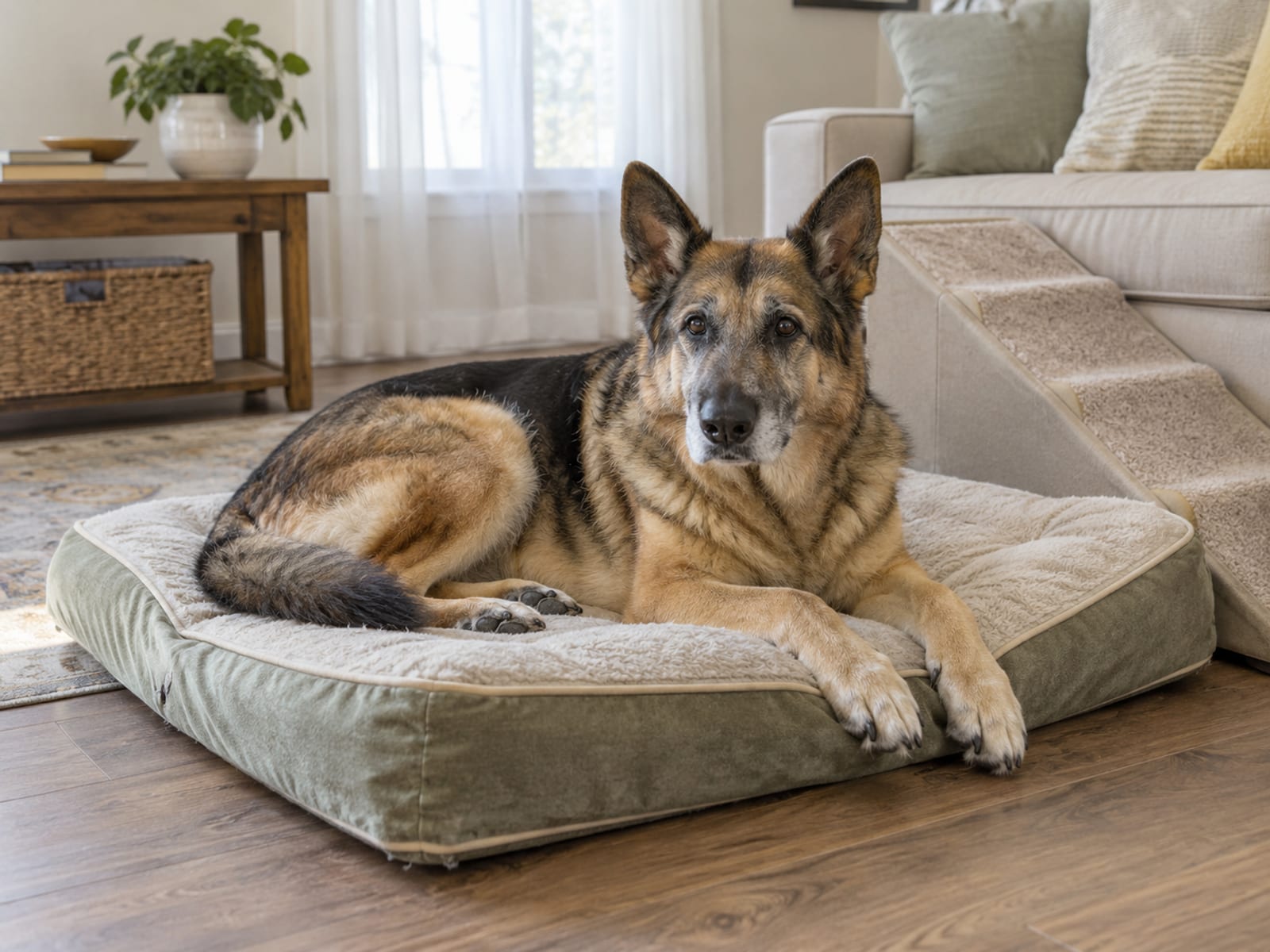
Vets may use acupuncture for pain, weakness, and neurologic injury or disease. For dogs with the problems this page covers, the common uses are arthritis and other long-term joint and muscle pain, intervertebral disc disease (IVDD), nerve injury, discomfort after surgery, and rehabilitation support. The AAHA senior care guidelines list acupuncture among the rehabilitation and pain options for older dogs, as one piece of a multimodal plan.
Notice the word "use." A vet using it for a condition is not the same as studies proving it works for that condition, and the next section is about that gap. If your dog has hip trouble, hip dysplasia and elbow dysplasia are worth reading about first, and senior dog care covers everyday comfort for an older dog.
Does acupuncture work for dogs?
It depends on the condition, and the honest answer is mixed. Here is what the studies and guidelines show:
- A 2006 systematic review in the Journal of Veterinary Internal Medicine looked at 14 randomized and 17 nonrandomized controlled trials. The authors judged study quality variable and generally low. They reported encouraging evidence for skin pain and diarrhea, isolated positive results for other conditions, and no compelling evidence to recommend or reject acupuncture for any condition in domestic animals.
- A 2020 trial followed 32 client-owned dogs with osteoarthritis, using weekly acupuncture or a placebo for four weeks in a crossover design. It found no improvement in objective measures of how the dogs moved, their activity, or the orthopedic exam. Some owner-reported measures did improve, and the authors described the results cautiously.
- The 2022 AAHA pain management guidelines say acupuncture has been reported as helpful as an add-on for pain after surgery and for IVDD, but was not beneficial for canine osteoarthritis pain in the cited literature. AAHA calls for more research.
For IVDD specifically, ACVIM consensus material says there is evidence for acupuncture in conservative management, but it is not currently recommended as an alternative to surgery when surgery is indicated. So, if your vet has recommended surgery for a slipped disc, acupuncture is not a substitute.
The fair conclusion is that acupuncture may be reasonable complementary care for some dogs when a veterinarian recommends it. It does not support promises of guaranteed results, and it should not replace treatment your dog needs.
What happens during a session?
VCA describes a first appointment that starts with your dog's history and medical records, a physical exam, a talk about treatment options, and an explanation of what will happen. Bring anything relevant, such as lab results, X-rays, and a list of current treatments.
The treatment itself runs about 20 to 30 minutes. Many dogs relax once the needles are in, but your dog needs to be able to stay safely still. A typical schedule is one to three sessions a week for several weeks, then fewer visits if your dog improves. That is a general pattern, and your vet sets the real plan.
There is no single day when every dog starts to improve. Timing depends on the condition, how long it has been going on, the method used, and the individual dog. Before you start, ask your vet what change you are looking for, when your dog will be rechecked, and how many sessions you will try before deciding whether it is helping.
Does it hurt, and what is normal afterward?
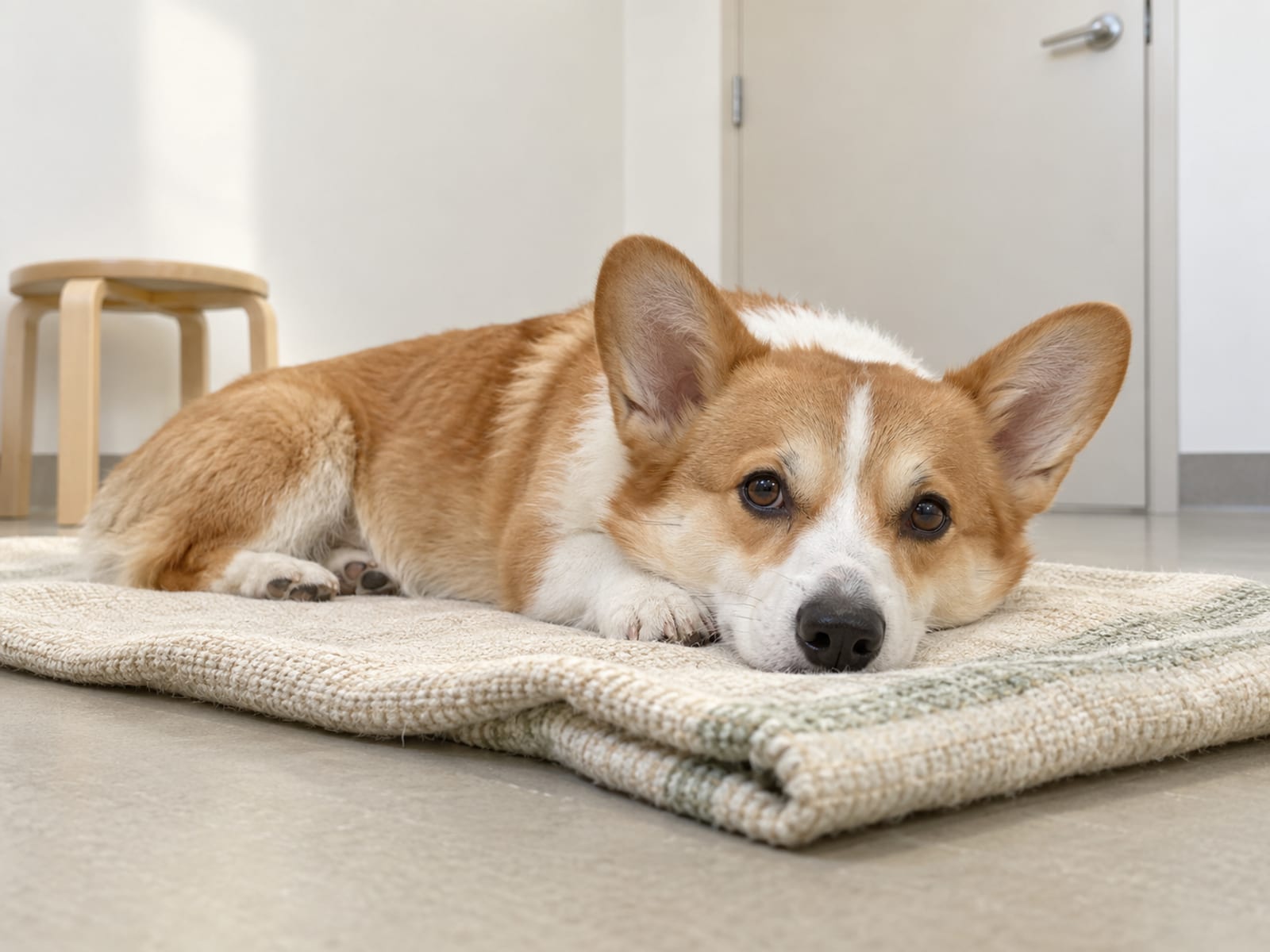
Many dogs take needle placement well and some seem to settle down. Your dog is still an individual, and a nervous dog may react. A needle that touches a nerve can cause a painful or extreme reaction, which is one reason this belongs with a trained vet. Minor local irritation or a little bleeding can happen. IVAS also describes a temporary worsening or tiredness in some dogs after a treatment.
If your dog cannot stay still, the treatment should stop. Call your vet if your dog seems more painful or much more tired than expected after a session, or if the spot where a needle went in looks irritated.
When should a dog not get acupuncture, and what needs a vet right away?
Your veterinarian decides, based on your dog's condition, behavior, medications, bleeding risk, infection risk, and whether handling is safe. The Merck Veterinary Manual points to these situations for caution or avoidance:
- Infected skin at the needle site.
- A tumor or cancerous area where the needle would go.
- A bleeding disorder, because of the risk of excess bleeding.
- A weakened immune system, because of infection risk.
- Pregnancy, which is often treated as a contraindication.
- A dog so frightened or aggressive that handling is unsafe.
If your dog has a pacemaker or other medical device, ask before any electrical method.
Some signs mean acupuncture is not the next step. Go to an emergency veterinarian now for severe pain, sudden weakness, being unable to walk, collapse, or neurologic signs that are getting worse quickly. If you are trying to sort out a new limp or wobble first, why your dog is limping and ataxia in dogs cover what to do now. A seizure is also an emergency question, not an acupuncture question, so see seizures in dogs.
Who can perform acupuncture on a dog, and can a vet come to your home?
State law controls this, and the safest standard for an owner is a licensed veterinarian who has formal veterinary acupuncture training. The rules vary:
- Texas defines animal acupuncture as an alternate therapy within veterinary medicine and allows only licensed veterinarians to use it, according to the Texas Veterinary Board rules. Texas also requires owner consent that names the treatment and a discussion of conventional options.
- California's Veterinary Medicine Practice Act defines veterinary practice to include diagnosing and treating animal disease, injury, and physical conditions. It allows limited actions by technicians or assistants under direct veterinary supervision, but it does not create a general license for animal acupuncture.
- New York defines veterinary medicine broadly as diagnosing, treating, operating on, or prescribing for animal disease, pain, injury, or physical conditions.
For your own state, ask your state veterinary board. A human acupuncturist cannot assume the right to treat your dog.
Certification programs exist too. IVAS describes certified members as licensed veterinary graduates who completed its certification or an equivalent program and keep up their continuing education. Chi University offers a certification track for veterinarians and veterinary students, with 130 continuing-education hours and exams, a case report, and further hours. CuraCore also runs veterinary integrative-medicine training. Those are the programs' own descriptions. Certification does not replace a state license, and it does not promise the treatment will work for your dog.
To find a provider, start by asking your regular vet. Then check the vet's active state license, ask what formal course they completed, and ask whether they do mobile or house-call visits. A house call is convenient, but the licensing and the exam still apply. The vet directory can help you find a general vet or specialist to start the conversation.
How much does it cost, and will pet insurance pay?
A dated published range from PAW Vet Practice puts an initial consultation at about $100 to $150 and follow-up sessions at about $60 to $120, with a broader range of $60 to $150 per session. These are general figures, not a national price list, and local prices vary.
Tap or hover a row to highlight it.
| Item | Figure | Source |
|---|---|---|
| ItemTreatment length | FigureAbout 20 to 30 minutes | SourceVCA |
| ItemTypical schedule | FigureOne to three sessions a week for several weeks, then tapering | SourceVCA |
| ItemInitial consultation | FigureAbout $100 to $150 | SourcePAW Vet Practice |
| ItemFollow-up session | FigureAbout $60 to $120 | SourcePAW Vet Practice |
| ItemBroader session range | FigureAbout $60 to $150 | SourcePAW Vet Practice |
Because most plans involve several visits, the total adds up. A course can run to several hundred dollars or more, depending on the exam, any imaging or records review, the number of visits, travel fees, and whether rehabilitation or other treatments are included. Ask for a written, itemized estimate before the first session.
Insurance depends on the policy. Some plans cover acupuncture under alternative, complementary, or recovery care, and a sample AKC Pet Insurance policy lists it among alternative treatments. Others require a rider or leave it out. Read your own policy for:
- Whether a licensed veterinarian must perform it.
- Which conditions are covered, and pre-existing condition exclusions.
- Waiting periods, deductibles, and annual or per-incident limits.
- The reimbursement percentage, and whether a rider is needed.
Check before the first session, and keep your invoices and treatment notes for claims.
What should you ask before you book?
Take this list to the appointment or the phone call:
- Will a licensed veterinarian perform the treatment?
- What diagnosis or condition is it meant to address?
- Has the provider completed formal veterinary acupuncture training?
- What change will we measure, and when will we recheck?
- How many sessions will we try before deciding it is or is not helping?
- What side effects should I watch for, and what rules it out for my dog?
- Can it be combined with rehabilitation or my dog's current treatment?
- What will it cost, in writing, and does my insurance cover it?
Questions owners ask about dog acupuncture
Quick answers to the questions that come up most.
Does acupuncture actually work for dogs?
It depends on the condition. Veterinary guidance reports possible benefit for some neurologic and postoperative problems, while the evidence for canine osteoarthritis is mixed. Ask your vet whether it fits your dog's diagnosis.
What are the side effects of acupuncture for dogs?
Most are mild, such as local irritation, a little bleeding, or a short stretch of tiredness. A needle that hits a nerve can cause a painful reaction, so only a trained veterinarian should do it. Call your vet if your dog seems worse after a session.
How long does it take to work, and how often should a dog go?
There is no one timeline, because it depends on the condition and the dog. A common pattern is one to three sessions a week for several weeks, then fewer visits if your dog improves. Ask your vet what improvement to watch for and when the recheck will be.
What are the signs that acupuncture is working?
Your vet should name them before you start, such as easier movement, more activity, or less obvious discomfort. Keep notes and videos of how your dog moves, and share them at each recheck. Tell your vet if you see no change.
Does acupuncture help dogs with IVDD?
It may help as part of conservative management, according to ACVIM material. It is not recommended as an alternative to surgery when surgery is indicated, and a sudden loss of walking ability needs a vet right away.
Can you do acupuncture on animals without being a vet?
State law controls this. Texas allows only licensed veterinarians to use acupuncture on animals, and California treats treating animal conditions as veterinary practice with limited supervised exceptions. Ask your state veterinary board about your state.
Can it be done at home?
Some veterinarians offer mobile or house-call acupuncture. The vet still has to be licensed and has to examine your dog first.
What is your next step?
Start with a call to your own vet. Ask whether acupuncture fits your dog's diagnosis, what it could add to the plan you already have, and who they would trust to do it. If your dog has sudden weakness, severe pain, or cannot walk, skip all of this and head to an emergency vet first. I can't promise a result for any dog, but a good plan, a licensed vet, and a written estimate put you in a strong spot to decide.
Sources
- acvim.org: ACVIM consensus material
- akcpetinsurance.com: AKC Pet Insurance policy
- American Animal Hospital Association: 2022 AAHA pain management guidelines
- American Animal Hospital Association: AAHA senior care guidelines
- chiu.edu: Chi University
- ivas.org: IVAS
- ivas.org: IVAS
- Merck Veterinary Manual: Merck Veterinary Manual
- oup.silverchair-cdn.com: 2006 systematic review
- pawvetpractice.com: PAW Vet Practice
- PubMed Central: 2020 trial
- sedmain11-acquia.nysed.gov: New York
- VCA Animal Hospitals: VCA
- veterinary.texas.gov: Texas Veterinary Board rules
- vmb.ca.gov: Veterinary Medicine Practice Act