

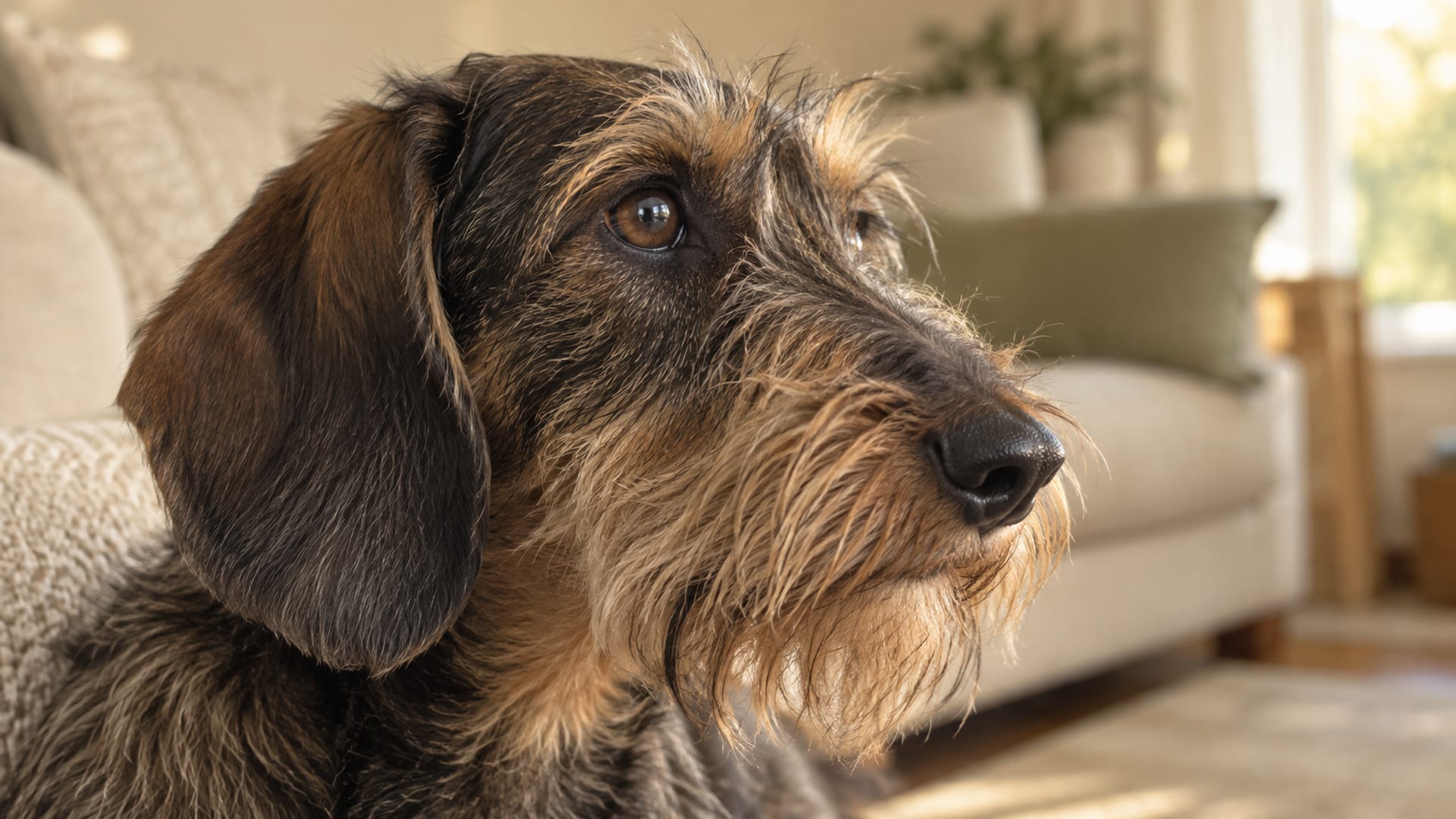
Dogs have whiskers because they are touch organs, not ordinary hair. Whiskers, also called vibrissae, grow from follicles packed with nerves and blood vessels, so when a whisker bends against something or moves in a stir of air, your dog feels it. They help a dog sense what is right in front of its face, and the ones near the eyes help set off a protective blink. If a groomer cut them, the hair was cut, not pulled out: check the muzzle for any nick or sore and ask for them to be left next time. They generally grow back. A vet visit makes sense when missing whiskers come with wounds, rash, crusts, swelling or pain.
Key takeaways
Tap a card to bring it forward.
- Whiskers (vibrissae) are touch hairs whose roots are rich in nerves and blood vessels.
- They pick up nearby objects and air movement around the face and help protect the eyes.
- Cutting a whisker is not the same as pulling it out, and whiskers should never be plucked.
- Cut whiskers generally grow back, though nobody can give you a set number of weeks.
- Ask your groomer to leave the whiskers, and check your breed's standard before a show.
- Call a vet if whisker loss comes with wounds, rash, crusting, swelling, itching or pain.
Why dogs have whiskers: they are touch hairs, not ordinary coat
Run a finger along your dog's face and you'll find these stiffer hairs in a few places: on the muzzle beside the nose and lips, on the cheeks, under the chin and above the eyes. They look like thick versions of the rest of the coat, but they work differently.
Every hair grows from a follicle. A whisker's follicle is built for sensing. It sits in a structure called the follicle-sinus complex, which is wrapped in nerve endings and blood vessels, so even a small movement of the hair gets turned into a signal. A 2025 study by Müller and colleagues describes the canine whisker system as a highly innervated, functional sensory organ, and a 2020 paper by Schmidberger and colleagues treats the tactile hairs as part of a sensory organ that deserves protection.
There is no single whisker count that fits every dog, and the layout isn't identical from breed to breed. What holds for all of them is the job: touch, close to the face.
That job is different from eyesight. Whiskers feel what is inches away; they don't help a dog see. If you're curious how dogs manage in low light, that is a separate question, covered in can dogs see in the dark.
If a groomer cut your dog's whiskers: what to do today
A face that suddenly looks a little bare can be a shock. The good news is that a cut whisker is a cut hair. The part that senses things, the follicle under the skin, was not touched by the scissors or clippers.
What I'd do today:
- Look closely at the muzzle. Check whether the whiskers were cut short, snapped, or look pulled out, and look for redness, small cuts, crusts, swelling or discharge where they grow.
- Leave the stubs alone. Don't pull or pluck any short or uneven whiskers to "tidy" them.
- Watch your dog. Notice whether they rub their face, flinch when you touch the muzzle, or seem sore. If the skin looks hurt, call your vet.
- Speak up before the next appointment. Tell the groomer you'd like the whiskers left on. There's wording you can use further down.
Cutting on its own doesn't call for treatment. Your job is to check the skin, let the whiskers grow, and make your wishes clear for next time.
Does trimming whiskers hurt or harm a dog?
This question is really three questions, and they have different answers.
Does the cut itself hurt? The cut happens on the hair shaft, outside the nerve-rich follicle, so cutting is not the same as pulling. Nobody has shown a pain response that applies to every dog from cutting alone.
Does the dog lose something? Yes, for a while. Schmidberger and colleagues argue that shaving the whiskers leaves that sensory organ temporarily unusable and that it should not be done for looks alone. Müller and colleagues also argue against cosmetic shaving, while describing their own work as a pilot study with limits.
Does the dog act differently afterward? Some owners worry their dog will bump into things or seem upset. It hasn't been shown that every trimmed dog changes how it moves or behaves, and it hasn't been shown that none do. Your own dog is the best guide, so watch how they are over the next days.
My view, for what it's worth: whiskers are working equipment. Unless there's a real reason to shorten them, such as a breed standard you're showing to, I'd leave them on.
What dog whiskers sense up close
Whiskers extend a dog's sense of touch a little way out from the face. According to Müller and colleagues, they pick up:
- Nearby objects, such as the edge of a doorway, a fence gap or the side of a crate.
- Air movement close to the face.
- Things near the mouth, which helps at close range where a dog can't easily see what is right under its nose.
- Contact near the eyes, where a touch to the whiskers above the eyes can trigger a blink that shields them.
That close range is where eyes are least useful, because an object pressed near the muzzle is hard to focus on. Whiskers fill that gap by feel.
How much an ordinary pet leans on its whiskers during a normal day is not known. The nerve and follicle anatomy in dogs is well described, but, as Horowitz and colleagues point out, behavior studies confirming what dogs do with their whiskers are still thin. Whiskers also aren't known to control balance; their role is touch around the face.
Why pulling or plucking is different from trimming
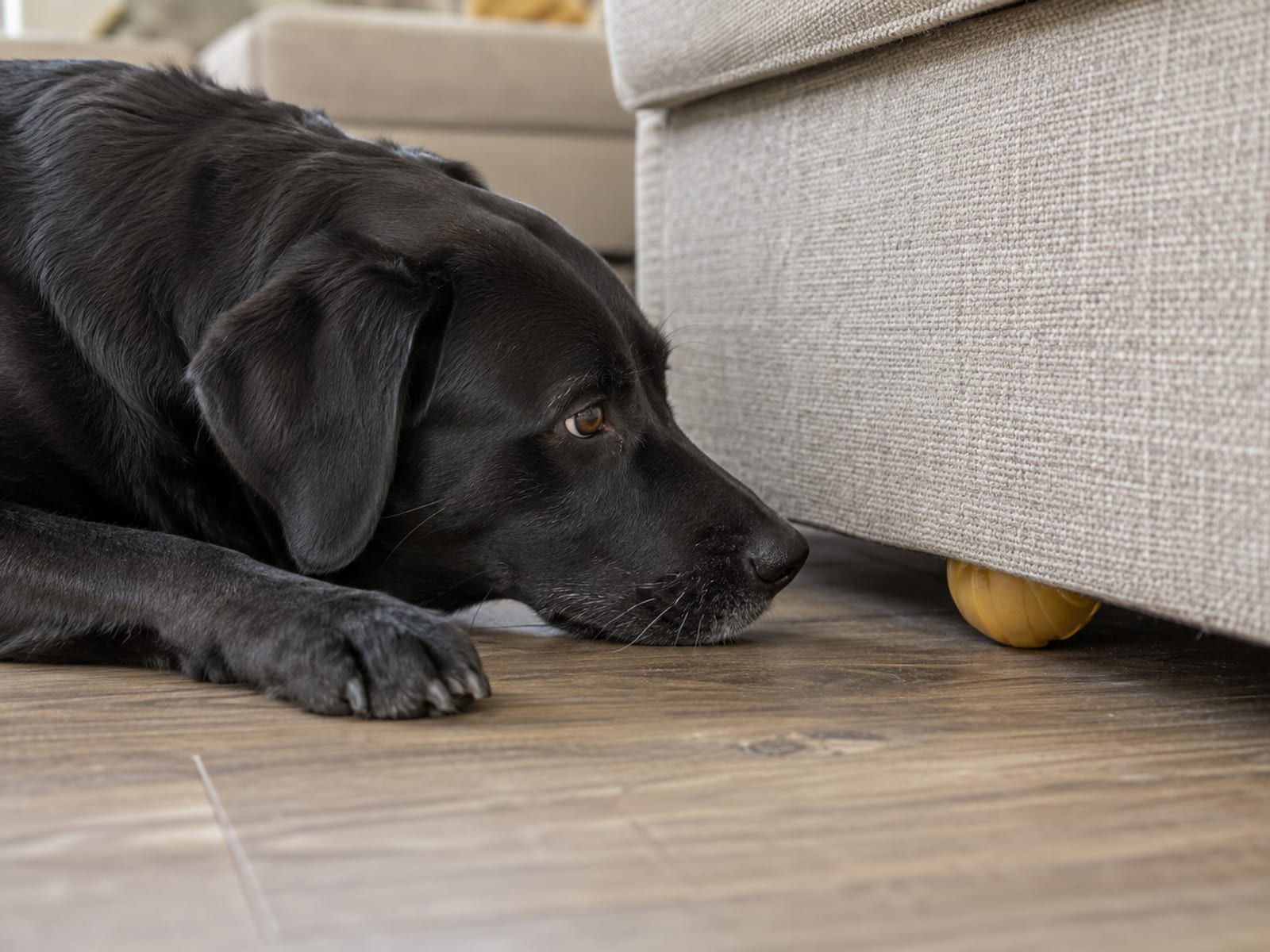
Pulling a whisker is a different act from cutting one. Plucking removes the hair from the follicle, and the follicle is exactly where the nerves and blood vessels sit. That's why Schmidberger and colleagues and Müller and colleagues give no support for treating it as harmless grooming, even though there's no published pain score or injury rate for it in dogs.
So, the rule is simple: don't pull or pluck whiskers, and don't let anyone else do it. If a whisker is caught in a mat, a scab or a sore, have a groomer or your vet deal with it rather than tugging it free.
Whiskers and your dog's facial expressions
Whiskers move with the muscles of the face, so their position may be part of how a dog's expression changes. That's where I'd stop, though. Whisker angle alone can't tell you whether a dog is afraid, relaxed, in pain or ready to snap, and no named study ties a particular whisker position to a particular feeling.
Read the whole dog instead: posture, how they move, ears, eyes, mouth, tail, and what's going on around them. Whiskers are one small piece of that. For the rest, see dog body language.
Grooming is a good example. The AKC's grooming education standards expect groomers to notice signs of stress and changes in behavior while they work, and those signs come from the whole body, not the whiskers.

Do dog whiskers grow back?
Yes, whiskers generally grow back after they are cut. How fast depends on where that hair is in its growth cycle and on the health of the follicle, so no one can promise a set number of days or weeks.
If a whisker was pulled out or the skin around it was hurt, regrowth depends on how that follicle heals. That's one more reason to leave the stubs alone and keep an eye on the skin.
When missing whiskers need a vet
Dogs can shed a whisker here and there, just as they shed other hair. One missing whisker on healthy-looking skin is less of a worry than loss that comes with skin changes.
Call your vet when whisker loss or breakage comes with any of these:
- Redness, crusting, scaling, swelling or discharge around the muzzle
- A wound, bite, burn, scrape or other injury
- Itching, rubbing, pain or sensitivity when you touch the face
- Hair loss that spreads beyond single whiskers
- Loss that keeps happening or gets worse quickly
- A dog that seems unwell or has other new signs
Missing whiskers alone don't point to any one disease, and I won't guess at a cause. If you're unsure, or the change doesn't settle, ask your vet. For a broader sense of what normal looks like, see signs of a healthy dog.

Grooming and show rules, and how to ask a groomer to leave the whiskers
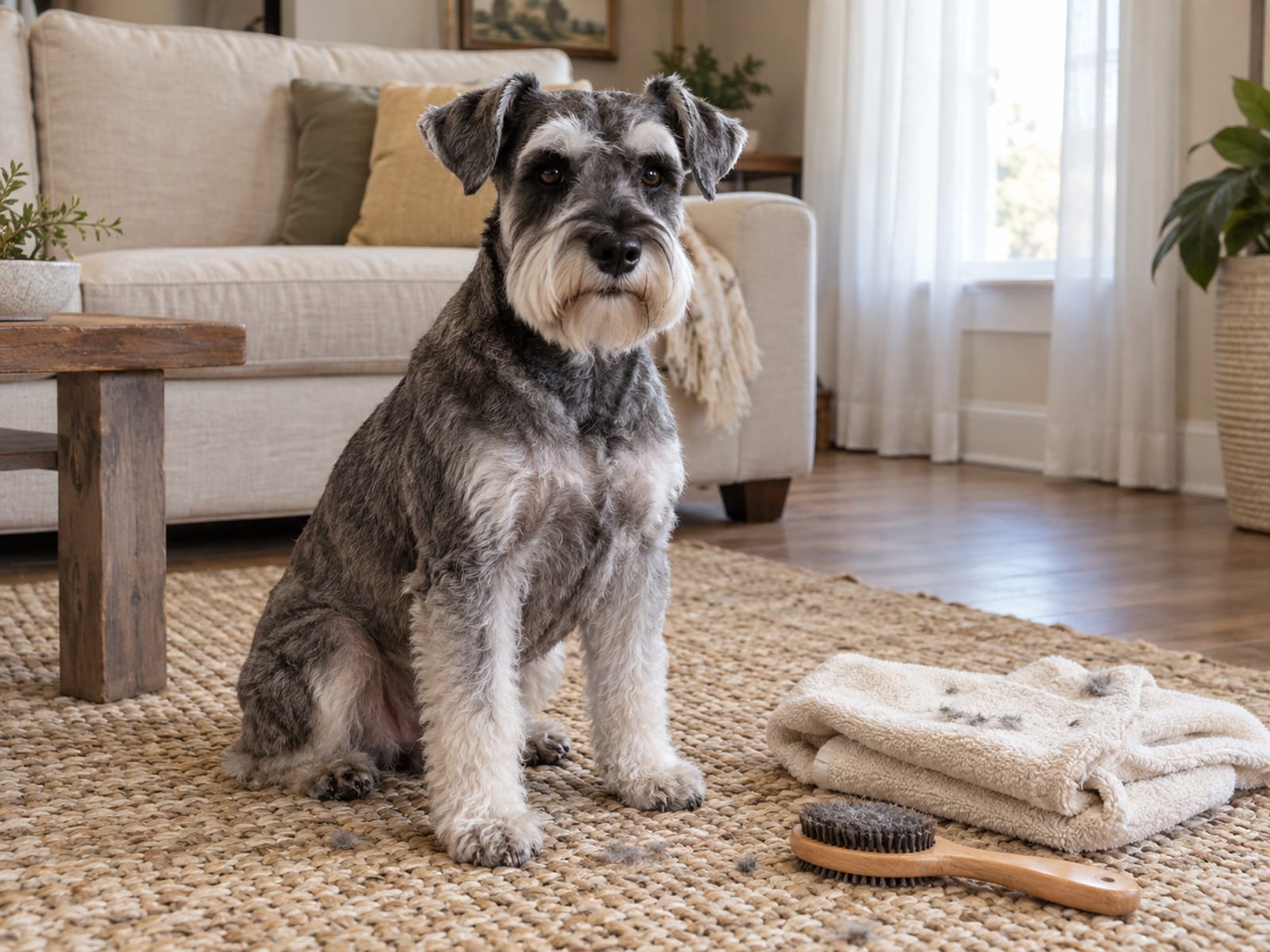
Face trimming is common in breeds with a clipped or shaped face, including many poodles, schnauzers, terriers and bichons, along with other long-coated and wire-coated dogs. What actually happens varies with the trim, the groomer, the breed standard and what the owner asks for. There isn't one list of breeds where cutting the whiskers is required.
Show rules differ by breed, so the current standard for your breed is the one that counts. One example: the Icelandic Sheepdog standard published in the AKC Gazette in May 2025 says whiskers altered by trimming or clipping should be severely faulted. Other breeds may expect a different look.
For a pet trim, you get to decide. The AKC grooming standards stress that groomers should understand the style and expectations the owner wants, so say it plainly at drop-off. You could use:
> "Please leave the facial whiskers intact. Don't clip or shave them unless you contact me first."
Put it on the intake form too, if there is one. If you're looking for someone new, you can find a groomer in the DogServ groomer directory and ask about whiskers when you book.
Questions dog owners ask about whiskers
These are the questions that come up most after the basics.
Should I touch my dog's whiskers?
A gentle touch is fine, and your dog will feel it, because bending the hair is exactly what the follicle picks up. Stroking is not the same as tugging, so never pull on them. Whether your dog likes having its face handled shows in its ears, eyes and mouth; if it turns away, stop.
What happens if a dog's whiskers are cut off?
The dog loses that bit of close-range touch until the whiskers grow back, which is why welfare researchers advise against cutting them for looks. Cutting doesn't reach the follicle the way pulling does. Check the muzzle skin, and the whiskers generally regrow on their own schedule.
What are the hairs above my dog's eyes called?
They are whiskers too, sometimes called supraorbital whiskers. The ones on the muzzle are mystacial whiskers, the cheek ones are genal, and the ones under the chin are mandibular. The ones above the eyes help trigger a blink when something brushes them.
What if my dog's whiskers look brittle or keep breaking?
Look at the skin where they grow. If you see redness, crusts, flaking, swelling, or your dog rubs or scratches its face, have a vet take a look. Breakage with healthy skin is less specific, but ask your vet if it keeps happening.
The next step
If your dog's whiskers were cut, look over the muzzle today, leave the stubs alone and let them grow back. Before the next grooming visit, tell your groomer in plain words that you want the whiskers left on, and write it down if they use a form. If you're showing, read your breed's current standard first. And if missing whiskers ever come with sores, crusts, swelling, itching or pain, that's the day to call your vet.
Sources
- American Kennel Club: AKC's grooming education standards
- link.springer.com: Horowitz and colleagues
- PubMed: Schmidberger and colleagues
- PubMed Central: Müller and colleagues
- s3.amazonaws.com: AKC Gazette in May 2025