
Mobile Dog Grooming in Mississippi: Local Licenses, Van Parking, Wastewater and What to Collect at the Door
By Cal Hewitt · Published
Business guides
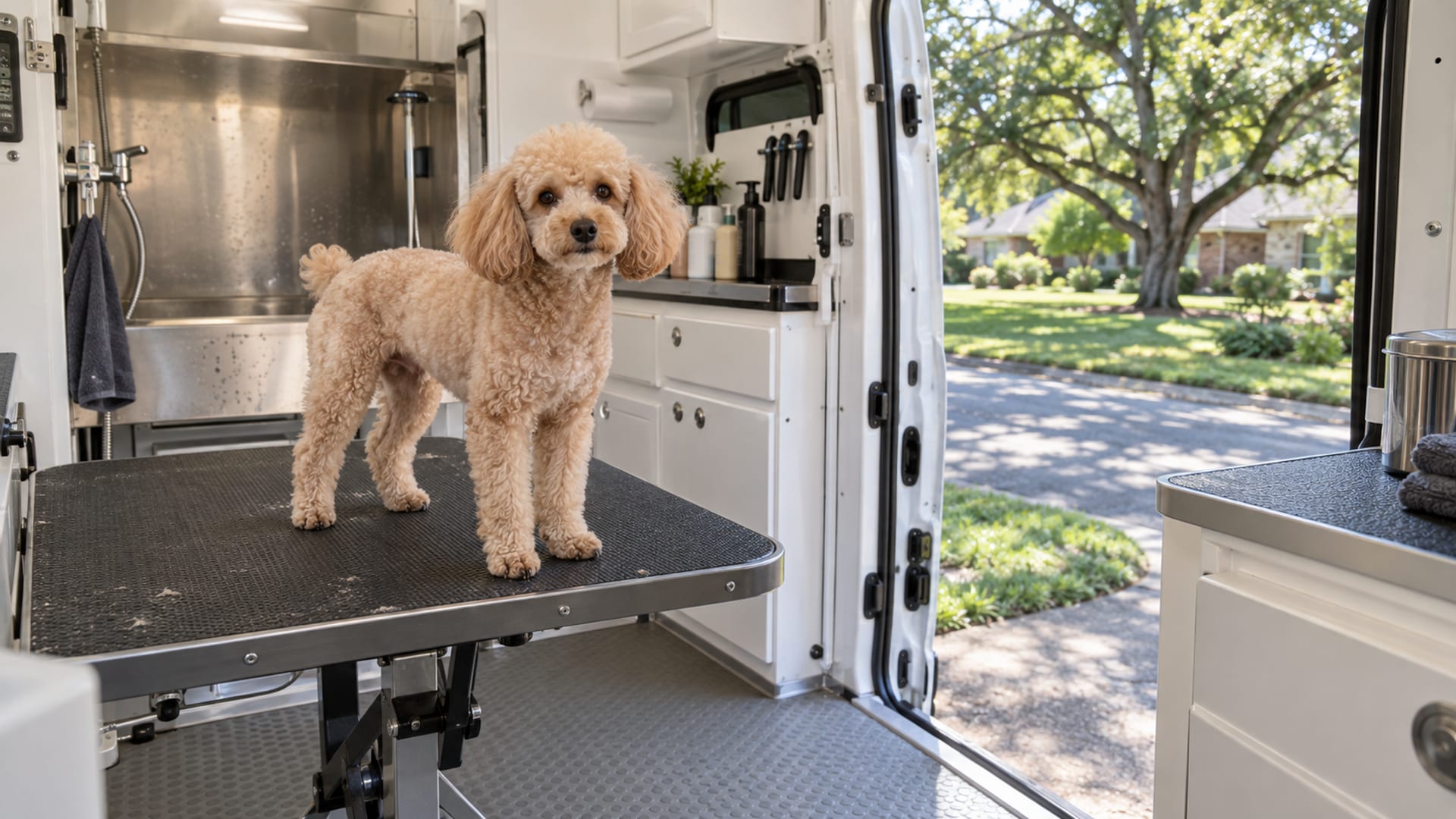
Mobile dog grooming in Mississippi usually means you bring a van or trailer to the client's home and groom on site. Mississippi does not have one general statewide mobile-grooming license that replaces local requirements. Before your first appointment, pick a business structure, check Mississippi registration and tax obligations, then ask each city or county where you will work about privilege licensing, zoning, home-occupation rules, vehicle signs, parking and wastewater. The Mississippi State Department of Health says the state does not recognize gray water, so grooming wastewater cannot go onto the ground, into a ditch or into a waterway. Selling retail products may require a Mississippi sales-tax permit.
Key takeaways
Tap a card to bring it forward.
- Mississippi has no single statewide mobile-grooming license; local city and county requirements differ, so ask each one where you work.
- Do not assume a license from one city covers another city or county. Ask the clerk or revenue office in each place.
- The Mississippi State Department of Health says the state does not recognize gray water; wastewater goes to a central sewer or septic system, never onto the ground.
- Selling shampoo or other products generally means a sales-tax permit from the Mississippi Department of Revenue at the 7% general rate, and DOR requires a separate permit for each location.
- Collect a current rabies certificate for each dog; Mississippi Code 41-53-9 describes one showing breed, sex, markings and tag serial number.
- BLS wage figures for Mississippi animal caretakers are employee wages, not what a mobile grooming owner will earn.
What a Mississippi mobile groomer checks first, and how grooming differs from walking and sitting
A grooming van raises three questions at once: can I legally do this, where can I park, and what do I do with the dirty water. Each one has an office that can answer it.
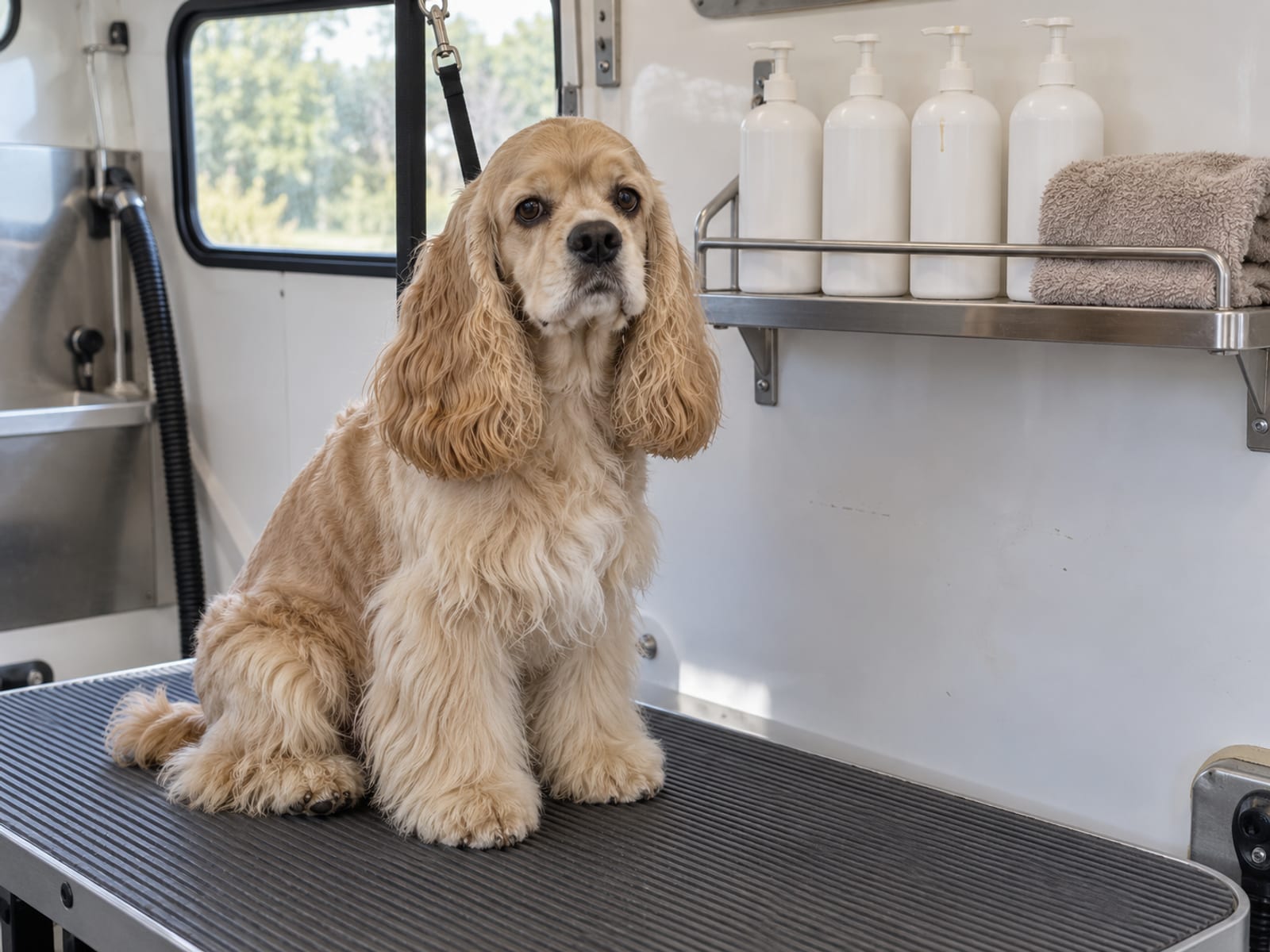
Start with what you sell. Mobile grooming usually means bathing, drying, brushing, nail trimming, ear cleaning, clipping, deshedding and coat maintenance done in a van or trailer parked at the client's home. In-home grooming is different: you work inside the client's house with no vehicle setup. Dog walking and pet sitting are different again. Pet Sitters International defines pet sitting as caring for a pet in its own home while the owner is away, and treats dog walking as a form of pet sitting.
A grooming van raises questions a walker never faces: water, wastewater, maybe a generator, and a lettered commercial vehicle on a residential street. If you add walking or sitting, describe each service separately to every office, because the answers may differ.
What to do this week to set up your mobile grooming business
The Mississippi One Stop guide walks through state registration and points you to local permits, and the SBA notes that "local governments determine registration, licensing, and permitting requirements." This is the order I'd work in:
- Choose your business structure and name.
- File with the Mississippi Secretary of State if your structure requires it. The Secretary of State's business FAQ says filing fees for business documents are set in statute by the legislature, so check the current fee schedule.
- Apply for an EIN when it applies to your business.
- Register with the Mississippi Department of Revenue for the taxes that apply to you.
- List every city and county where you expect to take appointments; it drives most of your next calls.
- Ask each city clerk or county revenue office about privilege licensing.
- Ask planning and zoning about mobile operation, home storage of the van, parking and vehicle signs.
- Ask the Department of Health and the local utility about water and wastewater.
- Set up a rabies-record intake process and a client file.
- Get insurance quotes with the coverage details in writing.
Keep records from day one. The IRS says your records should clearly show income and expenses, and that supporting documents should show the payee, amount, proof of payment, date and business purpose.
Does a grooming van need a city or county license, and does one city's license cover another?
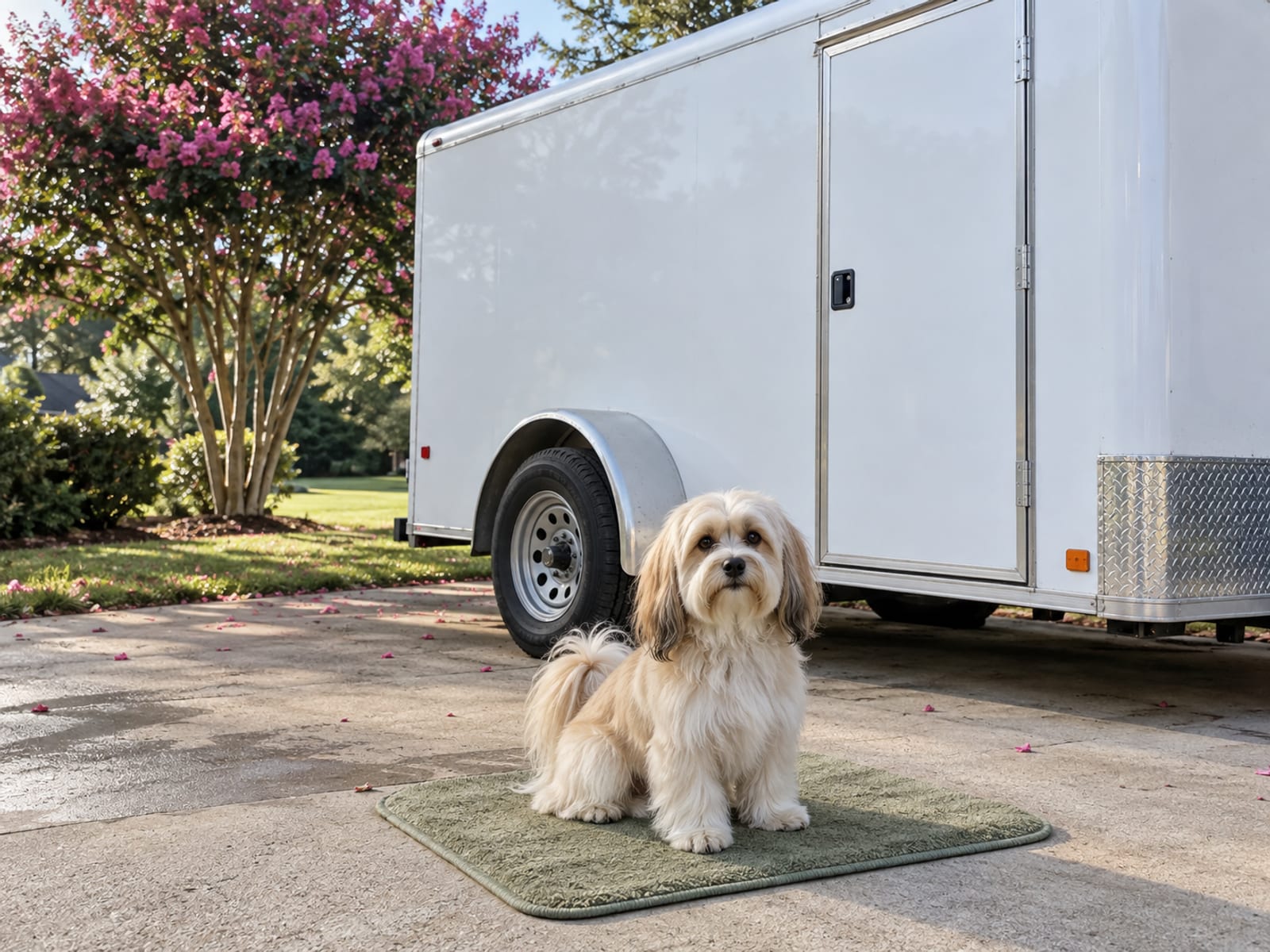
There is no statewide mobile-grooming license that covers you everywhere. The Mississippi One Stop guide says "you may be required to apply for permits and licenses from your local government" and "different locations have different requirements." It lists city or county business, occupational, signage and zoning permits. DOR sends local permit questions to the municipal clerk and the county tax collector.
Depending on where you work, that can mean a business or privilege license, a home-occupation permit, zoning approval for your base or van storage, a sign permit, and building, plumbing or electrical permits if you modify a base or unit. Outside city limits, county rules may apply.
Do not assume a license from one city covers appointments in another city or county. Ask each jurisdiction on your list, in writing when you can. Questions for the clerk: Do I need a city privilege or business license? Does it cover mobile appointments at customer addresses? Is a county license also required? Do I need a separate license in each city where I work?
Jackson is a useful example. Its starting-a-business page says most businesses operating within Jackson need a city business license, and requirements vary by business type and activity. Jackson's Signs and License Division issues privilege or business licenses and also handles sign permits. Jackson says people placing a sign on or off their premises must get a sign permit, so ask the sign or planning office whether your van lettering counts before you pay for a wrap.
Where your van can park and work at a client's home
No single statewide parking rule lets every grooming van operate at every client address. The city or county where the appointment happens decides.
In Jackson, the city's zoning office explains that zoning controls what activities are allowed on a property, and the starting-a-business page says most new businesses need a zoning check and a business license, with home-based businesses possibly facing more limits. If you run the business from your house, Jackson's planning FAQ requires a Home Occupation Permit and lists restrictions that include no retail trade, no stock on the premises and no increase in traffic. That FAQ also lists an employee-fee example: $20 for 0 to 3 employees, $30 for 4 to 10, and over 10 employees $30 plus $3 per employee over 10, up to $150.
When you call planning and zoning, in Jackson or anywhere else, ask:
- Can a mobile grooming van operate at a client's home, in the driveway or on the street?
- Can I store the van at my residence?
- Do I need a home-occupation permit?
- Are there rules on noise, generators or operating hours?
- Are there parking setback, right-of-way or obstruction rules?
- Are vehicle lettering, signs or temporary signs regulated?
- Does the permit follow my base address or the client's address?
Subdivisions, HOAs, apartment complexes and landlords may also limit commercial vehicles, so ask your client to check before the first visit.
How grooming wastewater and water supply are handled
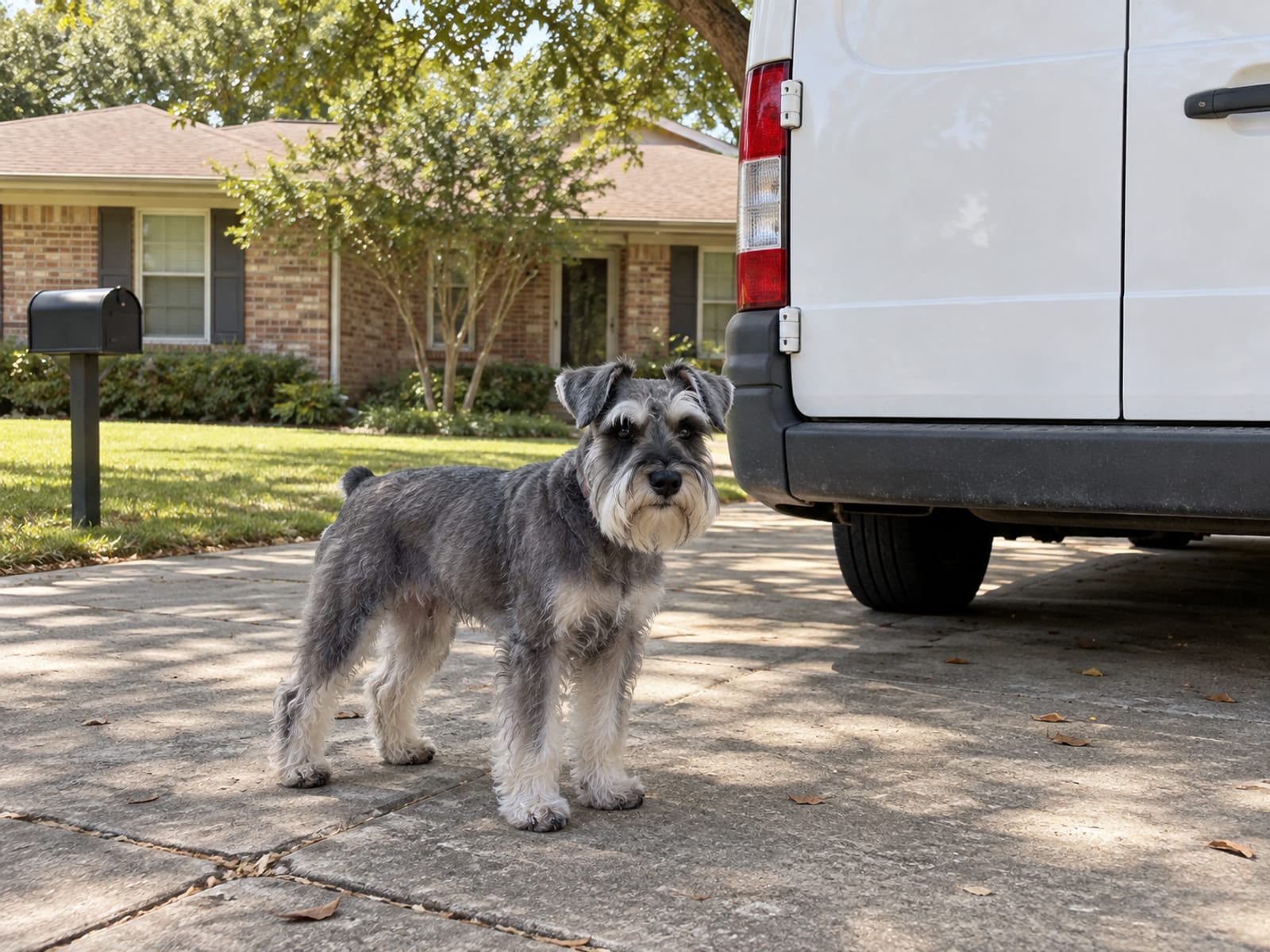
The Mississippi State Department of Health wastewater FAQ says "Mississippi does not recognize gray water." All wastewater must be piped into a central sewer or septic system, and it may not be discharged onto the ground, into ditches or into bodies of water. Rinse water from a grooming van is wastewater under that rule, so plan for containment and proper disposal from the start.
The same FAQ lists fees of $412.50 for "Commercial Establishment + Final Approval" and $315 for "Existing Commercial Establishment." Those fees can change, and those categories may not fit a grooming van. Ask MSDH which category applies to you, if any, before you budget for it.
Offices to call about wastewater and water:
- MSDH, Division of On-site Wastewater. Spanish speakers can call and ask for an interpreter.
- Your local sewer utility or municipality.
- The city or county building, plumbing or public works office.
- The Mississippi Department of Environmental Quality if a discharge or environmental permit question comes up.
- The county environmental-health office where local procedures apply.
- A licensed septic installer or pumper when an on-site system is involved.
Ask how grooming wastewater must be contained and discharged, and whether you need a sewer connection, septic system, holding tank or licensed hauler. If you fill your tank from a client's hose, ask the utility and plumbing office whether a backflow device, meter or other approval is required. Get these answers before you build out the van.
What happens if you sell shampoo or other products
Selling a bottle of shampoo or a brush at the end of an appointment changes your tax situation. The Mississippi Department of Revenue says sales of tangible personal property are generally taxed at the regular 7% retail rate unless an exemption or reduced rate applies.
DOR says a business subject to sales tax must get a permit before it starts selling. Its registration guidance says in-state businesses with retail sales in Mississippi must register for a sales-tax permit and number. DOR's sales-tax page also says "a separate permit is required for each location," and that a permit does not expire while you stay in the same business at the same location. Its business tax FAQ adds that a business moving locations may need a new permit or a registration update.
For a van, "location" is a real question. Ask DOR how it treats your base, where you store inventory and your mobile route, and do not assume one permit covers every place you sell. If you stay with grooming only, ask DOR how your services are treated before you set prices. The DogServ guide on Mississippi sales tax on pet services covers the service side.
Which rabies records to collect at the door, and what else goes in a client file
Mississippi Code 41-53-1 requires dogs and cats three months of age or older to be vaccinated against rabies. Section 41-53-9, as published by MSDH, says the person giving the vaccine must give the owner a certificate for each dog or cat, and the certificate and related records identify the breed, sex, markings and tag serial number.
So, ask for the current rabies certificate, not just a look at the tag. Check that the breed, sex and markings match the dog in front of you, and note the date, expiration and tag number.
The law covers vaccination and certificates. The rest of a client file is your own policy, and usually holds:
- Owner name, address and phone number, plus an emergency contact.
- Dog name, breed, sex, age and identifying markings.
- Rabies certificate date, expiration and tag information.
- The veterinarian contact the owner gives you.
- Grooming instructions, coat condition and any allergies or sensitivities the owner reports.
- Consent for handling, photos and emergency contact.
- Appointment history, invoices and incident notes.
If you also walk or sit, add feeding, medication and access instructions exactly as the owner gives them. Record them; do not advise on medication.
What Mississippi wage figures show, and why they are not mobile business income
The Bureau of Labor Statistics May 2023 estimates for Mississippi animal caretakers give the state's employee wage figures for this work. BLS defines animal caretakers as workers who feed, water, groom, bathe, exercise or otherwise care for animals.
Tap or hover a row to highlight it.
| Figure | Value | Source |
|---|---|---|
| FigureEmployment | Value1,920 | SourceBLS May 2023 |
| FigureMedian hourly wage | Value$11.19 | SourceBLS May 2023 |
| FigureMean hourly wage | Value$12.10 | SourceBLS May 2023 |
| FigureAnnual mean wage | Value$25,170 | SourceBLS May 2023 |
These are employee wages collected from employers, and BLS excludes self-employed workers; the annual figure assumes a full-time year of 2,080 hours. They do not measure mobile grooming prices, receipts, owner pay or profit, and they leave out your van, supplies, fuel, taxes, insurance, downtime and loan payments. They help if you plan to hire a bather. They are not a forecast of what you will earn. For more on pricing and pay, see dog business prices and wages in Mississippi.

Questions Mississippi mobile groomers ask
Short answers on startup costs, licenses in more than one city, pricing and insurance.
How much does it cost to start a mobile dog grooming business in Mississippi?
It depends mostly on your van or trailer and its water, power and wastewater setup, which you price yourself. The fixed fees come from several offices: the Secretary of State filing fee set in statute, each city or county license, any sign or home-occupation permit, and any MSDH fee that applies. Call each office on your city list for its current fee before you build a budget.
Which licenses does a mobile groomer need when working in more than one city?
Expect to check state registration once and local licensing in every city and county where you take appointments. One city's license should not be treated as covering another, so ask each clerk or county revenue office whether mobile appointments at customer addresses need their own license. If you sell products, ask DOR how its per-location permit applies to your route.
Is mobile grooming more expensive than salon grooming?
A mobile price has to cover travel time, fuel and one-dog-at-a-time scheduling, costs a salon carries differently. Set your price from your own costs, including the van, water, disposal, insurance and drive time between stops. Before you publish rates, compare a few local salon and mobile quotes in the cities you serve.
Is business insurance required for a mobile groomer?
Ask each city during licensing whether it requires proof of coverage, and ask an insurance professional about general liability, care-custody-control coverage, commercial auto, equipment and workers' compensation if you hire. Get the exclusions for animal injury, vehicle damage and employee work in writing. The DogServ guide to dog business insurance explains the coverage types.
Your next step
Make your city and county list today and call the first clerk on it about licensing, zoning, home occupation, signs and parking. Ask the Department of Health and your sewer utility about wastewater before you buy equipment. Plan for Mississippi heat, storms and breakdowns too: decide when you will cancel for heat or severe weather, and how you will get a dog home safely if the van fails mid-route.
For the state registration side, the guide to Mississippi One Stop dog business licensing goes step by step, and how to start a dog grooming business covers the general startup work. When you are ready for clients, list your business in the DogServ directory so owners in your service area can find you.
Sources
- apps.msdh.ms.gov: Mississippi State Department of Health wastewater FAQ
- bls.gov: Bureau of Labor Statistics May 2023 estimates
- bls.gov: defines animal caretakers
- dor.ms.gov: business tax FAQ
- dor.ms.gov: Mississippi Department of Revenue
- dor.ms.gov: Mississippi Department of Revenue
- dor.ms.gov: registration guidance
- irs.gov: IRS
- jacksonms.gov: planning FAQ
- jacksonms.gov: Signs and License Division
- jacksonms.gov: starting-a-business page
- jacksonms.gov: zoning office
- mdeq.ms.gov: Mississippi Department of Environmental Quality
- ms.gov: Mississippi One Stop guide
- msdh.ms.gov: environmental-health office
- msdh.ms.gov: published by MSDH
- petsit.com: Pet Sitters International
- sba.gov: SBA
- sos.ms.gov: Secretary of State's business FAQ