
Do Dogs Have Belly Buttons? Where to Find It and When a Bump There Needs a Vet
By Cal Hewitt · Published
Health
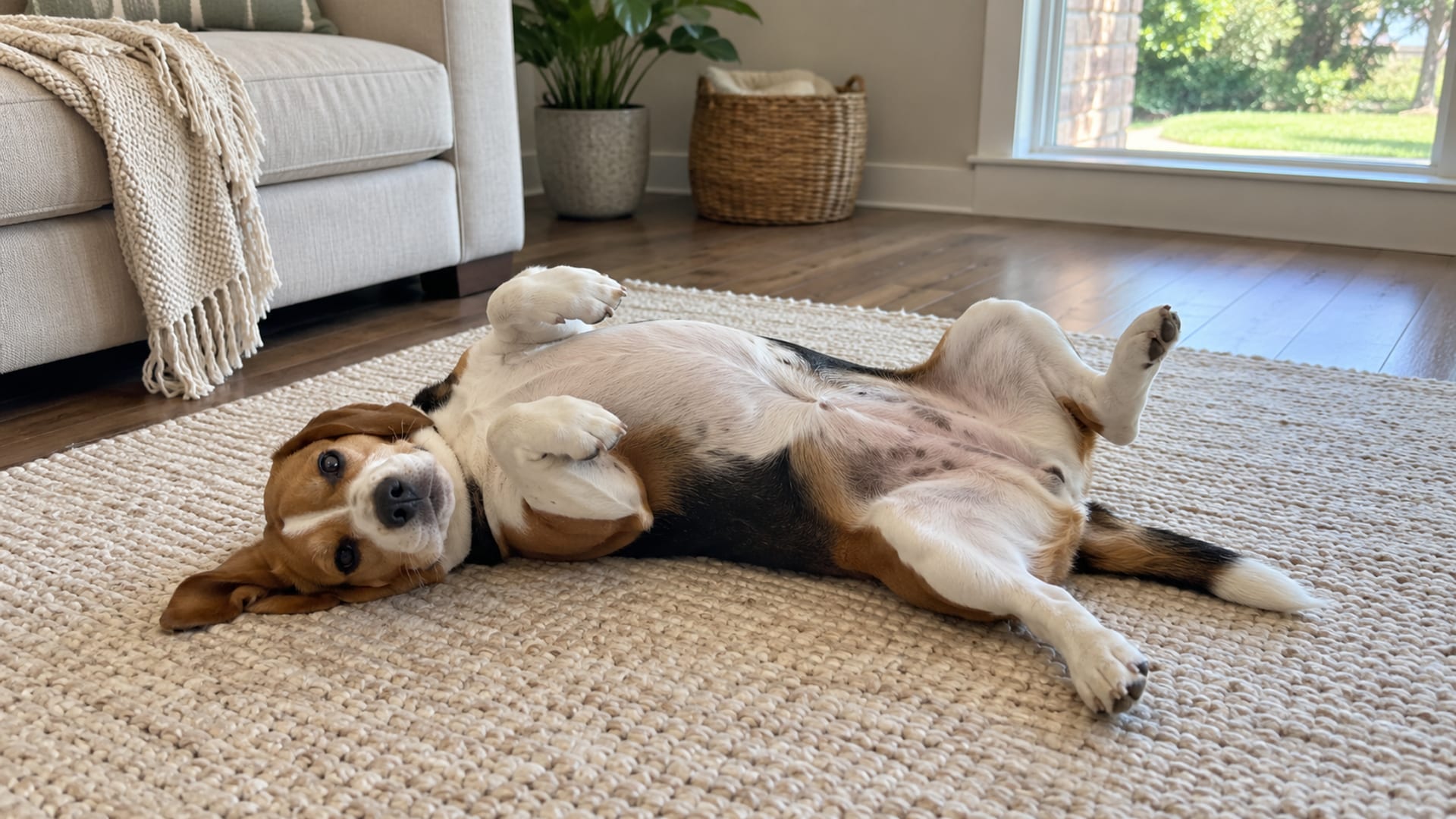
Yes, dogs have belly buttons. A dog's belly button, or umbilicus, is the small scar left where the umbilical cord attached before birth. It sits on the underside of the belly, just below the rib cage, and it is usually flat and hard to see because fur covers it and the scar is much smaller than a human navel, according to the American Kennel Club.
If you found a bulge, soft lump, redness, pain, discharge, or a swelling that turns hard or changes color, book a vet visit. A new lump can't be safely diagnosed at home. Most umbilical hernias are not emergencies, but trapped tissue can need surgery right away.
Key takeaways
Tap a card to bring it forward.
- A dog's belly button is the healed scar where the umbilical cord attached, on the underside of the belly just below the rib cage.
- A normal one is flat and faint, often a tiny vertical scar, a wrinkle, or a whorl of fur.
- A soft bulge at that spot may be an umbilical hernia, and any new lump deserves a vet exam.
- Small hernias may close by 3 to 4 months, and persistent ones are often repaired during spay or neuter.
- A hard, painful, red or purple swelling, or vomiting, means an emergency vet now.
- Don't press a lump inward, and don't let a dog lick an open wound.
Where is a dog's belly button?
You'll find it on the underside of the belly, in the middle, just below the rib cage. Dogs are placental mammals, so each one grew with an umbilical cord linking it to the placenta. After birth the cord separates, and the healed spot is the umbilicus, the same thing we call a belly button on a person, as the VCA animal hospitals explain for puppies.
To look for it, lay your dog on their back or stand them up and part the belly fur gently with your fingers. Go slowly and don't press hard or push on the spot. If your dog tenses or pulls away, stop and let your vet take a look at the next visit.
Why is it so hard to see?
The scar is small and flat, and the fur on the belly covers it. The AKC describes a normal belly button as a tiny vertical scar or wrinkle, sometimes with a whorl of fur around it. The healed tissue can look like any other wrinkle or small change in the skin, and dogs generally don't have a deep "innie" or a prominent "outie" the way many people do.
So, if you've never found yours, that's common. A flat, faint mark is what a normal one looks like. What deserves attention is a raised, soft, or growing bump where that scar should be.
What happens to the umbilical cord after birth?
The mother normally opens the birth sac, licks the puppy, and chews through the cord. VCA says she commonly breaks it about an inch from the puppy's body. If she doesn't, a person helping with the birth needs veterinary guidance to clear the sac and handle the cord safely.
When does a puppy's navel need a vet?
Look at a newborn's belly button every day while the stump heals. Call your vet if you see any of these:
- Redness, swelling, or heat around it
- Discharge or drainage, or an area that stays wet
- Bleeding that keeps going
- An open wound
- A new bulge
- Pain
- Poor nursing, weakness, lethargy, or fever
An infected umbilical area can turn into a serious infection in a newborn, so don't wait on these signs. Don't put home products on it or pull off a stump that's still attached unless your vet tells you to. If the fluid seems to be urine, tell the vet that too, and see our dog incontinence article for what leaking can mean.
What is an umbilical hernia, and how is it different from a normal belly button?
An umbilical hernia is a bulge of abdominal lining, fat, or an organ through the opening around the umbilicus. It happens when the ring in the belly wall doesn't close fully after birth. The Merck Veterinary Manual notes that what pokes through varies, from fat to a loop of intestine, and VCA says nobody knows exactly how common these hernias are or what causes them.
A normal belly button is a flat scar. A hernia is more likely to look like a soft, raised swelling at the same spot. VCA reports that it can look bigger when a puppy stands, barks, cries, or strains, and that sizes run from under 1 cm to more than 2.5 cm. An "outie" that you can see sticking out is worth a vet check for that reason. Some hernias can be gently moved back in by a vet and some can't, and that is something only an exam can tell. Please don't try to push it in yourself.
The Merck Veterinary Manual says the tendency to develop hernias may run in families, so a puppy's relatives matter if you're planning to breed. The mother's chewing is not the cause; the problem is a ring in the belly wall that didn't close. A new lump can't be sorted into "normal navel" or "hernia" by touch or by photo, so let your vet make that call.
When is a hernia harmless, when is it repaired, and what is an emergency?
Most umbilical hernias are painless and don't threaten your dog right away. VCA says small ones, under 1 cm, may close on their own by 3 to 4 months, so your vet will likely want to watch it. If one is still there at spay or neuter time, VCA recommends repairing it, and the surgery can often be done under the same anesthesia. Merck makes the same point for small hernias. Your vet may suggest repair sooner when the hernia is larger, looks worrying, doesn't move back in, or may hold intestine.
Go to an emergency vet now if you see:
- A hard or firm swelling
- Pain or a dog who flinches when the area is touched
- Red or purple skin over the swelling
- A swelling that is stuck, or that grows fast
- Vomiting
- Severe tiredness, collapse, or refusing food
VCA explains that trapped intestine or other tissue can be squeezed so tightly that its blood supply is cut off, and that needs immediate surgery. Don't push on it, poke it, tape it, or massage it. You can find emergency vets in our directory, and it helps to save one clinic's number before you need it. If your puppy is also vomiting, very sleepy, or off food, read about parvo in puppies, since those signs have their own causes and they are not caused by the belly button.
Quick check: dog belly buttons and hernias
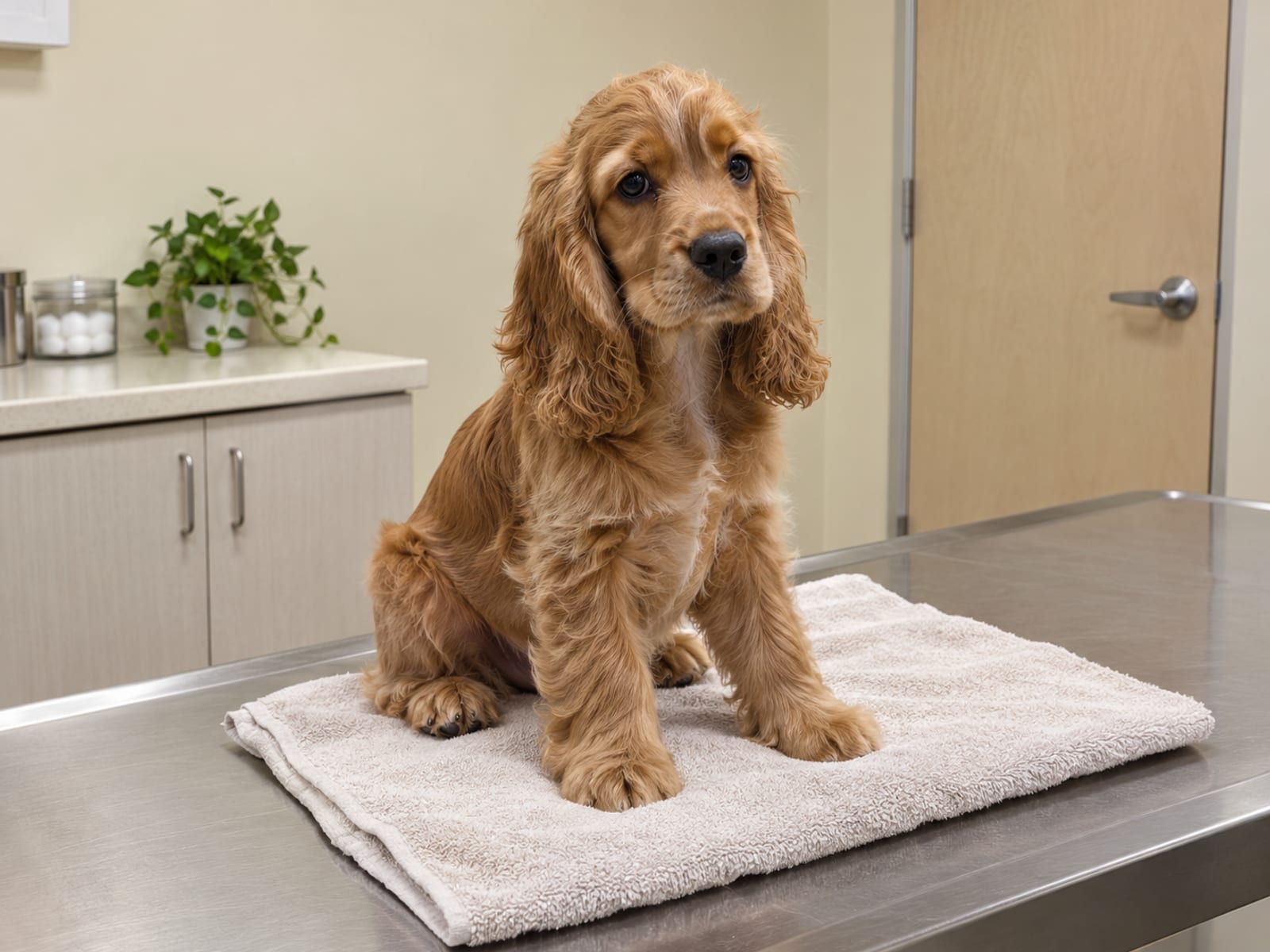
What else can a lump on the belly be?
A bump near the belly button is not always a hernia. It could be a fatty lump called a lipoma, a cyst, a mammary-gland lump, an insect bite or local reaction, an abscess or infected spot, a swelling from an injury, another growth in or under the skin, or a hernia somewhere else in the belly wall. You can't sort these out by looking. Our guide to lumps on dogs covers what vets look at and why any new mass needs an exam.
Book a regular appointment for a lump that is new, changing, growing, firm, warm, red, purple, draining, or sore. Treat a lump with vomiting, collapse, trouble breathing, or severe pain as an emergency. Before a routine visit, jot down where the lump is, about how big it is, the date you first saw it, whether it changes when your dog stands or strains, and whether touching it hurts. That helps your vet, and it doesn't replace the exam. You can find veterinarians in our directory, and our new puppy checklist covers what a first vet visit should include.
What can repair cost?
Prices vary a lot by clinic, place, hernia size, anesthesia, and whether the repair is done along with a spay or neuter. These are published examples from three providers, each labeled with its date, and not a national price.
Tap or hover a row to highlight it.
| Provider | Price | Date or limit |
|---|---|---|
| ProviderHelping Hands Veterinary Surgery | Price$1,675 for umbilical repair | Date or limitPrice guide marked 04/2026 |
| ProviderASPCA Spay/Neuter Alliance | Price$0 (free) umbilical hernia repair | Date or limitWestern North Carolina clinic fee page only |
| ProviderHumane Society of San Bernardino Valley | PriceQuoted case by case | Date or limitPrices effective 06/01/2025 |
Ask your own clinic for a written estimate, and ask whether the repair can be combined with a spay or neuter you already have planned. If cost worries you, read our pet insurance article and ask any insurer whether conditions present from birth are excluded, since policies differ.
Is it safe for a dog to lick your belly button or a wound?
Don't let a dog lick an open wound, a surgical incision, a sore, or an irritated belly button. The CDC says dog saliva can carry Capnocytophaga germs, and saliva that gets into an open wound or sore can make a person sick. Wash the area with soap and water. Get medical advice if the wound is deep, painful, red, swollen, or draining, if you develop a fever, or if the person who was licked has a weakened immune system.
A dog licking unbroken skin is a different, lower-risk contact, and washing your hands afterward is still a good habit, as the CDC's dog guidance recommends.
Questions people ask about dog belly buttons
These are the short answers to the questions that come up most.
Where is a dog's belly button?
It's on the underside of the belly, in the middle, just below the rib cage. It usually looks like a faint vertical scar, a small wrinkle, or a whorl of fur.
Does each puppy have its own umbilical cord?
Yes. Every puppy develops with its own cord connecting it to the placenta, and each one ends up with its own belly button scar. The mother usually breaks each cord herself after the puppy is born.
Should I let my dog lick my belly button?
Intact skin is a lower-risk contact, but wash your hands after contact with saliva. Keep your dog away from any open wound, sore, or irritated skin, since saliva can carry Capnocytophaga, per the CDC.
Which animals do not have belly buttons?
Placental mammals like dogs have umbilical cords and healed scars, though many are small, smooth, and hidden by fur. Marsupials and monotremes differ in how they reproduce and may not keep the same lasting navel. "Every mammal has one" is too broad to be exactly right.
Why does my puppy's belly button stick out?
A soft bulge at that spot may be an umbilical hernia, where tissue pushes through a ring in the belly wall that didn't close fully. Small ones can close by 3 to 4 months, but your vet should check it and watch it. Hard, painful, red or purple swelling, or vomiting, is an emergency.
When does a puppy's cord stump fall off?
Usually within a few days, anywhere from about 2 to 3 days up to 7 days. Call the vet for redness, swelling, heat, discharge, or a puppy that is nursing poorly or seems weak.
What is a little lump on my dog's belly?
It could be a hernia, a lipoma, a cyst, an insect reaction, an abscess, or a mammary lump, and only an exam can tell them apart. Note when you first saw it and whether it changes, and book a visit.
What should you do next?
Take a quiet look at your dog's belly, note anything raised, red, wet, or sore, and don't press on it. If it's a flat faint scar, you've found a normal belly button and there's nothing to do. For a new soft bump, book an exam with a veterinarian. For a hard, painful, red or purple swelling, or any bulge with vomiting, call an emergency vet now.
Sources
- American Kennel Club: American Kennel Club
- ASPCA: ASPCA Spay/Neuter Alliance
- cdc.gov: CDC's dog guidance
- cdc.gov: CDC
- helpinghandsvetva.com: Helping Hands Veterinary Surgery
- hssbv.org: Humane Society of San Bernardino Valley
- Merck Veterinary Manual: Merck Veterinary Manual
- PetMD: PetMD
- VCA Animal Hospitals: VCA animal hospitals
- VCA Animal Hospitals: VCA
- VCA Animal Hospitals: veterinary guidance
- vin.com: VIN