
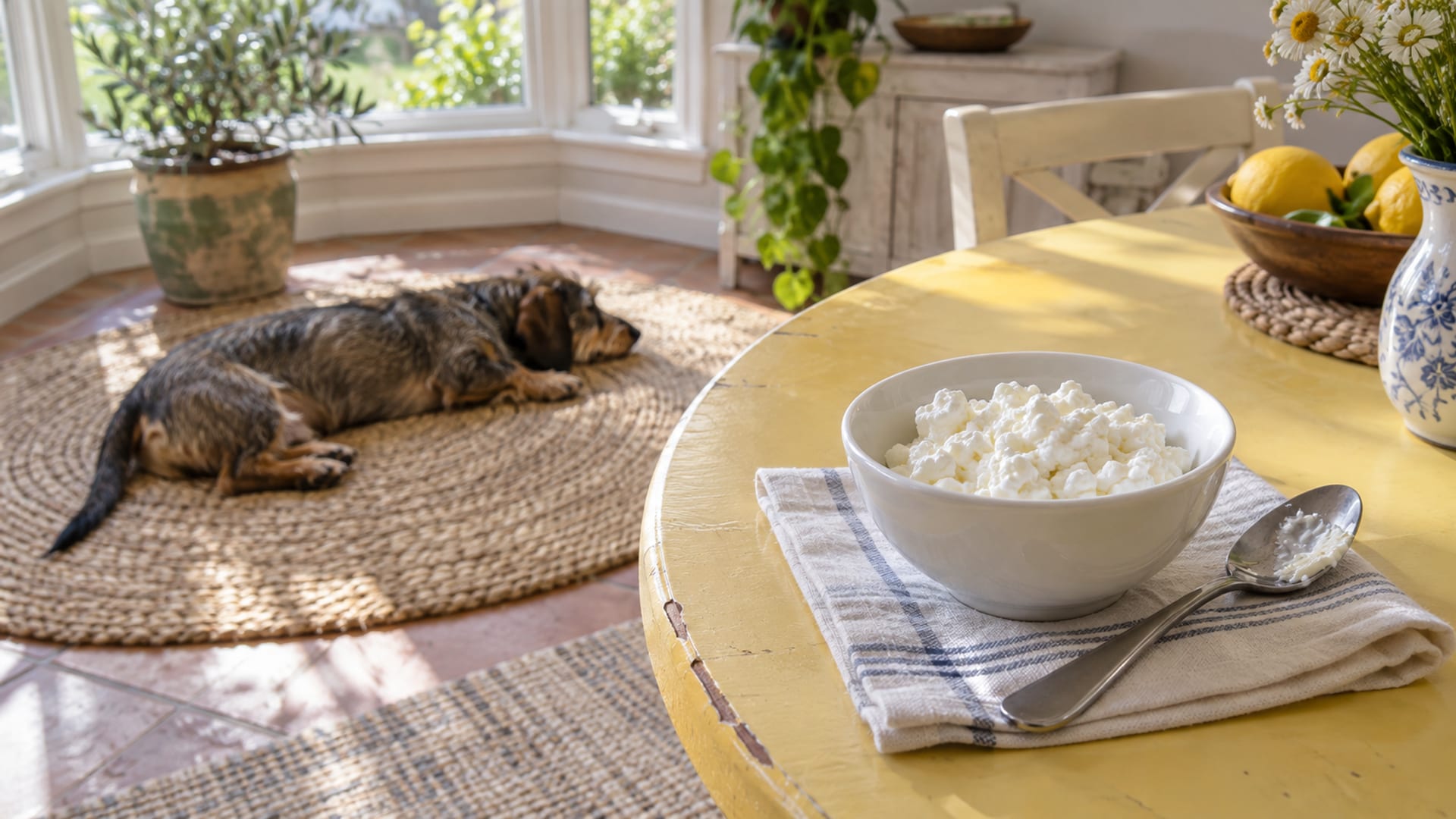
Yes, a little. The American Kennel Club names cottage cheese as one of the lower-fat, lower-sodium, lower-lactose cheeses to share, and plain low-fat tubs are the best pick. It is still dairy, so a dog with a sensitive stomach may react even to a small amount.
If your dog licked the bowl or stole a spoonful of plain cottage cheese, all you need to do is watch for gas or loose stool. If the tub was flavored, check the label, since chives, onion, garlic, fruit mixes and sweeteners are the ingredients that change the answer.
Key takeaways
Tap a card to bring it forward.
- Plain, low-fat cottage cheese is a fine occasional treat for most healthy dogs.
- It has less lactose than many dairy foods, but some dogs still get gas or diarrhea.
- Garlic and chive, onion, fruit and sweetened flavors can carry separate risks.
- Keep it to a spoonful or so, and keep all treats to about 10% of daily calories.
- Dogs with pancreatitis or a dairy sensitivity need their vet's say first.
My dog ate cottage cheese: what to watch for
For a small amount of plain cottage cheese, stop there and keep an eye on your dog. The ASPCA suggests sharing cheese only in small pieces and sparingly, since too much can upset the stomach.
Tap or hover a row to highlight it.
| What they ate | What to do |
|---|---|
| What they ateA spoonful or two of plain cottage cheese | What to doWatch for gas or loose stool |
| What they ateMost of a tub | What to doExpect some stomach upset; call your vet if vomiting or diarrhea keeps up |
| What they ateGarlic and herb, onion or chive flavor | What to doCall your vet or a poison line |
| What they ateA fruit mix with grapes or raisins | What to doCall now; see can dogs eat grapes? |
| What they ateA sweetened or "light" product with xylitol | What to doCall now |
| What they ateThe plastic cup or lid | What to doCall your vet about a possible blockage |
Call your vet sooner if your dog has repeated vomiting, severe diarrhea, a painful belly, weakness, or signs of dehydration, or if your dog has had pancreatitis before.
Signs of trouble and how long they last
As dogs grow up, the enzyme that digests milk sugar drops off, and some become lactose intolerant, according to the Merck Veterinary Manual. The AKC lists the usual signs as loose stool, gas, vomiting, belly pain and diarrhea.
They usually show up within hours and settle once the dairy is out of the system. Signs that go on, or a dog who stops eating, need a vet.
The rarer, bigger worry is pancreatitis in a dog prone to it, where rich food can tip things over. Merck lists vomiting, belly pain, weakness, dehydration and diarrhea as signs, and notes that some dogs show only a quieter mood or less appetite. Merck names Miniature Schnauzers as one breed where pancreatitis turns up more often. A small spoonful of low-fat cottage cheese in a healthy dog is unlikely to cause it.
Which cottage cheese is okay
Tap or hover a row to highlight it.
| Type | Okay? | What to know |
|---|---|---|
| TypePlain, low-fat or reduced-fat | Okay?Yes, a little | What to knowThe best choice |
| TypePlain, full-fat | Okay?A smaller amount | What to knowMore fat and calories |
| TypeSalted or regular | Okay?A little | What to knowCheck the sodium on the label |
| TypeGarlic and herb, onion, chive | Okay?No | What to knowOnion-family ingredients can harm dogs |
| TypeFruit on the bottom, sweetened | Okay?Check first | What to knowGrapes, raisins, sugar or xylitol |
| TypeDry curd | Okay?A little | What to knowMore concentrated per spoonful |
| TypePlant-based "cottage cheese" | Okay?Check first | What to knowASPCA flags xylitol, chocolate and macadamia in some dairy substitutes |
Lasagna, dips and casseroles made with cottage cheese are mixed foods. Judge them by their richest and riskiest ingredient.
How much cottage cheese to give
No one has published a cottage cheese amount by dog size. For cheese in general, the AKC describes a small cube or a few shreds, and Pet Poison Helpline keeps treats to about 10% of daily calories. For cottage cheese, that means a small taste, even less for a small dog, and cutting back if stools soften.
- Pick plain and low-fat.
- Try a small amount the first time and wait a day before offering more.
- Use it as a topper now and then. Your dog's regular food should stay the main meal.
- Skip it for a dog on a prescription diet unless the vet agrees.
"My dog gets cottage cheese on her kibble every morning"
That routine can work well for a dog who tolerates dairy, and plenty do. Pet Poison Helpline says most dogs handle cheese fine and some are sensitive. How much, how rich, and the dog all matter. A spoonful of low-fat curd is a different thing from half a tub of full-fat, and a large dog absorbs the same spoonful more easily than a small one. A dog whose gut is already upset can also lose tolerance for dairy for a while, which is why Merck advises avoiding dairy in animals with diarrhea. If stools soften, pause the cottage cheese and see if they firm up.
Look-alikes: ricotta, queso fresco and other cheeses
- Ricotta, farmer cheese, quark and queso fresco differ in fat, salt and moisture, so a cottage cheese serving does not transfer to them.
- Cream cheese is a different product with its own fat and salt levels.
- Cheese curds are often salted and sometimes seasoned.
- Cottage cheese flavored treats or powders may hold little real cheese. Read the label.
- Our entries on cheese, yogurt and milk cover the rest of the dairy case.
Check what you learned
Quick check
Questions about dogs and cottage cheese
Can dogs eat cottage cheese every day?
A small spoonful can fit for a dog who tolerates it, as long as all treats stay near 10% of daily calories. Occasional is the safer habit.
Is cottage cheese better for dogs than other cheese?
The AKC counts it among the lower-fat, lower-sodium, lower-lactose cheeses, so it is a gentler choice. Dogs with severe lactose intolerance can still react.
What if my dog has diarrhea after cottage cheese?
Stop the dairy. Call your vet if the diarrhea is severe, lasts, or comes with vomiting, pain, weakness or refusing food.
Can dogs with pancreatitis eat cottage cheese?
Ask your vet. Merck says low-fat feeding is key to managing pancreatitis, and your vet can tell you whether a particular product fits.
Can puppies eat cottage cheese?
A tiny taste of plain cottage cheese is usually fine. Puppies can dry out faster if vomiting or diarrhea starts, so keep it very small.
Sources
Checked September 24, 2026.
- American Kennel Club, Can Dogs Eat Cheese?
- American Kennel Club, Can Dogs Drink Milk?
- ASPCA, Sharing is Caring: Foods You Can Safely Share with Your Pet
- ASPCA, Are Dairy Substitutes Safe for My Pet?
- Merck Veterinary Manual, Malabsorption Syndromes in Small Animals
- Merck Veterinary Manual, Pancreatitis in Dogs and Cats
- Pet Poison Helpline, Pet Safe Seal of Approval Dog Recipes