
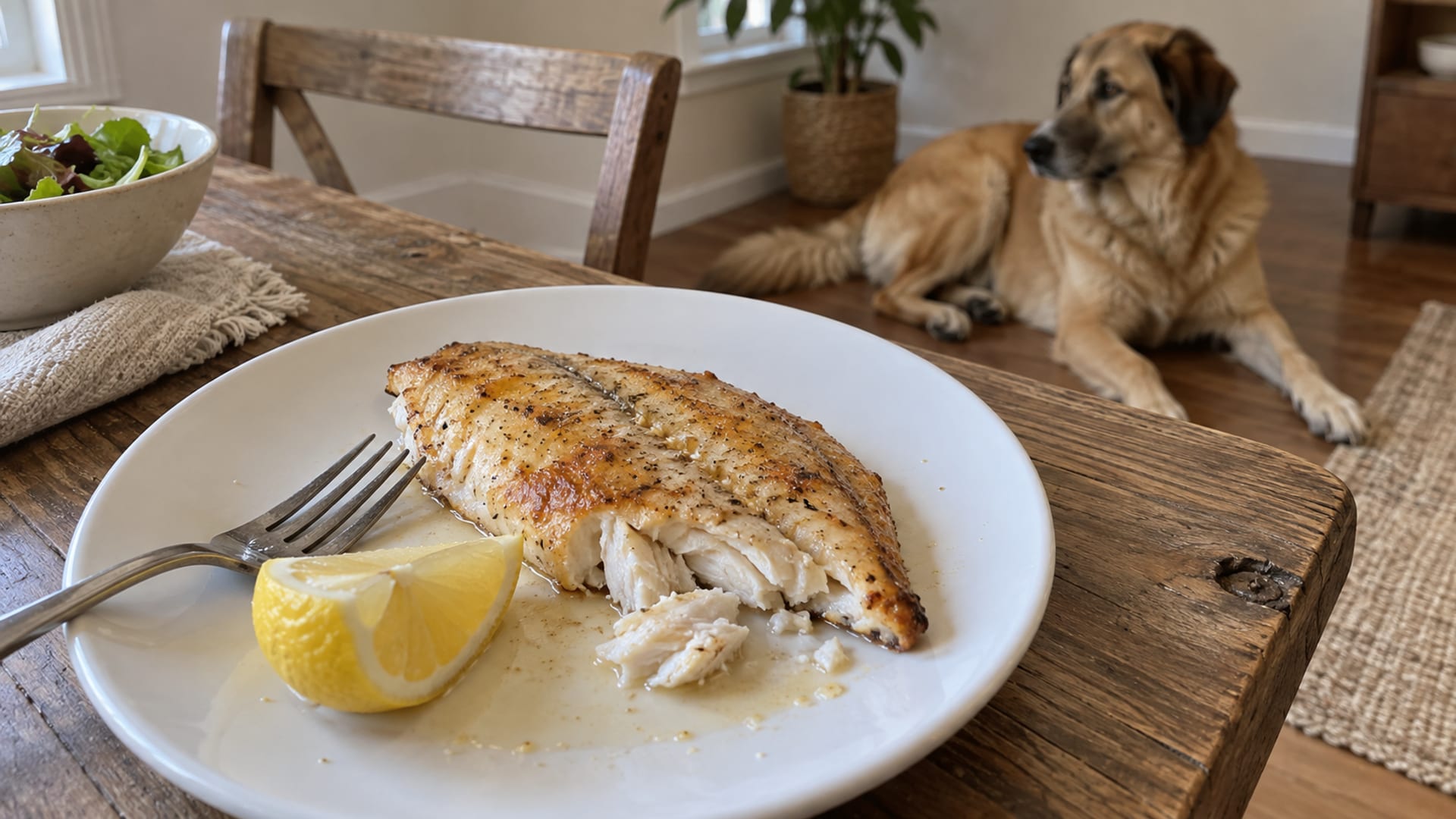
Yes, in the right form. Plain, fully cooked, boneless catfish is fine for most dogs in a small amount, and the American Kennel Club treats cooked, unseasoned, boneless fish as a reasonable occasional food. Raw or undercooked catfish, fish bones, and fried, salty or seasoned catfish are a different matter, because each brings its own risk: germs and parasites, a bone that chokes or lodges in the gut, or a load of fat, salt and seasoning.
If your dog already ate some, what matters is raw or cooked, whether a bone went down, how it was seasoned, and how much. A flake of plain baked fillet usually needs only a watchful evening. Raw fish off the stringer, bones or a pile of fried fish is worth a call to your vet, and choking, trouble breathing or repeated vomiting means call right now.
Key takeaways
Tap a card to bring it forward.
- Plain, fully cooked, boneless catfish is fine for most dogs as a small, occasional treat.
- Raw or undercooked catfish can carry Salmonella, Listeria and parasites, and raw freshwater fish holds an enzyme called thiaminase that cooking destroys.
- Bones, heads, fins and spines can choke a dog or lodge in or pierce the gut.
- Fried, breaded or seasoned catfish brings oil, salt, garlic and onion along with the fish.
- Call your vet now for choking, trouble breathing, gagging or drooling, repeated vomiting, belly pain, blood in vomit or stool, weakness or seizures.
What to do if your dog just ate catfish
Start with your dog, then the fish.
- Check that your dog is breathing and acting normally. Pet Poison Helpline puts this first, and a dog who is gagging, pawing at its mouth or struggling to breathe needs a vet now.
- Move your dog away from the rest and keep what is left. That stops a second helping from the cooler or the plate, and the leftovers show your vet exactly what was eaten.
- Work out what went down. Raw or cooked, bones or boneless, plain or fried, and roughly how much are the facts your vet will ask about first.
- Hold off on home remedies and on trying to make your dog throw up. Pet Poison Helpline advises against both unless a vet or the helpline tells you to.
- Call your vet or a poison line if the fish was raw, had bones or was heavily seasoned, or if your dog shows any signs. A little plain, cooked, boneless catfish in a dog acting normally usually just calls for watching; the rest deserve a professional opinion, sooner for a puppy, a dog with health problems or a large amount of raw fish.
If a bone had gone down and this were my dog, I'd call even if everything looked normal, because a bone can cause trouble later as it moves through.
Which kinds of catfish are fine and which are not
Catfish reaches dogs in more ways than a dinner fillet, and each form lands differently.
Tap or hover a row to highlight it.
| Form | For your dog | Why |
|---|---|---|
| FormPlain fillet, fully cooked, boneless | For your dogFine in small amounts | WhyCooking handles germs and destroys thiaminase |
| FormRaw or undercooked, fresh catch or bait | For your dogCaution; call about a large amount or a puppy | WhySalmonella, Listeria, parasites, thiaminase |
| FormSkin | For your dogOnly fully cooked and plain | WhySame rules as the fillet |
| FormBones, head, fins, tail, spines | For your dogKeep away | WhyChoking, blockage or a tear in the gut |
| FormRaw guts and organs | For your dogCaution | WhyThiaminase can gather in digestive tissue |
| FormFried, breaded or blackened | For your dogSkip it | WhyOil, salt, breading, garlic and onion |
| FormSmoked, dried, salted or canned | For your dogNot a routine treat | WhySalt; drying does not remove germs or thiaminase |
| FormCatfish dog food | For your dogFollow the label | WhyBuilt differently from plain fish |
| FormCatfish oil and fish-oil supplements | For your dogAsk your vet | WhyStrength varies by product |
Raw catfish from the catch or the bait bucket raises the most questions. The FDA warns that raw pet food can carry Salmonella and Listeria monocytogenes, and raw fish can also pass on fish tapeworms and flukes, which the Merck Veterinary Manual's page on gastrointestinal parasites of dogs says vary by region. Raw freshwater fish also contains thiaminase, an enzyme that breaks down thiamine (vitamin B1), and the Merck Veterinary Manual explains that cooking destroys it. A silver carp study in PMC found the enzyme concentrated in the fish's guts, one more reason to keep raw innards away from your dog.
Bones are the other big concern. The AKC says fish bones should not be fed because they can lodge in or pierce the digestive tract, and a catfish head, fins and fin spines are hard and sharp too. Our entry on fish bones covers what happens after one is swallowed.
Fried catfish from a fish fry is a different food from a plain fillet. The AKC notes that oil can upset a dog's stomach or play a part in pancreatitis, and the breading, salt, sauces, garlic and onions that come along add risks of their own. Dogs who have had pancreatitis or trouble with fatty food have the most reason to skip it.
How to serve plain catfish and how much
If you want to share tonight's catfish, set a piece aside before any breading, butter or seasoning goes on. Cook it all the way through, let it cool, and pull out every bone you can find by running your fingers along the flesh. I'd rather hold back a plain piece from the start than try to scrape the coating off a fried one.
The AKC suggests starting with a small portion and watching for an upset stomach or signs of an allergy. It also says treats should stay at no more than 10% of what your dog eats in a day, and its list of human foods dogs can and can't eat keeps fish in the limited-treat group. It gives no gram amount by dog size, so let that 10% ceiling set the portion: a few flakes for a small dog, and still only a small piece for a large one.
Keep catfish as an extra on top of your dog's complete and balanced food rather than a replacement for it, unless a veterinary nutritionist has planned the diet. If your dog has kidney disease, check with your vet first, since sodium and phosphorus in its diet are their call.
Signs to watch for as it passes
What you watch for depends on what your dog ate.
After a bone. Gagging, drooling, pawing at the mouth, trouble swallowing, vomiting, belly pain, constipation or straining without passing stool can point to a bone that has lodged or caused damage, and the AKC advises calling your vet promptly if you see them. These signs can start right away or show up later as the bone moves along the gut, so keep watching over the next few days.
After raw fish. Germs such as Salmonella and Listeria can cause vomiting, diarrhea, fever, low energy, refusing food, dehydration or belly discomfort, as the FDA's warning about contaminated raw pet food describes. How soon they appear depends on the germ and the amount.
After raw fish again and again. Parasites often cause no signs at first, though the Merck Veterinary Manual says heavy infections can lead to diarrhea, weight loss, vomiting, weakness and liver disease. Thiamine deficiency comes from a lot of raw, thiaminase-rich fish rather than one small meal, and the Merck Veterinary Manual's page on nutritional disorders of the spinal cord lists loss of appetite, depression, back-leg weakness and seizures among its signs. If your dog regularly gets raw fish at the dock, tell your vet.
Whatever your dog ate, call now for choking, trouble breathing, repeated vomiting, severe belly pain, blood in vomit or stool, collapse, seizures, marked weakness, fever or any sign of a blockage. Pet Poison Helpline's list of warning signs backs getting help right away.
My dog ate catfish before and was fine
If your dog has grabbed catfish before without a problem, that happened, and it was good news for that dog on that day. It just doesn't set a rule for the next time or the next dog.
Maybe the amount was small for the dog's size, the fish was cooked, and no bone went down. That fish may not have carried many parasites, and one raw meal is far from the repeated raw feeding that drains thiamine. Dogs also differ, and some problems start quietly: the Merck Veterinary Manual notes that mild fish-parasite infections can pass unnoticed, and the FDA says pets can carry Salmonella or Listeria without looking sick.
So, the next fish or the next bone can go differently. Ask the same questions each time: raw or cooked, bones or none, plain or seasoned, and how much.
Catfish products and names that get mixed up
A few names and products come up around catfish often enough to sort out.
"Catfish" covers a whole group of fish. The USDA Food Safety and Inspection Service uses the name for fish in the order Siluriformes, including farm-raised channel catfish, and wild catfish come from many different waters. Channel, blue, flathead, farm-raised or wild, the rule for your dog stays the same: cooked, plain and boneless.
Catfish nuggets, catfish sandwiches and breaded or blackened catfish are prepared foods, so check them for bones, salt, oil, garlic, onion, sauces and breading. Cat food is its own thing too, even when it lists fish, with a different balance of fat, salt and nutrients. For fish beyond catfish, our entries on fish and salmon cover the rest of the cooler.
Check what you learned
Three quick questions to lock in the main points.
Quick check
Questions about dogs and catfish
A few more questions owners ask once the first worry has passed.
Can puppies eat catfish?
A puppy eating solid food can have a tiny piece of plain, fully cooked, boneless catfish, started slowly like an adult. Raw catfish is a bigger concern, because an infection or a blockage can hit a young dog harder. The FDA advises against raw pet food in general, and that goes double for a puppy that got into the catch.
Can my dog get worms from catfish?
Raw or undercooked fish can pass on fish tapeworms and flukes, and cooking the fish fully is what protects your dog. If your dog eats raw fish often, ask your vet about a stool check, since the Merck Veterinary Manual notes these infections often show no early signs.
Can my cat have catfish too?
The same cooked, plain, boneless approach applies, and raw fish carries the same germ, parasite and bone risks for cats. The Merck Veterinary Manual points out that cats are especially likely to develop thiamine deficiency from raw fish. Keep raw catch away from both.
Should I wash up after handling raw catfish around my dog?
Yes. The FDA warns that the Salmonella and Listeria in raw pet food can make people sick too, and a dog can carry these germs without looking ill. Wash your hands, the cutting board and your dog's bowl after raw fish has been around.
Sources
Checked September 25, 2026.
- American Kennel Club, Can Dogs Eat Fish?
- American Kennel Club, Which Human Foods Can Dogs Eat and Which Are Dangerous?
- Merck Veterinary Manual, Nutritional Requirements of Small Animals
- Merck Veterinary Manual, Nutritional Disorders of the Spinal Column and Cord in Animals
- Merck Veterinary Manual, Gastrointestinal Parasites of Dogs
- U.S. Food and Drug Administration, Get the Facts! Raw Pet Food Diets Can Be Dangerous to You and Your Pet
- U.S. Food and Drug Administration, FDA Cautions Pet Owners Not to Feed Performance Dog Raw Pet Food Due to Salmonella, Listeria monocytogenes
- Pet Poison Helpline, 24/7 Animal Poison Control Center
- Pet Poison Helpline, Signs and Symptoms of Pet Poisoning
- USDA Food Safety and Inspection Service, Catfish From Farm to Table
- PMC, Understanding and mitigating thiaminase activity in silver carp