
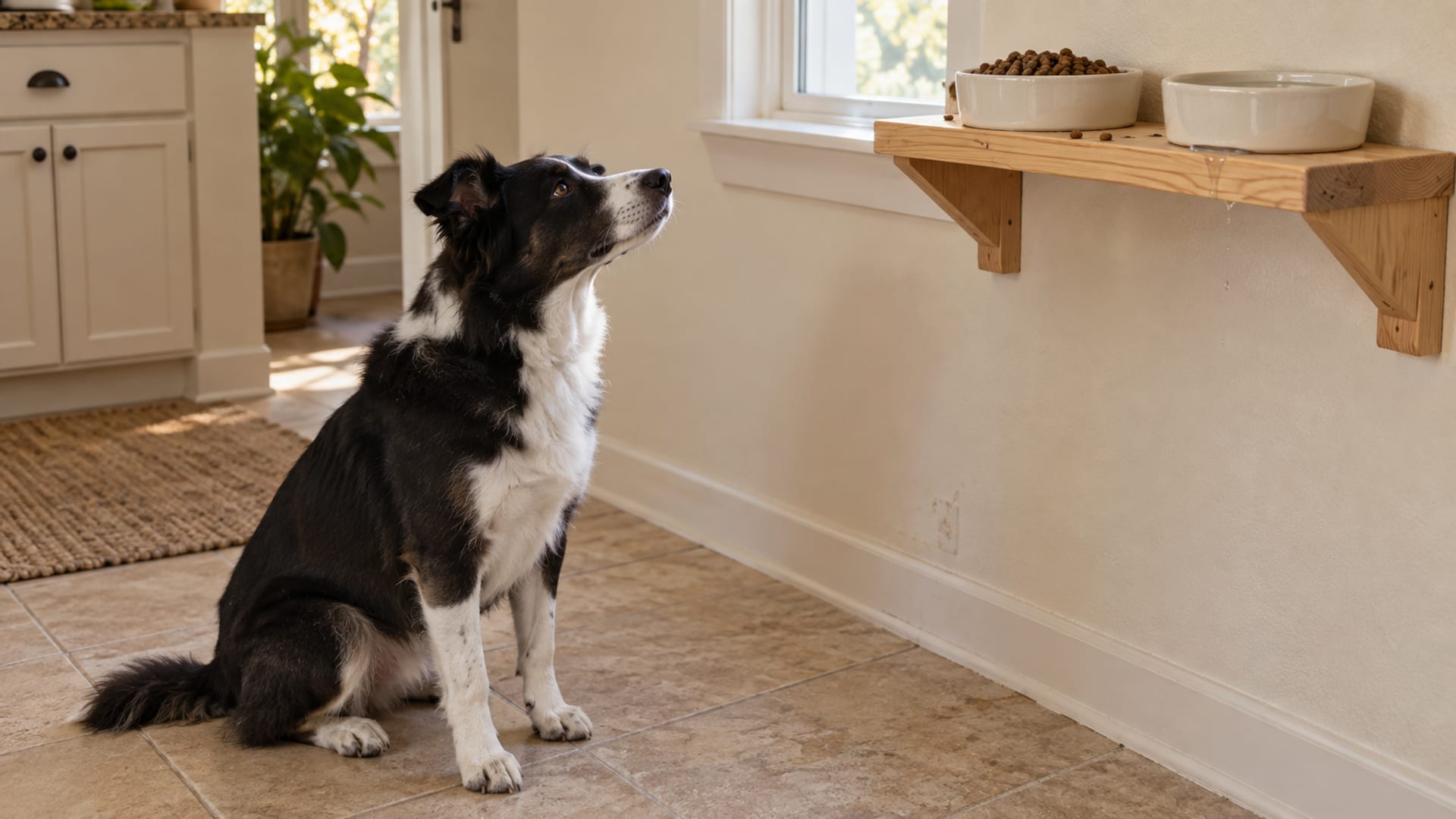
A little will not hurt most dogs. Ordinary cat food is not poisonous to dogs, and a few bites from the cat's bowl usually pass without a problem. It is made for a cat's needs and is often higher in fat and protein than dog food, so it should never stand in for your dog's own food.
If your dog just cleaned out the cat's dish and is acting normally, pick up what is left and watch them for a day or two. If they ate a whole bag, raw or prescription cat food, or your dog has had pancreatitis, the section below says when to call.
Key takeaways
Tap a card to bring it forward.
- Ordinary cat food is not toxic to dogs, and a few bites are usually harmless.
- It often carries more fat and protein than dog food, which can upset a dog's stomach.
- A big or fatty meal can set off pancreatitis in dogs prone to it.
- Raw and freeze-dried cat foods can carry germs.
- Cat food is formulated for cats and should not replace a complete dog diet.
My dog ate cat food: what to do
Tap or hover a row to highlight it.
| What they ate | What to do |
|---|---|
| What they ateA few bites of dry or canned cat food | What to doNothing beyond keeping an eye out for an upset stomach. |
| What they ateA full bowl, or cat food more than once in a day | What to doWatch closely for vomiting, diarrhea or belly pain, and call your vet if they start. |
| What they ateA whole bag, or an amount you cannot guess | What to doCall your vet, especially for a small dog. |
| What they ateAny amount, in a dog with past pancreatitis or a low-fat diet | What to doCall your vet today. |
| What they ateRaw or freeze-dried raw cat food | What to doCall your vet for advice. |
| What they atePrescription or medicated cat food, or supplements | What to doCall your vet or a poison line with the label. |
| What they ateCat treats or toppers that list onion, garlic or xylitol | What to doCall now and read out that ingredient. |
| What they ateCat litter, cans, pouches or packaging | What to doCall your vet. Those can block the gut. |
Pet Poison Helpline's first steps are to move your pet away from the food and check that they are breathing and acting normally. Then find the bag or can, guess how much went, and note the time.
Get your dog to a vet now for vomiting that keeps coming, a painful or hunched belly, blood in vomit or stool, weakness, collapse, or trouble breathing.
Why cat food does not suit dogs
Cats and dogs need different diets. Cats have higher requirements for taurine, arginine and some vitamins, according to a 2024 review by Li and Wu, and cat food is built around those needs.
The bigger issue for a dog is fat. The Merck Veterinary Manual puts cat diets anywhere from 8% to 40% fat on a dry-matter basis, compared with about 5% to 15% for typical adult dog foods. Formulas vary, so some cat foods are close to dog food and some are far richer.
That extra fat is why a big helping can upset a dog's stomach. Merck lists dietary indiscretion, meaning eating food a dog should not, and high blood fats among the risk factors for pancreatitis in dogs.
Kibble, canned, raw and treats
Tap or hover a row to highlight it.
| Type | For a dog who ate some | What to know |
|---|---|---|
| TypeDry kibble | For a dog who ate someLow risk in small amounts | What to knowCalorie-dense; repeated raids add up |
| TypeCanned or wet | For a dog who ate someLow risk in small amounts | What to knowSome formulas are rich and fatty |
| TypeKitten food | For a dog who ate someLow risk once | What to knowMade for growth and can be more calorie-dense |
| TypeRaw or freeze-dried raw | For a dog who ate someCall your vet | What to knowUncooked animal food can carry harmful bacteria |
| TypePrescription cat food | For a dog who ate someCall with the label | What to knowMineral and calorie levels differ by product |
| TypeTreats, purées, toppers | For a dog who ate someRead the label | What to knowCheck for onion, garlic, xylitol or medication |
| TypeTuna cat food | For a dog who ate someLow risk once | What to knowNot the same as plain tuna; salt and additives vary |
How much cat food is too much?
There is no amount of cat food by dog size that marks a line. What matters is how much your dog ate for their weight, how rich the formula was, and your dog's health. A few bites in a healthy medium or large dog rarely cause anything. A whole can or a big pile of kibble in a small dog is more likely to upset the stomach.
For a dog with pancreatitis, obesity, diabetes, kidney disease or a prescription diet, any cat food is a question for your vet.
If your dog raids the cat's bowl every day, the fix is access. Feed the cat somewhere the dog cannot reach, or pick the bowl up when the cat is done.
Signs to watch for over the next few days
- Within hours: vomiting, diarrhea, gas, a sore belly or a dog who goes off their food.
- Later on: vomiting that keeps returning, belly pain, weakness and refusing food, which can point to pancreatitis.
- At any time: straining without passing stool after eating litter or packaging.
Mild gas or a single loose stool after a raid usually settles on its own. Signs that get worse, or a dog who seems painful or flat, need a vet.
"My dog eats the cat's food all the time and is fine"
That can be true, and plenty of dogs in cat households sneak kibble for years without getting sick. It is still not a rule for every dog. Whether it causes trouble depends on the amount, the fat content of that particular food, the dog's size, and whether the dog has a sensitive pancreas or another health condition. Pancreatitis can also take its time to show. And a dog who fills up on cat food every day is eating a diet that was never balanced for a dog, which matters more over months than on any single day.
Litter, cat poop and other things near the cat bowl
- Cat poop: a separate problem from cat food, with germ and parasite risks. The AKC explains why dogs do it and what it can pass on.
- Cat litter: clumping litter can cause stomach irritation or a blockage if a dog eats much of it.
- Cat milk and dairy treats: a different question; see can dogs drink milk?.
- Treats with onion or garlic: check the label, and see can dogs eat garlic?.
Check what you learned
Quick check
Questions about dogs and cat food
What happens if my dog eats some cat food?
Usually nothing, or a mild upset stomach. A bigger meal can cause vomiting or diarrhea, and in dogs prone to it, pancreatitis.
Why does my dog prefer cat food?
The AKC describes cat food as appealing to dogs, and cat foods tend to be higher in protein and fat than dog foods, as a study on nutrient digestion in cats and dogs reports. Feed the cat out of reach if your dog keeps helping themselves.
What can I feed my dog if I run out of dog food?
A meal of ordinary cat food is unlikely to poison a healthy dog, but get dog food again as soon as you can. If your dog has pancreatitis or eats a special diet, call your vet before swapping anything in.
Can dogs eat cat food every day?
No. It is not balanced for dogs, and the extra fat and calories add up over time.
Can cats eat dog food?
Not as their regular food. Cats have their own needs, including taurine and arachidonic acid, and can end up short on nutrients if dog food is all they eat, as Texas A&M's veterinary school explains.
Sources
Checked September 24, 2026.
- Pet Poison Helpline, Emergency Instructions
- Li P and Wu G, Characteristics of Nutrition and Metabolism in Dogs and Cats, Advances in Experimental Medicine and Biology, 2024
- Merck Veterinary Manual, Nutritional Requirements of Small Animals
- Merck Veterinary Manual, Pancreatitis in Dogs and Cats
- American Kennel Club, Your Dog Won't Eat Kibble: What Are Your Options?
- American Kennel Club, Why Do Dogs Eat Cat Poop?
- Centers for Disease Control and Prevention, About Pet Food Safety
- Nutrient Digestive Bypass study, Nutrient Digestive Bypass: Determinants and Associations with Stool Quality in Cats and Dogs
- Texas A&M Veterinary Medicine, Cat Food for Thought: Can Cats Eat Dog Food?