
Tornado and Flood Planning for Arkansas Dog Businesses: Shelter, Evacuation, Supplies and Client Messages
By Cal Hewitt · Published
Business guides
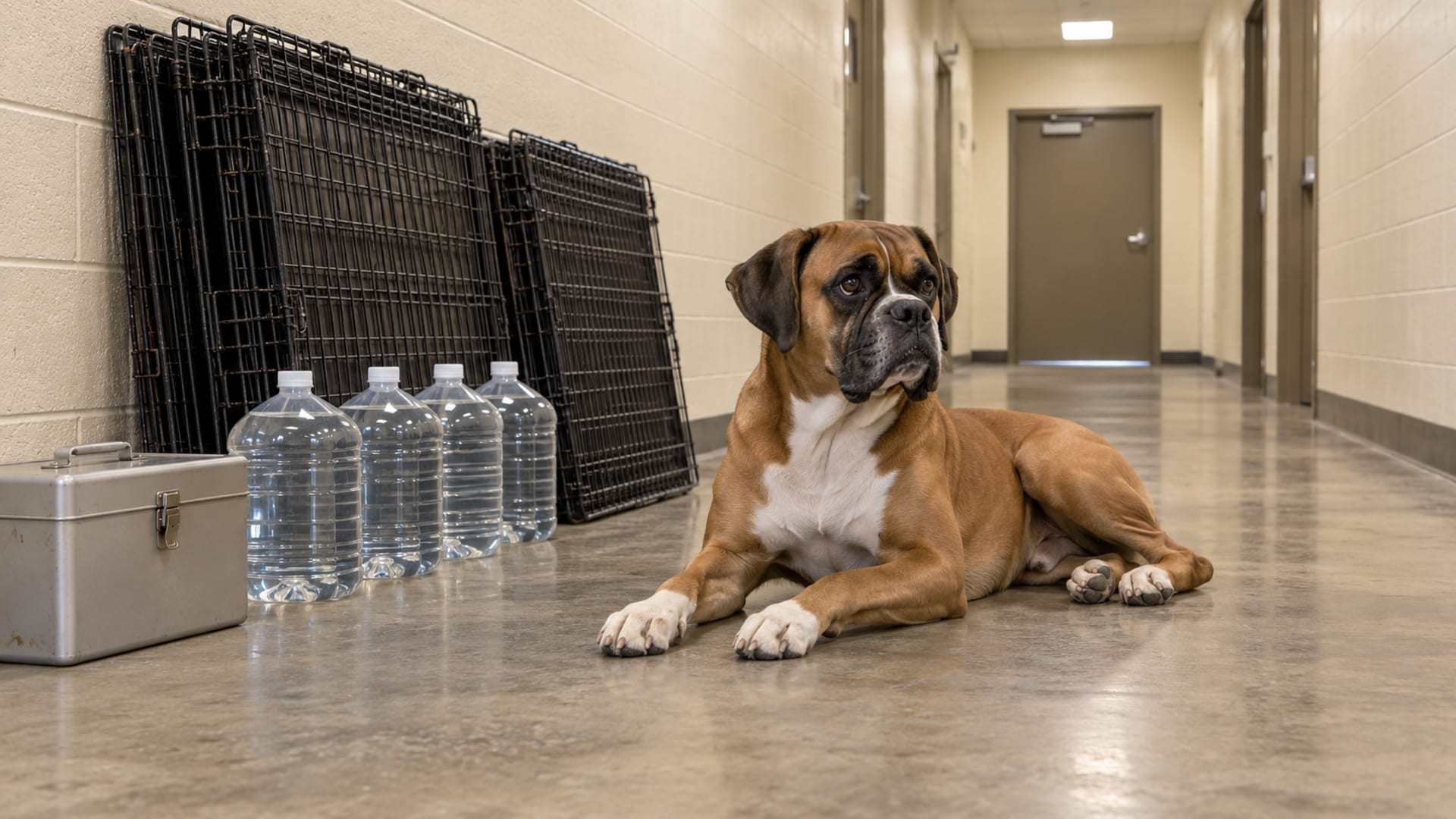
If you board dogs, run a daycare or pet sit in Arkansas, your storm plan comes down to three written decisions: where the dogs shelter during a tornado warning, when they leave because of flooding or building danger, and where they go if your facility cannot operate. Start this week. Choose a shelter area and an evacuation route, assign staff roles, confirm an alternate boarding location, update every dog's identification and owner contacts, and pack supplies. The Rogers Animal Services flyer says to keep at least three days of food and water as a minimum, and its supply list recommends five to seven days. Use National Weather Service warnings, and confirm every destination before you move a single dog.
Key takeaways
Tap a card to bring it forward.
- Write down three decisions: where dogs shelter in a tornado warning, when they evacuate for flooding or building danger, and where they go if the building is lost.
- A tornado watch means get ready; a tornado warning means move dogs and staff to your shelter area right now.
- Rogers Animal Services gives at least three days of food and water as the minimum and five to seven days on its supply-kit list; scale both from each dog's own care records.
- Many emergency shelters do not admit pets, so line up a primary and a backup destination and call before you move dogs.
- Keep owner contacts, authorizations, photos, microchip and rabies details, vaccination proof and care instructions in print and in a backup staff can reach.
- Use more than one alert source, including NOAA Weather Radio, and have client messages ready in English and Spanish.
What happens to the dogs in your care if a warning hits today?
When you are responsible for other people's dogs, the fear is specific: a dog trapped in a damaged building, a dog that slips a leash in the confusion, a dog you cannot get back to its owner because the phone list was on a computer that lost power. A rough idea of what you would do lives in one person's head, and storms do not wait for that person to be on shift. Writing it down turns it into a sequence any staff member can follow.
The plan rests on three decisions. Shelter: during a tornado warning, dogs and staff stay inside and move to an area you chose ahead of time. Evacuate: for a flash flood, an evacuation order or an unsafe building, dogs leave by a planned route to a destination you already confirmed. Relocate: if the building cannot operate after the storm, dogs go to alternate care or back to their owners, with their records.
The Rogers Animal Services flyer recommends having both a stay-home plan and an evacuation plan. It is written for households, so a business adapts it for many dogs, several staff and a client list. Treat it as preparedness guidance, not a license condition; your city or county decides what your premises must have.
What to do this week, one day at a time
The SBA tells businesses to assess their risks, create a response plan for their own operations, practice it with staff and protect records and insurance information. Its preparedness checklists, updated July 1, 2024, include tornado and flood checklists you can work from. For a dog business, that work fits into seven days.
Day 1: choose your shelter and evacuation areas. Walk the building and mark the area where dogs and staff go during a tornado warning, the exit and route you would use to evacuate, and the risks that apply to your site: flash flooding, power loss, damaged fencing and roads that could be blocked.
Day 2: assign staff and buddy roles. Decide who orders shelter or evacuation, who counts dogs, who carries the records, who handles crates and leashes, and who contacts clients. Rogers recommends a buddy system for when an owner cannot return; for a business, the buddy covers if you or the assigned staff member cannot reach the dogs.
Day 3: update dog and client records. Check every file for current owner and backup contacts, emergency and pickup authorization, photos, microchip and rabies details, vaccination proof, feeding and medication instructions, and the dog's veterinarian.
Day 4: confirm alternate locations. Call at least one primary and one backup destination and write down what each one needs from you.
Day 5: pack and label supplies. Food, water, bowls, crates, leashes, sanitation supplies, bedding, medications and printed records go where staff can reach them fast.
Day 6: write client messages. Draft short warning, closure, relocation and pickup messages in English and Spanish so nobody writes them under pressure.
Day 7: run a drill. Practice a full count, move dogs to the shelter area, and send a test message to staff. Note what took too long and fix it.
Where dogs go during a tornado warning
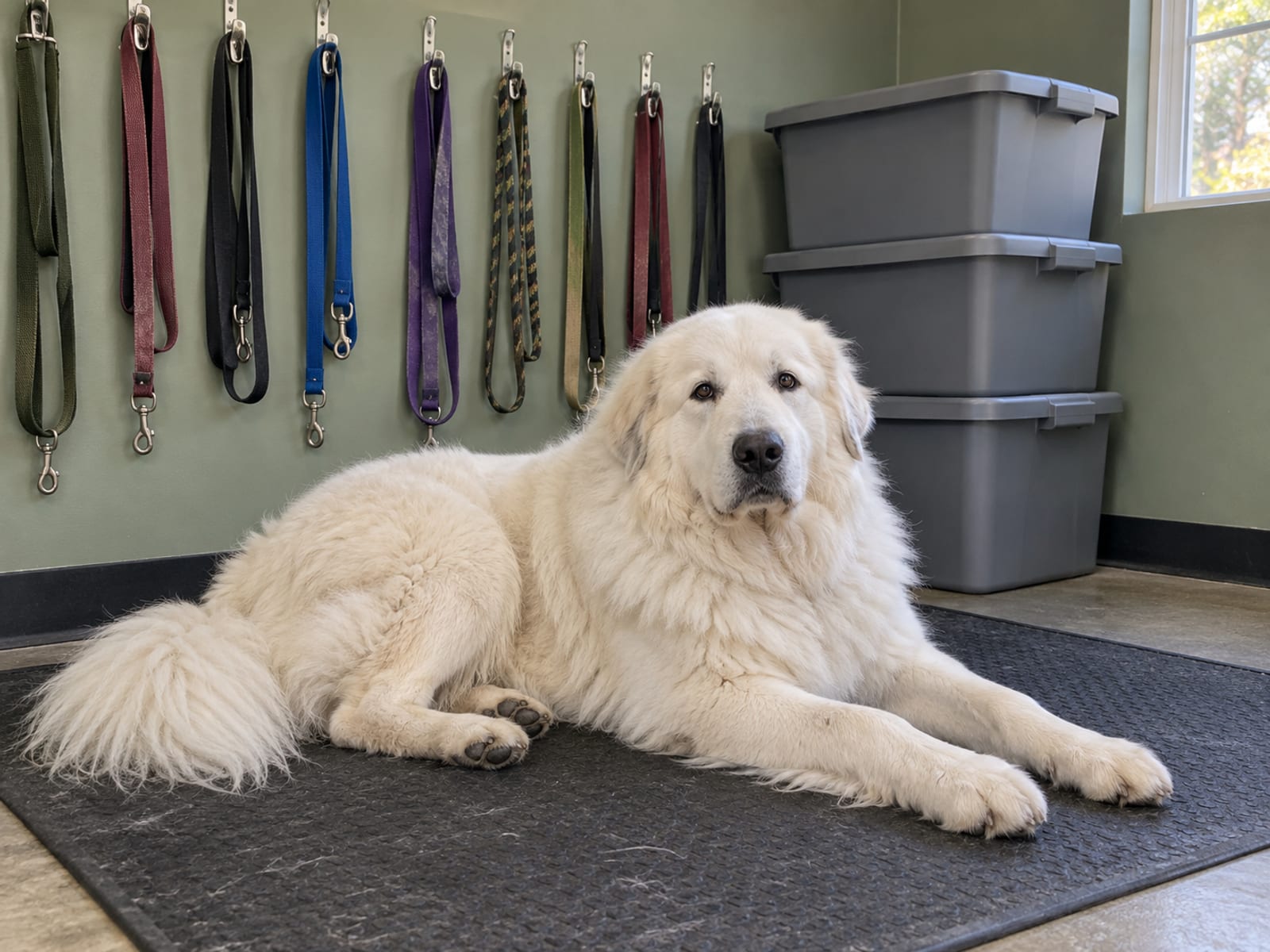
The difference between a watch and a warning sets the pace. According to the National Weather Service, a tornado watch means conditions are favorable for tornadoes. A tornado warning means a tornado has been indicated or sighted, and people in the warned area should take shelter immediately. During a watch, get ready: Rogers says to bring pets indoors well before the storm, so bring dogs in from yards and runs, then check staff and supplies and secure your records.
When the warning comes, staff move dogs to the preselected shelter area at once. The right room depends on your building, so choose it in advance and confirm the property-specific procedure with your local emergency management office, building officials or other qualified local professionals.
Count the dogs before you move and again once everyone is in the shelter area. Every dog should be wearing identification and be on a leash or in a crate. Keep apart the dogs that should not share space. The Rogers flyer warns that frightened animals may behave differently than usual. Your client message during a warning should ask owners not to travel to you until the warning ends.
When dogs leave for flooding or building danger
Flooding asks a different question than a tornado: not where to hide, but when to go. The same watch and warning logic applies. A watch is the time to call your destinations, load supplies and prepare messages; a flash-flood warning calls for immediate action. The NWS Little Rock watches and warnings page gathers Arkansas warning resources. When a flash-flood warning, an evacuation order or a damaged building puts the dogs at risk, follow the decision you made in advance and leave by your planned route. Moving dogs to a higher floor is not a universal answer; assess your own facility and follow emergency officials.
Before any dog leaves, call the destination and confirm it can take them now, as Rogers advises. Transport dogs in crates or with handlers so incompatible dogs never share space. If your main route floods, use a second route and a backup destination. If staff cannot safely reach the building, your buddy plan decides who goes. If the power fails, your plan should cover ventilation and temperature control, lighting, doors, cameras, pumps, water and phones, and say when an outage alone becomes a reason to relocate.
What supplies to store and how much
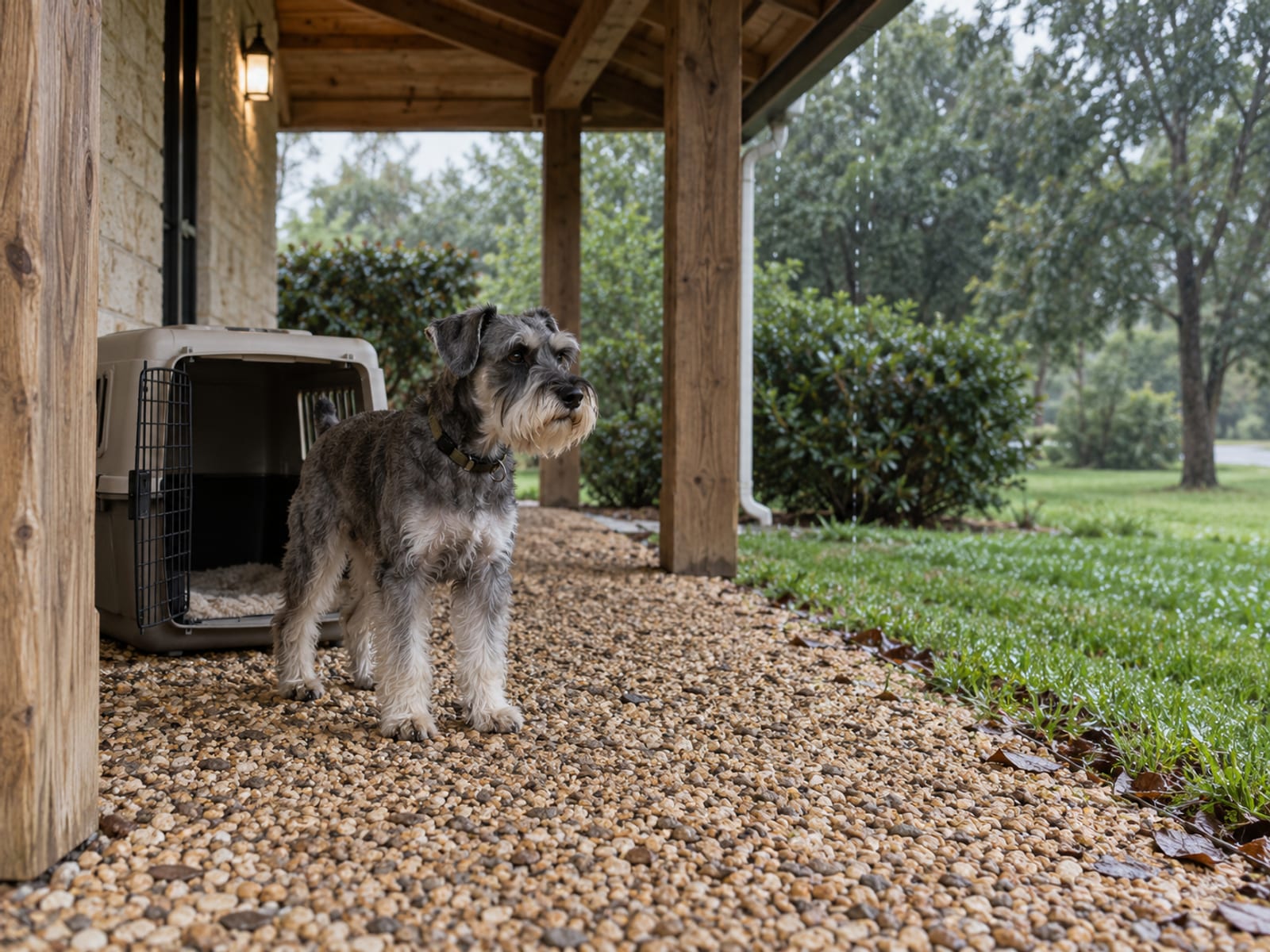
The Rogers Animal Services flyer gives two figures, and they are not interchangeable. At a minimum, it says to have enough food and water for at least three days. Its emergency supply-kit list goes further and says to pack at least five to seven days of food and water, stored in an airtight, waterproof container. I would treat three days as your floor and five to seven days as your target.
Those figures are written per household, so scale them to your dogs. Take each dog's normal daily food and water from its care records, multiply by the number of days, and add the totals across every dog you usually have in care. Then add a reserve that fits your facility, sized for your busiest weeks rather than a quiet Tuesday.
Your supply store should hold:
- Food and water, with bowls
- Airtight, waterproof storage
- Crates or carriers
- Collars, ID tags, harnesses and spare leashes
- Muzzles only where they are already part of a dog's care plan
- Medications with written instructions
- Newspapers, paper towels, trash bags, disinfectant and other sanitation supplies
- Bedding, toys and treats
- Flashlights, batteries, a charged phone or radio and printed contact lists
Which records staff must reach during a storm
Records get a dog back to its owner. Keep each of these in print and in a digital copy staff can open even if the building is closed to them:
- The dog's name, description, photo and current location
- Owner and backup contact names and phone numbers
- Emergency and pickup authorization
- Microchip and registration details, plus collar, license and rabies-tag information
- Vaccination and rabies proof
- Feeding schedule, medication list and instructions
- Behavior or handling notes the owner already gave you
- The dog's regular veterinarian and an emergency veterinarian
- Destination and transport details, staff contacts and role assignments
- Your insurance policy and claims contacts
These records matter at the next stop too. Rogers says evacuation centers may require identification, rabies tags, carriers or cages, leashes, food, water, bowls, medications, care instructions and cleanup materials. FEMA notes that boarding kennels, veterinarians and animal shelters may need medical records to confirm vaccinations. The CDC recommends current identification, photographs and microchipping, because a collar alone can come off.

Where dogs go if the building is lost
The Arkansas Department of Health's Protect Your Pets fact sheet says many emergency shelters do not admit pets. It tells people to contact local animal shelters and their local animal-control or animal-services agency, learn what their community plans for pets, and plan pet-friendly lodging before an evacuation. The CDC adds family, relief organizations and rescue groups as possible alternatives.
For a business, the list includes another boarding facility, a local animal shelter, animal control, a veterinary clinic, relatives or friends outside the danger area, pet-friendly hotels and local rescue groups. Keep at least one primary and one backup destination. For each, write down a contact name, how many dogs they can take, what transport they need, their vaccination requirements, their hours and their payment terms. Call before you move dogs, every time.
Plan for owners you cannot reach. Signed emergency authorization tells you what you may do with a dog when its owner is out of contact, and your buddy system covers the gap if you cannot get back to the dogs yourself. After the storm, Rogers advises walking dogs on a leash and watching for debris, downed power lines, high water and changed landmarks.
How to tell clients what is happening
First, how you hear about the danger: the National Weather Service says NOAA Weather Radio broadcasts 24 hours a day and can sound an alert for tornado and flash-flood warnings, and SAME-capable radios can be set for your county and the alert types you choose. Reception reaches about 40 miles from a transmitter, and NWS Little Rock lists 25 transmitters serving Arkansas, including some outside the state. Rogers points out that outdoor storm sirens are meant to warn people who are outside, so an indoor kennel should not rely on them. Use more than one method: a weather radio, local emergency alerts and phone alerts.
Then decide how clients hear from you, and tell them in advance where to look. Each message should say which alert affects you, whether you are sheltering, evacuating, closing or relocating, whether clients should stay off the roads, where dogs are going if it is safe to share, and when the next update will come.
Write them ahead in both languages. For example:
- Warning: "A tornado warning is in effect for our area. All dogs and staff are in our shelter area. Please do not travel here until the warning ends. Our next update will come by [time]."
- Aviso: "Hay una alerta de tornado para nuestra zona. Todos los perros y el personal están en nuestra área de refugio. Por favor, no viaje hasta aquí mientras dure la alerta. Le enviaremos otra actualización antes de las [hora]."
- Relocation: "Because of [flooding / building damage], we are moving dogs to [confirmed location]. Your dog is with [staff name]. We will send pickup details by [time]."
Write closure and pickup messages the same way, and keep the contact list where it works without office internet.
The business, local-rule, tax and insurance questions that remain
A storm plan sits on top of your ordinary business setup. The Arkansas Secretary of State handles entity filings and sends new entities to the IRS for an EIN. Its FAQ says most cities issue a privilege or business license and encourages contacting city hall before opening.
Rules differ by city and county, so ask your city hall, planning or zoning office, or county planning and permitting office:
- Is this address zoned for boarding, daycare, grooming or kennel use, and is a special-use or home-occupation approval needed?
- Is there a maximum number of dogs?
- Are building, fire, electrical, floodplain or occupancy inspections required?
- Are there emergency-access or evacuation requirements for this premises?
- Which office approves the facility before it opens, and before it reopens after damage?
On taxes, Arkansas DFA Rule GR-9.16 says kennel services and pet grooming are subject to Arkansas gross receipts tax and local gross receipts taxes, with defined exceptions, and the DFA tax lookup gives city, county and state rates by address. Ask DFA or your tax professional how that applies to your services.
Coverage depends on your policy, its exclusions, limits, deductibles and endorsements. Ask your insurer directly about property damage from a tornado, flood coverage, business interruption, care, custody and control coverage for dogs in your care, evacuation costs and lost-dog claims. Get the answers in writing.
For recovery, the Arkansas Department of Health's community preparedness resources include fact sheets on flood cleanup, food and water safety, mold cleanup, electrical hazards and reopening after a power outage. Apply each one to your actual building and event, and document damage before you clean up.
Questions dog business owners ask about tornado and flood plans
A few short answers for when you sit down to write the plan.
How should a dog boarding or daycare business make a tornado safety plan?
Start with your building and your list of dogs, not a template. Set what triggers each step (a watch means prepare, a warning means shelter now), then practice with staff, because a drill shows where the count or the crates slow you down.
When should my Arkansas tornado plan be ready?
Before the next watch is issued, whatever the month. With the plan, supplies and messages ready, each watch becomes a short checklist. Set a SAME weather radio for your county now so you are not depending on sirens or a single phone.
Where should dogs shelter during a tornado warning?
In the area you chose in advance, with every dog identified and on a leash or in a crate. Count dogs before and after the move, and keep dogs apart that should not share space, since stressed dogs can act differently. If you cannot decide which room is safest, ask your local emergency management or building officials.
Do emergency shelters in Arkansas take dogs?
Many do not, according to the Arkansas Department of Health. Before a storm, contact local animal shelters, animal control, veterinary clinics, another boarding facility and pet-friendly lodging, and keep a primary and backup destination with phone numbers. Call to confirm space before you move dogs.
Does Arkansas require every dog business to have a written disaster plan?
Ask your city or county; requirements for emergency access, evacuation and facility approval vary by address. Either way, SBA continuity guidance and the Rogers flyer give you a solid starting point, and a written plan lets staff act when you are not there.
Your next step
Do Day 1 this week. Walk your building, mark the shelter area and the evacuation route, and write down the risks that apply to your site. Then call one alternate boarding location and one backup and ask whether they could take your dogs on short notice. Records, supplies, messages and a drill fill in the rest of the week, and your city or county, your insurer and DFA get their questions too. When the next watch comes, you want staff opening a written plan, not trying to remember one.
Sources
- cdc.gov: CDC
- cdc.gov: CDC
- dfa.arkansas.gov: Arkansas DFA Rule GR-9.16
- dfa.arkansas.gov: DFA tax lookup
- healthy.arkansas.gov: Arkansas Department of Health's community preparedness resources
- healthy.arkansas.gov: Arkansas Department of Health's Protect Your Pets fact sheet
- irs.gov: IRS
- legacy.sba.gov: preparedness checklists
- legacy.sba.gov: SBA
- rogersar.gov: evacuation centers may require
- rogersar.gov: Rogers Animal Services flyer
- sos.arkansas.gov: Arkansas Secretary of State
- sos.arkansas.gov: FAQ
- training.fema.gov: FEMA
- weather.gov: National Weather Service
- weather.gov: NWS Little Rock
- weather.gov: NWS Little Rock