
Arkansas Sales Tax on Dog Grooming and Kennel Services: GR-9.16, Local Rates and How to Register
By Cal Hewitt · Published
Business guides

Yes, Arkansas taxes dog grooming and kennel services. Under the Department of Finance and Administration's Rule GR-9.16, gross receipts from pet grooming and kennel services are subject to state and local gross receipts taxes. Kennel service includes boarding for varying periods, so a dog doesn't have to stay overnight, which matters if you run a daycare. Grooming covers washing, combing, hair cutting and nail clipping. The rule does not classify dog walking, pet sitting, training or waste removal, so ask DFA before you charge tax on those. Then check your exact city and county rate with DFA's address lookup.
Key takeaways
Tap a card to bring it forward.
- Arkansas Rule GR-9.16 makes pet grooming and kennel service receipts subject to state and local gross receipts taxes.
- Kennel service includes boarding for varying periods; an overnight stay is not required, so daycare can be covered.
- Grooming done as part of nontaxable veterinary care is not taxed, but cosmetic grooming stays taxable, even when a vet clinic bills it.
- Breeding services are excluded from the kennel service definition.
- Ask the DFA Sales and Use Tax Section (501-682-7104) how to treat walking, sitting, training and waste removal.
- Look up the rate for each service address with DFA's tool; Arkansas has no single local rate.
If you groom, board or run a daycare in Arkansas, you're probably trying to avoid two mistakes: charging customers too little and owing the difference later, or charging tax you never needed to collect. I've put this in the order you'll need it. First, which of your services are taxable. Then the rate, the registration and the local permits that sit beside the tax. This is practical information, not legal or tax advice, and DFA is the office that gives you a ruling.
Do you charge Arkansas tax on your dog service?
For grooming and kennel work, the answer is yes. The operative sentence of GR-9.16 is short: "The gross proceeds or gross receipts derived from pet grooming and kennel services are subject to state and local gross receipts taxes." In Arkansas, "gross receipts tax" is the name for what most people call sales tax, and it applies to these services the same way it applies to taxable goods.
The rule first appeared in the November-December 2006 Arkansas Register, at pages 44 to 45. The current version is indexed as 006.05.08 Ark. Code R. 004-GR-9.16, and that collection of state regulations is updated quarterly. Before you set up your invoices, pull the current version and write down the date you checked it.
"State and local" means more than one tax. You collect the state tax plus whatever city, county and special taxes apply at the location, and those differ from one address to the next. I'll cover the lookup below.
Is dog grooming taxable in Arkansas?
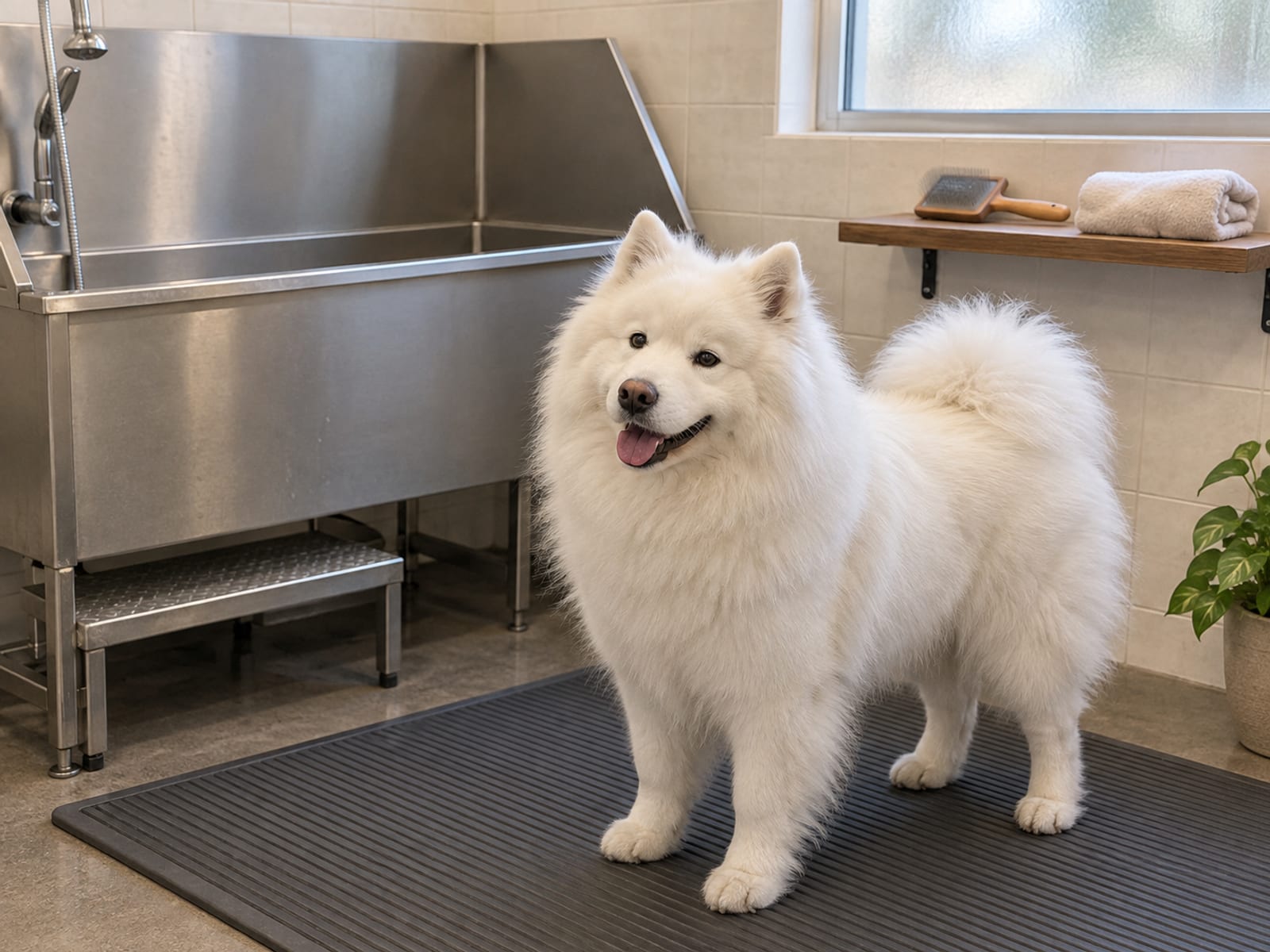
GR-9.16 defines grooming as any act performed to maintain or improve a pet's appearance. It names washing, combing, hair cutting and nail clipping. A bath, a brush-out, a haircut and a nail trim all fall inside that definition, so a full groom or a quick tidy-up is taxable either way.
The definition leaves out teeth cleaning and dental work, flea dipping, treatments for skin disease and similar procedures. Those are treated as health care rather than appearance.
Veterinary purpose can change the answer, but only in a specific way. Grooming performed for veterinary purposes is not taxable when it is integral to nontaxable veterinary care. When a treatment has both a veterinary and a cosmetic purpose, the primary purpose decides. Washing, trimming and cutting are presumed cosmetic unless the facts show a mainly veterinary purpose. If the cosmetic and veterinary charges can be invoiced separately, tax applies only to the cosmetic part. And cosmetic grooming stays taxable even when a veterinarian or a veterinary clinic bills it.
In practice, if you groom inside or next to a clinic, put the cosmetic work on its own invoice line. That makes the taxable amount clear to you, the customer and DFA.
One more point covers the supplies you buy. GR-9.16 says a provider of taxable grooming services is the consumer of the supplies and equipment used to do the work. That means you pay tax when you buy shampoo, clippers, blades, towels and similar items. You don't buy them tax-free for resale, because the customer is paying for a service, not buying the shampoo.
Is boarding or daycare taxable without an overnight stay?
Yes, it can be. GR-9.16 defines a kennel service as an establishment, other than a pound or animal shelter, where pets not owned by the proprietor are kept, sheltered, fed and watered for consideration, profit or compensation. It expressly includes "all boarding activities for varying periods of time" and says an overnight stay is not required.
That last line is the one daycare owners need. If dogs come to you in the morning, spend the day being kept, fed and watered, and go home that evening, your service can fall inside the kennel definition. A half-day rate is still a boarding period of some length.
If your setup is unusual, for example you mostly train or exercise dogs and the keeping and feeding is minor, describe it to DFA and ask how they classify it. Write down the date, the person you spoke with and the answer. For more on setting up a boarding operation in the state, see opening a dog boarding kennel in Arkansas.
What about dog walking, pet sitting, training and waste removal?
GR-9.16 names grooming and kennel services. It does not classify dog walking, pet sitting, dog training or dog waste removal. That doesn't make them taxable, and it doesn't make them exempt. It means you need a ruling for your specific service before you decide.
The office to ask is the DFA Sales and Use Tax Section. DFA lists its phone number as 501-682-7104 and its email as Sales.tax@dfa.arkansas.gov, on the DFA Sales and Use Tax page. Describe each service plainly: what you do, where you do it, how long you have the dog and how you bill. Ask about each one separately, since a walk and an overnight house-sit can be treated differently.
If you sell a package that mixes services, such as a daycare day with a training session, or a sitting visit with a nail trim, ask about the bundle too. Keep the reply with your tax records.
Are breeding services covered by the kennel rule?
No. GR-9.16 excludes breeding services from its kennel service definition. A stud fee is not a boarding charge under this rule just because the dog stays on your property.
That exclusion only answers the kennel question. It doesn't settle every tax question about a breeding business, such as other charges you bill alongside breeding. If you combine breeding with boarding or grooming on one invoice, ask DFA how to split it. If you breed in Arkansas, the rules for breeding dogs in Arkansas are a separate question from this tax rule.
How to find the right state, city and county rate
Arkansas has no single local rate, and I'm not going to quote a typical one, because local rates vary and change. Your total rate is the state rate plus any city, county and special district taxes at the location.
DFA's local tax lookup tools let you search by address or ZIP code for city, county, state and special rates. The Streamlined Tax Lookup identifies the city, county and state rates and provides rate and boundary data. DFA's downloadable local-rate file is updated during the first week of every month, and DFA keeps a list of recent changes for local taxes by effective date, including city and county changes during 2026. Annexations, new taxes, increases and decreases all move the number.
If your customers come from several cities, or you groom from a van, use this routine for each sale:
- Record the service location for the transaction.
- Run that address through DFA's lookup.
- Check whether the address is inside city limits or another taxing district.
- Save the lookup result and its effective date with the invoice.
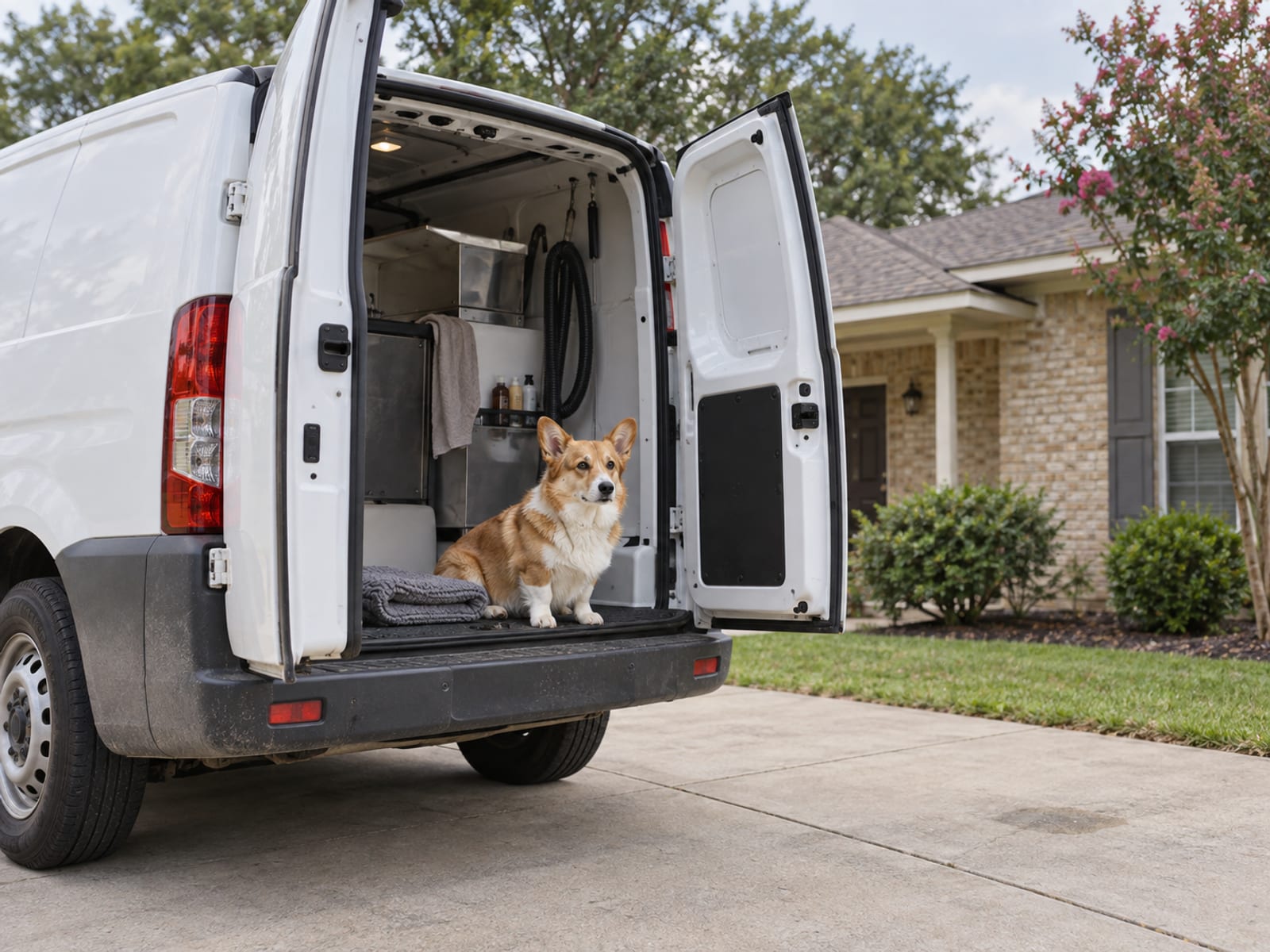
- Ask DFA about mobile or multi-location work that doesn't fit a simple fixed-shop pattern.
When you have the customer's full address, search the full address rather than the ZIP code alone, because step 3 depends on knowing whether the location is inside city limits.
How to register and file Arkansas sales tax
DFA's Sales and Use Tax section issues sales tax permits and runs the tax accounts. According to DFA's 2020 guide to starting a new business in Arkansas, vendors operating in Arkansas must register if they sell taxable property or services. At that time, a new sales tax permit application required a $50 nonrefundable fee, and processing took about 8 to 10 working days. Those figures are from 2020, so confirm the current fee and timing with DFA before you apply.
The same guide says the return, Form ET-1, is due on the 20th day of the month after the tax period, and that reports can be filed online through the Arkansas Taxpayer Access Point (ATAP).
How often you file depends on the status DFA assigns you. DFA's sales and use tax FAQs describe monthly, quarterly and annual reporting according to that filing status. DFA's older sales tax rules say to keep filing monthly until DFA notifies you of a quarterly or annual classification. So, if you haven't received a notice, plan on monthly returns.
If you're still forming the business itself, the starting a dog business in Arkansas page walks through the steps that come before the tax account.
The local permits that sit beside the tax
A DFA permit covers the tax. It doesn't give you permission to operate at a location. That comes from your city or county.
The Arkansas Secretary of State's FAQ says most Arkansas cities issue a privilege or business license and recommends contacting city hall before you open. The SBA's Arkansas district guidance adds that licenses come from several state and local departments and that zoning can restrict home businesses.
North Little Rock shows how specific a local rule can get. Its animal-related business page defines an animal establishment to include pet shops, kennels, grooming shops and other animal-handling facilities. It requires an animal establishment permit, sets annual permit timing and treats each facility as a separate enterprise. That is one city's rule, not a statewide one, but it tells you the kind of questions to ask where you are:
- Do I need a city privilege or business license?
- Is the property zoned for grooming, boarding, daycare or a mobile business base?
- Do I need home occupation approval?
- Do I need an animal establishment permit?
- Are there limits on dog numbers, noise, parking, sanitation or setbacks?
- Does each location need its own permit?
- Does the county add requirements outside city limits?
Call city hall, the business license office, planning and zoning, and animal control. If you're outside city limits, call the county planning or business office.
What to do this week
You can get most of this sorted in a few calls and an afternoon at your desk.
- Write out your service list with each item on its own line: grooming, boarding, daycare, walking, sitting, training, waste removal and breeding.
- Mark grooming and qualifying kennel services, including daycare, as taxable under GR-9.16.
- Call or email the DFA Sales and Use Tax Section about every service the rule doesn't classify, and save the answer.
- Run every service address through DFA's lookup and save the result with its date.
- Register your tax account with DFA and confirm the current permit fee, your filing frequency and your due date.
- Ask your city about a privilege license, zoning, home occupation approval and any animal establishment permit.
- Keep invoices, rate lookups and DFA answers together, by month.
If you're mobile or serve several towns, set up the lookup step as a habit now, before you have a year of invoices to sort.
Questions dog business owners ask about Arkansas sales tax
These answers cover grooming, boarding, exempt services, tax rates and your first return.
Is dog grooming taxable in Arkansas?
Yes. GR-9.16 makes gross receipts from pet grooming subject to state and local gross receipts taxes. Grooming includes washing, combing, hair cutting and nail clipping, while teeth cleaning, flea dipping and skin disease treatment are outside the grooming definition.
Are boarding and kennel services taxable?
Yes, when the service fits GR-9.16's kennel definition: pets you don't own are kept, sheltered, fed and watered for pay. Boarding for varying periods counts, and no overnight stay is required. A pound or animal shelter is not a kennel service under the rule.
What pet services are exempt?
Breeding services are excluded from the kennel service definition, and grooming that is integral to nontaxable veterinary care is not taxable. Walking, sitting, training and waste removal are not classified by the rule, so get DFA's answer for each one rather than assuming they're exempt.
Can I quote one tax rate to every customer?
Not safely. Rates depend on the city, county and special district at the location and the date of the sale. Use DFA's address or ZIP lookup for each location and keep the dated result with the invoice.
When is my first return due?
DFA's 2020 startup guide puts Form ET-1 on the 20th of the month after the tax period. Keep filing monthly until DFA notifies you that you're on a quarterly or annual schedule.
Your next step
Start with two contacts. Email or call the DFA Sales and Use Tax Section to register and to ask about any service GR-9.16 doesn't name, and call your city hall about the license and zoning for your address. Then run your addresses through the lookup and set up your invoices with the rate and date on each one. Once your paperwork is in order, make sure customers can find you by adding your business to the DogServ directory.
Sources
- atap.arkansas.gov: Arkansas Taxpayer Access Point (ATAP)
- dfa.arkansas.gov: 2020 guide to starting a new business in Arkansas
- dfa.arkansas.gov: DFA Sales and Use Tax page
- dfa.arkansas.gov: local tax lookup tools
- dfa.arkansas.gov: older sales tax rules
- dfa.arkansas.gov: recent changes for local taxes
- dfa.arkansas.gov: Rule GR-9.16
- dfa.arkansas.gov: sales and use tax FAQs
- dfa.arkansas.gov: Streamlined Tax Lookup
- law.cornell.edu: 006.05.08 Ark. Code R. 004-GR-9.16
- legacy.sba.gov: SBA's Arkansas district guidance
- nlr.ar.gov: animal-related business page
- sos.arkansas.gov: FAQ
- sos.arkansas.gov: November-December 2006 Arkansas Register