
Selling Puppies in Louisiana: Pet Store Rules, Where Dogs Can Be Sold and What Records to Keep
By Cal Hewitt · Published
Business guides
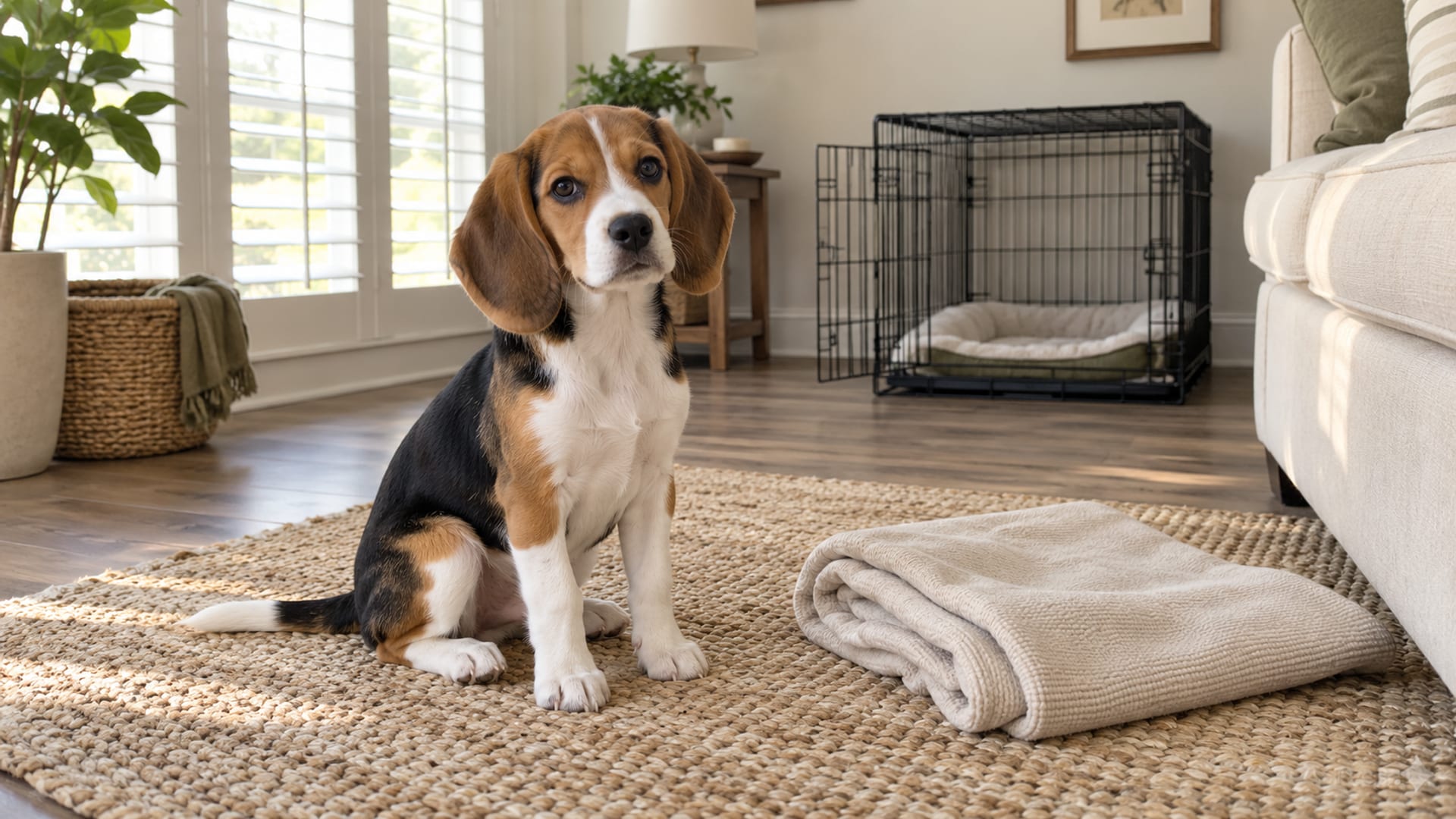
In Louisiana, a retail pet store may sell dogs and cats only from sources allowed by R.S. 3:2511: qualifying breeders, animal-care facilities and animal-rescue organizations. A store may not offer a dog or cat younger than eight weeks, must post the breeder's name and license numbers on each enclosure, and must keep source records for at least two years. A separate law, R.S. 14:102.27, bans sales on highways, rights-of-way, flea markets, public parks and similar places, with listed exceptions. Parishes and cities may set stricter rules.
Key takeaways
Tap a card to bring it forward.
- Two state laws do different jobs: R.S. 3:2511 covers retail pet stores, and R.S. 14:102.27 covers where any dog or cat may be sold.
- A retail pet store may not offer a dog or cat younger than eight weeks, and that rule is written for stores.
- Stores post the breeder's name, USDA license number and any required state license number on each cage or enclosure.
- Source records stay on file for at least two years and go to a law-enforcement or animal-control officer on request.
- A sale at a private residence is outside the public-location ban, but zoning, tax, USDA and local rules still apply.
- New Orleans, Baton Rouge and Jefferson Parish each add their own rules, so check your exact address.
What does Louisiana require before you sell a puppy or a dog?
You probably want one clear answer before you spend money on signs or ads. Louisiana splits that answer between two statutes, and they ask different questions.
The first, R.S. 3:2511, is about retail pet stores. It controls where a store gets its dogs and cats, how old they must be, what goes on the cage and what records the store keeps. It came from Act 618 of 2016 and took effect June 17, 2016.
The second, R.S. 14:102.27, is about place. It makes it unlawful to offer or sell a dog or cat in certain public locations, whoever the seller is, and it lists who is exempt. Retail pet stores and licensed breeders are on that exempt list, so the two laws work side by side, not as one rule.
Your parish or city, the Department of Revenue, the Secretary of State and sometimes USDA each answer another part.
Are you a retail pet store, a breeder, a rescue or a private seller?
Start here, because the category decides which rules land on you. R.S. 3:2511 defines a retail pet store as a retail establishment where dogs or cats are sold, exchanged, bartered or offered for sale as pets to the general public at retail. The same definition leaves out two kinds of operations: an animal-care facility and an animal-rescue organization.
The definition describes what the business does, not what the owner calls it. It does not exempt a seller just because the operation is called a hobby, runs from home, advertises online or has one litter.
The main categories line up like this:
- Retail pet store: sells dogs or cats to the general public at retail. R.S. 3:2511 applies in full.
- Breeder: a breeder can be a source for a store, and R.S. 14:102.27 exempts a licensed breeder from the public-location ban. A breeder who also sells at retail to the public should check the store definition carefully.
- Animal-rescue organization or animal-care facility: excluded from the retail-pet-store definition, and both can be lawful sources for a store.
- Private seller: someone rehoming a dog or selling a single litter. The public-location statute still applies, and a sale at a private residence is one of its exceptions.
If your setup does not fit neatly, ask your local business-license, planning or zoning, and animal-control offices for guidance in writing. A disputed classification is a question for a Louisiana attorney.
Where can a Louisiana retail pet store get its dogs and cats?
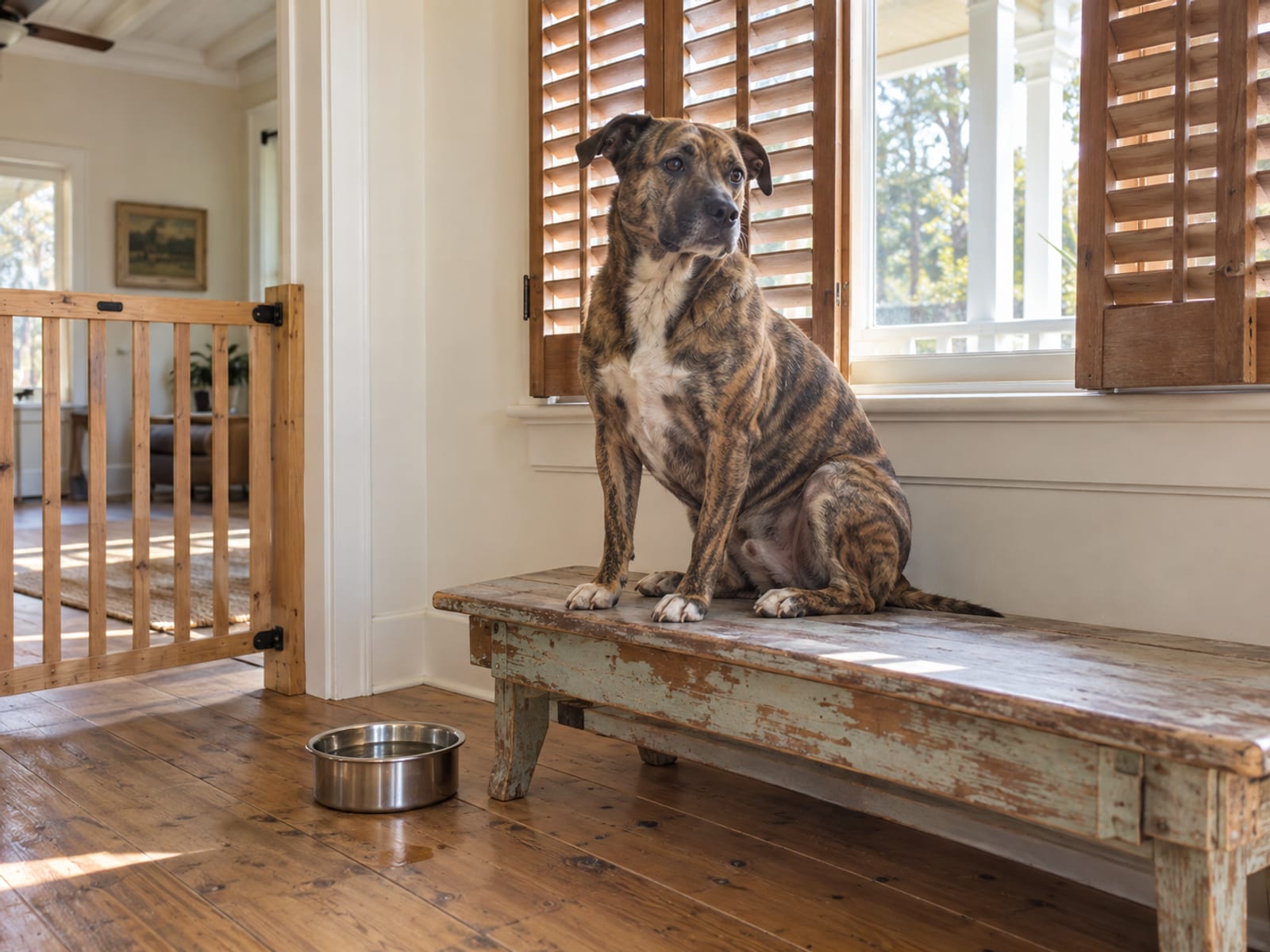
A retail pet store may offer dogs and cats from only four kinds of sources under R.S. 3:2511:
- A breeder in compliance with R.S. 3:2772(H).
- A breeder without certain recent USDA inspection citations. The statute rules out a breeder with a direct violation in the preceding three years, three or more indirect violations in the preceding three years, or no-access violations on the two most recent inspection reports.
- An animal-care facility.
- An animal-rescue organization.
So, before a store takes in a puppy, it needs to know who the breeder is and whether that breeder's federal inspection history clears the bar. A store that works with animal-care facilities and rescues has a lawful path too.
If the breeder is in another state, the posting rule in the next section still asks for that breeder's state license number when their home state requires one.
How old must a puppy be, and what must a store post and keep?
R.S. 3:2511(C) is short: "A retail pet store shall not offer for sale a dog or cat that is younger than eight weeks old." A buyer's agreement does not change it.
Keep the scope in mind. That eight-week rule is written for retail pet stores as the statute defines them. It is not a statewide rule for every private seller, although a local ordinance can set its own age floor, as Jefferson Parish does below.
For each dog or cat, the store must post conspicuously on the cage or enclosure:
- The breeder's name.
- The breeder's USDA license number.
- The breeder's state license number, if the breeder must be licensed in the state where the breeder is located.
The store must also keep source records for at least two years after it acquires the animal. Those records include a description of the animal and the breeder's name, business address, email address and USDA license number. They must be made available immediately when a law-enforcement officer or animal-control officer asks.
Tap or hover a row to highlight it.
| Figure | What it means | Source |
|---|---|---|
| Figure8 weeks | What it meansMinimum age for a dog or cat offered by a retail pet store | SourceR.S. 3:2511(C), effective June 17, 2016 |
| Figure2 years | What it meansMinimum time a store keeps source records after acquisition | SourceR.S. 3:2511(E) |
| Figure3 years | What it meansLookback for certain USDA breeder citations | SourceR.S. 3:2511(B)(2) |
| Figure2 most recent reports | What it meansLookback for no-access citations | SourceR.S. 3:2511(B)(2)(c) |
| Figure$250 maximum | What it meansFirst-offense fine for a public-location sale | SourceR.S. 14:102.27(C)(1) |
| Figure$1,000 per violation maximum | What it meansFine for a second or later offense | SourceR.S. 14:102.27(C)(2) |
Where can't dogs and cats be sold in Louisiana?
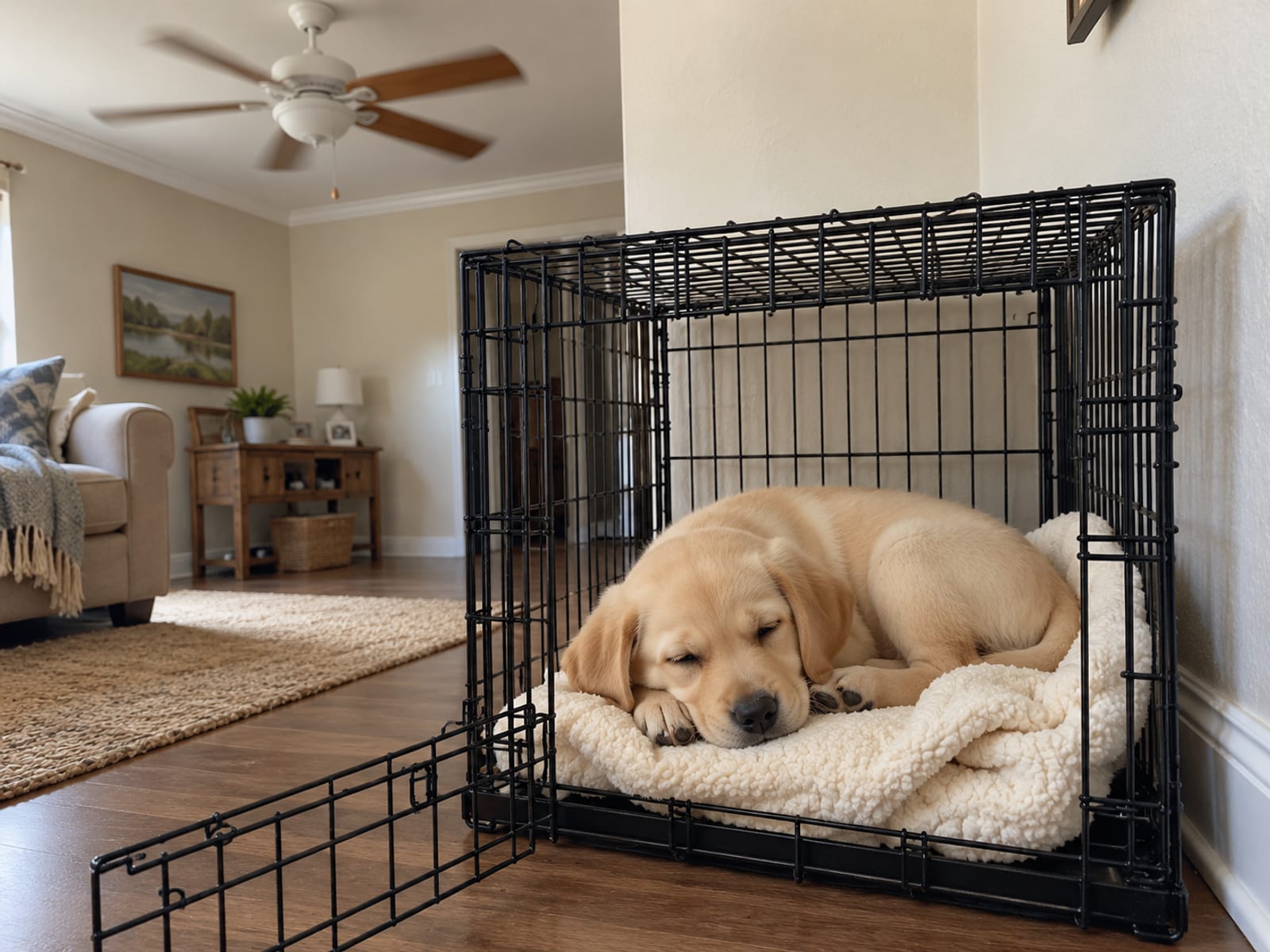
R.S. 14:102.27 makes it unlawful to offer for sale or sell a dog or cat on:
- A highway or a right-of-way.
- A flea market.
- A public park, public playground or public swimming pool.
- Any other public recreational area.
- Property next to those places, whether or not access is authorized.
- A commercial or retail parking lot, unless the lot's owner gives permission.
The statute defines "highway" as the entire publicly maintained width used for vehicle travel, and "right-of-way" as the privilege of immediate use of the highway.
It also lists exceptions: bona fide humane societies, animal-welfare groups, animal-control agencies, nonprofit organizations sponsoring adoption events, sales at a private residence, a paid entrant at a competitive dog or cat show selling within the show premises, any retail pet store or licensed breeder, and certain conservation-organization raffles or drawings.
Two of those exceptions have limits worth knowing. A private residence is outside this ban, but that does not settle zoning, tax, kennel or USDA questions. And a parking-lot owner's permission lifts the parking-lot restriction only; every other rule still applies to the sale.
The fine is not more than $250 for a first offense and not more than $1,000 per violation for a second or later offense. The statute does not name one state office to enforce it, so for a specific incident, contact the local police or sheriff's office and the local animal-control authority.
When can a parish or city be stricter than state law?
R.S. 3:2511(F) says nothing in that section stops a municipality or parish from adopting more stringent rules on animal sales at retail pet stores. That means the state rules are a floor, and your address may add more. Three examples, each dated so you can check whether it has changed:
- Baton Rouge and East Baton Rouge Parish: the code defines "pet shop," regulates animal establishments and bans animal sales in restricted areas, including roadsides, public rights-of-way, parks, playgrounds, swimming pools, recreational areas, flea markets, commercial or retail parking lots and adjacent property. Its history includes Ordinance No. 9634 of May 26, 1993, with later amendments; the page was current when accessed in September 2026.
- New Orleans: Chapter 18 covers animal sales, source records, health certificates, licensing and animal keeping. Section 18-15 requires information for animals sold, adopted or placed, including source information and a Louisiana veterinarian health certificate for covered animals. The code is codified through Ordinance No. 30653, adopted May 7, 2026, with online content updated June 26, 2026.
- Jefferson Parish: the parish code bars offering animals under six weeks for sale, adoption, barter or giveaway, and requires dogs and cats to have age-appropriate vaccinations before they are offered. Accessed September 2026.
These are examples, not a full list for Louisiana. For your own address, call the city clerk or parish clerk, the parish animal-control office, the planning or zoning department and the local business-license office.
Which registrations and taxes should you check?
The Louisiana Secretary of State sends new businesses to geauxBIZ. There you can reserve a business name, complete a new-business filing, manage filings and tax-account registrations, and generate a list of possible federal, state and local licenses and permits for your business.
The Louisiana Department of Revenue registers tax accounts through LaTAP. Its page, updated September 8, 2026, says businesses selling taxable goods or services may need a sales-tax account, along with collecting, filing, remitting and keeping records. On its sales-tax page, LDR says sellers of tangible personal property who qualify as dealers must apply for a sales-tax certificate, collect the proper tax and file returns. It lists the state general rate as 5%, with local taxes and exemptions reviewed separately. Returns and payments are due on or before the 20th day of the month after the reporting month or quarter. Ask LDR or your accountant how your puppy sales are treated.
For federal tax filing, IRS Publication 583 (December 2024) explains that an EIN is used for business tax filing and reporting. The online application is free, and an online EIN is issued immediately once your information is validated.
A state registration does not authorize puppy sales on its own. Business filing, tax accounts, zoning, local licenses, animal rules and any USDA license are separate approvals from separate offices.
When might USDA licensing or a kennel license apply?
Federal licensing under the Animal Welfare Act runs through USDA APHIS. Rather than guess, use its licensing and registration assistant, which APHIS says takes about five to fifteen minutes and directs you to the right application, such as the Class A breeder or Class B dealer application. APHIS says online applications generally take about ten minutes, and payment for an online license application is due when you submit it. That page was last modified August 30, 2026. Spanish readers can use the APHIS Spanish Blue Book for the federal definitions.
USDA matters even if you never apply yourself. A retail pet store's postings and records depend on the breeder's USDA license number, and its sourcing rule depends on the breeder's USDA inspection history.
If you keep five or more dogs, read Louisiana's kennel-license statute. It has language on keeping five or more dogs for breeding and sale, along with kennel-license fee provisions. Ask your parish animal-control office how it applies at your address and whether the parish adds a dog limit of its own.
What should you do this week?
Each step feeds the next:
- Classify the operation. Compare what you actually do with the R.S. 3:2511 definition and write your answer down.
- Call your local offices. Ask zoning whether retail dog sales, breeding or a home occupation are allowed at your address; ask the business-license office and city or parish clerk which permits apply; ask animal control about kennel limits, inspections, health certificates and vaccination records.
- Ask about online sales. Find out whether online sales or customer pickups count as retail activity where you are.
- Register. Use geauxBIZ for the business filing, LaTAP for tax accounts and the IRS for an EIN.
- Check USDA status. Run the APHIS licensing assistant.
- Verify every source. Collect the breeder's name, address, email, USDA license number and any state license number before an animal arrives.
- Set up postings and records. Make the enclosure card and the two-year record file ready before the first sale.
- Confirm the sale location. Rule out every place on the R.S. 14:102.27 list unless an exception clearly fits.
- Talk to an insurance agent. Ask what coverage fits animals in your care, customers on your premises and sales from home.
A Louisiana attorney is the right call when your category is unclear, when a local office and state law seem to point different ways, or when a buyer disputes a sale. Questions about refunds and other remedies belong with that attorney too.
Questions people ask about selling puppies in Louisiana
What are the rules for selling puppies in Louisiana?
Two state laws apply. R.S. 3:2511 governs retail pet stores, and R.S. 14:102.27 bans sales on highways, flea markets, public parks and similar places for any seller, with listed exceptions. Your parish or city may add stricter rules on top.
What does Louisiana require of a pet store?
A retail pet store sources only from the four allowed categories and offers no dog or cat under eight weeks. It posts breeder details on each enclosure and keeps source records for two years, ready for any law-enforcement or animal-control officer.
What paperwork goes with a puppy sale?
For a store, the records cover the animal's description and the breeder's name, business address, email and USDA license number. New Orleans adds source information and a Louisiana veterinarian health certificate for covered animals, so ask your local office what your area requires.
Can I sell puppies from my home in Louisiana?
A sale at a private residence is an exception to R.S. 14:102.27. Your zoning, home-occupation, kennel and tax rules still apply, so call your planning or zoning office before you list the litter.
Can a city or parish ban or limit retail puppy sales?
Yes. R.S. 3:2511(F) lets a municipality or parish adopt more stringent rules for retail pet-store sales. Jefferson Parish, for example, sets a six-week floor.
Your next step
Make one call today: your parish or city zoning office, with your exact address in hand. Its answer shapes everything else. Then work through the checklist, confirming each figure with the office that sets it. Once your paperwork is in order, you can list your business in the DogServ directory so local buyers can find you.
Sources
- aphis.usda.gov: Spanish Blue Book
- aphis.usda.gov: USDA APHIS
- irs.gov: IRS Publication 583
- legis.la.gov: Act 618 of 2016
- legis.la.gov: kennel-license statute
- legis.la.gov: R.S. 14:102.27
- legis.la.gov: R.S. 3:2511
- library.municode.com: Chapter 18
- library.municode.com: code
- library.municode.com: parish code
- revenue.louisiana.gov: Louisiana Department of Revenue
- revenue.louisiana.gov: sales-tax page
- sos.la.gov: Louisiana Secretary of State