
Louisiana Kennel License Requirements: When Five Dogs Changes the Rules, What It Costs and Who Issues It
By Cal Hewitt · Published
Business guides
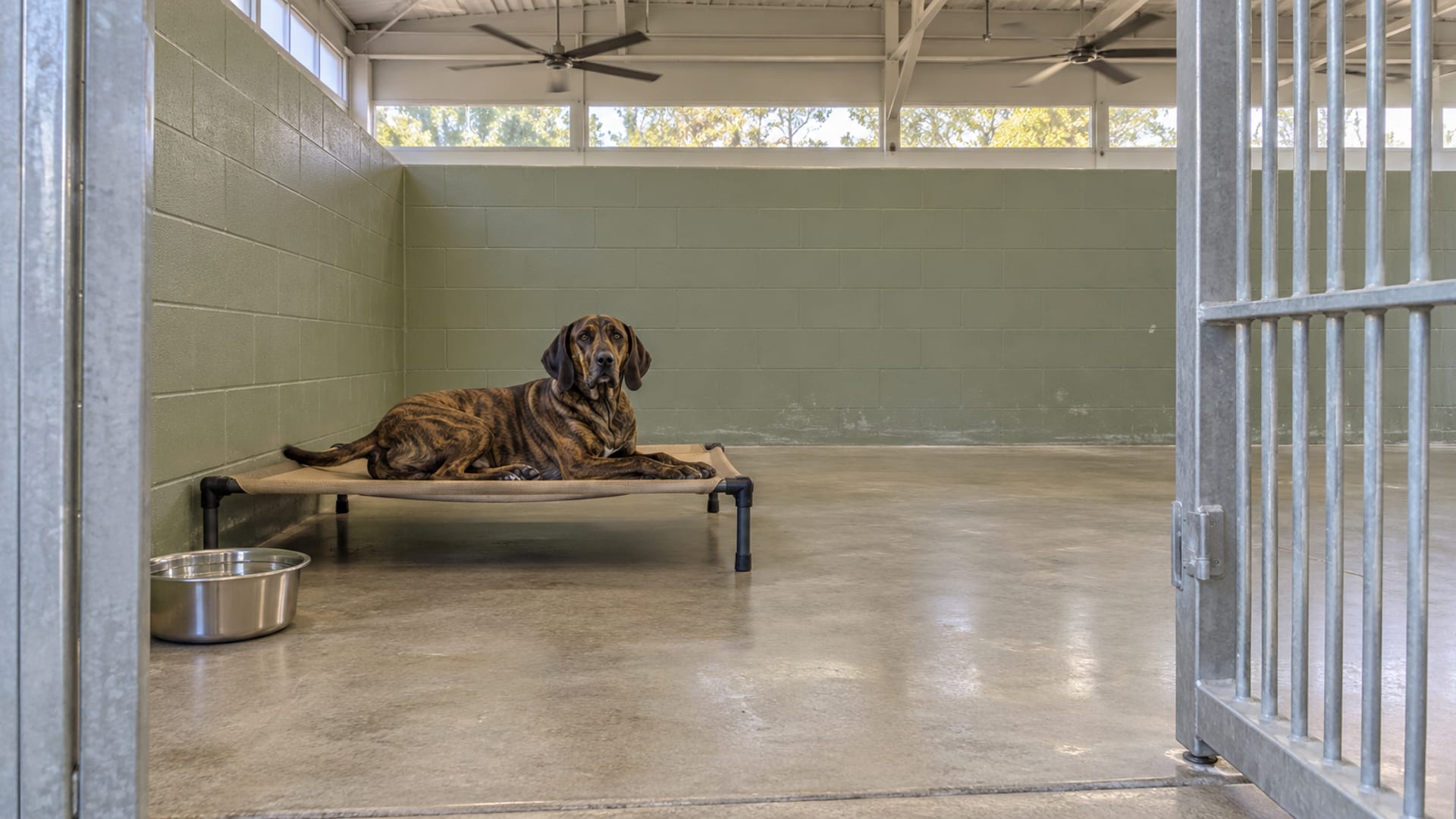
Louisiana's five-dog rule decides when you may, or must, get a kennel license from your parish or city. Under Louisiana R.S. 3:2772, an owner or keeper of five or more dogs may get a kennel license instead of individual dog licenses. The same law requires a kennel license when an individual or business with five or more dogs breeds and sells dogs. The minimum annual fees are $15 for no more than five dogs over six months old, $25 for six to ten, and $30 for more than ten. The statute covers the kennel license only and creates no statewide boarding or daycare permit. Your parish or city can set its own fee and its own rules, so your next call is to its animal-control or licensing office, then its planning and zoning office.
Key takeaways
Tap a card to bring it forward.
- At five or more dogs, Louisiana lets an owner or keeper buy one kennel license in place of individual dog licenses.
- A kennel license is required when an individual or business with five or more dogs breeds and sells dogs.
- The state sets minimum annual fees of $15, $25 and $30; your parish or city sets the actual amount by ordinance.
- The state law does not create a statewide boarding or daycare permit; local zoning and ordinances decide those uses.
- The application asks for a USDA Class A or B number and a Louisiana sales-tax ID, or the reason you don't need each one.
- Zoning, business registration, tax accounts and insurance are separate steps handled by separate offices.
If you're counting dogs at home, planning a litter or about to take your first boarding client, you want to open the right way and pay the right fee. I've laid this out in the order you'll need it, from the state rule to the calls to make this week.
Does keeping five dogs mean you need a Louisiana kennel license?
Five dogs is the number where the state kennel license comes into play, but whether it's optional or required depends on what you do with those dogs. The rule sits in R.S. 3:2772, and two subsections do most of the work.
Subsection E gives you a choice. In the statute's words, "The owner or keeper of five or more dogs may procure a kennel license and pay a kennel license fee in lieu of the individual dog licenses and license fees." That's permission, not a mandate. If you keep five or more dogs, you can license them as a kennel instead of one by one.
Subsection G turns that choice into a requirement for one group. It requires a kennel license when "any individual or business with five or more dogs" breeds and sells dogs "retail, wholesale, or to the public." So, if you have five or more dogs and you breed and sell, the kennel license is no longer optional.
The license itself is local. The governing body of each parish or municipality issues or administers it and sets the fee by ordinance. In practice that office might be animal control, a licensing office, the parish clerk or city hall. There is no single state agency that hands out kennel licenses for every address in Louisiana.
Which dogs count toward the five, and what about tags?
Not every dog on the property counts toward the fee tiers. The statute's fee tiers refer to dogs "over the age of six months" harbored on the owner's premises at the time of application. A litter of eight-week-old puppies doesn't move you into a higher tier on the day you apply. The count is taken when you apply, not averaged across the year.
The law also ties tags to the count. Kennel-license tags equal the number of dogs harbored on the premises, so expect one tag for each dog counted.
The state law doesn't settle two counting questions for every parish. One is whether client-owned dogs you board count. The other is whether your local ordinance counts younger dogs differently. Ask your local licensing office both questions before you fill out the form, because local rules can define the count their own way.
What a Louisiana kennel license costs
The state sets a floor, and your parish or city sets the price. Under R.S. 3:2772(E) and (G), the minimum annual fees are:
Tap or hover a row to highlight it.
| Dogs over six months old harbored at application | Minimum annual kennel fee |
|---|---|
| Dogs over six months old harbored at applicationNo more than five | Minimum annual kennel fee$15 |
| Dogs over six months old harbored at applicationMore than five and no more than ten | Minimum annual kennel fee$25 |
| Dogs over six months old harbored at applicationMore than ten | Minimum annual kennel fee$30 |
These are minimums, not the price you'll pay everywhere. The law lets the governing body of each municipality or parish fix the annual fee by ordinance, so a local fee can be higher. The statute also says the kennel-license fee is dedicated solely to animal impoundment facilities.
When you call, ask for four things: the current fee, the renewal date, how to pay, and whether any other local charges apply. That one call gives you the real number for your first-year budget.
Kennel license or individual dog licenses: how to compare them
If the kennel license is optional for you, the next question is whether it saves money. The same statute caps individual licenses. Under R.S. 3:2772(B), a parish or municipality may set an annual dog or cat license fee of no more than $10 for each spayed or neutered animal and no more than $20 for each unspayed or unneutered animal.
It's tempting to multiply: five spayed dogs at $10 is $50, five intact dogs at $20 is $100, and a $15 kennel license looks like an easy win. The math doesn't work that cleanly. The individual amounts are maximums, so your parish may charge less. The kennel amounts are minimums, so your parish may charge more. Both sides of the comparison can move.
The honest way to compare is to get both local numbers from the same office. Ask what one individual license costs for a spayed or neutered dog and for an intact dog, then what the kennel license costs for your dog count. Local exemptions and collection procedures vary, so the office is the one that can tell you which applies.
When the license is optional and when it's required
This is the line that matters most for breeders. The kennel license is optional for an owner or keeper of five or more dogs who simply wants one license instead of several. It becomes required under subsection G when an individual or business with five or more dogs breeds and sells dogs, whether retail, wholesale or to the public.
A household with six pets and no litters falls under the optional rule. A home breeder with five adult dogs who sells puppies falls under the required rule. If you breed but are unsure whether your sales count, put the question to your local licensing office in writing and keep the answer.
The breeding rule has a ceiling too. R.S. 3:2772(H) says an individual or business that breeds, buys or sells dogs may not maintain more than 75 dogs over one year old at any time for breeding purposes. A kennel license doesn't authorize any number of breeding dogs above that limit.
Does five dogs make your boarding or daycare business a commercial kennel?
Not by itself. The five-dog line in R.S. 3:2772 doesn't turn every boarding or daycare operation into a statewide commercial kennel, and the statute doesn't create a statewide boarding or daycare permit. What it does is allow a kennel license at five or more dogs and require one for breeding and selling.
Boarding and daycare are usually decided closer to home, through local ordinances and zoning. A few Louisiana examples show how different that can look:
- Jefferson Parish zoning lists animal and pet services and kennels as a specific land-use category.
- Pointe Coupee Parish requires a permit for an animal boarding establishment and describes an animal-services manager and an inspection process.
- St. Bernard Parish zoning materials separate kennels from pet daycare and identify the zoning districts where each is permitted.
- Caddo Parish handled a dog-boarding facility as a zoning case with required approvals, and Bossier Parish has taken zoning action involving dog boarding and grooming.
The takeaway for a home-based sitter or a new daycare is that the kennel license and the right to run the business at that address are two different answers. Get both before you accept clients.
What the kennel license application asks for
The application has two statements to prepare before you apply. For an initial or renewal kennel license, R.S. 3:2772(I) requires a signed and dated statement that gives:
- Your USDA Class A or Class B animal-dealer license number under the federal Animal Welfare Act, or the reason you aren't required to hold either license.
- Your Louisiana sales-tax identification number, or the reason you aren't required to have one.
Neither one is automatically required for every applicant. The law asks for the number or the reason. If breeding, dealing or exhibiting might bring you under federal rules, read the USDA APHIS Animal Welfare Act materials before you write your reason. For the sales-tax side, the Louisiana Department of Revenue business registration page is where accounts are set up.
The 75-dog breeding limit sits alongside these statements, so if you breed at scale, be ready to show you're under it. Your local office receives this information and confirms the exact form and any supporting documents it wants.
How to apply in New Orleans, Baton Rouge, Lafayette and Shreveport
Start by figuring out whether your address is inside a city or in unincorporated parish territory, because that decides which office you call. Below is where to start in four cities.
New Orleans. Start with the city's One Stop Shop permitting and licensing system. Ask the city's licensing or animal-control office whether kennel licenses go through One Stop or another office. Then contact city planning and zoning about the property address.
Baton Rouge. The Baton Rouge Animal Control and Rescue Center handles dog registration and licensing. The city says all dogs must be registered and licensed with the center and vaccinated against rabies every year. Ask the center whether a kennel license is available or required for your situation, then contact Baton Rouge planning and zoning about boarding, daycare, breeding or a home business.
Lafayette. Contact Lafayette Consolidated Government's animal-control or licensing office and its planning and zoning office. Confirm the application, the local fee, how dogs are counted, the renewal date, and whether your address allows boarding, daycare, breeding or kennel use.
Shreveport. Contact the City of Shreveport's animal-control or licensing office and the planning and zoning office. Ask whether the city or Caddo Parish administers the license for your property, then ask about zoning, commercial-use approval, inspection and local animal limits.
Wherever you are, the same short script works. Ask the licensing office who issues the kennel license, the current fee, which dogs count, whether client dogs are included, the renewal date, whether tags and certificates are issued, and whether there's an inspection.

What sits beside the kennel license: zoning, registration, taxes and insurance
A kennel license answers one question. These are the others, and each has its own office.
Zoning. Ask planning and zoning whether boarding, daycare, breeding, grooming or training is allowed at your address. Ask whether you need a home-occupation, conditional-use, special-use or commercial permit, whether there are limits on dog numbers, outdoor runs, noise, parking or fencing, and whether you need a certificate of occupancy. A building or permitting office may also handle construction, fencing and drainage approvals.
Business registration. The Louisiana Secretary of State's geauxBIZ lets you reserve a business name, complete a business filing, manage filings and tax-account registrations, and generate a list of possible federal, state and local licenses and permits. The office says it can't advise you on which business structure to choose.
Tax registration. New businesses register tax accounts through LaTAP, according to the Louisiana Department of Revenue. Depending on what you do, that can include sales tax, withholding or income-tax accounts. The department also says not to register for accounts that don't apply, because registration can create filing obligations. Its sales and use tax page covers which services are taxable.
Insurance. No single policy fits every dog business. Talk with a licensed insurance professional about animal-custody and commercial-liability coverage, and ask specifically about exclusions for the care, custody, control or loss of animals.
The SBA's licenses and permits guidance puts it plainly: requirements and fees vary by activity and location, and state, county and city rules can all apply at once. In Louisiana, read "county" as parish.
Questions dog business owners ask about Louisiana kennel licenses
These answers cover when a dog business needs the license, inspections, renewal, home use and where to start.
When does a Louisiana dog business need a kennel license?
The state requires one when an individual or business with five or more dogs breeds and sells dogs, retail, wholesale or to the public. A boarding, daycare, grooming or training business isn't put under a statewide kennel permit by that law. Your parish or city may still require its own license or permit for those uses.
Can animal control inspect your property?
It depends on your parish or city. Some local rules build inspection into the permit; Pointe Coupee Parish, for example, describes an inspection process for animal boarding establishments. Ask your licensing office whether its kennel license includes an inspection, and ask planning and zoning whether your business permit does.
Do I have to renew a Louisiana kennel license?
The fee is annual, and the statute refers to both initial and renewal applications. The renewal date and process are set locally. Each renewal repeats the USDA and sales-tax statements, so keep your numbers or reasons on file.
Does a kennel license let me run a business from home?
No. The kennel license covers dog licensing, not land use. Whether your home address allows boarding, daycare or breeding is a zoning question, and a home-occupation or conditional-use permit may be involved.
Where should I start if I'm opening this month?
Call your local animal-control or licensing office first, then planning and zoning. After that, handle business registration through geauxBIZ and any tax accounts that apply through the Department of Revenue.
Your next step
Before you take a new client or add another dog, make two calls. Ask your parish or city licensing office for the kennel-license fee, the dog count it uses and the application form, and ask planning and zoning whether your activity is allowed at your address. Write down who you spoke with and what they said. Then register the business and the tax accounts that apply, and talk insurance with a licensed professional.
Sources
- aphis.usda.gov: USDA APHIS Animal Welfare Act materials
- bossierparishla.gov: Bossier Parish
- brla.gov: Baton Rouge Animal Control and Rescue Center
- caddo.gov: Caddo Parish
- legacy.sba.gov: SBA's licenses and permits guidance
- legis.la.gov: Louisiana R.S. 3:2772
- library.municode.com: Jefferson Parish zoning
- onestopapp.nola.gov: One Stop Shop permitting and licensing system
- revenue.louisiana.gov: Louisiana Department of Revenue business registration page
- revenue.louisiana.gov: sales and use tax page
- sbpg.net: St. Bernard Parish zoning materials
- sos.la.gov: Louisiana Secretary of State's geauxBIZ
- zoneomics.com: Pointe Coupee Parish