
Hurricane and Flood Planning for Louisiana Dog Businesses: Evacuation, Records and Reopening
By Cal Hewitt · Published
Business guides
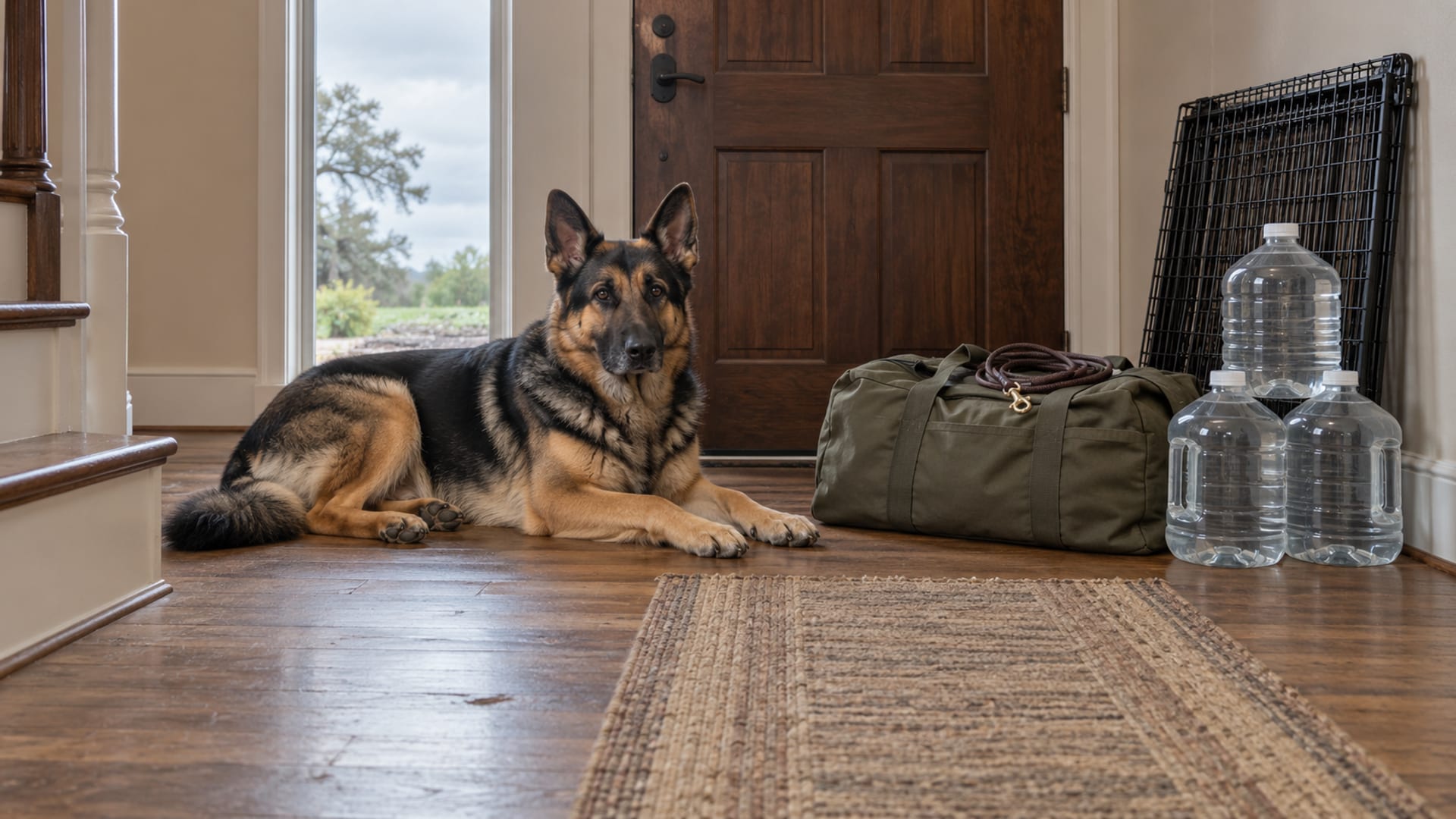
Before hurricane season, write a plan for every dog in your care. Keep a current dog census, paper and digital vaccination records, crates and vehicles, a primary and a backup destination, staff assignments, emergency contacts, food, water, sanitation supplies, and backup cooling or power. Watch NOAA's National Hurricane Center, the National Weather Service, GOHSEP and your parish emergency office. Decide ahead of time when you will stop accepting dogs, close, shelter in place or evacuate, and don't wait for roads or phones to fail. Louisiana law requires covered animal facilities to have an evacuation plan and show it on request.
Key takeaways
Tap a card to bring it forward.
- Louisiana requires covered animal facilities to file an evacuation plan with LDAF and the parish emergency-preparedness agency.
- Set written triggers now; a hurricane watch generally comes 48 hours before tropical-storm-force winds.
- Confirm a primary and a backup destination directly; public pet sheltering in Louisiana is local and depends on the event.
- Your parish Office of Homeland Security and Emergency Preparedness is the first call for animal evacuation coordination, with animal control or the sheriff as applicable; LSART responds through that system.
- Settle relocation, emergency-care authorization and extended-care charges in the service agreement before a storm.
- After floodwater, reopen only when the structure, wiring, water, sewage and HVAC are safe and any local inspection is done.
What to do this week if dogs are in your care, and what Louisiana law asks of you
A storm in the forecast raises a lot of questions at once. Where do the dogs go if the parish orders an evacuation? What if you have more dogs than crates, or a staff member can't get in? The goal for this week is a written plan that another trained person could follow if you were unreachable.
Start with the legal piece, because it shapes the rest. Louisiana law requires animal facilities that normally house household pets or service animals to create evacuation plans, make them available to the public on request, and file them with the Louisiana Department of Agriculture and Forestry (LDAF) and the parish emergency-preparedness agency. Leaving dogs behind because evacuation got hard is not a plan the law contemplates.
The same law has every parish keep a Parish Pet Plan for the humane evacuation, safe transport and temporary sheltering of household pets and service animals. According to LDAF, parishes file that plan by March 1 each year. Ask your parish office how its pet plan works and where a private facility like yours fits in it.
This week, write down every dog in your care with the owner's contact details, call your parish emergency office to confirm how to file your plan, and pick one person besides yourself who knows where it is kept.
When to close or evacuate: the season, the alerts and a written trigger table
NOAA puts the Atlantic hurricane season at June 1 through November 30, but storms can form outside those dates, so your plan should be ready all year. For a sense of scale, NOAA's 1991 to 2020 averages are 14 named storms, 7 hurricanes and 3 major hurricanes per season across the whole Atlantic basin, not Louisiana alone.
The National Hurricane Center uses these terms:
- Hurricane watch: hurricane conditions are possible in the area, generally issued 48 hours before tropical-storm-force winds.
- Hurricane warning: hurricane conditions are expected, generally issued 36 hours before tropical-storm-force winds.
- Flash flood watch: flash flooding is possible.
- Flash flood warning: flash flooding is imminent or happening.
There is no universal evacuation hour for a business. Your timing depends on your building, parish orders, route, destination, dog count, vehicles, staff and how fast the storm is moving. Jefferson Parish tells businesses not to wait for contraflow or a mandatory evacuation order when a storm threatens.
Put your decisions in a table before the season, so nobody has to invent them under pressure:
Tap or hover a row to highlight it.
| Stage | What sets it off | What you do |
|---|---|---|
| StageMonitor | What sets it offThe forecast shows a credible threat | What you doCheck supplies, records, vehicles and staff availability |
| StageStop intake | What sets it offYour destination, staff, routes or utilities may not support more dogs | What you doPause new bookings and tell clients why |
| StageRelocate | What sets it offOfficials issue evacuation instructions, flooding threatens the property, roads may close, or you can't keep safe staffing, cooling, water, sanitation or control of the dogs | What you doStart loading by your written order |
| StageFinish evacuating | What sets it offBefore tropical-storm-force winds, dangerous flooding or route restrictions make travel unsafe | What you doFinal count and departure |
| StageShelter in place | What sets it offOnly when officials and your written risk assessment support it and the building can safely care for the dogs | What you doFollow the shelter-in-place section of your plan |
Name who has the authority to call each stage, and who calls it if that person is out of reach.
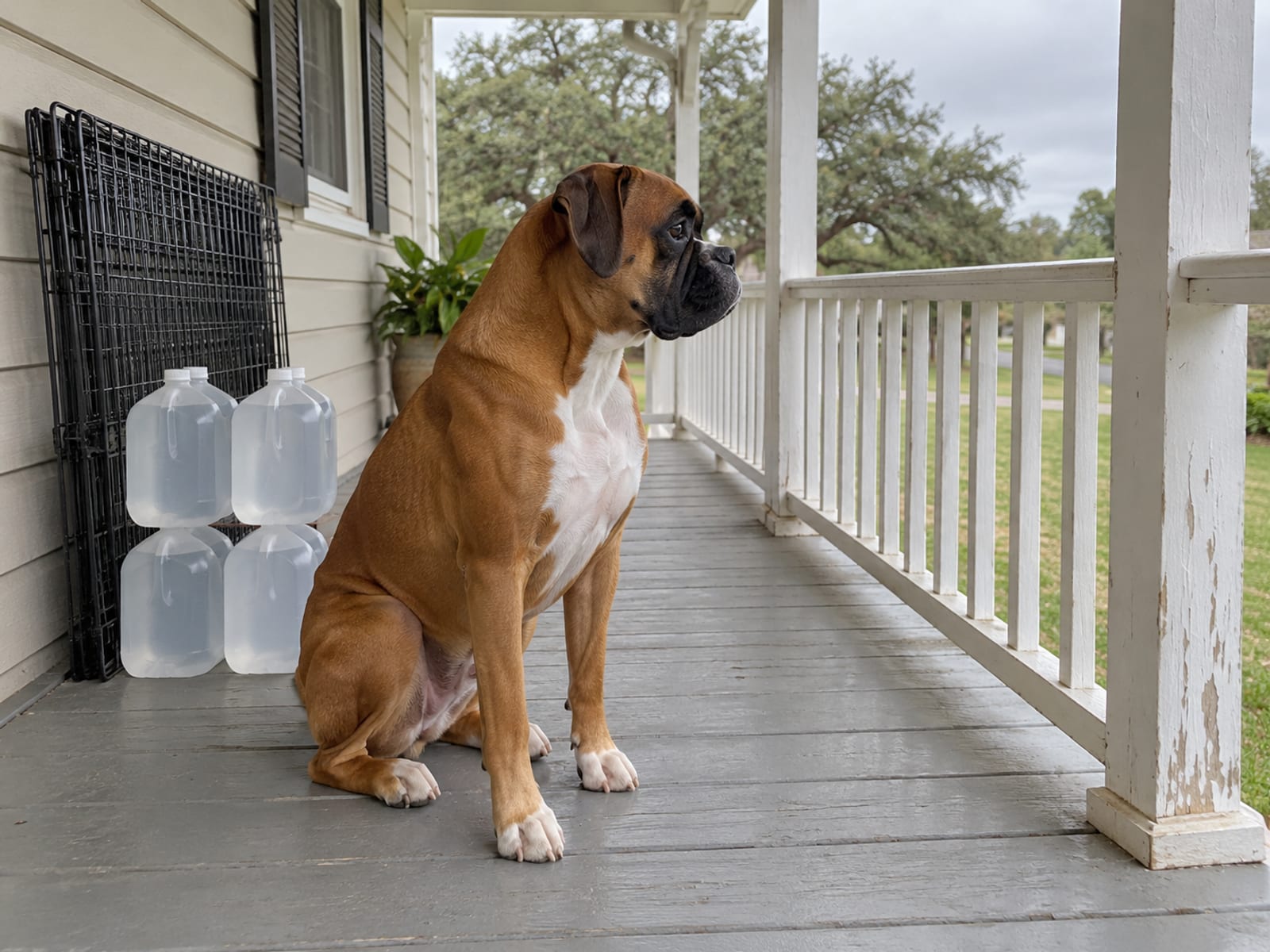
What the written plan holds: census, records, crates, vehicles and people
Ready.gov and FEMA guidance comes down to a few habits for a dog business: plan where you'll go and how you'll get there, prepare for flooding, wind, power failure, blocked roads and lost communication, keep animals identified and records available, keep paper copies in case electronic systems fail, and practice the plan.
The heart of it is the dog census. For each dog, record the name, a current photo, the owner, the emergency contact, the crate or vehicle assignment, feeding instructions, behavior notes, any medication or veterinary instructions the owner supplied, vaccination records, and the dog's destination status. Then count. Count at loading, at departure, at arrival, during every transfer and at the final destination.
Records travel with the dog. GOHSEP advises a waterproof kit with current records. For each dog, that means identification, owner and emergency-contact details, vaccination records, care instructions, authorization forms and a photo. If rabies paperwork is where your files tend to fall short, sort that out before the season, not at the loading door.
Assign people, not just tasks. One person runs the census, one handles records, one loads, one coordinates vehicles, one talks to owners and one manages supplies, and every role has a backup. Jefferson Parish also recommends written crisis-management roles and protected records. Add a staff call tree, and decide what employees should do if they are under an evacuation order themselves.
The plan should also list your flood exposure, utility shutoffs, crates, vehicles, fuel, labels, loading order, alternate routes, client message templates, what to do if a dog escapes, and a review after every storm.
Where the dogs go, and why public pet sheltering is local
Every plan needs a primary destination and a backup, and both should be confirmed in advance with the facility itself. Ask whether they can take your number of dogs, what records they need, and how they'll reach you if phones are down.
Don't build the plan around a public shelter. In Louisiana, according to LDAF, sheltering depends on parish arrangements, transportation, owner needs, animal size and the facilities available for that event. Co-sheltering people and animals happens in some places and some storms. Treat it as something to confirm with your parish each season, not something to count on.
When the time comes, check that roads to your destination are safe for vans and trailers, and keep an alternate route in case the main one floods.
Who to call before and during a storm
Keep this list printed and saved:
- Your parish Office of Homeland Security and Emergency Preparedness (OHSEP). The GOHSEP parish directory lists names, phone numbers and websites by parish; it shows East Baton Rouge Parish OHSEP at (225) 389-2100, for example.
- Local animal control or the parish-designated animal-care agency, or the sheriff's office where the parish has no animal control.
- The local fire marshal, or the State Fire Marshal as applicable.
- LDAF for animal emergency questions.
- The Louisiana State Animal Response Team (LSART) for coordination questions.
LSART makes resources available to parishes, trains volunteers and assists with evacuation, sheltering, and search and rescue when requested through the state or federal system. It is not a private service you can dispatch. LSART tells animal and facility owners to take responsibility for evacuating or caring for their own animals, and to contact the parish emergency office, animal control or the sheriff first, then LDAF as appropriate.
Ask LSART or your parish ahead of time which agency handles animal evacuation requests, whether your facility should submit an animal-facility evacuation information form, and what animal counts they'll need from you.
Power loss, cooling and generator safety in a Louisiana summer
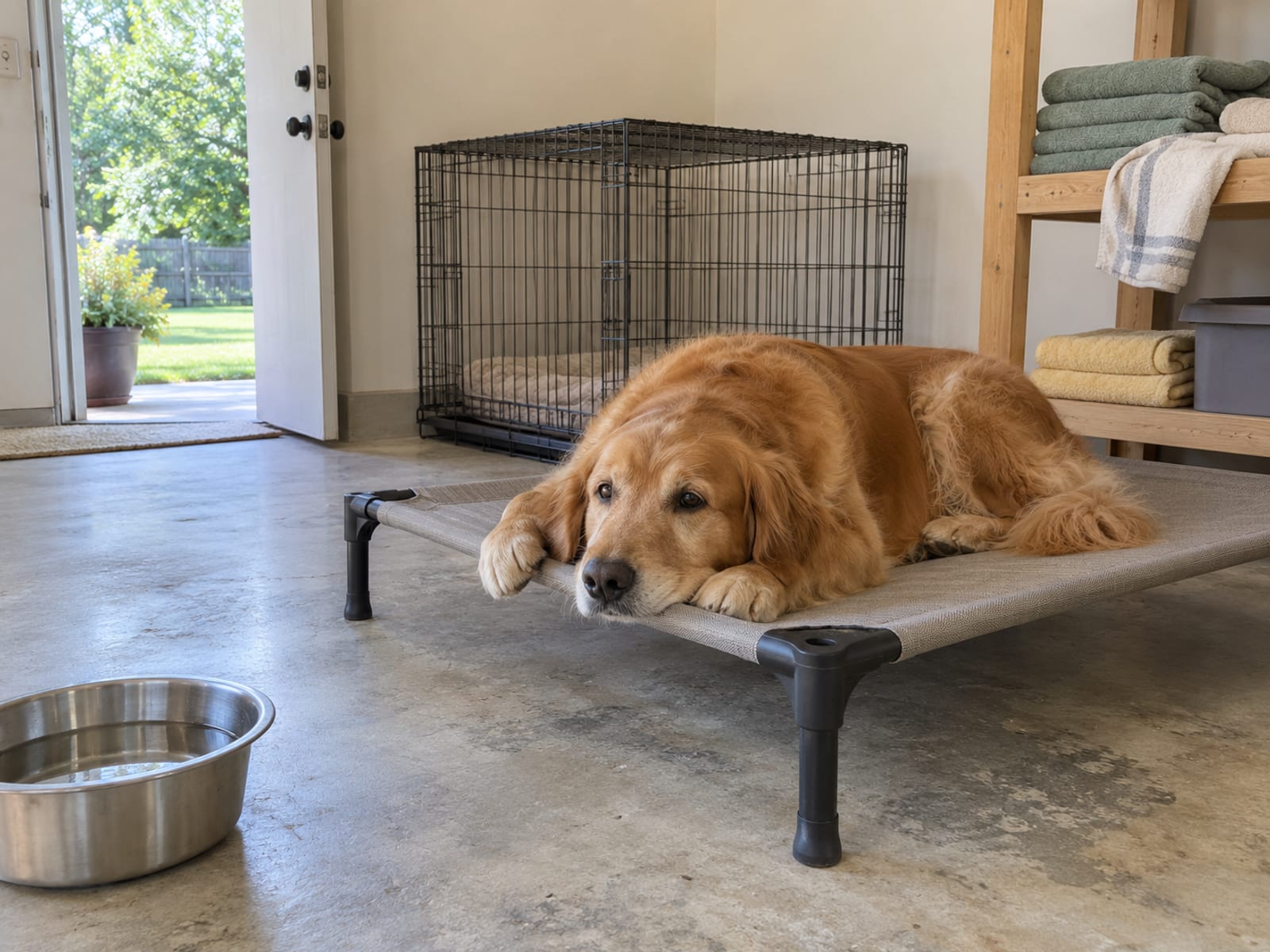
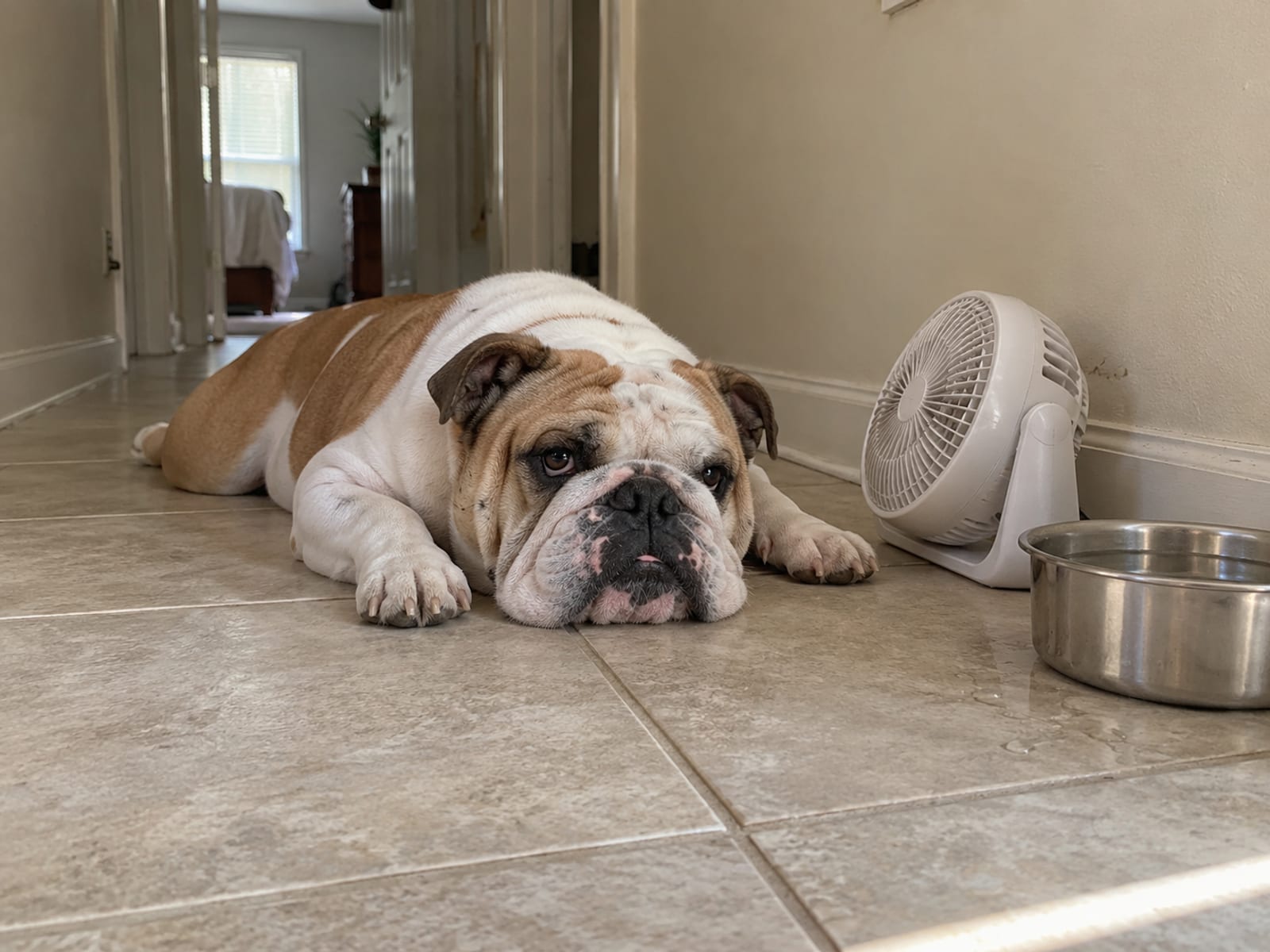
A storm that knocks out power in August leaves you with heat and no fans. Write a cooling plan for power loss: where the coolest safe rooms are, how many dogs each can hold, and when heat becomes a reason to relocate, as the trigger table says.
If you have a generator, the plan should state where it sits, how much fuel you keep, how it's ventilated and the safe operating steps. Test backup power safely before the season, not on the first dark night. Know where your utility shutoffs are.
Stock food, water, sanitation and cleaning supplies, protective equipment for staff and first-aid materials, and label food and records by dog. Keep both in waterproof containers, since floodwater can ruin them.
What happens if an owner cannot return
Owners get stranded outside the area, and the dog stays with you longer than anyone planned. Settle the terms now, in the service agreement.
The agreement should already name:
- The owner's emergency contact and an out-of-area contact, plus permission to reach them.
- Permission to move the dog to a named backup location.
- Permission for emergency veterinary care, following the owner's written instructions.
- Who can make decisions if the owner can't respond.
- How long ordinary boarding or sitting continues, and what happens when that period ends.
- Daily or weekly extended-care charges, plus transport, lodging, food, cleanup and emergency expenses.
- Whether you can use a backup caretaker or partner facility.
- How you'll communicate if normal systems fail.
- How the owner reclaims the dog and proves identity, and what happens if records, keys or payment methods are lost.
Pet Sitters International calls for documented contingency plans, emergency-care authorization, backup caretakers and client communication plans. NAPPS stresses getting client consent before a catastrophe and assigning team responsibilities. For in-home sitters, written permission to enter a home and move a pet belongs in the same agreement.
I'm not a lawyer, and this is a planning checklist, not legal advice; have a Louisiana attorney review the agreement. During the event, log every call, message and expense.
After floodwater: checks before you reopen
Don't go back in until authorities say the area and roads are safe. Then work through the building before any dog returns.
The CDC says to remove and discard drywall and insulation contaminated by sewage or floodwater, clean wet surfaces thoroughly and repair leaks. For buildings reopening after water and wind damage, the CDC says electrical, sewage, water, fire safety and HVAC systems should be evaluated before reoccupation.
For a dog facility, the walk-through covers:
- Roof, walls, flooring, drains, fencing, runs and gates.
- Wiring, panels, outlets, generators, HVAC and fire-protection systems.
- Potable water, sewage, drainage and sanitation.
- Mold and damp porous items like bedding, toys, food and paper records.
- Standing water, sharp debris, chemicals, displaced wildlife and unstable equipment.
- A safe separation between dogs and any cleanup area.
Bring in an electrician, plumber, engineer or remediation company where the damage calls for one. The Louisiana Department of Health requires flooded food establishments to contact the local health department before reopening in certain cases. Ask your parish sanitarian or other local authority which rules apply to you and whether an inspection is required before dogs come back. Power coming back doesn't make flooded runs safe.
Permits, taxes and insurance questions that stay local
Some of what a Louisiana dog business needs is statewide, and some depends on your exact address. The Louisiana Secretary of State fee schedule lists, as of September 2026:
Tap or hover a row to highlight it.
| Filing | Fee |
|---|---|
| FilingLLC Articles of Organization | Fee$100 |
| FilingLLC annual report | Fee$30 |
| FilingName reservation | Fee$25 |
| FilingTrade-name registration | Fee$75 |
The Louisiana Department of Revenue registers tax accounts through LaTAP, and a business may need sales-tax, withholding or other accounts depending on what it does. Those state steps are separate from local rules.
Zoning, occupancy, building, fire, home-occupation, business-license and animal-control rules belong to your city or parish, and they differ by place, by home-based versus commercial site and by number of dogs. Inside city limits, start with the city planning or zoning department; outside them, the parish planning and zoning department. Ask whether your address is zoned for boarding or daycare and whether the fire marshal wants an emergency plan or generator review.
Insurance is the place to be most careful. Don't assume a general liability policy covers flood damage or lost income. NAPPS states that its liability policy has no business-income or extra-expense coverage for hurricane losses. Coverage depends on your actual policy, so ask your licensed agent, in writing, about flood, business interruption, evacuation costs and dogs in your care. The IRS advises backing up records and keeping a property inventory, which also helps when you document damage later.
Questions Louisiana dog business owners ask about hurricane plans
These answers cover practice drills, boarded dogs during an evacuation, what to tell owners before the season and plans for in-home sitters.
How should a boarding or pet-sitting business prepare for a hurricane?
Write the plan, then practice it. Run a loading-and-counting drill with your staff so the first real evacuation isn't the first try, and review the plan every year and after every storm.
What happens to boarded dogs during an evacuation?
They travel to your confirmed destination with their records and labeled crates. Record each dog's location on arrival so you can tell owners where their dog is and how reunification will work.
What should owners be told before the season?
Tell them your triggers for closing and evacuating, your primary and backup destinations, and the charges for extended care. Have them sign the relocation and emergency-care authorization and confirm an out-of-area contact before they book a stay during the season.
Do in-home pet sitters need a hurricane plan too?
Yes. Pet Sitters International standards call for a documented contingency plan, backup caretakers and a way to notify clients and staff. A sitter also needs written permission to access each home and move the pet if the area must be evacuated.
Your next step
Today, print a blank census sheet, fill it in for every dog in your care right now, and look up your parish OHSEP on the GOHSEP directory. Then work through this list before the next storm:
- Confirm parish OHSEP, animal control and fire marshal contacts.
- Print records and save digital copies.
- Label crates, leashes, food and records.
- Confirm primary and backup destinations, vehicles, drivers, handlers, fuel and routes.
- Set your trigger table.
- Prepare the staff call tree and client messages.
- Stock food, water, sanitation, cooling and first-aid supplies, and test backup power safely.
- Confirm owner authorizations and emergency contacts.
- Practice loading and counting.
- Keep the reopening checklist with the plan.
A plan on paper, shared with one other trained person, is what keeps dogs safe when you can't be everywhere at once.
Sources
- cdc.gov: CDC
- cdc.gov: CDC
- fema.gov: FEMA
- gohsep.la.gov: GOHSEP parish directory
- gohsep.la.gov: GOHSEP
- irs.gov: IRS
- jeffparish.gov: Jefferson Parish
- ldaf.la.gov: Louisiana Department of Agriculture and Forestry (LDAF)
- ldh.la.gov: Louisiana Department of Health
- legis.la.gov: Louisiana law
- lsart.org: Louisiana State Animal Response Team (LSART)
- napps.petsitterinsurance.com: NAPPS
- nhc.noaa.gov: NOAA's 1991 to 2020 averages
- nhc.noaa.gov: NOAA's National Hurricane Center
- oceanservice.noaa.gov: NOAA
- petsit.com: Pet Sitters International
- ready.gov: Ready.gov
- revenue.louisiana.gov: Louisiana Department of Revenue
- sos.la.gov: Louisiana Secretary of State fee schedule