

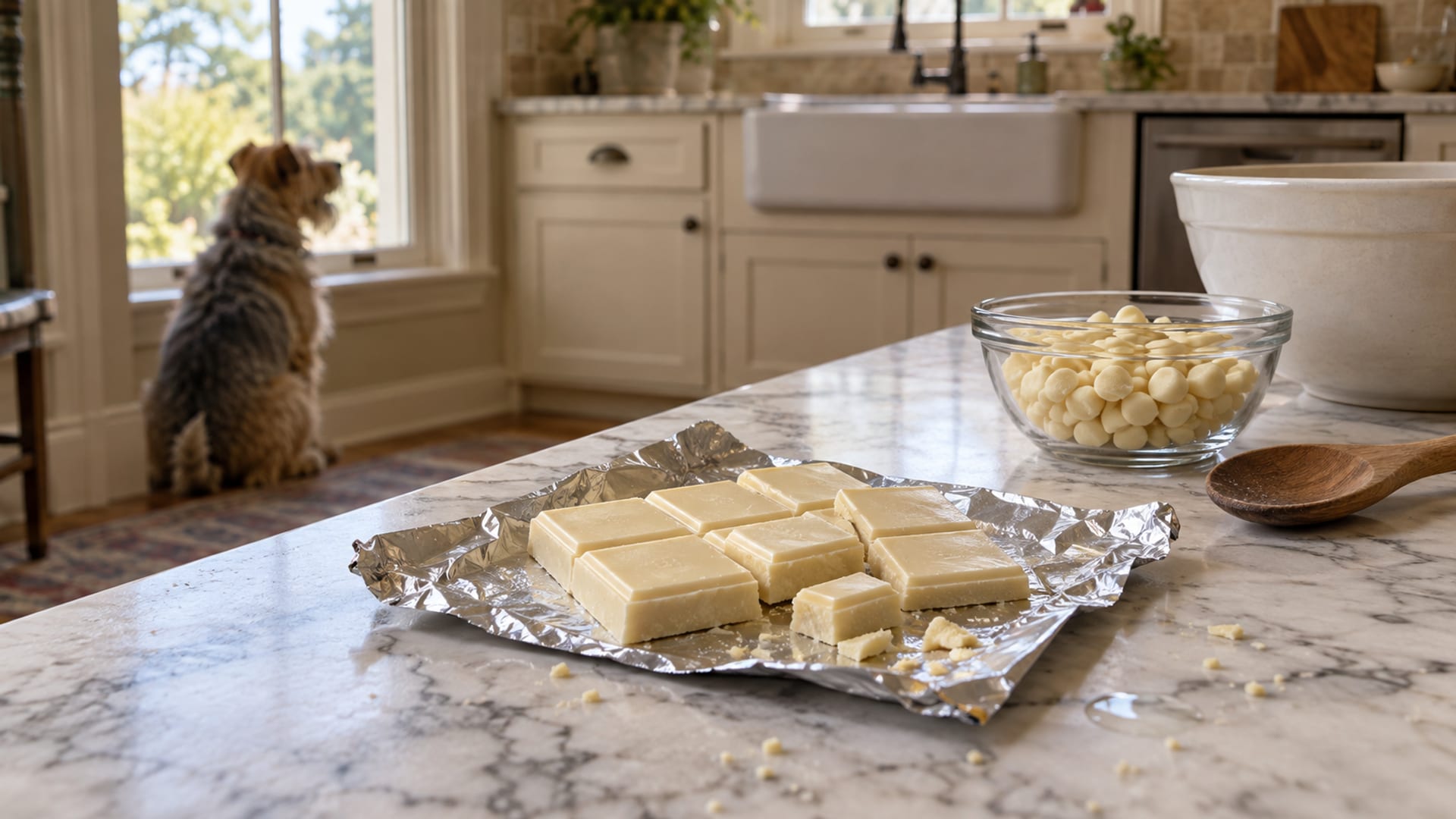
Plain white chocolate is the least dangerous chocolate a dog can find. The Merck Veterinary Manual calls it a negligible source of methylxanthines, the theobromine and caffeine that make darker chocolate toxic. It is still a poor treat: the ASPCA warns that its sugar and fat can lead to pancreatitis.
If your dog just ate some, find the wrapper and read every ingredient. A bite or two of plain white chocolate in a healthy dog usually calls for watching the stomach over the next day. Call your vet or a poison line now if the label lists xylitol, raisins, currants, macadamia nuts or coffee, if your dog ate a lot, if they are small or have had pancreatitis, or if any signs show up. For milk, dark or baking chocolate, go to can dogs eat chocolate instead.
Key takeaways
Tap a card to bring it forward.
- White chocolate has almost no theobromine, so true chocolate poisoning from it is unlikely.
- Its fat and sugar can still cause vomiting, diarrhea or pancreatitis.
- Sugar-free white chocolate may contain xylitol: call a vet right away.
- Macadamia nuts, raisins and coffee in the treat each bring their own danger.
- The ingredient list decides the next step, so keep the wrapper.
My dog ate white chocolate: your next step
Tap or hover a row to highlight it.
| What your dog ate | What to do |
|---|---|
| What your dog ateA bite or two of plain white chocolate, dog acting normal | What to doWatch for vomiting, diarrhea or belly pain through tomorrow. |
| What your dog ateA whole bar, a bag of chips or a tub of frosting | What to doCall your vet, especially for a small dog or a puppy. |
| What your dog ateAnything sugar-free, keto or "no sugar added" | What to doLook for xylitol, birch sugar or wood sugar on the label. If you see it or cannot check, call now. |
| What your dog ateA white chocolate macadamia nut cookie | What to doCall now about the macadamia nuts. |
| What your dog ateWhite chocolate with raisins or currants | What to doCall now; see can dogs eat grapes. |
| What your dog ateA white chocolate mocha or coffee treat | What to doCall about the caffeine; see can dogs eat coffee. |
| What your dog ateAny amount, and your dog has had pancreatitis | What to doCall your vet today. |
| What your dog ateThe wrapper or foil went down too | What to doWatch for gagging, vomiting or not eating, and call if you see them. |
The ASPCA suggests collecting any leftover packaging and noting fillings like raisins or macadamia nuts before you reach out for help. Pet Poison Helpline asks owners to stay calm and call right away. Have your dog's weight, a guess at how much they ate, and the time ready.
How white chocolate compares with darker chocolate
Merck lists white chocolate at 0.04 mg of methylxanthines per gram, far below every other kind. Milk, semisweet, dark and baking chocolate, and cocoa powder, all carry far more. A peer-reviewed review of household foods toxic to dogs and cats says a dog would have to eat an extremely large amount of white chocolate to get serious chocolate poisoning from it.
That is why a lick of white frosting and a stolen brownie are such different calls. The brownie is a chocolate emergency. The frosting is mostly a fat and sugar problem, unless something else is mixed in.
Fat, sugar and pancreatitis
The FDA notes that chocolate can hold enough fat and sugar to push some dogs into pancreatitis, an inflamed pancreas. Signs to watch for are vomiting, belly pain, low energy, not wanting to eat, and diarrhea.
Some dogs deserve a quicker call even after a smaller amount:
- dogs that have had pancreatitis before
- overweight dogs
- dogs with diabetes, liver disease or a sensitive gut
- small dogs and puppies, who take in more per pound from the same piece
What else is hiding in the treat
- Xylitol. The FDA warns that xylitol shows up in sugar-free candy, chocolate bars, baked goods and desserts, and can cause weakness, seizures, liver failure and death in dogs. It also goes by birch sugar, wood sugar or birch bark extract.
- Macadamia nuts. Merck's food hazards page notes that dogs are the only species in which illness from macadamias has been reported. White chocolate macadamia cookies are a common way dogs find them.
- Raisins and currants. These can cause kidney failure in dogs, and they turn up in white chocolate bark, trail mix and holiday baking.
- Coffee. A white chocolate mocha, a coated espresso bean or a coffee-flavored bark adds caffeine.
- Wrappers and foil. These can choke a dog or block the gut.
Signs and timing
According to Cornell University College of Veterinary Medicine, signs of chocolate poisoning can appear within 2 to 12 hours and last 12 to 36 hours. With plain white chocolate, an upset stomach is far more likely than the racing heart and tremors that darker chocolate can cause.
- Common: vomiting, diarrhea, extra thirst, belly discomfort.
- Call your vet: vomiting that keeps coming back, a sore or tight belly, low energy, refusing food.
- Go now: a racing heart, tremors, seizures, weakness or collapse. Plain white chocolate rarely causes these, so they can mean xylitol or a darker chocolate was in the mix.
"My dog has eaten white chocolate before with no problem"
That makes sense. White chocolate has so little theobromine that plenty of dogs eat some and never show a thing. That experience is real, and it tells you about that dog, that treat and that amount. The next time can differ. A few chips are a different load from a whole bag. A small dog takes in more per pound than a big one. A cookie with macadamias or a sugar-free bar carries risks the plain chips never had. A dog that has since had pancreatitis may react to fat that never bothered them before. And chocolate signs can take hours to show, so a dog who looks fine at bedtime may not be the whole story.
White chocolate look-alikes and mixed treats
- White candy coating and baking wafers: sold alongside white chocolate, with the same fat and sugar concerns. Read the label.
- White chocolate chip or macadamia cookies: check for macadamias and raisins.
- White chocolate ice cream and frosting: more fat and sugar; see can dogs eat ice cream.
- "Sugar-free," "keto" or "low-carb" white chocolate: the most likely place to find xylitol.
- Cocoa powder and cocoa solids: a different, much stronger product than white chocolate; see the chocolate entry linked above.
Check what you learned
Quick check
Questions about dogs and white chocolate
Is white chocolate as toxic as dark chocolate?
No. Merck lists white chocolate as a negligible source of theobromine and caffeine, while dark, baking and cocoa products carry far more.
How much white chocolate is too much for a dog?
A lick or a chip or two rarely causes more than a stomach upset. A whole bar, a small dog, or a dog with a history of pancreatitis is worth a call.
Can white chocolate cause pancreatitis in dogs?
It can. The ASPCA and the FDA both point to the fat and sugar in chocolate as a trigger for pancreatitis in some dogs.
What if the white chocolate had macadamia nuts in it?
Call your vet or a poison line. Macadamia nuts make dogs sick on their own, apart from the chocolate.
My puppy ate white chocolate. Is that worse?
A puppy gets more per pound from the same piece, so call your vet unless it was a tiny taste of plain white chocolate, and watch closely either way.
Is white chocolate bad for cats too?
Merck notes that cats are also sensitive to chocolate, though dogs get into it far more often. The same logic applies: white chocolate is low in theobromine, and the fat, sugar and extra ingredients still matter.
Sources
Checked September 25, 2026.
- Merck Veterinary Manual, Chocolate Toxicosis in Animals
- Merck Veterinary Manual, Food Hazards
- ASPCA, What to Do If Your Pet Gets into Chocolate
- Pet Poison Helpline, Can Dogs Have White Chocolate?
- U.S. Food and Drug Administration, Paws Off! Xylitol Is Toxic to Dogs
- U.S. Food and Drug Administration, Leave Chocolate Out of Rover's Celebrations
- Cornell University College of Veterinary Medicine, Chocolate Toxicity: What Should I Do if My Dog Eats Chocolate?
- PubMed Central (peer-reviewed review), Household Food Items Toxic to Dogs and Cats