
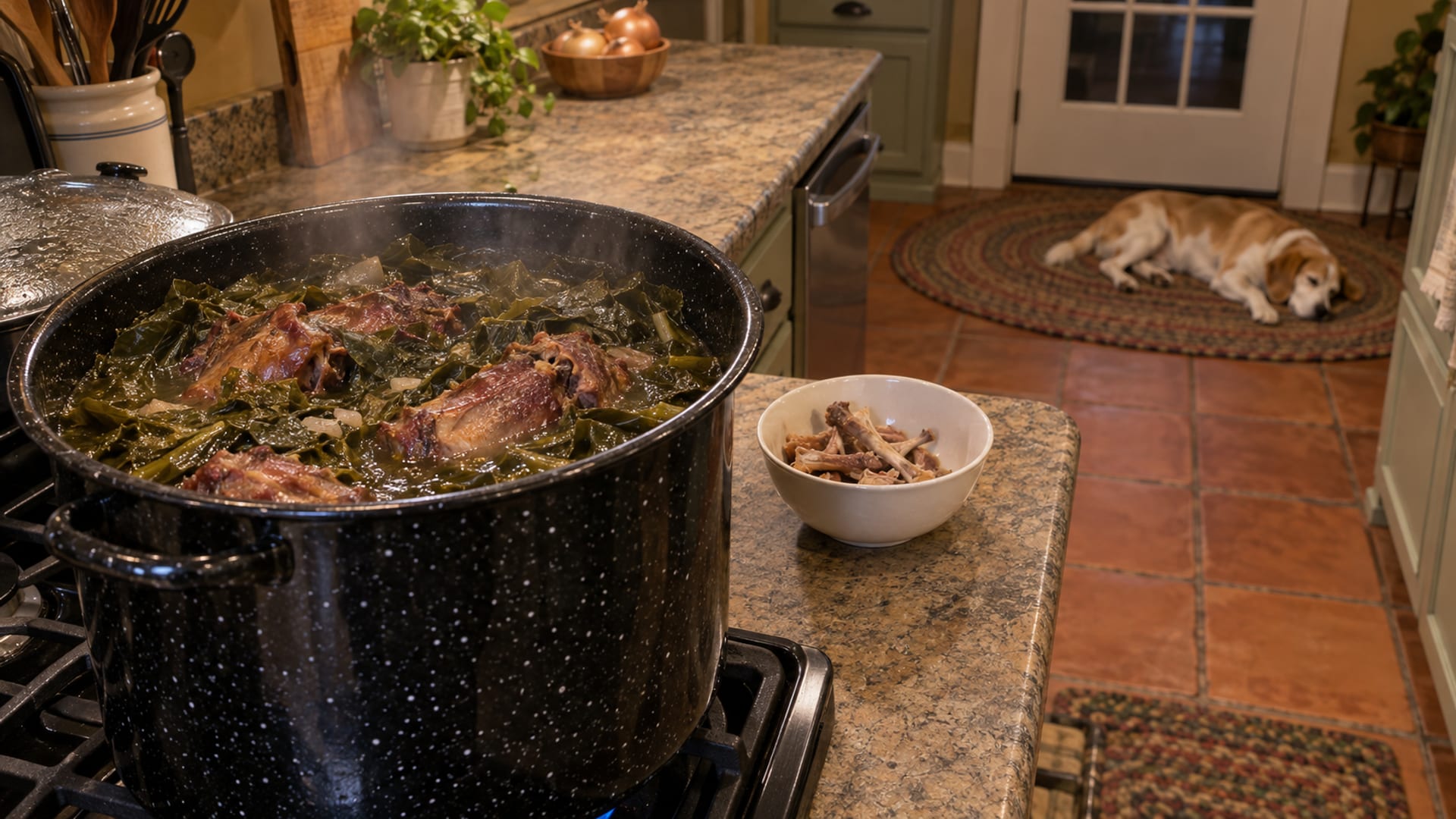
Keep smoked turkey necks out of your dog's reach, whether they are still in the pot of collards or picked clean on a plate. Smoking cooks the bone, and the ASPCA warns that cooked bones can splinter and seriously injure a dog. Raw turkey necks sold as dog chews splinter less, but they can still choke a dog, lodge in the gut, crack a tooth and carry germs.
If your dog already swallowed a neck or a chunk of one, phone your vet for advice now, while your dog still seems like themselves. Choking, pawing at the mouth or struggling to breathe means a trip straight to the nearest emergency clinic.
Key takeaways
Tap a card to bring it forward.
- A smoked turkey neck is a cooked bone. Keep it, and the picked bones from the pot, away from your dog.
- The neck is a string of small, jointed bones that can go down whole or in pieces.
- Pot liquor, greens and beans can hold salt, fat, onion and garlic even after the neck is lifted out.
- Raw and dried turkey neck chews are a conversation for you and your vet, with choking, tooth and bacteria risks.
- A little plain, boneless, unseasoned turkey meat is a different food and can be fine.
Your dog got a turkey neck from the pot or the plate: first steps
- Move everything up high. The pot, the serving bowl, the plate of picked bones and the trash bag that holds the rest.
- Watch the breathing. Gagging, choking, heavy drooling or swallowing again and again can mean a piece is stuck high up. VCA Animal Hospitals treats choking as an emergency that needs a vet right away.
- Call your vet if a cooked neck or any real piece of one went down, before signs start. The American Kennel Club says to call for advice or book a visit after a dog eats cooked bone.
- Give nothing on your own. Skip the bread, oil, laxatives and medicine that people sometimes suggest, unless your vet or a poison specialist tells you to.
- Tell the vet what was in the pot. How salty it was, whether onion or garlic went in, and the package from the smoked necks if you still have it.
A vet may check your dog's mouth and belly and use X-rays or ultrasound to find the bone. Cornell University's veterinary college explains that some swallowed objects in the stomach can be pulled out with an endoscope, while a blocked or torn gut needs surgery.
Smoked, cooked, raw and chew necks, form by form
Tap or hover a row to highlight it.
| Form | Verdict | What to know |
|---|---|---|
| FormSmoked neck cooked in greens, beans or soup | VerdictAvoid | What to knowCooked bone that can splinter; often salty and seasoned |
| FormRoasted, boiled, fried or pressure-cooked neck, including the one from the holiday bird | VerdictAvoid | What to knowCooking turns the bone brittle |
| FormPicked neck bones left after the meat comes off | VerdictAvoid | What to knowBare cooked bone, easy to gulp |
| FormRaw turkey neck sold as a chew or for raw feeding | VerdictCaution; ask your vet | What to knowSplinters less, but still choking, blockage, tooth and bacteria risks |
| FormDried, dehydrated or smoked turkey neck chew | VerdictCaution; ask your vet first | What to knowDrying or smoking does not make it raw; the hard bone stays hard |
| FormPlain boneless turkey meat, no skin or seasoning | VerdictA little is fine | What to knowA separate food with its own guide |
The last row is the easy one. The AKC says turkey meat can be safe for dogs once bones, skin, excess fat, salt, seasoning, onion and garlic are gone. Can dogs eat turkey? covers that meat on its own.
The greens pot, the beans and the smoke cure
Smoked necks go into the pot for flavor, and a lot of that flavor is salt. Store-bought smoked necks can carry salt and seasonings of their own, and the recipe may add onion or garlic on top. Lifting the neck out leaves all of that behind in the pot liquor, the greens and the beans.
Salt matters most when a dog drinks a lot of the liquid or cleans out a bowl. Merck Veterinary Manual says salt poisoning signs can start in dogs after 2 to 3 grams of salt per kilogram of body weight, and lists vomiting, diarrhea, weakness, wobbly walking, tremors and seizures. That figure is for salt itself, and the salt in a pot changes with every brand and every cook, so it cannot be turned into a count of necks or ladles. If your dog ate a salty dish, or the label lists onion, garlic or a heavy brine, call your vet or a pet poison line instead of doing the math. Pet Poison Helpline gives the same direction for a salt ingestion that could be toxic. For onion and garlic in the pot, see Can dogs eat onions? and Can dogs eat garlic?
The fat is the other piece. Turkey skin, drippings and rich table scraps can upset a dog's stomach, and Merck's guide for dog owners counts large amounts of table scraps and high blood fats among the risk factors for pancreatitis. It also reports the condition more often in Miniature Schnauzers, Yorkshire Terriers, Cocker Spaniels, Dachshunds, Poodles and sled dogs. A dog with a history of pancreatitis should not get the skin or the pot liquor at all.
Signs to watch in the days after
Right away: choking, gagging, drooling, pawing at the mouth or trouble breathing. Go to an emergency clinic.
Later on: Cornell lists vomiting, loss of appetite, belly pain, diarrhea, dehydration and low energy as blockage signs, and they vary with where the bone sits and how long it has been there. VCA adds straining to poop or passing only small amounts. Constipation from bone can look like squatting over and over with nothing coming out, circling, scooting or crying out. A bone piece that stays in the stomach can cause vomiting that keeps coming back.
A dog can look normal at first and then get into real trouble once a piece lodges or pokes through the gut wall. The worst outcomes are a blocked airway, a tear with infection in the belly, surgery to remove damaged intestine, and death. Call your vet for any of these signs, and get care right away for blood, weakness, collapse or a swollen, painful belly.
Small dogs and puppies have the least room for a neck or a piece they can swallow, and Cornell advises keeping small, easily swallowed bones away from dogs. Big dogs are not safe either, because a large dog can gulp a whole turkey neck in one go.
Raw turkey necks and store-bought neck chews
Raw turkey necks show up in pet store freezers and raw-feeding plans. The AKC notes that poultry necks are among the bones used in raw diets and lays out both sides: some raw feeders see raw meaty bones as digestible and less likely to splinter, while others say no bone, raw or cooked, is worth the harm. The AKC's advice is to ask your vet before giving a raw meaty bone. VCA says raw bones can carry E. coli, Salmonella and Listeria and can still block the gut, damage teeth or cause constipation.
The germs reach your kitchen too. Out of 196 raw pet food samples the FDA tested, 15 had Salmonella and 32 had Listeria monocytogenes, and a dog can shed these bacteria without looking sick. Pregnant people, young children, older adults and anyone with a weak immune system face the most risk, so wash up and wipe down after handling raw necks. Cats get the same bone and germ risks, so keep raw necks and cooked scraps away from them as well.
Dried, dehydrated or smoked neck chews are a different product from a soft raw neck. The drying or smoking does nothing to the hard bone inside, so the tooth, choking and blockage risks travel with it. Talk to your vet before buying one for your dog.
"My dog has had turkey necks for years"
Maybe your dog has been getting a neck bone off the plate for years and has come through every time. That outcome is real. It rested on things that change from one meal to the next: whether the dog licked the meat or swallowed bone, how big and sharp the pieces were, and where each one went, which Cornell names as what shapes how a blockage turns out. Cooked bone is brittle and raw bone brings germs, so the form matters too. VCA adds that the dog's own size and health play a part, and dogs prone to pancreatitis can react badly to rich scraps. A piece that passes one Sunday can lodge the next, and the vomiting or straining may not start until days later. Let the neck finish its job in the greens, then bag the bones and take them out.
Other turkey and smoked-meat questions
- Smoked turkey wings and legs: also cooked poultry bone, with the same splinter risk. See Can dogs eat turkey bones?
- Turkey neck broth or stock: the bone risk only applies if fragments were left in, but the salt, onion and garlic stay.
- Plain turkey meat pulled off the neck: fine in a small amount if it is boneless, skinless and unseasoned. Meat from a seasoned pot carries the salt and seasoning of the pot.
- Turkey jerky and turkey-flavored treats: commercial products that may hold no bone at all. Check the label.
- Bones from other animals: start at Can dogs eat bones?
Check what you learned
Quick check
Questions about dogs and turkey necks
My dog ate one smoked turkey neck. Is that an emergency?
Call your vet now for advice about your dog. It becomes an emergency visit if your dog is choking, struggling to breathe, collapses, bleeds, has a seizure or stops responding to you.
Can I give my dog a raw turkey neck instead?
Raw is not risk-free. A raw neck is less brittle than a smoked one, but it can still choke a dog, block the gut, crack a tooth, cause constipation and carry Salmonella, Listeria or E. coli. Ask your vet first.
What signs mean a piece of neck bone may be stuck?
Drooling, gagging, vomiting, not eating, belly pain, low energy, diarrhea, straining to poop or passing only a little stool. Trouble breathing needs an emergency clinic.
The neck seasoned the greens and beans. Can my dog have some of those?
Do not assume the dish is plain once the bone is out. The pot can hold salt, fat, onion, garlic and seasoning. If your dog ate a good amount or shows any signs, call your vet.
Can my dog have plain turkey meat instead?
Yes, in a small amount, as long as it is fully cooked with no bones, skin, extra fat, salt, seasoning, onion or garlic. The AKC treats that plain meat as a separate food from the neck.
Can the cat have a turkey neck?
No. Cats face the same bone injuries and can pick up and shed Salmonella from raw food, so keep necks and scraps away from both pets.
Sources
Checked September 24, 2026.
- ASPCA, Destructive Chewing
- VCA Animal Hospitals, Why Bones Are Not Safe for Dogs
- American Kennel Club, Can Dogs Eat Bones? Be Careful Before Giving Your Pup a Bone
- American Kennel Club, Is It Safe for My Dog to Eat Steak Bones?
- Cornell University College of Veterinary Medicine, Gastrointestinal Foreign Body Obstruction in Dogs
- Merck Veterinary Manual, Salt Toxicosis in Animals
- Merck Veterinary Manual, Pancreatitis and Other Disorders of the Pancreas in Dogs
- Pet Poison Helpline, Salt
- U.S. Food and Drug Administration, Get the Facts! Raw Pet Food Diets Can Be Dangerous to You and Your Pet