
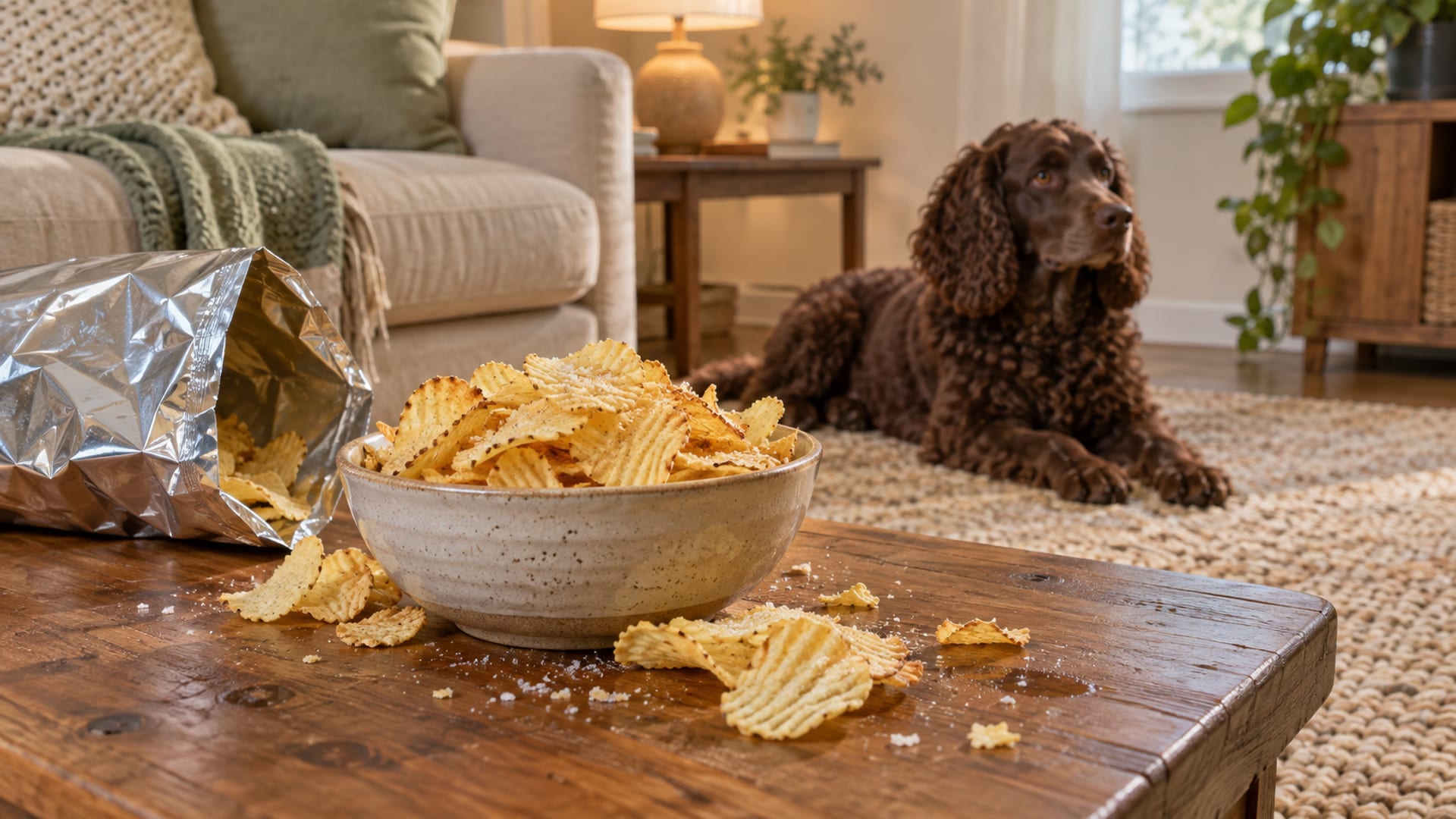
Potato chips are a caution food: a few plain chips are unlikely to seriously harm a healthy adult dog, but chips are loaded with salt and frying fat, so they are best kept off your dog's menu. What changes the answer is how many were eaten, what flavor they were and how big your dog is, so if your dog just raided a bag, those are the three things to find out first.
A handful of plain chips eaten by an adult dog who is acting normal is usually something you watch at home, with fresh water in the bowl. A whole bag or an amount you can't pin down, a flavor with onion or garlic in the seasoning, or a small dog, a puppy or a dog with a history of pancreatitis all mean calling your vet or a pet poison line now. Vomiting that keeps coming back, heavy thirst, trembling, stumbling, a seizure or collapse means calling right away, whatever the amount.
Key takeaways
Tap a card to bring it forward.
- A few plain chips are unlikely to seriously harm a healthy adult dog, but chips are salty, fatty snack food and make a poor treat.
- Onion or garlic seasoning adds a second problem on top of the salt, so the flavor printed on the bag matters.
- A whole bag, an unknown amount, a small dog or a puppy are reasons to call your vet or a poison line promptly.
- Salt trouble often starts with vomiting within several hours; tremors, stumbling or seizures need a vet right away.
- If you want to share potato with your dog, a little plain cooked potato with nothing added is the better choice.
If your dog already ate potato chips
These checks sort a snack-table accident from a real exposure. Work through them in order, and keep your phone handy.
- Get the bag and any spilled chips out of reach. Pet Poison Helpline lists removing your pet from the area as the first thing to do, and a dog who found one bag will happily finish the crumbs.
- Find the bag and read the label. The flavor name, the sodium per serving and the ingredient list tell you whether you are dealing with salt and fat alone or with onion or garlic powder too, and the vet or poison line will ask for exactly those details.
- Estimate how much is gone and when it happened. A few chips off the floor, half a bag and a whole family size bag are very different exposures, and the time helps a vet judge whether signs could still be coming.
- Think about your dog's size, age and health. The Merck Veterinary Manual measures salt risk per kilogram of body weight, so the same chips are a much bigger dose for a Chihuahua than for a Labrador. Mention pancreatitis, a low fat diet or kidney disease when you call, since those dogs have less room for salt, fat or dehydration.
- Put out a full bowl of fresh water. Merck notes that salt poisoning is unlikely in a dog with normal sodium control and access to fresh water, so let your dog drink freely.
- Decide whether to call now. The ASPCA says its poison experts consider a pet's age and health along with what and how much was eaten before recommending care or watching at home. Call promptly for a whole bag or an unknown amount, onion or garlic flavors, a small dog, a puppy or a dog with a relevant health problem. If it were my dog and most of a bag was gone, I would make that call before any signs showed up.
Plain, kettle, flavored or homemade: how the chip changes the risk
The word "chip" covers a lot of different bags. This table sorts them by what actually drives the concern.
Tap or hover a row to highlight it.
| Chip or form | Concern | What drives it |
|---|---|---|
| Chip or formPlain salted chips (regular, ridged, wavy, kettle cooked) | ConcernCaution | What drives itSalt, frying fat, calories, sharp pieces |
| Chip or formUnsalted chips | ConcernCaution | What drives itMuch less salt, but fried chips still carry the fat |
| Chip or formBaked chips | ConcernCaution | What drives itCheck the label for sodium and seasoning |
| Chip or formFlavored chips (sour cream, cheese, barbecue, chili) | ConcernAvoid | What drives itSeasoning can add more salt, fat, dairy, spices, onion or garlic |
| Chip or formChips with onion or garlic powder | ConcernAvoid; call if more than a taste | What drives itOnion and garlic are toxic to dogs in large enough amounts |
| Chip or formHomemade chips from green or sprouted potatoes | ConcernAvoid | What drives itGreen or sprouted potato can contain solanine and chaconine |
| Chip or formRaw potato slices | ConcernAvoid | What drives itHarder to digest; green spots raise the same glycoalkaloid concern |
The ASPCA specifically tells owners to avoid salt-heavy snacks like potato chips, and it lists onion and garlic among the foods that can hurt pets. That is why a bag of sour cream and onion deserves a closer look than a bag of lightly salted plain chips. If your dog ate a seasoned bag, the pages on Onions, Garlic and BBQ Chips cover those ingredients in more detail.
Store-bought chips are made from ordinary cooked potato, which is not itself the problem. Homemade chips are a different story if they were cut from potatoes with green patches or sprouts, because the AKC advises keeping green-spotted potato away from dogs. Hard, sharp or large pieces can also be a choking or blockage risk, particularly for small dogs and dogs who gulp their food.
Sharing potato, and how much chip is a concern
If your goal is to give your dog a bit of potato, skip the chips and cook a plain potato instead. The AKC treats plain boiled or baked potato as fine in moderation when it is fully cooked and unseasoned. That means no salt, butter, oil, onion, garlic or seasoning, no green or sprouted potato, and only a small amount next to your dog's regular food. The Potatoes entry covers serving it in more detail.
On the chip side, there is no published safe number of chips for a dog of any size, so nobody can honestly give you a chip count. What the veterinary sources do publish is how much salt causes trouble:
Tap or hover a row to highlight it.
| Source | Amount of salt | What it describes |
|---|---|---|
| SourceMerck Veterinary Manual | Amount of saltAbout 2 to 3 g per kg of body weight | What it describesClinical signs of salt toxicosis reported |
| SourceMerck Veterinary Manual | Amount of saltAbout 4 g per kg of body weight | What it describesApproximate acute oral lethal dose |
| SourcePet Poison Helpline | Amount of salt1.5 g per lb (about 3.3 g per kg) | What it describesToxic salt dose |
The Merck Veterinary Manual figures are for salt itself, and Pet Poison Helpline gives its 1.5 grams per pound figure the same way. Turning either into chips would take the sodium on your particular bag, the weight of the chips, your dog's weight, how much water they can reach and how much came back up. A few chips normally carry far less salt than these amounts, which is why a handful is rarely an emergency. A whole bag in a small dog is where the numbers can start to matter.
Instead of doing that math at the kitchen counter, call with three things ready: your dog's weight, the bag with its label, and your best guess at how much is gone. Puppies and small dogs deserve an earlier call, because a fixed amount of chips is a larger dose per kilogram for them, and pieces are a bigger choking risk.
Signs to watch for in the next several hours
With salt, the first sign is usually vomiting, and the Merck Veterinary Manual says it can begin within several hours of eating too much. From there it can move on to weakness, diarrhea, muscle tremors and seizures. Pet Poison Helpline adds poor appetite, extra thirst or urination and lethargy, with coma and, in rare cases, death at the far end.
When salt levels climb high enough, the brain is affected. Pet Poison Helpline describes the progression from stomach signs to stumbling, seizures, depression and severe brain swelling. Its salt poisoning page lists the same mix of stomach and nervous system effects. Any wobbliness, trembling or odd behavior after a big chip binge is a reason to call now, and the ASPCA says seizures, trouble breathing or a dog who won't respond need an emergency hospital.
The grease is its own issue. A fatty snack can upset the stomach or trigger pancreatitis, which VCA Animal Hospitals connects to vomiting, belly pain, low energy and a poor appetite. Keep an eye on those through the next day, especially in a dog who has had pancreatitis before.
For a small amount of plain chips, the most likely result is nothing at all, or a short bout of stomach upset that settles on its own.
My dog ate a bag of chips before and was fine
Plenty of dogs have polished off a bag of chips and gone on with their day, and if yours did, that really happened. It just does not predict what happens the next time, or with a different dog.
A lot of things line up to make that good outcome. The amount may have been small next to the dog's body weight, or the chips may have held less salt than you thought. The bag may have been plain rather than onion or garlic flavored. The dog may have had fresh water and normal sodium control, which Merck says makes salt poisoning unlikely. Individual dogs also simply respond differently.
Timing matters too. Salt signs can take several hours to start, and mild vomiting, loose stool, thirst or a sleepy evening are easy to miss or blame on something else. The next bag might be a spicier flavor, a smaller dog, a puppy or a dog with a touchy pancreas, and each of those changes the risk.
Chips, crisps and snacks that get mixed up with potato chips
Several snacks share the name, and they don't all carry the same risks. If the bag says something other than potato, check its own ingredients.
- Crisps. This is the British and Irish word for potato chips, so the same advice applies.
- Tortilla chips and corn chips. These are usually made from corn, so the potato facts don't carry over, but salt, fat and flavoring are still the concerns.
- Banana chips. These can be fried, sugared, salted or seasoned, and potato evidence says nothing about them.
- Sweet potato chips. Sweet potato is a different plant, and the seasoning on the bag decides the risk. The Sweet potatoes entry covers the plain vegetable.
- French fries. In Spanish, "papas fritas" often means fries rather than bagged chips. Fries have their own entry at French fries.
- Potato skins. Skins can be green, sprouted, fried or heavily salted, so they are not the same as a plain cooked potato.
- Brand-name chips. Whatever the brand on the bag, the label is what tells you the sodium and whether onion or garlic is in the seasoning.
- Potato plants. If your dog chews in the garden, the AKC lists potato leaves and stems as dangerous for dogs.
Parties are when most of these bags end up open at nose height. The ASPCA singles out chips and dip on game day because of the salt, onion and garlic, so a bowl on a low coffee table is worth moving before guests arrive.
Check what you learned
Three quick questions to see what stuck.
Quick check
Questions about dogs and potato chips
These come up once the first scare has passed.
Can I give my dog one plain chip as a treat?
A single plain chip is unlikely to cause harm in a healthy adult dog. It still makes a poor habit, because chips are salty, fatty and high in calories, and a regular chip here and there adds up toward weight gain. A piece of plain cooked potato or your dog's usual treats do the same job without the salt.
My dog has had pancreatitis. Should I worry about a few chips?
Call your vet, even for a small amount. VCA Animal Hospitals explains that low fat diets are usually preferred for dogs with pancreatitis because fat makes the pancreas work harder and slows how fast the stomach empties. Fried chips are the kind of treat those dogs should not get.
Are unsalted or baked chips okay to share?
Unsalted chips remove most of the salt worry, but if they are fried, the fat is still there. Baked chips vary a lot by brand and flavor, so the label decides. Neither one is a better treat than plain cooked potato.
What about chips and dip?
The dip is a second exposure. Dips can carry onion, garlic or extra salt, and specialty dips can bring in other ingredients too. If your dog licked the dip bowl clean, read that label as well and mention both when you call.
My cat got into the chips too. Is it the same?
Cats can also be poisoned by too much salt, and Pet Poison Helpline lists similar signs for them. The dog salt figures on this page should not be used for a cat, so call about your cat separately and give its own weight.
Sources
Checked September 25, 2026.
- ASPCA, People Foods to Avoid Feeding Your Pets
- ASPCA, Emergency Care for Your Pet
- ASPCA, My Pet Ate Something! When Should I Seek Help?
- ASPCA, Have a Pet-Safe Super Bowl Sunday
- AKC, Can Dogs Eat Potatoes?
- AKC, Dangerous foods and household products
- Merck Veterinary Manual, Salt Toxicosis in Animals
- Pet Poison Helpline, 24/7 Animal Poison Control Center
- Pet Poison Helpline, Salt Is Toxic To Pets
- Pet Poison Helpline, Sodium Toxicity Symptoms in Pets
- Pet Poison Helpline, Should You Give Salt to Your Dog
- Pet Poison Helpline, Summer Toxins To Pets
- VCA Animal Hospitals, Nutrition and Pancreatic Disease in Dogs