
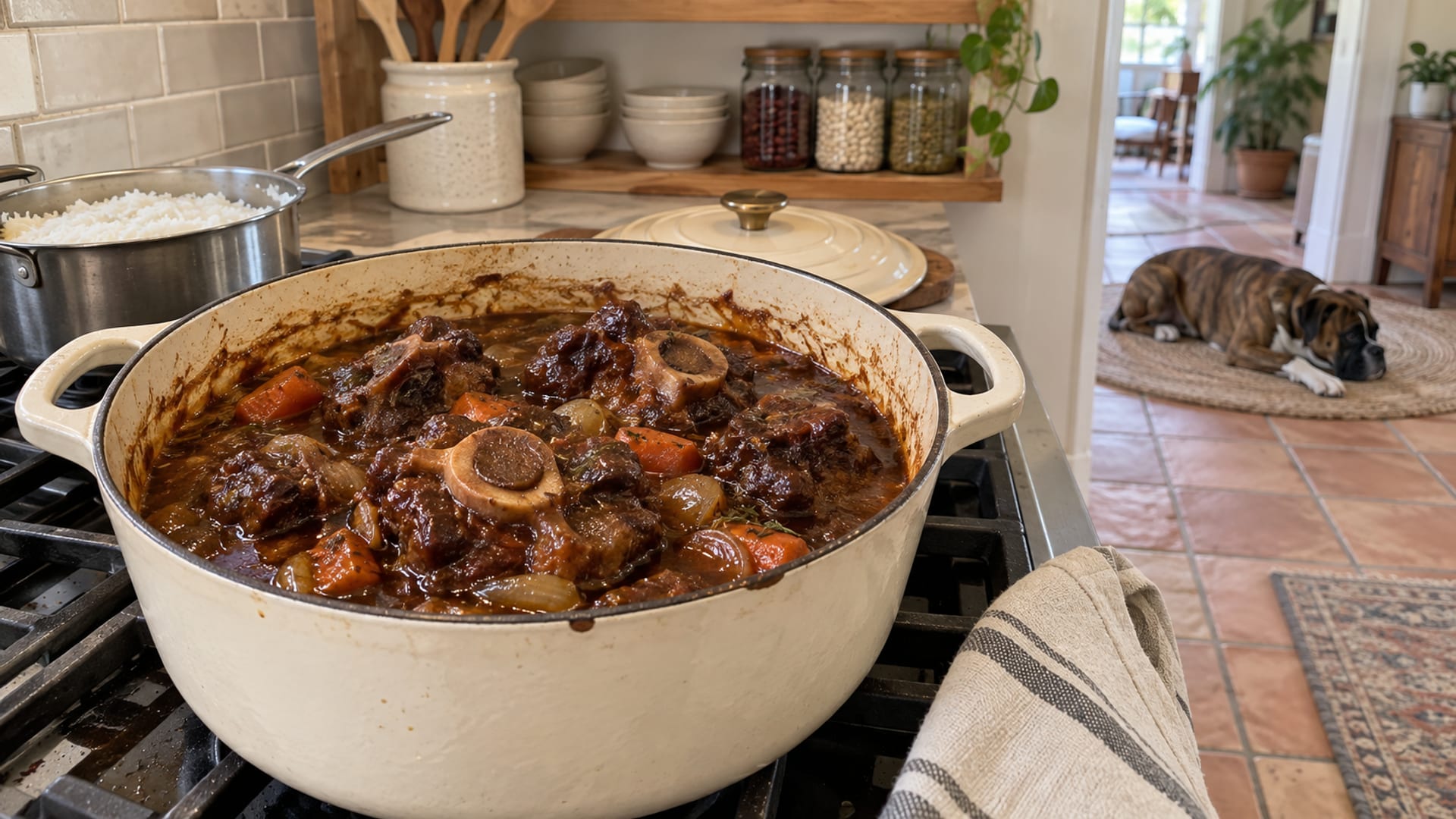
Keep oxtail bones away from your dog, whether they came out of a pot of smothered oxtails and gravy or straight from the butcher's tray. Oxtail is a string of small tail bones wrapped in meat, fat and gelatin, and the American Kennel Club says cooked bones splinter into shards that can choke a dog or injure the mouth, throat, stomach or intestines. Raw oxtail splinters less, and it can still choke, block the gut, crack a tooth and carry germs.
If your dog already swallowed an oxtail bone or a piece of one, call your vet today for advice while your dog still seems normal. If your dog is choking, can't breathe well or keeps gagging, go to an emergency clinic now.
Key takeaways
Tap a card to bring it forward.
- Every oxtail is bone: short tail vertebrae with meat and fat around them.
- Braised, stewed, smoked or fried, a cooked oxtail bone can splinter. Never share one.
- Raw oxtail is less brittle and still a choking, blockage and germ risk.
- The fat, marrow and gravy can upset the stomach or bring on pancreatitis, and many recipes add onion or garlic.
- Swallowed bone: call your vet, and skip home remedies and vomiting unless they tell you otherwise.
If your dog got an oxtail bone: first steps
- Clear it away. Pick up the plate, the pot, the bones and the trash bag so your dog cannot go back.
- Check for choking. Gagging, pawing at the mouth, drooling heavily, trying to swallow over and over or labored breathing means an emergency clinic, right now.
- Gather the details. Your dog's weight, raw or cooked, how many pieces are missing and how big, roughly when, and everything that went into the pot.
- Call your vet, an emergency clinic or a pet poison line. The AKC's advice after a cooked bone is to call your vet or book a visit to rule out anything serious. Call promptly for a whole raw vertebra, several pieces or an amount you are unsure of, too.
- Leave the home remedies alone. Pet Poison Helpline says not to give home antidotes and not to make a pet vomit without talking to a vet or the helpline first.
- Keep watching for days. Bone digests slowly, and trouble can start after a normal first night.
At the clinic, the vet may examine your dog and take X-rays, sometimes more than once to see whether a piece is moving. Merck Veterinary Manual notes that most swallowed objects a vet finds are taken out with a scope or with surgery, because of the risk of blockage or a tear.
Cooked oxtail and raw oxtail, side by side
Tap or hover a row to highlight it.
| Cooked oxtail (braised, stewed, soup, roasted, smoked, fried, pressure-cooked) | Raw oxtail | |
|---|---|---|
| Splintering | Cooked oxtail (braised, stewed, soup, roasted, smoked, fried, pressure-cooked)Yes, cooking makes bone brittle | Raw oxtailLess likely, according to the AKC |
| Choking and blockage | Cooked oxtail (braised, stewed, soup, roasted, smoked, fried, pressure-cooked)Yes | Raw oxtailYes |
| Broken teeth | Cooked oxtail (braised, stewed, soup, roasted, smoked, fried, pressure-cooked)Yes | Raw oxtailYes |
| Germs | Cooked oxtail (braised, stewed, soup, roasted, smoked, fried, pressure-cooked)Mostly killed by cooking | Raw oxtailSalmonella, Listeria and E. coli possible |
| Fat and marrow | Cooked oxtail (braised, stewed, soup, roasted, smoked, fried, pressure-cooked)Yes, plus gravy and seasoning | Raw oxtailYes |
| Share it? | Cooked oxtail (braised, stewed, soup, roasted, smoked, fried, pressure-cooked)No | Raw oxtailNo, unless your own vet has weighed it for your dog |
The cooking style does not change the answer. Oxtail smothered in gravy, oxtail soup, a pressure-cooker batch and fried oxtail all leave cooked bone behind.
Size is the other worry. An oxtail piece that might be too big to pass through a small dog can be swallowed whole by a bigger one, and the AKC's steak bone guide warns against bones already cut into smaller pieces because they are a more immediate choking hazard. Keep that in mind with oxtail, which is made entirely of short tail bones.
Some raw-feeding owners and vets consider raw meaty bones acceptable, and others say no bones at all, raw or cooked, and the AKC describes both views. On the germ side, the FDA advises against feeding raw diets because raw pet food is more likely to carry Salmonella and Listeria monocytogenes. The careful choice is to keep raw oxtail for the pot.
The gravy, the fat and the seasoning
Oxtail cooks down rich, and that richness is its own concern apart from the bone.
- Fat, marrow and grease. The Pet Poison Helpline food guide lists pancreatitis among the hazards of fatty foods, and it names cooked bones for their splinters, cuts, blockages and choking. Fat can also cause vomiting, diarrhea, tiredness and a lost appetite.
- Onion, garlic and salt. The AKC's cookout food guide counts onion, garlic and salt among the foods to keep from dogs. Stews and gravies often carry all three. If they were in the pot, see Can dogs eat onions? and Can dogs eat garlic?
- Wine or rum in the braise. Alcohol is a separate hazard, so mention it when you call.
A few bites of plain, fully cooked oxtail meat, pulled completely off the bone with the visible fat trimmed, carry none of the bone risk. Keep it small and occasional, and skip it for a dog with pancreatitis in its past or a vet-prescribed diet.
Signs of trouble after an oxtail bone
Within minutes, if a piece lodges in the throat or esophagus: distress, heavy drooling, gagging, trouble swallowing, bringing food back up, swallowing again and again, or labored breathing. Merck names bones as the most common thing stuck in the esophagus of dogs and cats.
Over hours to days, as a piece moves down: vomiting, not eating, diarrhea, tiredness, a painful or swollen belly, dehydration, or straining to poop with nothing or little coming out. Merck's page on stomach and intestine problems in dogs adds hard, dry stool and straining as signs of bone packing up as constipation.
From the fat: vomiting, diarrhea, low energy and no interest in food.
The signs depend on where the piece stops and whether it blocks the gut partly or fully, so the timing varies. A sharp piece can tear the gut and lead to infection of the belly or blood. Go now for trouble breathing, collapse, severe pain, vomiting that will not stop, a swollen belly, weakness, blood in the vomit or stool, or a painful dog who cannot pass stool.
"My dog has chewed oxtail bones before with no problem"
That can be exactly right. Plenty of dogs have cleaned an oxtail bone off a plate and never had a bad day from it. The good outcome was real, and it still does not tell you how the next bone will go.
One dog licks the gravy or eats some meat, and another swallows a whole vertebra or a sharp sliver. Merck explains that a very small object can block a small dog, that a partial blockage can let some food through at first, and that signs change with where the piece stops and how long it stays. The recipe changes too: one pot has little fat and no onion, the next has plenty of both. Young dogs and dogs that eat anything in reach run into more trouble, and a dog prone to pancreatitis can react hard to a rich plate.
Some problems also start late or never show. Merck describes vets following a swallowed object with X-rays over hours to days, so a quiet evening does not prove the bone passed. With raw oxtail, the FDA reports on a study where half of the dogs fed Salmonella-contaminated raw food shed the bacteria. The last bone went fine, and that is a good memory. It does not cover the next one.
Which dogs are most at risk
- Small dogs. Merck notes that even very small objects can block a small dog. A piece a large dog can gulp down whole may be too big to pass through a small dog's gut.
- Young dogs, especially young large breeds. Merck says they are more likely to end up with a swallowed-object blockage.
- Dogs that eat everything. Pica, and illnesses or medicines that make a dog ravenous, raise the odds of swallowing bone.
- Dogs with pancreatitis in their past or on a low-fat diet. Fatty oxtail, marrow and greasy broth are a poor fit. The AKC describes pancreatitis from high-fat foods as ranging from mild to deadly.
- Cats and people in the same house. Cats can choke on or be blocked by bone too. In FDA testing of 196 raw pet food samples, 15 carried Salmonella and 32 carried Listeria monocytogenes, which can reach whoever handles the raw meat, bowls and counters.
Beef tail chews, broth and other oxtail look-alikes
- Beef tail, cow tail, ox tail: in US stores these usually mean cattle tail. Treat them as oxtail if there is bone.
- Oxtail soup, stew, rabo guisado, rabo encendido: recipes. Check the bowl for bone and the ingredient list for onion, garlic, salt and alcohol.
- Dried, smoked or dehydrated beef tail chews: still bone. Processing does not prove a chew is safe, so read the label, check the size and hardness, and watch your dog with it.
- Strained oxtail broth: with every bit of bone strained out, the bone hazard is gone, while salt, fat and seasoning remain.
- Beef bones in general: marrow, knuckle and soup bones are covered in Can dogs eat beef bones?, and T-bones and ribeye bones in Can dogs eat steak bones?
Family dinners and cookouts are when oxtail bones end up within reach, on plates, counters and in the garbage. The AKC advises keeping platters with bones out of reach while you cook and serve. For how every kind of bone compares, see Can dogs eat bones?
Check what you learned
Quick check
Questions about dogs and oxtail
My dog ate a cooked oxtail bone. Is it an emergency?
It can turn into one. Cooked bone can splinter and cause choking, cuts, a blockage or a tear. Call your vet today, and go to an emergency clinic for trouble breathing, gagging, repeated vomiting, pain, low energy or trouble passing stool.
Can dogs eat raw oxtail bones?
Raw bone is less likely to splinter than cooked bone, and it can still choke a dog or block the gut. Raw oxtail can also carry Salmonella and Listeria for your dog and your household, and the FDA advises against raw diets for that reason.
Can I give my dog oxtail meat without the bone?
Plain, fully cooked oxtail meat with every bone and the visible fat removed has none of the bone risk. Keep it to a small taste. Leave out the fatty trimmings, marrow, gravy and seasoned stew, especially for a dog prone to pancreatitis.
My dog only licked oxtail soup. Does the bone warning apply?
If no bone went down, the choking and blockage risk does not apply. Check the soup for onion, garlic, salt and alcohol, and check the bowl and trash for any missing bones.
Should I make my dog vomit after an oxtail bone?
No. Pet Poison Helpline says not to make a pet vomit or give home remedies without a vet or the helpline telling you to. Call first.
Sources
Checked September 24, 2026.
- Merck Veterinary Manual, Gastrointestinal Obstruction in Small Animals
- Merck Veterinary Manual, Esophageal Foreign Bodies in Small Animals
- Merck Veterinary Manual, Disorders of the Stomach and Intestines in Dogs
- American Kennel Club, Can Dogs Eat Bones? Be Careful Before Giving Your Pup a Bone
- American Kennel Club, Is It Safe for My Dog to Eat Steak Bones?
- American Kennel Club, Hazardous Cookout Foods for Dogs
- Pet Poison Helpline, 24/7 Animal Poison Control Center
- Pet Poison Helpline, Toxic and Hazardous Food Guide for Pets
- FDA (US Food and Drug Administration), Tips for Safe Handling of Pet Food and Treats
- FDA (US Food and Drug Administration), Get the Facts! Raw Pet Food Diets Can Be Dangerous to You and Your Pet
- FDA (US Food and Drug Administration), CVM Issues Assignment to Collect Official Samples of Raw Foods for Dogs or Cats