

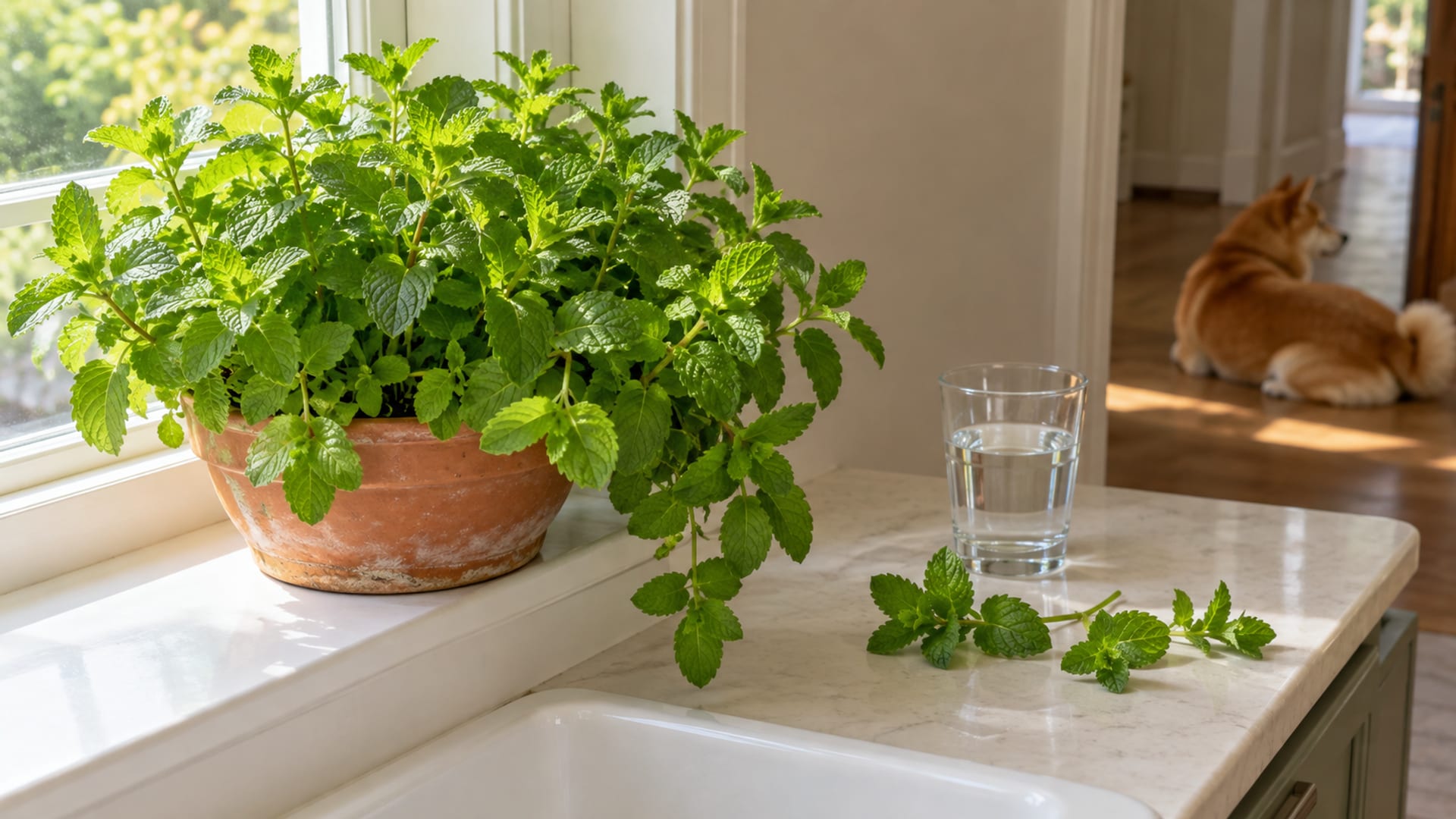
A few leaves of garden mint, spearmint or peppermint usually cause little more than an upset stomach. The ASPCA lists mint (*Mentha*) as toxic to dogs because of its essential oils, with vomiting and diarrhea after large amounts, so it belongs in the herb pot and out of the treat jar. The bigger worries share the name: sugar-free gum and breath mints, pennyroyal, and concentrated mint oils.
If your dog nibbled a sprig from the garden and is acting like themselves, move the plant out of reach and watch for vomiting or diarrhea for the rest of the day. If they got into a mint product, pennyroyal, an essential oil, a plant you cannot name, or a big mouthful of leaves, call your vet or a poison line now.
Key takeaways
Tap a card to bring it forward.
- A little garden mint usually means a mild stomach upset at most.
- The ASPCA lists mint as toxic to dogs in large amounts, so skip it as a treat.
- Sugar-free gum, breath mints and toothpaste may contain xylitol: call right away.
- Pennyroyal and mint essential oils are far more dangerous than the leaves.
- Check the plant tag or the product label before you decide it was only mint.
My dog ate mint: your next step
Tap or hover a row to highlight it.
| What your dog got into | What to do |
|---|---|
| What your dog got intoA few leaves of garden mint, spearmint or peppermint | What to doMove the plant and watch for vomiting or diarrhea today. |
| What your dog got intoA large amount of leaves, or dried mint | What to doCall your vet, especially for a small dog or a puppy. |
| What your dog got intoMint gum, breath mints, sugar-free candy, toothpaste or mouthwash | What to doRead the label for xylitol. If it is listed, or the label is gone, call now. |
| What your dog got intoPennyroyal, pennyroyal oil or any mint essential oil | What to doCall your vet or a poison line now, even if your dog seems fine. |
| What your dog got intoChocolate-mint cookies or candy | What to doCall about the chocolate; see can dogs eat chocolate. |
| What your dog got intoA plant you are not sure is mint | What to doTake a photo of it and call. |
When a mint product contains xylitol, Pet Poison Helpline says to seek veterinary care immediately. Before you dial, grab the package or photograph the plant, and note your dog's weight and roughly when it happened.
Whatever the source, go now if your dog is weak, wobbly, trembling, having a seizure, struggling to breathe or collapses.
Leaves, oils and mint products side by side
Tap or hover a row to highlight it.
| Form | Concern | Why |
|---|---|---|
| FormFresh garden mint, spearmint or peppermint leaves | ConcernLow for a few leaves | WhyEssential oils in the plant can cause vomiting and diarrhea in large amounts (ASPCA) |
| FormDried mint or mint tea | ConcernUnclear | WhyStrength varies, so skip it |
| FormMint or peppermint essential oil | ConcernHigh | WhyConcentrated, and can be swallowed or absorbed through the skin |
| FormPennyroyal plant or oil | ConcernVery high | WhyCan cause liver failure and death (Merck) |
| FormSugar-free gum, breath mints, toothpaste | ConcernCan be very high | WhyMay contain xylitol |
| FormChocolate-mint sweets | ConcernDepends on the chocolate | WhyChocolate carries its own poisoning risk |
Pet Poison Helpline explains that essential oils reach a dog by mouth or through the skin, and it names pennyroyal among the oils that poison dogs. Keep diffuser bottles, massage oils and natural pest sprays well out of reach.
Why pennyroyal is a different level of danger
Pennyroyal (*Mentha pulegium*, also sold as European pennyroyal or squaw mint) is a mint relative that the Merck Veterinary Manual names as a known liver toxin that can kill. Its oil contains pulegone, which the body turns into compounds that destroy liver tissue.
A case report in the *Journal of the American Veterinary Medical Association*, indexed on PubMed, describes a dog exposed to pennyroyal oil on the skin. It vomited within two hours and died within 48 hours. Pet Poison Helpline lists pennyroyal oil as toxic to both dogs and cats. If a herbal flea product or a garden plant tag says pennyroyal, keep it away from your dog, and call at once if they got into it.
Gum, breath mints and toothpaste
Most dogs meet mint in a purse, a pantry or a bathroom drawer, and Pet Poison Helpline points to those same spots. Some gum, breath mints, candy and toothpaste are sweetened with xylitol. According to the AKC, xylitol can drop a dog's blood sugar within 30 minutes to an hour and can lead to weakness, stumbling, tremors, seizures and liver damage.
The amount in one piece varies from brand to brand, so the label and your dog's size decide how serious it is. Call either way, and keep the pack in your hand while you talk.
Signs to watch for, by what they ate
- Garden mint leaves: vomiting or diarrhea. The ASPCA ties these to large amounts and gives no set timeline.
- A xylitol product: vomiting, weakness, wobbling, trembling, seizures or collapse, sometimes within the first hour.
- Pennyroyal or a mint essential oil: tiredness, vomiting or diarrhea, and later bleeding from the nose or mouth, seizures or signs of liver failure. Any of these means a trip to the vet now.
"My dog snacks on the mint patch every summer"
That can be true, and many dogs nose through an herb bed and nibble with no trouble at all. The ASPCA links mint's stomach upset to large amounts, and a dog that takes a leaf now and then may never get close. Your dog's summers are real. They just do not cover every dog or every plant. A small dog takes in more per pound from the same leaves. A patch sold as mint can include pennyroyal or a plant with a look-alike name. Dried or brewed mint is a different strength. And a dog that shrugs off leaves can still be poisoned by one stick of sugar-free gum. Knowing exactly which plant is in the bed is what keeps the next summer quiet.
Mint look-alikes and confusing names
- Catnip and catmint: *Nepeta* plants, a separate group from true mint. A minty name does not tell you the risk.
- American pennyroyal: some sources use this name for *Hedeoma pulegioides*, a different plant from European pennyroyal. Treat either one as pennyroyal until someone identifies it.
- Mexican mint, Cuban oregano, Spanish thyme: these names often mean *Plectranthus* or *Coleus* plants. Check the botanical name on the tag.
- Mint tea: could be plain mint, pennyroyal or a blend. Read the box.
- Thin Mints and chocolate-mint desserts: the chocolate is the main concern.
- Candy canes and peppermint candy: sugar, hard pieces and sometimes xylitol. See can dogs eat candy canes.
Check what you learned
Quick check
Questions about dogs and mint
Can dogs eat mint leaves?
A leaf or two is unlikely to do more than upset the stomach. There is no published safe amount, and the ASPCA lists mint as toxic in large amounts, so keep it off your dog's menu.
Is peppermint safe for dogs?
The peppermint plant is a true mint and falls under the same ASPCA listing. Peppermint oil is an essential oil, so call your vet if your dog licked or swallowed any.
Can mint freshen a dog's breath?
None of the veterinary sources on this page recommend mint leaves for a dog's breath. If bad breath is new or will not go away, ask your vet to take a look.
Can dogs drink mint tea?
Do not share it. Tea sold as mint may be plain mint, pennyroyal or a mix. If your dog lapped a little plain mint tea, watch for stomach upset. If the box lists pennyroyal, call now.
My dog ate toothpaste. What should I do?
Find the tube and check for xylitol. If it is listed or you cannot tell, call your vet or a poison line right away.
Is mint toxic to cats too?
Yes. The ASPCA lists mint as toxic to dogs, cats and horses, and Pet Poison Helpline includes peppermint oil and pennyroyal among the essential oils that can poison cats.
Sources
Checked September 25, 2026.
- ASPCA Animal Poison Control Center, Mint
- Pet Poison Helpline, Can Dogs Have Mint?
- Pet Poison Helpline, Essential Oils Are Toxic to Dogs
- Pet Poison Helpline, Pennyroyal Oil Is Toxic to Dogs
- Pet Poison Helpline, Updates on Essential Oils
- Merck Veterinary Manual, Herbal Medicine in Veterinary Patients
- American Kennel Club, What to Do if Your Dog Accidentally Eats Gum
- Sudekum and others, Journal of the American Veterinary Medical Association (1992), Pennyroyal oil toxicosis in a dog