

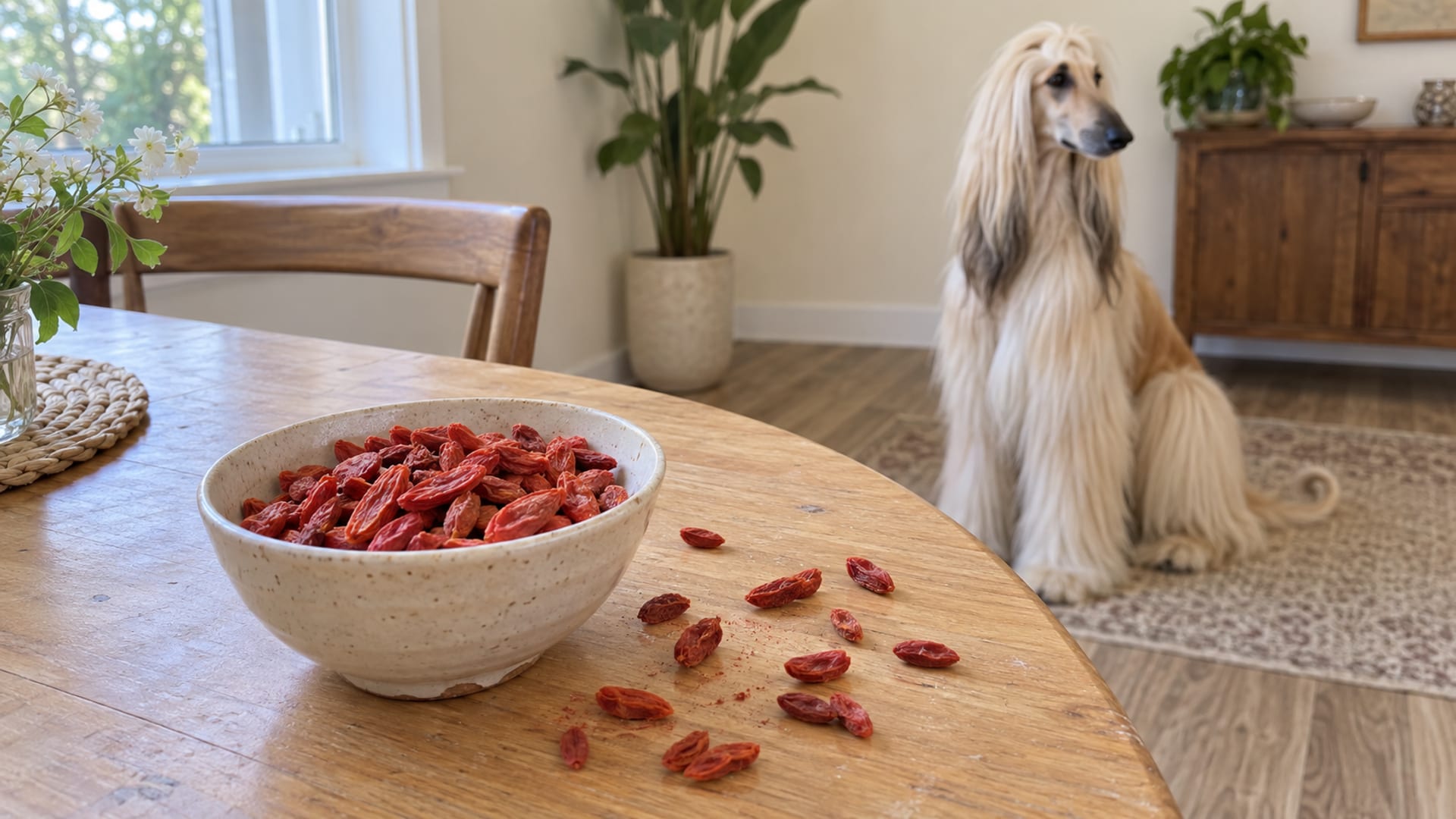
Yes. A small amount of plain goji berries, fresh or dried, is low risk for most dogs, and goji does not appear on the toxic plant list for dogs kept by the ASPCA or among the poisonous plants covered by the Merck Veterinary Manual. If your dog just helped itself, the first thing to check is what else was in the bag, because a trail mix or juice can carry raisins, grapes or grape juice alongside the goji.
If it was plain goji and your dog is acting like itself, keep the package, note roughly how many are missing, and keep an eye out for stomach upset over the next several hours. If it was a mix, a supplement, a berry from a plant nobody can name with certainty, or a big handful for a small dog, call your vet or an animal poison line now.
Key takeaways
Tap a card to bring it forward.
- Plain, identified goji fruit is low risk in small amounts, and neither the ASPCA nor the Merck Veterinary Manual lists goji as a plant poisonous to dogs.
- The real danger in mixed goji snacks is the rest of the recipe: raisins, grapes and grape juice are linked to kidney injury in dogs.
- Powders, extracts, teas and capsules are concentrated products, so treat them separately from a few whole berries.
- Leaves, stems, green unripe berries and any berry you cannot identify stay out of the treat jar.
- Trouble from plain goji usually looks like an upset stomach; choking, repeated vomiting or weakness means call right away.
If your dog just ate goji berries, start here
Most of what decides this situation is the product and the amount, so these steps are about gathering that information fast.
- Find the bag, bottle or plant. Read the full ingredient list on the back, since a vet or poison line will ask exactly what was in it.
- Decide whether it was plain goji or a blend. Plain dried goji is a much lower-stakes call than a trail mix. The Merck Veterinary Manual connects grapes and raisins with acute kidney injury in dogs, so raisins in the mix mean you call today even if your dog seems fine.
- Estimate how much and when. Count what is left and write down the time. The same number of berries is far more food per pound for a small dog than for a large one.
- Confirm the plant if it came from a yard or a walk. A common name or a phone app is not enough. Unless someone can confirm it was goji (*Lycium barbarum* or *Lycium chinense*), handle it as an unknown berry and call.
- Hold off on home treatment and watch your dog. A vet or poison-control team decides whether watching at home, an exam or treatment makes sense, and they need the details above to do it.
Call your vet or an animal poison line right away if any of these apply:
- The product contains grapes, raisins, grape juice, xylitol, chocolate, alcohol, caffeine or medication, or you cannot read the label.
- The berry or plant was never positively identified as food-grade goji.
- Your dog ate a large or unknown amount, especially a small dog.
- Your dog is choking, having trouble breathing, vomiting again and again, weak, collapsed, in pain, trembling or unusually sluggish.
- Vomiting or diarrhea keeps going, or your dog cannot keep water down.
The ASPCA Animal Poison Control Center advises contacting a vet or its poison line as soon as possible whenever you suspect a pet swallowed something potentially toxic. For a few clearly identified plain goji berries in a dog that is acting normally, an emergency call usually is not needed, though your vet can still advise on your particular dog.
Fresh, dried, juice or powder: how each form compares
Goji reaches dogs in more shapes than most fruit does, and each one carries a different set of questions.
Tap or hover a row to highlight it.
| Form | Where it stands for dogs | What to check |
|---|---|---|
| FormFresh ripe goji, identified | Where it stands for dogsLow risk in small amounts | What to checkRipe red fruit only; skip green berries |
| FormCooked goji | Where it stands for dogsDepends on the recipe | What to checkSugar, spices and every other ingredient |
| FormPlain dried goji | Where it stands for dogsLow risk, but easy to overdo | What to checkConcentrated sugar and calories |
| FormTrail mix or dried-fruit blend | Where it stands for dogsDepends on the whole mix | What to checkRaisins, grapes, chocolate, xylitol |
| FormGoji juice | Where it stands for dogsTreat as a mixed product | What to checkGrape juice, added sugar |
| FormPowder, extract, tea, capsules | Where it stands for dogsConcentrated, not ordinary fruit | What to checkAsk your vet before giving any |
| FormLeaves, stems, roots, bark | Where it stands for dogsKeep away from your dog | What to checkNot suitable as treats |
| FormGreen or unidentified berries | Where it stands for dogsTreat as unknown | What to checkCall your vet |
Dried goji is the form most people have in the pantry. Drying concentrates the sugar and calories, and small, chewy, seedy berries are easy to gulp by the dozen, which is where stomach upset and choking risk tend to come from.
Juice deserves a closer look at the label. The herbal safety fact sheet from the University of Texas at El Paso notes that goji juices may contain varying amounts of apple, grape or orange juice, and grape juice is the ingredient to rule out before you relax. The same source separates mature fruit from green fruit, which is why unripe berries from a garden shrub belong in the "call" column.
Powders, extracts, teas and capsules vary in strength and added ingredients, and nobody has set a safe amount for dogs. If your dog chewed into a supplement bottle, have the bottle with you when you call.
How to share a few goji berries with your dog
The safest approach is simply to keep it small. Offer a few plain, food-grade berries as an occasional treat, with nothing added: no sweeteners, spices, yogurt coating or supplement powder. Try goji on its own the first time, rather than alongside another new food, so you can tell what caused any upset.
Fresh or rehydrated berries are gentler than dry ones straight from the bag, and handing them over one at a time keeps a dog from bolting a pile.
Dogs with diabetes, obesity, pancreatitis, food sensitivities, ongoing bowel trouble or kidney disease should get a vet's opinion first, because the sugar and calories in dried fruit and juice can matter for them.
Goji is often sold as a superfood, and the fruit does contain polysaccharides, carotenoids and betaine. Dog studies of those compounds, such as a lab study in kenneled poodles published on PubMed Central, used purified extracts at research doses, which says little about a pet eating a few berries. Share goji because your dog enjoys it.
Signs to watch for after goji berries
When plain goji causes a problem, it usually looks like a stomach that did not appreciate the snack. Watch for:
- vomiting or diarrhea
- gas or a tender, uncomfortable belly
- less interest in food
- low energy
Signs like these from simple stomach upset would generally show up within hours. Most mild cases settle, but call your vet if vomiting or diarrhea keeps going or your dog cannot hold down water.
Choking and blockage look different and happen fast, either right away or soon after swallowing. Gagging, coughing, trouble breathing, vomiting over and over, belly pain or straining without passing stool all need a call immediately.
If the goji came in a mix that also held raisins or grapes, a quiet first few hours does not settle the question. The Merck Veterinary Manual describes kidney injury from grapes and raisins that can develop later, and Pet Poison Helpline lists trail mix and juice among the grape and raisin products that can be hazardous. Our entry on grapes and raisins covers what to expect in that case.
My dog ate goji berries before and was fine
That happened, and it is good news for that day. Plenty of dogs eat a few goji berries and never show a single sign. It still does not make a rule for the next time or for another dog, and the reasons are practical ones.
- Amount. A few berries may cause nothing; a whole bag can bring on vomiting or diarrhea.
- Size. A handful is a small snack for a large dog and a big share of a small dog's day.
- Form. Fresh fruit behaves differently from dried fruit, juice, powder or a mix.
- Identity. The berry from the hedge this time may be a different plant.
- The individual dog. Stomachs differ in how they handle new foods.
- Timing. Feeling fine right away does not rule out a later problem from grapes or raisins in a mix.
So, treat each snack on its own facts: what the product was, how much went down, and how your dog is doing now.
Trail mixes, wolfberries and other names for goji
Goji goes by several names, and a few of them overlap with other plants. The fact sheet from Texas A&M AgriLife lists common names such as wolfberry, Barbary wolfberry, matrimony vine and Chinese boxthorn, and the review in Frontiers in Veterinary Science describes goji as the fruit of *Lycium barbarum* and related *Lycium* species.
- Wolfberry does not guarantee a species, so check the botanical name or a reputable food label.
- Black goji may be a different *Lycium* species or product, and this page does not automatically apply to it.
- Matrimony vine can mean more than one plant by region, so a garden shrub needs positive identification.
- Trail mix and "superfood" blends often pair goji with raisins, dried cranberries or chocolate. Look for raisins first.
- Goji tea blends can include regular tea leaves, which bring caffeine; see the tea entry.
- Other berries from the same aisle, like açaí berries and blueberries, have their own entries, and wild elderberries are a separate question.
Check what you learned
A quick way to test whether the key points stuck.
Quick check
Questions about dogs and goji berries
These cover the situations the sections above did not.
Can puppies eat goji berries?
Goji is not known to affect puppies differently from adult dogs. Puppies do tend to chew and swallow things quickly, though, and their small bodies mean each berry counts for more. If you share, give one soft, plain berry and keep the bag well out of reach.
Should I soak dried goji berries before giving them?
It helps. Rehydrated berries are softer and less concentrated, which makes them harder to gulp by the mouthful. Use plain water only.
Can I give my dog a goji supplement or powder?
Ask your vet first. Supplement strength and added ingredients vary, the products can interact with medications, and no safe amount for dogs has been set. A few plain berries are a much simpler way to share goji if your dog likes the taste.
Is cooked goji safe for dogs?
Ordinary cooking does not make goji harmful to dogs. What matters is what else went into the pot, since sugar, spices and other ingredients in a recipe can be the real problem. Share only plain cooked berries picked out of a dish with no risky ingredients.
Sources
Checked September 25, 2026.
- ASPCA, Toxic and Non-Toxic Plant List, Dogs
- ASPCA, Animal Poison Control Center
- Merck Veterinary Manual, Plants Poisonous to Animals
- Merck Veterinary Manual, Grape, Raisin, and Tamarind Toxicosis in Dogs
- Pet Poison Helpline, Are Grapes and Raisins Poisonous to Dogs?
- University of Texas at El Paso, Goji
- PubMed Central, Cognitive Improvement and Microbiota-Gut-Brain Axis Regulation by Lycium barbarum Polysaccharides and Glycopeptide in Laboratory-Kenneled Poodles
- Texas A&M AgriLife, Goji, Specialty Crops Fact Sheet
- Frontiers in Veterinary Science, Goji Berries Supplementation in the Diet of Rabbits and Other Livestock Animals