

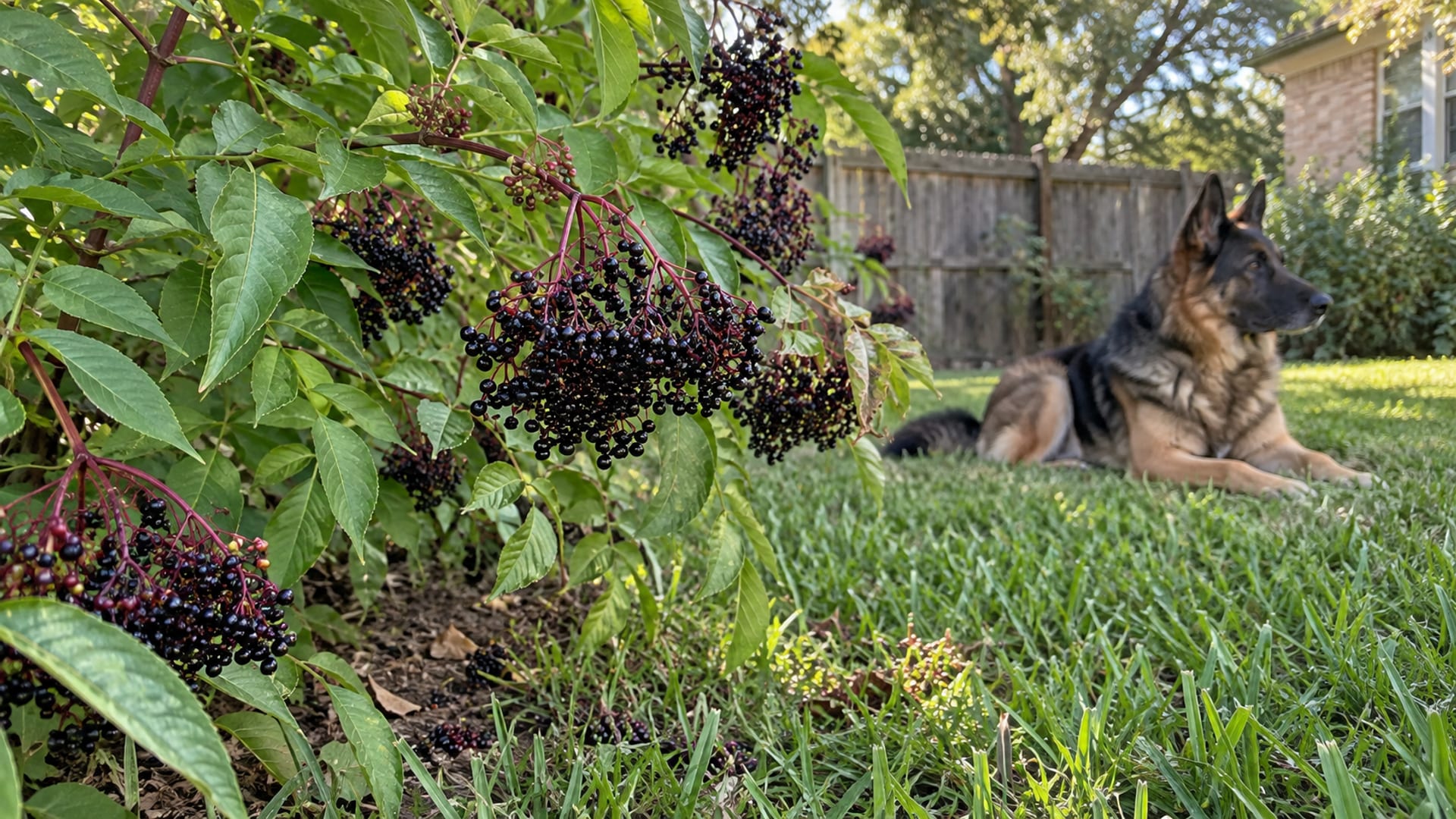
Elderberries are best kept away from your dog. A few ripe berries usually cause nothing worse than vomiting or diarrhea, but the plant contains cyanogenic glycosides, compounds that can release cyanide, and Pet Poison Helpline finds them in both the berries and the foliage. Leaves, stems, bark, roots, green berries and red elderberries carry the most risk.
If your dog ate a few ripe berries off a bush and is acting normally, keep them away from the shrub and watch for vomiting, diarrhea or low energy for the rest of the day. If they ate leaves or stems, unripe or red berries, a large number, or a concentrated product such as dried berries, powder or an extract, call your vet or a poison line now.
Key takeaways
Tap a card to bring it forward.
- A few ripe elderberries usually cause, at most, an upset stomach.
- Leaves, stems, bark, roots and unripe berries carry more cyanide-releasing compounds.
- Red elderberry is a separate species and needs more caution than black or blue.
- No safe number of berries has been published for dogs.
- Human elderberry syrups, gummies and supplements are not meant for dogs.
My dog ate elderberries: what to do now
Tap or hover a row to highlight it.
| What your dog ate | What to do |
|---|---|
| What your dog ateA few ripe black or blue berries | What to doMove your dog away from the bush and watch for vomiting, diarrhea or tiredness today. |
| What your dog ateA lot of ripe berries | What to doCall your vet, especially for a small dog. |
| What your dog ateLeaves, stems, twigs, bark or roots | What to doCall your vet or a poison line now. |
| What your dog ateGreen, unripe berries or red elderberries | What to doCall your vet or a poison line now. |
| What your dog ateDried berries, powder, capsules or an extract | What to doCall now with the package in hand. |
| What your dog ateElderberry syrup, gummies, juice or wine | What to doRead the label for alcohol, sweeteners and other herbs, then call. |
| What your dog ateBerries from a bush you cannot identify | What to doTake a photo of the plant and call. |
The ASPCA advises contacting your vet or a poison control center right away after a possible toxic ingestion, even when your pet shows no signs yet. Have your dog's weight, what part of the plant they ate, a rough count, and the time ready. Snap a photo of the shrub or grab a sprig in a bag, since the species matters.
Go to a vet now if your dog is breathing fast or hard, has blue or grayish gums, seems weak or wobbly, collapses or has a seizure.
Which parts of the elder plant matter most
Tap or hover a row to highlight it.
| Part or form | Concern | Why |
|---|---|---|
| Part or formRipe black or blue berries, a few | ConcernLow | WhyUsually stomach upset at most (Pet Poison Helpline) |
| Part or formCooked berries, juice or tea | ConcernLow | WhyHeat breaks down the compounds, but products can add sugar, alcohol or herbs |
| Part or formRaw berries in quantity | ConcernModerate | WhyMore cyanide-releasing compounds and more stomach upset |
| Part or formUnripe green berries | ConcernHigher | WhyHold more of the compounds than ripe fruit |
| Part or formRed elderberries | ConcernHigher | WhyA different species, toxic when raw |
| Part or formLeaves, stems, twigs, bark and roots | ConcernHigher | WhyContain cyanogenic glycosides |
| Part or formDried berries, powders, capsules and extracts | ConcernUnknown | WhyStrength and ingredients vary |
The Merck Veterinary Manual lists black elderberry (*Sambucus nigra*) among the plants of veterinary concern that contain cyanogenic glycosides. A Pet Poison Helpline plant handout rates fresh berries and foliage as a low risk for cyanide poisoning and a moderate risk for vomiting and diarrhea, and it expects no toxicity from cooked berries, juice or tea.
How elderberry can make a dog sick
When the plant is chewed and digested, its cyanogenic glycosides, mainly one called sambunigrin, can release hydrogen cyanide. Cyanide stops the body's cells from using oxygen. Other compounds in the plant irritate the stomach and gut, which is where the vomiting and diarrhea come from.
Merck notes in its guide to plants toxic to animals that severe cyanide poisoning from these plants is uncommon unless an animal eats a large amount. How much a given bush holds depends on the species, how ripe the berries are, which part was eaten, and whether it was cooked, which is why no one can turn a berry count into a safe number.
Signs to watch for
- Most common: vomiting, diarrhea, belly discomfort, not wanting to eat, tiredness.
- Call your vet: weakness, stumbling, or vomiting and diarrhea that keep going.
- Go now: fast or labored breathing, blue or gray gums, a racing or irregular heartbeat, seizures, collapse.
Timing varies from dog to dog. Cyanide can act quickly after a large exposure, while a mild stomach upset may pass on its own over the day.
"My dog eats elderberries off the bush every fall"
Some dogs do exactly that and never have a problem, and if yours is one of them, that is real. Pet Poison Helpline itself describes a few berries as low risk. It just does not carry over to every dog, every bush or every autumn. A small dog takes in more per pound from the same handful. Cooking lowers the risk, while raw, green or leafy material raises it. Red and black elderberries are different species with different levels of these compounds. One fall a dog might nose into a fresh cutting of leaves and stems instead of fallen fruit. And early vomiting or tiredness can be easy to miss outdoors. Knowing which elder is in your yard, and keeping your dog off the leaves, is what protects the next season.
Syrups, supplements and look-alike berries
- Elderberry syrup and gummies: made for people, and may contain sugar, alcohol, other herbs or a concentrated extract. Do not give them to your dog, and call if they got into the bottle.
- Elderberry wine: contains alcohol, which is a separate danger.
- Elderflower cordial and tea: made from the flowers, not the berries. Check the label for alcohol, sugar and other ingredients.
- Red elderberry (*Sambucus racemosa*): red clusters in place of dark purple. University of Virginia researchers flag it as the species to be careful with.
- Other dark yard berries: pokeweed, nightshade, yew and nandina berries are different plants with their own risks. A photo helps your vet.
- Safer berries: blackberries are fine in small amounts; see can dogs eat blackberries. Grapes and raisins can cause kidney failure; see can dogs eat grapes.
Common elderberry fruits from about July through October, according to the University of Virginia, so late summer and fall are when dogs are most likely to find it in a yard or along a trail.
Check what you learned
Quick check
Questions about dogs and elderberries
Can my dog eat one elderberry?
One ripe berry is unlikely to cause cyanide poisoning. No safe amount has been published for dogs, though, so keep them off the bush and call if the species or form is unclear.
What if my dog ate elderberry leaves or stems?
Call your vet or a poison line promptly. The foliage and woody parts contain cyanogenic glycosides and are a bigger concern than a few ripe berries.
Are cooked elderberries safe for dogs?
Cooking lowers the risk, and Pet Poison Helpline's handout expects no toxicity from cooked berries, juice or tea. Store-bought jams and syrups can still add sugar, alcohol or other herbs, so they are not a treat.
Can I give my dog elderberry syrup for immunity?
Skip it, and human syrups can contain alcohol, sweeteners or other herbs. Ask your vet before giving your dog any supplement.
Are elderberries toxic to cats?
Yes. Pet Poison Helpline's plant handout lists fresh elderberries and foliage as a risk for cats as well as dogs, mostly for vomiting and diarrhea.
Sources
Checked September 25, 2026.
- Pet Poison Helpline, Is Elderberry Safe for Dogs?
- Pet Poison Helpline, Toxic Plants handout
- Merck Veterinary Manual, Cyanogenic Glycoside-Containing Plants of Veterinary Importance
- Merck Veterinary Manual, Houseplants and Ornamentals Toxic to Animals
- ASPCA Animal Poison Control Center, My Pet Ate Something! When Should I Seek Help?
- University of Virginia, Blandy Experimental Farm, Common Elderberry