

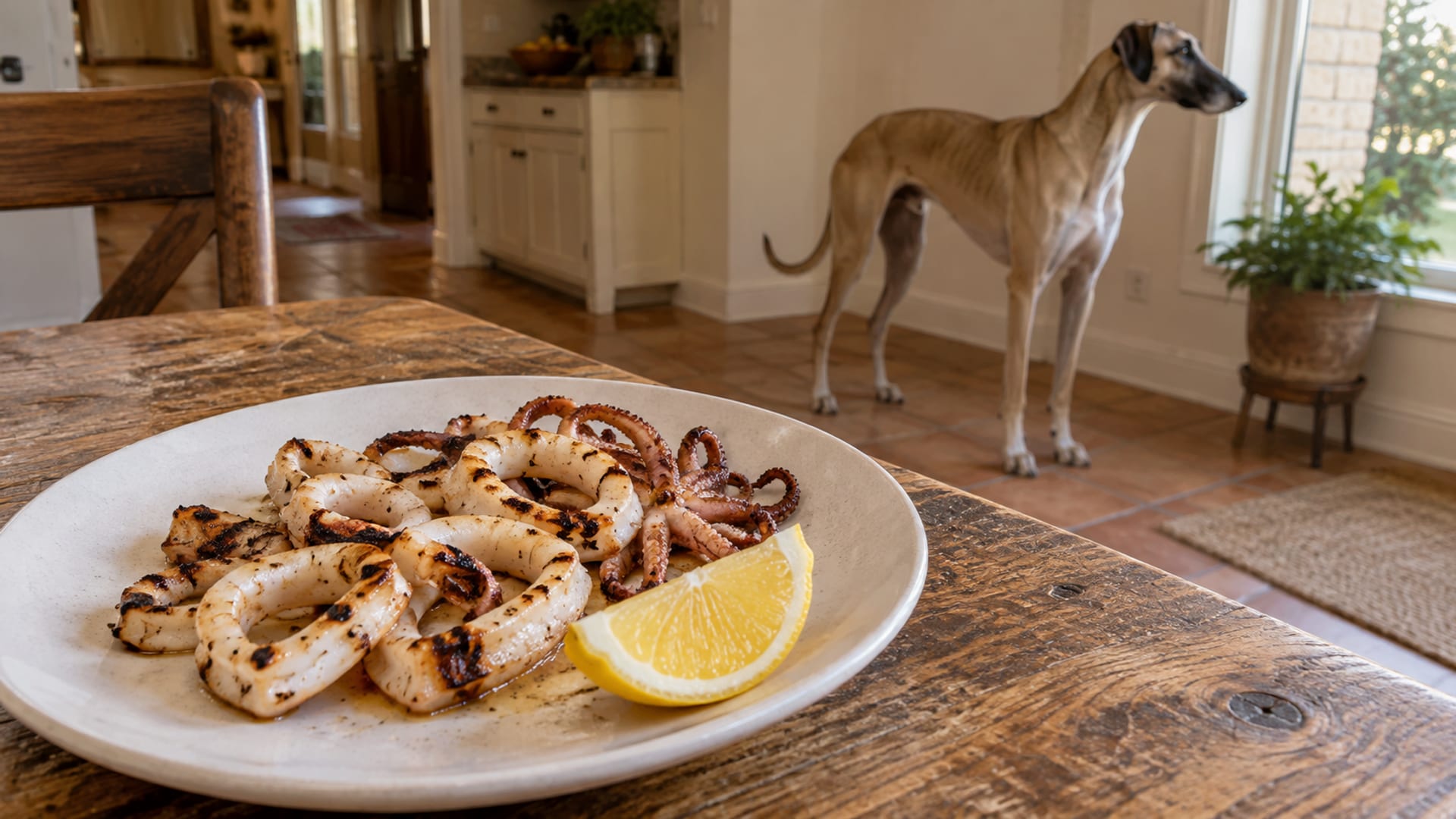
Yes, in small amounts. Plain, fully cooked squid is not known to be toxic to dogs, and a small piece is fine for a healthy dog, while raw, fried, breaded, salted or sauced calamari and big rubbery chunks each bring their own risks. If your dog already ate some, what decides your next move is how it was cooked, how much went down, and whether a skewer, toothpick or other hard piece went with it.
A fried ring off an appetizer plate, a strip of raw squid from the cutting board and a mouthful of dried squid from a snack bag each call for something different. I'll start with what to do right now.
Key takeaways
Tap a card to bring it forward.
- Plain, fully cooked squid, cooled and cut small, is fine as an occasional treat for a healthy dog.
- Raw or undercooked squid can carry parasites and germs, so call your vet if your dog ate raw or spoiled seafood.
- Fried, breaded and sauced calamari adds fat and seasonings that can upset the stomach or set off pancreatitis.
- Get help right away for choking, trouble breathing, repeated vomiting, belly pain or a swallowed skewer.
- Squid is rubbery, so cut it small, especially for a small dog.
What to do if your dog just ate calamari
Start with the dog in front of you, then work out what was on the plate. Each step comes with the reason it matters.
- Check breathing and swallowing first. Coughing, gagging, pawing at the mouth or struggling to breathe points to a piece stuck in the throat, and that needs a vet or emergency clinic right away. The American Kennel Club tells owners to contact a vet whenever they suspect a blockage.
- Figure out how it was prepared. Plain grilled or boiled squid is the mildest case. Raw squid, old leftovers, fried rings, and anything cooked with onion, garlic or a sauce change the risk, so check the recipe, menu or package.
- Estimate how much went down. One ring for a Labrador is a very different meal from a plateful for a Chihuahua, and the vet will ask about both the amount and your dog's weight.
- Look for the hard extras. Skewers, toothpicks, the squid's beak, cartilage and packaging can cause choking or a blockage further down. If any of those went missing, call your vet now.
- Think about your dog's health history. A dog that has had pancreatitis, or has diabetes or high blood fats, has less room for a greasy meal. The Merck Veterinary Manual names eating the wrong food and very high triglycerides among the risk factors for pancreatitis in dogs.
- Skip the home remedies. Pet Poison Helpline warns against home antidotes and against inducing vomiting unless a vet or the helpline tells you to.
- Call your vet for the risky cases, even if your dog seems fine. Raw or spoiled seafood, a large helping of fried or salted calamari, a dish with unknown ingredients, or a swallowed skewer, beak or wrapper deserve a prompt call. The ASPCA advises against waiting for symptoms when a harmful exposure is possible, because some effects show up later.
For a small bite of plain cooked squid and a dog acting normally, watching at home is usually enough.
Which kinds of calamari are fine and which to skip
The cooking, the add-ons and the size of the piece change the risk far more than the squid itself.
Tap or hover a row to highlight it.
| Form | For your dog | Why |
|---|---|---|
| FormPlain grilled, boiled or baked squid | For your dogFine in small pieces | WhyFully cooked, with no added fat or seasoning |
| FormFried rings and tentacles | For your dogSkip it | WhyBatter, oil and salt can upset the stomach and add pancreatitis risk |
| FormSalt and pepper squid, garlicky or sauced dishes | For your dogSkip it | WhySalt, onion, garlic and rich sauces carry their own risks |
| FormRaw or undercooked squid | For your dogKeep it away | WhyCan carry parasites and germs |
| FormDried squid and squid jerky | For your dogSkip it | WhyConcentrated, very chewy and often heavily salted |
| FormCanned, marinated or stuffed calamari | For your dogRead the label first | WhyFillings and liquids may contain onion, garlic, salt or alcohol |
| FormSquid ink dishes | For your dogJudge the whole dish | WhyThe sauce may carry garlic, onion, salt or wine |
| FormBeak, cartilage, skewers, toothpicks | For your dogNever | WhyChoking or blockage risk |
Fried calamari is the version most dogs end up with. The squid under the batter is not toxic, but the Merck Veterinary Manual lists dietary indiscretion, a dog eating food it does not normally get, as a common trigger for pancreatitis, and a pile of fried rings fits that description. Dipping sauces can add more fat and garlic. If garlic or onion was part of the dish, our garlic and onions entries cover those ingredients on their own.
Raw squid is the one to take seriously. The CDC lists raw or undercooked squid among the foods that can pass Anisakis worms to people, and the FDA warns that raw seafood can carry parasites and germs. Full cooking deals with that.
Dried squid and squid jerky are dense, tough and usually salty, and a dog tends to gulp a chewy strip. Keep them out of reach.
How to share calamari with your dog
If you want to give your dog a taste, keep it small and keep it plain. Set one piece aside before any batter, oil, salt, garlic or sauce goes near it.
- Cook it all the way through, as the FDA advises for seafood in general.
- Let it cool. Hot squid can burn a mouth.
- Cut it small. Squid stays rubbery even when cooked well. Pieces should be small enough that your dog cannot swallow one whole and get it stuck.
- Take out anything hard. Remove the beak, any cartilage, and every skewer or toothpick.
- Keep it occasional. The American Kennel Club treats people food as something to give in moderation, on top of your dog's regular, complete diet.
If your dog has had pancreatitis, has diabetes or high triglycerides, or eats a prescription diet, ask your vet before sharing any seafood.
Signs to watch for over the next day or two
The signs worth knowing depend on what your dog ate.
- Choking shows up right away: coughing, gagging, trouble breathing, pawing at the mouth or collapse.
- An upset stomach from a rich or oversized portion usually appears within hours as vomiting, diarrhea, belly discomfort, a poor appetite or low energy.
- Food poisoning from raw or spoiled squid can bring vomiting, diarrhea, belly pain, fever, tiredness and dehydration. How soon it starts varies with the germ and the food.
- Pancreatitis after a high-fat meal can cause vomiting, belly pain, refusal to eat, lethargy and sometimes diarrhea. The Merck Veterinary Manual notes it can turn severe, and its timing is hard to predict, so a dog that seemed fine at dinner can be sick later.
- A food allergy can show as itching, hives, a swollen face, vomiting, diarrhea or trouble breathing. Reactions to food vary from dog to dog, according to the Merck Veterinary Manual's page on food allergy.
Seizures, collapse, marked weakness or a swollen face also mean a vet visit right away. A dog that vomits once and then acts normal can be watched, but call if it happens again or your dog stops eating.
My dog ate calamari before and was fine
That happened, and I believe it. Plenty of dogs have eaten a fried ring off the floor and gone on with their day. It still does not make every form of calamari safe for every dog.
One ring carries far less fat, salt and batter than half a platter. The dog's size matters in the same way, since the same chunk of squid is a bigger mouthful for a small dog. The form matters too: plain cooked squid, raw squid, old leftovers and salty dried squid are not the same food.
Dogs also differ from each other. Pet Poison Helpline asks about species, breed, age, weight, medical history, the amount and the timing for exactly that reason. Sensitivity to a food varies from one dog to the next, and not every portion of raw seafood carries the same germs. Some problems, like pancreatitis, also appear later rather than at the table. Your dog's good experience was real; it just tells you about that dog, that day and that plate.
Calamari dishes, squid snacks and other names for it
Calamari and squid are the same animal on a menu; the preparation behind each name is what changes.
- Calamari rings may be whole squid cut into rings or formed, processed seafood. The ingredient list tells you which.
- Calamari salad, calamari steak, stuffed calamari and calamari in ink come with dressings, fillings or sauces that may add salt, fat, onion and garlic.
- Squid ink is an ingredient added to sauces and pasta, so judge the dish it came in.
- Calamari-flavored dog treats may contain salt, garlic, onion, preservatives or other seafood, so check what is actually in the bag.
- Spanish menu names such as calamares, rabas, chipirones, puntillas and chopitos usually mean squid, often small and fried; pota is a related animal sometimes sold as squid.
Check what you learned
A quick check on what to do if your dog grabs some calamari.
Quick check
Questions about dogs and calamari
Other questions owners often ask about dogs and calamari.
Can puppies eat calamari?
Puppies can have the same small taste of plain cooked squid as adult dogs, cut even smaller. Their size leaves less room for a chewy piece, and puppies tend to swallow things whole, so choking and blockage are the bigger concern. Skip fried and seasoned calamari entirely.
My dog swallowed a calamari skewer or toothpick. What now?
Call your vet now, even if your dog seems comfortable. A pick can lodge in the throat or block the gut further along, and the American Kennel Club advises contacting a vet for any suspected obstruction.
What should I tell the vet when I call?
Give your dog's age, breed, weight and any health problems, what kind of calamari it was, roughly how much, and when it happened. Pet Poison Helpline uses those same details to judge how serious an exposure is. Have the package, menu or recipe handy if you can.
Is calamari safe for cats too?
The same rules apply to cats: no raw or spoiled squid, no fried or salty versions, and no dishes with onion or garlic. A tiny piece of plain cooked squid, cut small, carries the same low risk.
Sources
Checked September 25, 2026.
- U.S. Food and Drug Administration, Selecting and Serving Fresh and Frozen Seafood Safely
- Centers for Disease Control and Prevention, About Anisakiasis
- Merck Veterinary Manual, Pancreatitis in Dogs and Cats
- Merck Veterinary Manual, Cutaneous Food Allergy in Animals
- American Kennel Club, People Foods Dogs Can and Can't Eat
- American Kennel Club, Summer Barbecue and Grilling Safety Tips for Dog Owners
- ASPCA, What to Do if Your Pet Is Poisoned
- Pet Poison Helpline, Emergency Instructions for Pet Poisoning
- Pet Poison Helpline, What to Expect When You Call