

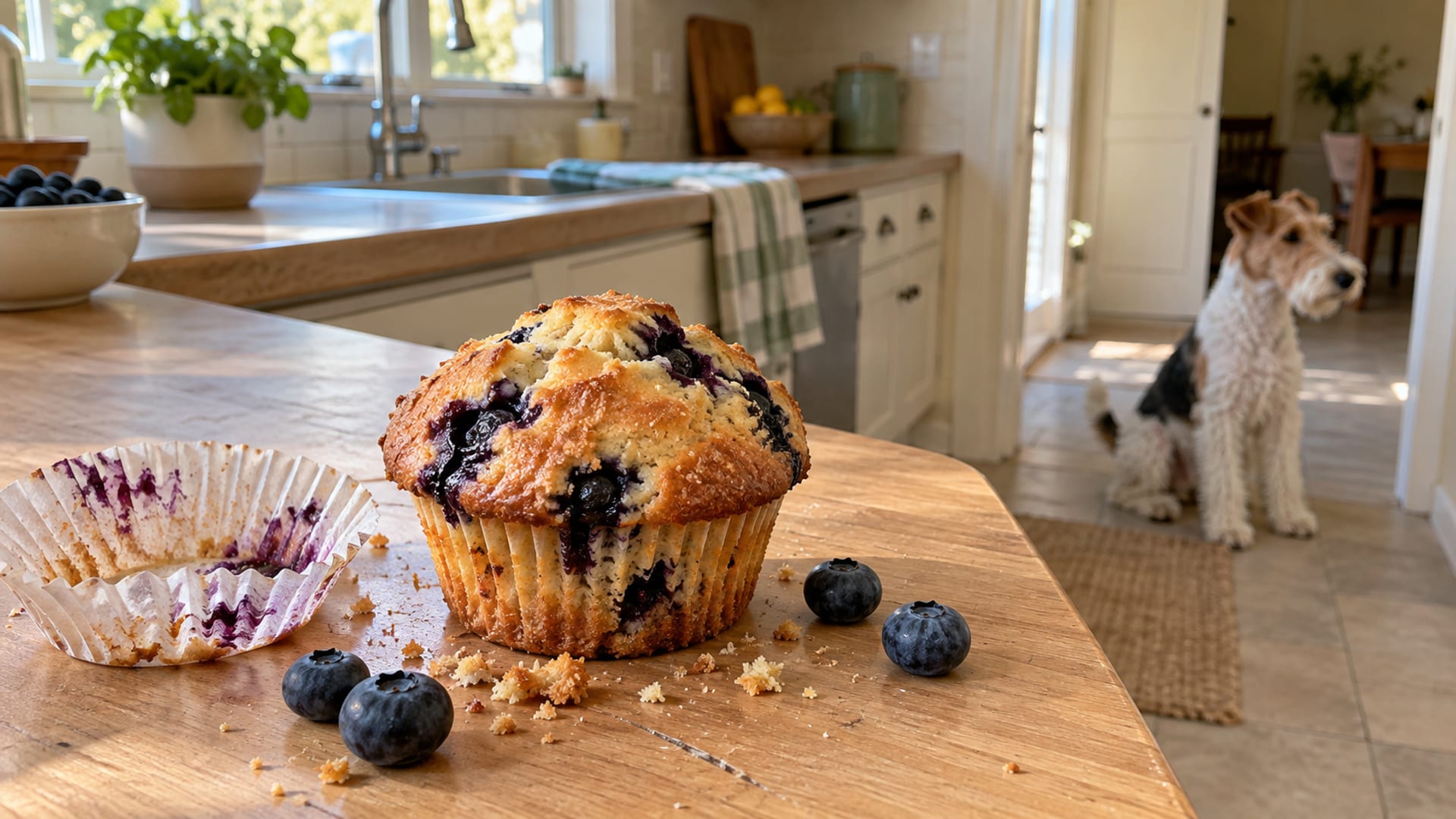
With caution. A small piece of plain blueberry muffin is not toxic to dogs, although the sugar and fat can upset some stomachs. The rest of the recipe decides everything else: raisins, grapes, Zante currants, xylitol in sugar-free or keto muffins, chocolate, alcohol or mold turn a stolen snack into a call to your vet right now.
If your dog just grabbed one off the counter, out of a lunch bag or from a bakery box, find the label or the recipe first. A plain muffin with none of those ingredients usually means watching for vomiting or diarrhea at home. A muffin that had any of them, or one you cannot identify, means calling now, even if your dog is acting completely normal.
Key takeaways
Tap a card to bring it forward.
- A little plain blueberry muffin is not toxic, though sugar and fat can cause vomiting or diarrhea.
- Raisins, grapes, Zante currants, xylitol, chocolate, macadamia nuts, alcohol or mold in the muffin make it urgent.
- Sugar-free, keto and low-carb muffins may contain xylitol, which also goes by birch sugar or wood sugar.
- A dog who seems fine has not been cleared yet: xylitol can drop blood sugar within an hour, and raisin kidney damage can take a day or more to show.
- Washed plain blueberries are the easier way to share the fruit.
What to do if your dog already ate a blueberry muffin
Four facts sort out what happens next: what was in the muffin, how much is gone, your dog's size, and when it happened. If it were my dog, I would work through them in this order.
- Find the ingredient list. Check the package, the bakery label or the recipe card. It is the quickest way to tell an ordinary muffin from one with a hidden hazard.
- Scan for the ingredients that make it urgent. Look for raisins, grapes, Zante currants, xylitol (also listed as birch sugar or wood sugar), chocolate or cocoa, macadamia nuts and alcohol, and check the leftovers for mold. The FDA names baked goods, muffins included, among the products that can hold xylitol.
- Work out how much is gone, and note the time. Whoever you call will compare the amount with your dog's weight. The time matters because xylitol can drop blood sugar within the hour.
- Call right away if any of those ingredients were in it, or you cannot tell. The ASPCA advises contacting your veterinarian or Animal Poison Control immediately whenever you suspect your pet ate something poisonous. Waiting for signs does not help, because xylitol and raisin problems can both show up late.
- If it was plain and only a small amount, watch at home. Veterinary sources do not treat a small bite of a plain muffin as a poisoning emergency; the likely trouble is vomiting, diarrhea or a sore belly. If the paper liner went down too, mention it to your vet as a separate question.
Which muffins and blueberry forms are fine, and which are not
The AKC says dogs can have fresh or frozen blueberries in moderation, washed first, with the caution that whole berries can be a choking risk for small dogs. Baked into a muffin, the berries stay fine, but the heat does nothing for the other ingredients.
Tap or hover a row to highlight it.
| Form | What to know |
|---|---|
| FormFresh or frozen blueberries | What to knowFine in moderation when washed; whole berries can choke a small dog |
| FormPlain blueberry muffin, small piece | What to knowNot toxic; sugar and fat can upset the stomach |
| FormMuffin top or crust | What to knowCan hold more fat, sugar, salt or butter than the center |
| FormDried blueberries | What to knowRead the label; some add sugar, raisins, grapes, xylitol or chocolate |
| FormBlueberry juice or powder | What to knowPure forms are not known to be toxic; mixes may contain grape juice or xylitol |
| FormSugar-free, keto or low-carb muffin | What to knowCheck for xylitol; if it is listed or you cannot tell, call now |
| FormMuffin with raisins, grapes or Zante currants | What to knowCall now; these can injure the kidneys |
| FormChocolate blueberry muffin | What to knowCall now; cocoa carries theobromine and caffeine |
| FormMoldy muffin | What to knowCall now; molds can produce toxins called mycotoxins |
Sharing a piece, and how much of a risky ingredient is too much
If you want to share the fruit, plain washed blueberries are the easier route. The AKC suggests treats of any kind stay under 10% of your dog's daily diet.
A muffin works best as an occasional small plain piece. Before you hand it over, confirm the recipe has no raisins, grapes, Zante currants, xylitol, chocolate, macadamia nuts or alcohol, and that nothing looks moldy. If your dog has diabetes, pancreatitis, obesity or kidney disease, sugary and fatty human food is a poorer fit, so ask your vet first.
Published figures exist for some of the risky ingredients:
Tap or hover a row to highlight it.
| Ingredient | Figure | Source |
|---|---|---|
| IngredientXylitol | FigureAbout 0.1 g per kg of body weight can cause low blood sugar | SourcePet Poison Helpline |
| IngredientXylitol | FigureAbout 0.5 g per kg can cause liver damage | SourcePet Poison Helpline |
| IngredientRaisins | FigureKidney injury reported at doses as low as 2.8 g per kg | SourceEubig et al. |
| IngredientGrapes or raisins | FigureMore than one per 4.5 kg of body weight may carry enough tartaric acid to risk the kidneys | SourceMerck Veterinary Manual |
| IngredientGrapes | FigureLowest reported dose tied to kidney injury: 19.6 g per kg | SourceEubig et al. |
The xylitol figures come from Pet Poison Helpline and the grape and raisin doses from a case series by Eubig and colleagues. None of them marks a safe amount. Xylitol concentrations vary by product, and Cornell University's College of Veterinary Medicine notes that the exact toxic dose of grapes and raisins is unknown because dogs differ in sensitivity. The practical step is the phone call: give your dog's weight, the amount eaten and the product name, and let the vet or poison line run the numbers.
Signs to watch for and when they show up
What you might see depends on what was in the muffin.
A plain muffin. Expect vomiting, diarrhea, some belly discomfort or nothing at all. Call your vet for repeated vomiting, severe or lasting diarrhea, weakness, wobbling, unusual sleepiness, pain, trembling, collapse, seizures, heavy drinking or urinating, or no urine at all.
A muffin with xylitol. The FDA explains that xylitol triggers a rush of insulin that drops a dog's blood sugar. Vomiting may come first. Low blood sugar can begin within 10 to 60 minutes, although serious effects can be delayed as long as 12 to 24 hours. Watch for weakness, staggering, poor coordination, collapse and seizures. Liver injury may only become clear later.
A muffin with raisins, grapes or Zante currants. According to the Merck Veterinary Manual, vomiting or diarrhea commonly starts within 6 to 12 hours. Tiredness, loss of appetite, belly pain, dehydration, extra thirst, weakness and tremors can follow. Kidney failure, with little or no urine, can develop within 24 to 72 hours, and once urine stops, death or euthanasia is common. That timeline is the reason to call before any signs appear.
A chocolate muffin. The ASPCA lists theobromine and caffeine in chocolate as causes of stomach, heart and nervous system problems in dogs.
Depending on the ingredient and amount, treatment may include blood sugar and liver checks, clearing the stomach, IV fluids or a hospital stay.
My dog ate a muffin before and was fine
Plenty of dogs have cleaned up a dropped muffin and gone on with their day, and if yours did, that really happened. It just does not carry over to the next muffin or dog.
That muffin may have been plain, with no raisins or xylitol in it. Your dog may have eaten only a few bites, or may be big enough that the amount barely registered per kilogram. The Merck Veterinary Manual describes the effects of grapes and raisins as variable: some dogs show no signs after an exposure while others become seriously ill after a small one. Some problems also arrive late.
A good outcome last time tells you about that muffin on that day. For tonight's muffin, the label is still the thing to check.
Muffin look-alikes and labels that change the answer
A few names and products cause most of the mix-ups.
- Currants. Zante currants are small dried grapes and count the same as raisins. True currants come from a different plant group, *Ribes*, which the Merck Veterinary Manual does not tie to kidney injury. Treat an unclear "currant" as a raisin and call.
- Mixed berry muffins. Blueberries and grapes and raisins can end up in the same product. Read the whole ingredient list.
- Sugar-free, keto, low-carb or diabetic-friendly muffins. These are where xylitol tends to hide, sometimes listed as birch sugar or wood sugar.
- Chocolate chip or double chocolate blueberry muffins. The cocoa brings theobromine and caffeine along with the berries.
- Blueberry cannabis edibles. These may contain THC, a different poisoning concern from a regular muffin. Call your vet.
- Cupcakes, blueberry bread, loaves, scones and store brands. Judge each recipe the same way, and check the current label, since recipes change.
Check what you learned
Three quick questions on what matters most.
Quick check
Questions about dogs and blueberry muffins
These tend to come up once the first worry has passed.
What will the vet or poison line ask when I call?
Expect questions about the exact product, the ingredients, how much your dog ate, your dog's weight and when it happened. Keep the wrapper, box or recipe next to the phone so you can read from it, or snap a photo of the label if you need to leave for the clinic.
Is a mini muffin less of a worry than a full-size one?
For a plain muffin, less food means less stomach trouble. With raisins, xylitol or chocolate, a mini muffin still calls for a phone call, and a fixed amount hits a small dog harder because it is more per kilogram of body weight.
My dog ate it hours ago and seems normal. Is it too late to call?
Call anyway. Raisin and grape kidney problems can take one to three days to develop, and serious xylitol effects can be delayed up to a day, so a few quiet hours rule nothing out.
What if my cat got some of the muffin too?
The ASPCA says xylitol does not cause the same serious problems in cats that it does in dogs, and the Merck Veterinary Manual notes only anecdotal reports of grape or raisin kidney failure in cats. A muffin can still upset a cat's stomach, so call your vet if your cat seems unwell.
Sources
Checked September 25, 2026.
- American Kennel Club, Can Dogs Eat Blueberries?
- ASPCA, People Foods to Avoid Feeding Your Pets
- ASPCA, Xylitol: The Sweetener That Is Not So Sweet for Pets
- U.S. Food and Drug Administration, Paws Off Xylitol; It's Dangerous for Dogs
- Merck Veterinary Manual, Grape, Raisin, and Tamarind Toxicosis in Dogs
- Pet Poison Helpline, Xylitol
- Eubig et al., Toxicosis with grapes or raisins causing acute kidney injury and neurological signs in dogs
- Cornell University College of Veterinary Medicine, Grape and Raisin Toxicity