
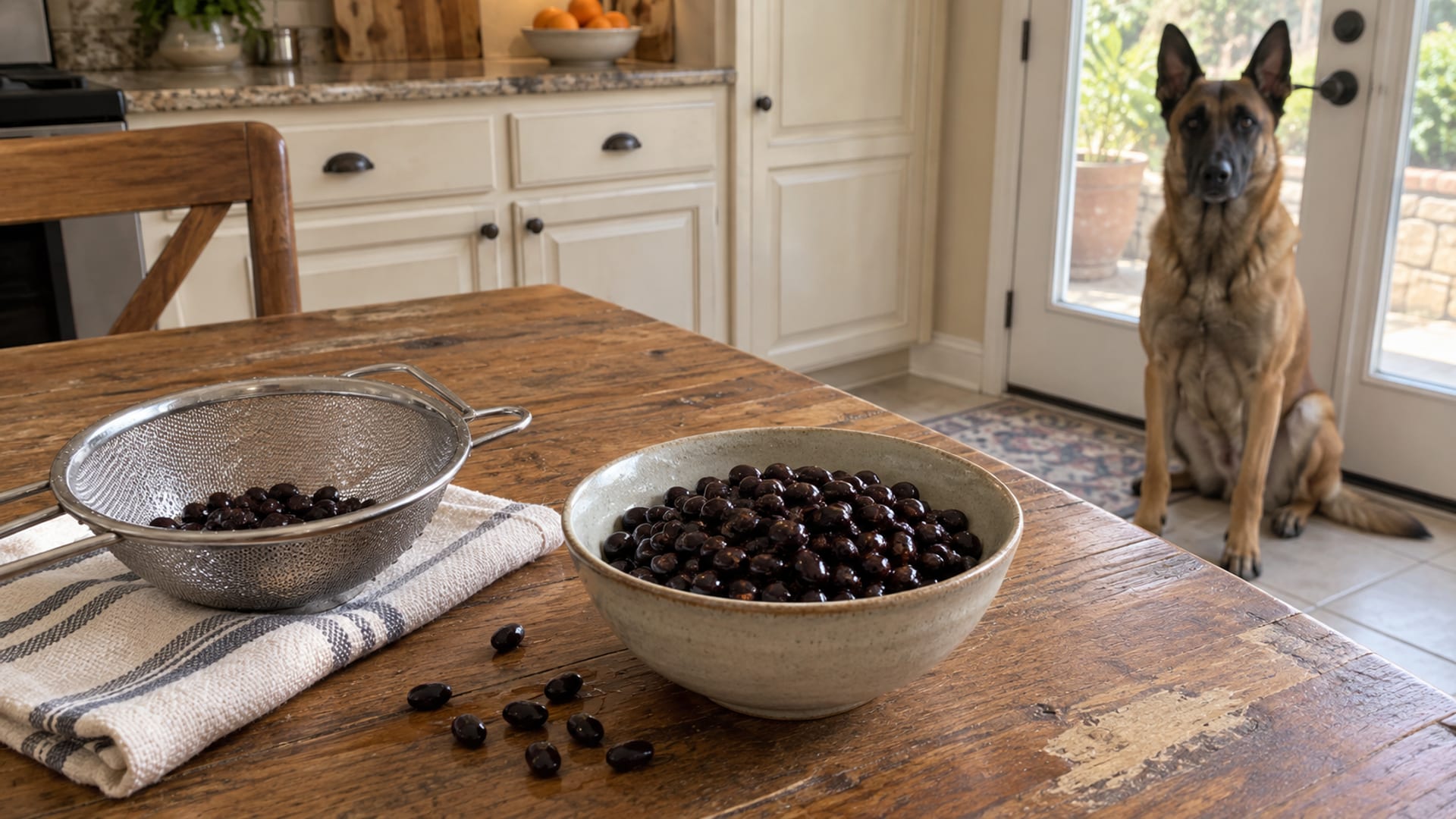
Yes, a small amount of plain, fully cooked black beans is usually fine for dogs. Raw, dry or undercooked black beans are harder on the stomach because of a natural lectin that cooking breaks down, and a bean dish like chili, refried beans or a burrito brings its own trouble from onion, garlic, salt and fat.
If your dog already ate some, the next few minutes are mostly about figuring out which of those it was. Plain cooked beans usually mean watching for gas or a loose stool. Raw beans, a seasoned dish, a big helping or any vomiting mean it's time to call your vet.
Key takeaways
Tap a card to bring it forward.
- Plain, fully cooked black beans are fine for most dogs as an occasional small treat.
- Raw and undercooked beans contain a lectin called phytohaemagglutinin that can cause vomiting and diarrhea, usually within several hours.
- In chili, refried beans, burritos and soups, the onion, garlic, salt and fat matter more than the beans themselves.
- Canned black beans work only when they are plain and low in salt, then rinsed and drained.
- Beans count toward the 10 percent of daily calories set aside for treats.
What to do if your dog just ate black beans
A few quick questions sort out most of these situations, and you can usually answer them from the kitchen.
- Check whether the beans were cooked. Soft beans from a can or a finished pot are the low-concern version, while hard, dry or half-cooked beans still carry the active lectin that upsets the stomach.
- Look at what else was in the dish. A leftover burrito, a bowl of chili or a scoop of refried beans can hold onion, garlic, a lot of salt, cheese or fat, and those ingredients can change the answer more than the beans do.
- Estimate how much, then compare it to your dog's size. The same handful is a much bigger dose per pound for a Chihuahua than for a Labrador.
- Think about how the beans went down. A small dog that gulped dry beans can choke or end up with a blockage, so watch its breathing and appetite.
- Call your vet when any warning sign applies. Raw or undercooked beans, a large or unknown amount, dry beans swallowed whole, a dish with onion, garlic or a lot of salt, or signs like repeated vomiting, belly pain or weakness all call for a prompt phone call.
For a small amount of plain cooked beans in a healthy dog, watching at home is usually enough. The ASPCA Animal Poison Control Center advises contacting your vet or its poison line whenever you think your pet ate something harmful or is acting ill.
Cooked, canned, dry or in a dish: which black beans are fine
Black beans belong to the same species as red kidney beans, *Phaseolus vulgaris*, and cooking is what separates a harmless bean from an upsetting one. The FDA names phytohaemagglutinin, a plant lectin, in raw and undercooked beans and ties it to stomach and gut illness.
The numbers in the FDA's Bad Bug Book show how much cooking changes things. Raw red kidney beans measured roughly 20,000 to 70,000 lectin units per gram, and fully cooked beans about 200 to 400. Those are kidney bean figures from human food safety, so they aren't a dose for dogs, but they explain why a soft cooked bean and a crunchy one from the pantry get different answers.
Tap or hover a row to highlight it.
| Form | For your dog |
|---|---|
| FormPlain black beans, fully cooked and soft | For your dogFine in small amounts as an occasional treat |
| FormCanned, plain, low sodium or no salt added | For your dogFine after rinsing and draining |
| FormCanned with added salt, spices or sauce | For your dogSkip it |
| FormRaw, dry or undercooked beans | For your dogAvoid; the lectin is still active |
| FormSoup, chili, refried beans, burritos, dips, restaurant dishes | For your dogAvoid unless you know every ingredient |
| FormChocolate-covered or sweetened black bean snacks | For your dogAvoid; the added ingredients are the problem |
| FormCooking liquid, black bean flour, powder or protein | For your dogDon't use as a supplement; the product's other ingredients decide the risk |
| FormSprouts, leaves, stems and pods | For your dogDon't feed them; raw sprouts can also carry germs |
Plain cooked black beans don't appear among the dog poisons the ASPCA lists, and the American Kennel Club treats plain vegetables as occasional extras on top of a complete diet.
How to serve black beans and how much to give
Cooked black beans do carry fiber and plant protein, but a complete dog food already covers what your dog needs, so beans are an optional extra. The VCA guideline is that about 90 percent of daily calories should come from complete and balanced food, with no more than 10 percent from treats and snacks. Black beans go into that 10 percent along with everything else your dog gets from your hand.
If you want to share, this is how to do it:
- Cook dry beans all the way, until they are soft through, or use canned beans that are already cooked.
- Pick low-sodium or no-salt-added cans, then rinse and drain the beans before serving.
- Keep them plain. No salt, onion, garlic, butter, oil, chili or other seasoning.
- Mash or break them up for small dogs, which lowers the choking risk for a dog that gulps.
- Start small. Offer a small amount the first time, watch the next day's stool, and give a small dog less than a large one.
If you cook rice and beans for dinner, set the dog's share aside before the seasoning goes in; plain rice has its own entry.
VCA Animal Hospitals notes that dogs with chronic pancreatitis may need a special low-fat diet and that treats and people food count toward it, which rules out bean recipes cooked with lard, oil or cheese. Food allergies can involve many ingredients, legumes among them, as the Merck Veterinary Manual describes. For a dog with diabetes, kidney disease, a known food allergy or a prescribed diet, ask your vet before beans go in the bowl.
Signs to watch for and when they show up
After plain cooked beans, the likely trouble is mild and comes from fiber and carbohydrates that ferment in the gut. A bigger serving can bring gas, belly discomfort, soft stool or diarrhea, and sometimes vomiting.
Raw or undercooked beans are a different story. The FDA's Bad Bug Book describes nausea, vomiting and diarrhea from lectin-containing beans, generally starting within several hours. How long it lasts depends on how much was eaten, how the beans were prepared and the dog. With a large amount of undercooked beans, the worst realistic outcome is dehydration serious enough to need care in the hospital.
That delay matters tonight. If your dog got into half-cooked beans in the afternoon, keep it close through the evening and check on it before bed.
Call your vet promptly for any of these:
- Vomiting more than once, or diarrhea that keeps coming back
- A tender or swollen belly, hunching or restlessness
- Weakness, collapse or tremors
- Coughing, gagging or trouble breathing after gulping dry beans
- Behavior that just isn't normal for your dog
My dog ate black beans before and was fine
That happens, and it's real. A dog can clean up a spilled burrito or a few beans off the floor and never have a bad moment. It still doesn't make every bean safe for every dog, and a few things explain the difference.
- Amount. A few beans may pass without a sign, while a bowlful can be a different result.
- Size. The same serving is a much larger dose per pound for a small dog.
- Form. According to the FDA, fully cooked beans carry far less active lectin than raw or undercooked ones, so last time's canned beans say little about today's dry ones.
- What came with them. Plain beans and a salty, fatty dish with onion or garlic are different exposures.
- The dog. Dogs vary in how well their stomachs handle new food, and some have food allergies.
- Timing. Signs from undercooked beans can take several hours, which means a dog that seemed fine at bedtime may have been sick overnight without anyone noticing.
Look-alikes and bean products to check
Several foods share a name or a look with black beans, and a couple of them change what you should do.
- Coffee beans. Sometimes called Java beans, they contain caffeine and are toxic to dogs, as Pet Poison Helpline explains. If "black beans" means chocolate-covered espresso beans or coffee from the grinder, read the coffee entry and call your vet.
- Black bean sauce and paste. These are products built on beans, often with garlic, salt, spices or alcohol, so the label decides the answer.
- Red beans and kidney beans. Red kidney beans have the best-documented lectin problems when undercooked, so the cooking rule applies even more strongly there. The general beans entry covers them.
- Black-eyed peas. A different plant, *Vigna unguiculata*, despite the name.
- Black soybeans. These are soy, *Glycine max*, with their own allergy and ingredient questions. Edamame has its own entry.
- Blackberries. If your search was actually about the fruit, blackberries have a separate page.
In Spanish, black beans go by frijoles negros, habichuelas negras, caraotas negras or porotos negros depending on the region. Same bean, same rules.
Check what you learned
Three quick questions.
Quick check
Questions about dogs and black beans
These come up often.
Can puppies eat black beans?
Nothing about black beans is special for puppies, but most puppies are small, so the same few beans make up a larger share of their body weight. Keep any taste plain, fully cooked and mashed, and count it toward the day's treats.
What if my cat got into the black beans too?
The same concerns apply to cats: raw or undercooked beans, stomach upset, choking and seasoned dishes. Cats are also sensitive to onion, garlic and caffeine, so a mixed human dish is more worrying for a cat than a few plain cooked beans. Call your vet if a cat ate chili, a burrito or anything seasoned.
Is it okay to pour the liquid from the can over my dog's food?
Drain it off instead. The bean liquid isn't a supplement for dogs, and canned beans are meant to be rinsed and drained before a dog eats them, which leaves the salty liquid behind in the sink.
My dog ate a pile of dry black beans from a torn bag. Is that an emergency?
Treat it as one and call your vet now. Dry beans combine the raw-bean lectin with a real choking and blockage risk, especially for a small dog, and a large or unknown amount is one of the clearest reasons to call.
Are other beans handled the same way?
The cooking rule carries over to most dried beans, red kidney beans above all. Green beans and chickpeas each have their own entry with the details for that food.
Sources
Checked September 25, 2026.
- ASPCA Animal Poison Control Center, Toxic and Non-Toxic Plants
- U.S. Food and Drug Administration, Natural Toxins in Food
- U.S. Food and Drug Administration, Bad Bug Book, Second Edition: Phytohaemagglutinin
- American Kennel Club, Fruits and Vegetables Dogs Can or Can't Eat
- VCA Animal Hospitals, Dog Treats
- VCA Animal Hospitals, Nutrition and Pancreatic Disease in Dogs
- Merck Veterinary Manual, Cutaneous Food Allergy in Animals
- Pet Poison Helpline, Java Beans