
Starting a Dog Grooming Business in Georgia: Salon, Home or Mobile Approvals and Costs
By Cal Hewitt · Published
Business guides
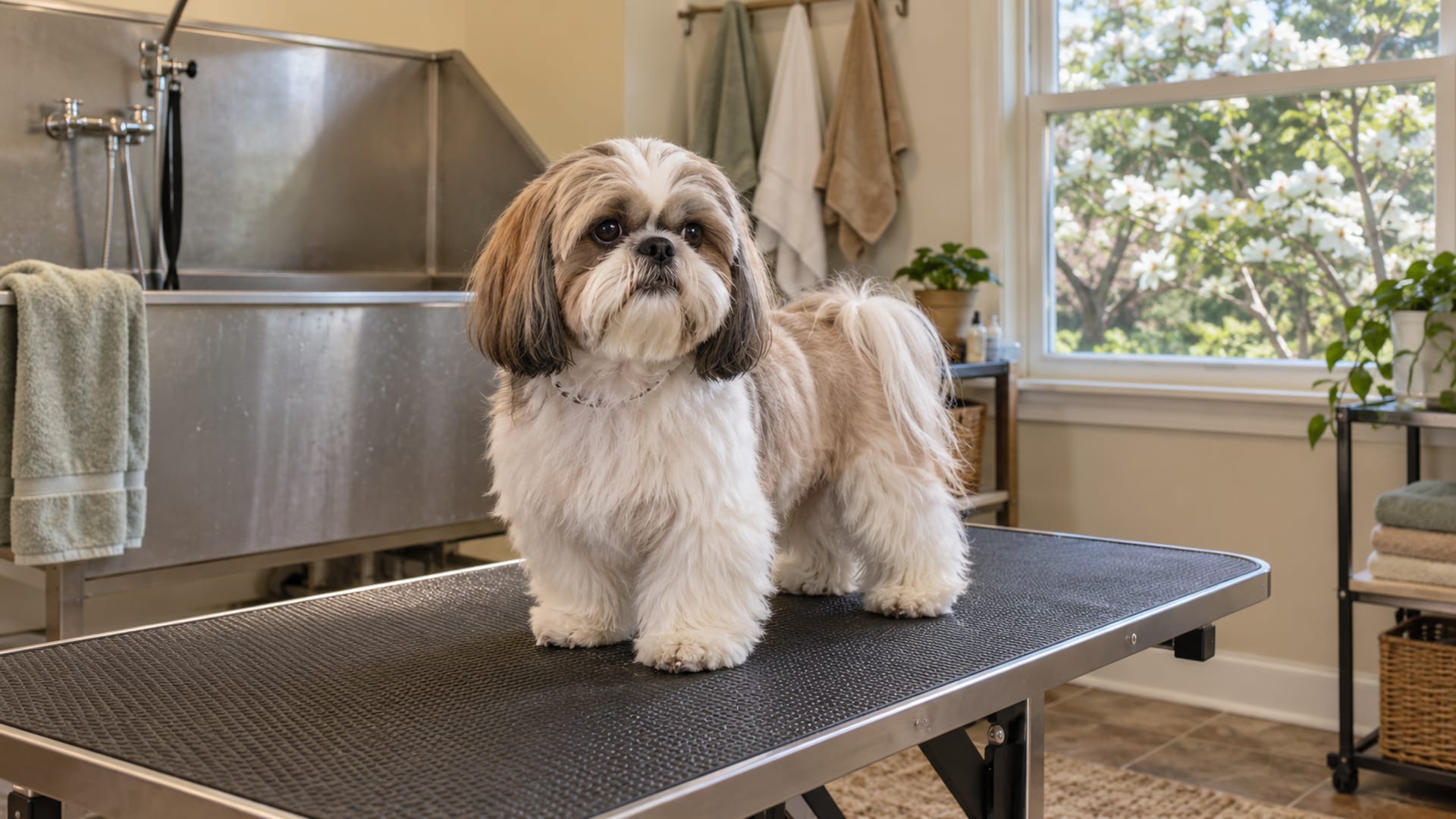
Georgia's kennel rule names grooming shops, so the Georgia Department of Agriculture (GDA) is the office that decides whether your salon, home setup or van needs a kennel license. You also need approval from the city or county where the business is based.
Before you sign a lease or buy a van, ask your local zoning and licensing offices about home occupation or commercial use, customer visits, parking, wastewater, occupancy and business taxes. Then call GDA about the kennel application and pre-inspection. That order protects your money.
Key takeaways
Tap a card to bring it forward.
- Georgia Rule 40-13-13 defines a kennel to include a grooming shop, so GDA classifies your salon, home setup or van.
- A kennel license under O.C.G.A. § 4-11-3 runs $50 to $400 a year; the rule lists $100 for up to 20 pets, $200 for 21 to 40, $300 for 41 to 80 and $400 for more than 80.
- GDA's pre-inspection has to be passed before the kennel application can proceed, and the license renews every year.
- A state license does not override local zoning, so confirm your address with your city or county before you spend money.
- Startup estimates run from $3,000 to $8,000 for a home business to $85,000 to $130,000 for a new turnkey van; treat them as estimates and get local quotes.
- Tips are optional, and your price menu can say so plainly.
Do you need a Georgia kennel license to groom dogs?
Short answer: very possibly, and GDA is the office that tells you. Georgia Rule 40-13-13 defines a kennel as an establishment where dogs or cats are kept for boarding, holding, training or similar purposes for pay, and it says similar purposes include "a grooming shop." The rule describes a grooming shop as an establishment keeping a dog or cat for bathing, dipping, clipping, trimming, brushing or similar care of the appearance for a fee.
The law behind it is O.C.G.A. § 4-11-3, which makes it unlawful to operate a kennel without a valid license from the Commissioner of Agriculture. The GDA kennel license page covers the application, the pre-inspection and the yearly renewal.
What about a personal license for the groomer? Whether any individual groomer license applies to you is a question for GDA, so ask it when you call. The kennel license attaches to the business and its premises. Do not decide from the word "mobile" or from how many dogs you groom in a day. Describe your exact setup to the GDA Companion Animal Program and let them classify it. Our guide to the Georgia kennel license goes deeper on the application itself.
Salon, home or mobile: which model fits your address?
Each model fails in a different place. A salon usually fails on zoning or occupancy. A home business fails on customer contact, space and vehicles. A van fails on parking and wastewater. Pick the model, then test the address before anything else.
Home grooming in Georgia is controlled mostly by local zoning, home-occupation, business-license and animal-control rules, and sometimes by an HOA or a lease. Four counties show how much it varies; check your own city or county, because the rules differ.
- DeKalb County: a home occupation with customer contact is Type II and needs a special land-use permit. The standards include no exterior evidence of the business, no detectable nuisance, work inside the dwelling, only residents employed there, no more than 25 percent of the home or 500 square feet, whichever is less, and one business vehicle. Read the DeKalb County Code § 4.2.31.
- Gwinnett County: a home business must follow the home-occupation rules and hold an Occupation Tax Certificate. Gwinnett code enforcement says commercial vehicles may not be parked outside homes.
- Cobb County: Cobb's zoning definitions list a dog grooming shop among community retail uses. Ask the county whether your proposed home use is permitted and which residential occupational tax certificate applies.
- Chatham County: Chatham's home-occupation rules generally limit a home occupation to 25 percent of gross livable area, with resident family employees, customary home equipment and no display or signs. The beauty-parlor provision allows no more than 500 square feet or 25 percent, whichever is less, and no more than two resident employees. Chatham also warns that paying a business tax or license fee does not make a home occupation legal.
When you call the planning or zoning office, ask whether customer drop-off, tubs, dryers, noise, wastewater, employees, signs, parking and a commercial van are allowed at your specific address. Ask whether you sit inside a city or in unincorporated county, because that changes which office answers.
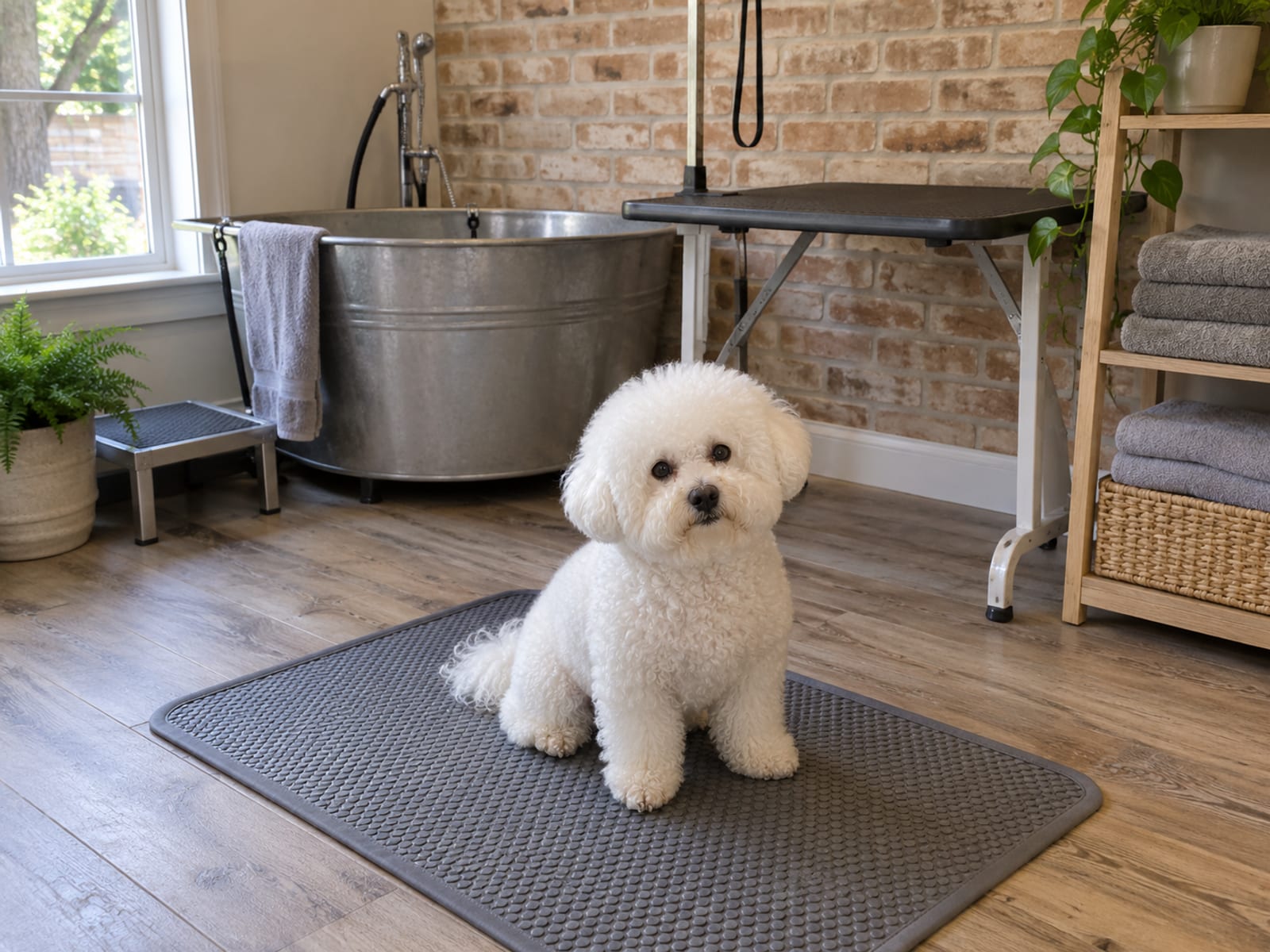
What must a fixed salon get before it opens, and in what order?
A lease is the first expensive promise, so put the approvals ahead of it. Atlanta, Macon-Bibb and Columbus describe an order that looks like this:
- Confirm the address and its zoning, and ask whether grooming is a permitted use or needs special approval.
- Add lease contingencies so you can leave if an approval fails.
- Confirm building, plumbing, electrical, mechanical and fire requirements, plus sanitation and wastewater.
- Get or update the certificate of occupancy where one is required.
- Apply for the local business license or occupational tax certificate.
- Ask GDA about the kennel license, then apply and pass the pre-inspection.
- Buy insurance and open only after the approvals are in place.
Atlanta says its zoning office verifies land use and issues zoning verification letters, and that a business may need a certificate of occupancy and inspections involving zoning, fire, traffic, sanitation and building offices. Its regulatory permit directory lists "Pet Grooming (Kennel)" with zoning as the regulatory agency. Macon-Bibb County says both a building permit and a business license need a valid Certificate of Zoning Compliance, and that businesses, home-based ones included, need an Occupation Tax Certificate unless exempt. Columbus says no business license is issued for an occupancy or change of occupancy until the Building Official issues a certificate of occupancy.
For wastewater and hair disposal, ask your local sewer, watershed, environmental health, sanitation or public-works office. Grooming wastewater is handled locally, so get the answer from that office before you sign anything.
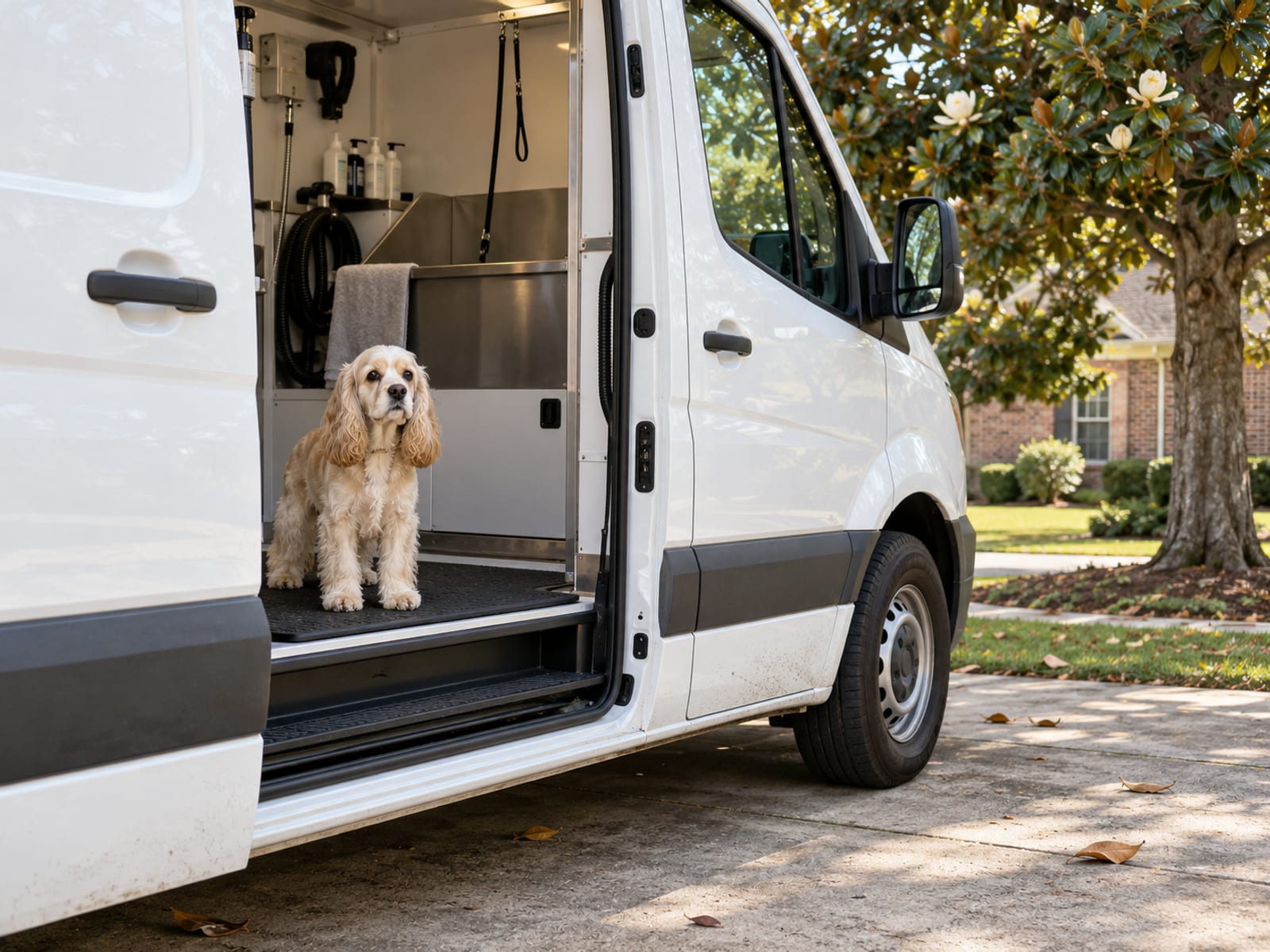
What does a mobile van add?
A van does not skip any of this; it adds more places to get a no. Confirm four things separately.
- Home base: ask zoning whether you can use the residence for dispatch, storage, vehicle parking, equipment upkeep and business registration.
- Van parking: ask the city or county where the van is stored and where it works whether commercial-vehicle parking, generator use and customer-site work are allowed. Gwinnett, for example, bars parking commercial vehicles outside residences and restricts vehicles over 20 feet long, 7 feet high or 7 feet wide. DeKalb allows mobile or dispatch-only home occupations under set conditions and one business vehicle per occupation.
- Each city or county you serve: ask whether a mobile operator from outside needs an occupational tax certificate, business license, certificate of use or other local registration.
- Wastewater and graywater: ask the local sewer, watershed or public-works office where wash water may go and how hair and solid waste must be handled.
Then ask GDA whether your van fits the kennel definition. I would make that call before the van is bought, not after it is wrapped and on the road.
How do you register the business in Georgia?
Registration is a short list, and each item has a different office.
- LLC: the Georgia Secretary of State forms LLCs. The filing is $110, then $60 a year for annual registration. See the Secretary of State business division FAQ.
- Trade name: if you operate under a name other than your own or your LLC's, register it with the superior court clerk of your county under O.C.G.A. § 10-1-490. The Secretary of State does not register county trade names.
- EIN: the IRS EIN page says an EIN is required for entities such as LLCs, partnerships and corporations, and for businesses with employees.
- Georgia tax registration: the Georgia Department of Revenue handles sales-and-use-tax registration.
- Local license: your city or county issues the business license or occupational tax certificate.
The Georgia First Stop business center and the SBA licenses and permits tool help you list the federal, state and local licenses that apply. For the wider list of offices, see our guide to Georgia dog business license requirements.
What does it cost to start, and which insurance should you price?
Published startup figures are broad estimates, not Georgia quotes, so use them to plan a range and then call for local prices. A June 2026 startup-cost estimate and an October 2025 mobile-van estimate give these ranges:
Tap or hover a row to highlight it.
| Setup | Estimate | Date |
|---|---|---|
| SetupHome-based | Estimate$3,000 to $8,000 | DateJune 2026 |
| SetupSalon | Estimate$15,000 to $50,000 or more | DateJune 2026 |
| SetupMobile, including a vehicle | Estimate$30,000 to $80,000 | DateJune 2026 |
| SetupNew turnkey grooming van | Estimate$85,000 to $130,000 | DateOctober 2025 |
| SetupUsed retrofitted van | Estimate$55,000 to $85,000 | DateOctober 2025 |
The Georgia state fees sit on top of those: the kennel license range of $50 to $400 a year, the $110 LLC filing and any local license or certificate cost.
Insurance is a question list, not one universal package. Ask an insurance agent about general liability, commercial auto if you run a van, equipment and business property, and care, custody and control (also called animal bailee) coverage for dogs in your hands. A salon or home operator should also ask about premises liability, animal injury, theft, water damage and employee coverage. For the wider picture, read our page on dog business insurance.

Is dog grooming taxable in Georgia?
Most services are exempt, but the exact charge decides. The Georgia Department of Revenue says most services are exempt, while tangible personal property and certain listed services such as accommodations, in-state transportation, admissions and amusements are taxable. A grooming charge and a bottle of retail shampoo or a bag of treats may be treated differently. If you bundle them on one ticket, ask DOR how the transaction should be classified. Our guide to Georgia sales tax on pet services covers bundled charges and retail sales.
Should groomers expect tips, and what should the price menu say?
Tips are optional, and you should not build your income plan around them. A 2024 Upgraded Points survey found that 20 percent tips were more common for pet services such as grooming and doggy daycare, and that nearly 91 percent of respondents tip based on service quality rather than a fixed percentage. That is a general U.S. survey, not a Georgia grooming survey, so use it as context only.
Put prices on the menu clearly and say what the tip policy is. Something like this works: "Prices cover the grooming service. Tips are optional and appreciated. If you choose to tip, you may add any amount at checkout." Then say whether tips go to the groomer, are pooled or stay with the owner, so no client or employee is surprised.

Questions about starting a grooming business in Georgia
These four questions cover the license, home, credential and cost points, with short answers.
Do I need a license to groom dogs in Georgia, and will groomers need one in 2026?
Georgia's kennel rule includes grooming shops, so ask GDA whether your salon, home setup or van needs a kennel license. Whether any individual groomer license applies is also a question for GDA's Companion Animal Program, so put it on your call list this year.
Is it legal to run a grooming business from home in Georgia?
It depends on your city or county. Local rules can limit customer contact, space, employees, signs, parking and commercial vehicles, and DeKalb, Gwinnett, Cobb and Chatham each handle it differently. Get your address cleared with the local zoning office first, then ask GDA about the kennel license.
Is NDGAA certification required, and how do I become a certified groomer?
No. The National Dog Groomers Association of America describes its certification as voluntary testing and recognition, with written and practical tests. It can show customers your training, but it does not replace local approvals, business registration, insurance or GDA's classification.
How much does it cost to start a grooming salon?
One June 2026 estimate puts a salon at $15,000 to $50,000 or more, and a home-based business at $3,000 to $8,000. Add the state kennel fee of $50 to $400 a year and your local license costs, and get local quotes for rent, equipment and insurance.
Your next step this week
You can do this in a week, and none of it needs a purchase.
- Write down your exact address or home base and whether it sits in a city or unincorporated county.
- Call the planning or zoning office with the questions above, and ask for a zoning verification letter if they issue one.
- Call GDA's Companion Animal Program and describe your salon, home or van.
- Ask the local office which business license or occupational tax certificate applies.
- Decide on an LLC, a trade name and an EIN.
- Collect insurance quotes and an equipment budget.
- Draft your price menu and tip line.
Once your address is cleared, list your business in the DogServ directory and start telling local dog owners you are open. For the bigger picture of the trade itself, our general guide on how to start a dog grooming business is the place to go next. And please do not take my word on a legal point: the city, the county and GDA decide, so make the calls.
Sources
- agr.georgia.gov: GDA kennel license page
- atlantaga.gov: Atlanta
- atlantaga.gov: regulatory permit directory
- buildingsafety.chathamcountyga.gov: Chatham's home-occupation rules
- cobbcounty.elaws.us: Cobb's zoning definitions
- dekalbcounty-ga.elaws.us: DeKalb County Code § 4.2.31
- dor.georgia.gov: Georgia Department of Revenue
- dor.georgia.gov: Georgia Department of Revenue
- gwinnettcounty.com: Gwinnett code enforcement
- irs.gov: IRS EIN page
- law.justia.com: O.C.G.A. § 4-11-3
- maconbibb.us: Macon-Bibb County
- nationaldoggroomers.com: certification
- resources.columbusga.gov: Columbus
- rules.sos.ga.gov: Georgia Rule 40-13-13
- sba.gov: SBA licenses and permits tool
- sos.ga.gov: Georgia First Stop business center
- sos.ga.gov: Secretary of State business division FAQ
- upgradedpoints.com: Upgraded Points survey
- wexfordins.com: October 2025 mobile-van estimate
- zendpaw.com: June 2026 startup-cost estimate