
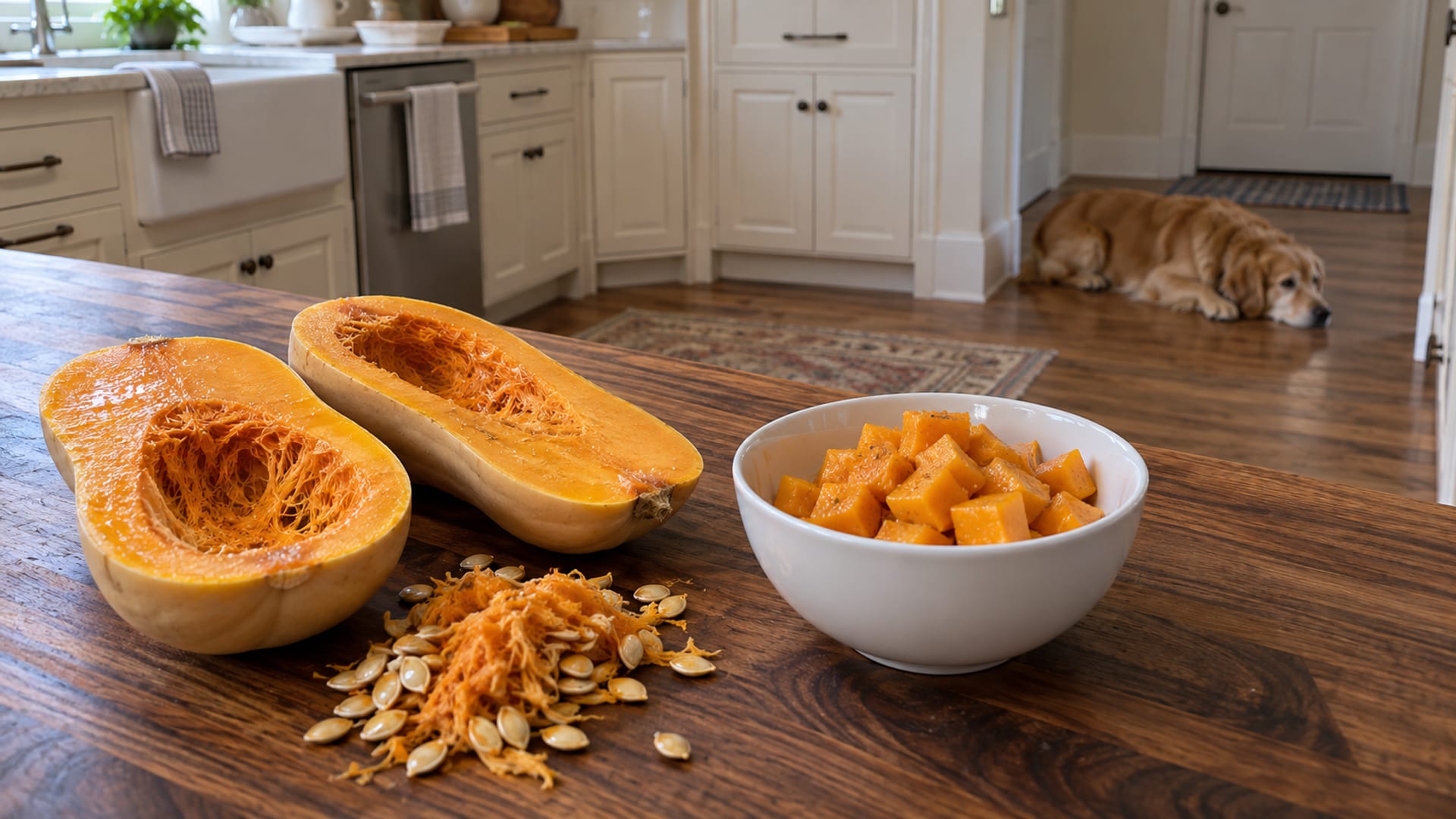
Yes. Dogs can eat small amounts of plain squash, whether it is zucchini, yellow squash, butternut, acorn or plain pumpkin. The ASPCA lists acorn, banana, buttercup, butternut, Hubbard, turban and zucchini squash as non-toxic to dogs, and the AKC suggests serving it steamed or roasted with the seeds, skin and rind removed.
If your dog grabbed a few pieces of plain squash, keep an eye on their stomach and go on with your day. Call your vet if the squash tasted bitter, came from an unknown garden plant or a decorative gourd, was cooked with onion, garlic or lots of butter, or if your dog swallowed a big piece of rind.
Key takeaways
Tap a card to bring it forward.
- Plain squash flesh is a safe treat for most dogs, raw or cooked, cut small.
- Remove the seeds, skin and rind. They are hard to digest and can choke a dog or block the gut.
- A squash that tastes very bitter can carry cucurbitacins, compounds that cause vomiting and belly pain. Throw it out.
- Casseroles, soups, breads and pumpkin pie filling depend on their other ingredients.
- Squash is a snack, so keep it to a small share of your dog's daily food.
Your dog already ate squash: what to do
Tap or hover a row to highlight it.
| What they ate | Next step |
|---|---|
| What they ateA few bites of plain squash, raw or cooked | Next stepNothing more. A little gas or a soft stool is possible. |
| What they ateA big helping of plain squash | Next stepVomiting, diarrhea or gas may follow. Call your vet if it keeps going. |
| What they ateSeeds, skin, rind or a large chunk | Next stepWatch for gagging, repeated vomiting, belly pain or no stool. Call your vet if any of these show up, and sooner for a small dog. |
| What they ateA squash that tasted bitter, a garden volunteer or a decorative gourd | Next stepCall your vet or a pet poison line now. |
| What they ateSoup, casserole, bread or pie made with squash | Next stepFind the recipe or label. Onion, garlic, xylitol, alcohol or a lot of fat means call now. |
Before you pick up the phone, jot down the kind of squash, how it was cooked, what else was in it, how much is gone, the time, and your dog's weight and age. After anything that might be harmful, the ASPCA advises getting help even when signs are mild or missing, before they get worse.
Go to a vet right away for choking, labored breathing, collapse, weakness, tremors, seizures, or vomiting that will not stop.
Which parts and kinds of squash are safe
Tap or hover a row to highlight it.
| Part or form | Safe? | Why |
|---|---|---|
| Part or formFlesh, steamed or roasted, plain | Safe?Yes, in small amounts | WhyThe way the AKC suggests serving it |
| Part or formRaw flesh | Safe?Yes, in small pieces | WhyHarder to digest than cooked, and firm chunks can choke |
| Part or formSeeds | Safe?Take them out | WhyA choking and blockage risk, mostly for small dogs |
| Part or formSkin and rind | Safe?Take them off | WhyTough to digest and easy to choke on |
| Part or formZucchini leaves and flowers | Safe?Non-toxic, per the AKC | WhyBig fibrous pieces can still upset a stomach |
| Part or formPlain canned pumpkin | Safe?Yes, if unsweetened with nothing added | WhyRead the label first |
| Part or formPumpkin pie filling | Safe?No | WhyCan contain sugar, spices or xylitol |
| Part or formBitter squash, wild or ornamental gourds | Safe?No | WhyBitterness can signal cucurbitacins |
Summer squash like zucchini and winter squash like butternut get the same answer. The AKC's zucchini guide says dogs can have it raw, steamed or cooked, as long as it is plain and cut into pieces they can manage.
If a squash tastes bitter, keep it from your dog
Squash plants make bitter defense compounds called cucurbitacins. A study of squash domestication describes how grocery varieties were bred to carry far less of them than wild plants do. Once in a while a zucchini or pumpkin turns bitter anyway. The German Federal Centre for Nutrition warns that plants grown from saved seed, volunteers from the compost, and anything crossed with ornamental gourds are the likeliest culprits.
Poison Control calls the illness toxic squash syndrome and lists nausea, vomiting, belly pain and diarrhea among its signs. Its advice for people applies to dogs too: if a squash tastes bitter while you cook it, throw the whole thing away. The amount of cucurbitacin changes from one squash to the next, so if your dog ate some of a bitter one, call your vet or a pet poison line.
How much squash to give, and how to cook it
Squash is a side snack, never a replacement for dog food. The veterinary school at UC Davis recommends keeping treats and other extras to no more than 10% of your dog's daily calories, and the WSAVA uses the same 10% guide.
- Wash the squash, peel it, and scoop out every seed.
- Steam, bake or roast it with nothing on it: no butter, salt, onion, garlic or garlic salt.
- Cut it into small cubes or mash it, sized to your dog's mouth.
- Offer a few small pieces the first time and watch how your dog's stomach handles it.
If your dog has pancreatitis, diabetes, kidney disease, food allergies or eats a prescription diet, check with your vet before adding squash. The WSAVA advises that dogs with medical conditions get treat advice made for them.
Signs to watch for after too much squash
A normal helping of plain squash usually causes nothing at all. A large amount can lead to vomiting, diarrhea, gas or a sore belly, according to the AKC. These show up as the food moves through and tend to pass. Call your vet if they last or your dog seems unwell.
Seeds, rind, stems and big chunks cause trouble of a different kind. Choking shows right away as gagging, coughing or struggling to breathe. A piece that gets stuck further down shows later as vomiting again and again, belly pain, tiredness, not eating, or not passing stool. Either picture is a reason to call.
"My dog steals zucchini from the garden every summer"
That happens in a lot of backyards, and for that dog it may never have caused a single problem. It still does not make squash risk-free for every dog. Several things change the outcome:
- Amount. A few nibbles are a snack. Half a zucchini can upset the stomach.
- Size of the dog and the piece. A chunk a large dog chews up can lodge in a small dog's throat or gut.
- Which part. Soft flesh, a tough stem and a mouthful of seeds are three different risks.
- The plant itself. A volunteer squash or one crossed with a gourd can turn bitter, and the dog cannot tell.
- The dog. Some dogs handle new foods and fiber better than others.
- Timing. A blockage can take hours or longer to show.
Plain, peeled, seeded squash in small pieces keeps the habit low-risk.
Pumpkin, zucchini bread, soups and other squash foods
- Plain canned pumpkin or squash: fine in small amounts if the only ingredient is the squash. Sweetened or spiced versions are a different product.
- Pumpkin pie filling and pie: skip them. Sugar, spices and sometimes xylitol.
- Zucchini bread, pumpkin bread and muffins: sugar and fat, and some recipes use xylitol. Check before your dog gets a crumb.
- Squash soup, casseroles and roasted squash dishes: often cooked with onion, garlic, butter, cream and salt. Can dogs eat onions? and can dogs eat garlic? cover what to do if those were in it.
- Roasted squash or pumpkin seeds: usually salted or spiced, and still a choking risk. Keep them for people.
- "Squash" the drink: in some countries squash means a sweetened fruit drink concentrate, which has nothing to do with the vegetable. Read the label.
- Dried squash, squash powder and supplements: the strength and added ingredients vary, so ask your vet first.
Cucumber comes from the same plant family; can dogs eat cucumbers? covers it.
Check what you learned
Quick check
Questions about dogs and squash
Is yellow squash toxic to dogs?
No. Yellow squash is a summer squash like zucchini, and plain pieces are fine for most dogs. As with any squash, throw it out if it tastes bitter, and skip it when it is cooked with onion, garlic or butter.
Is squash a laxative for dogs?
Too much squash can loosen the stool or cause diarrhea and gas, according to the AKC. If you are hoping squash or pumpkin will fix your dog's stool, talk to your vet first, since ongoing diarrhea or constipation can have other causes.
Can dogs eat raw squash?
Yes, in small pieces. The AKC says raw zucchini is fine, though cooked squash is softer and easier to digest. Large raw chunks are a choking risk.
Can dogs eat squash seeds or skin?
Take them off. The AKC recommends removing the seeds, skin and rind because they are hard to digest and can cause choking or a blockage.
How much squash can I give my dog?
A few small pieces at a time. Keep treats and extras together under 10% of your dog's daily calories, the guide UC Davis and the WSAVA both use.
Can dogs eat pumpkin pie filling?
No. It is not the same as plain pumpkin. Pie filling can contain sugar, spices and sometimes xylitol, so check the label and call your vet if your dog ate some that lists xylitol.
Sources
Checked September 24, 2026.
- ASPCA Animal Poison Control Center, Toxic and Non-Toxic Plants: Dogs
- ASPCA, My Pet Ate Something! When Should I Seek Help?
- American Kennel Club, Can Dogs Eat Squash?
- American Kennel Club, Can Dogs Eat Zucchini?
- Poison Control, Toxic Squash Syndrome: If It's Bitter, It's Not Dinner
- German Federal Centre for Nutrition, Bittere Kürbisse und Zucchini nicht essen
- Balkema-Boomstra and others, Consequences of Squash Domestication for Plant Defence and Herbivore Interactions
- UC Davis School of Veterinary Medicine, Treat Guidelines for Dogs
- World Small Animal Veterinary Association, Feeding Treats to Your Dog