

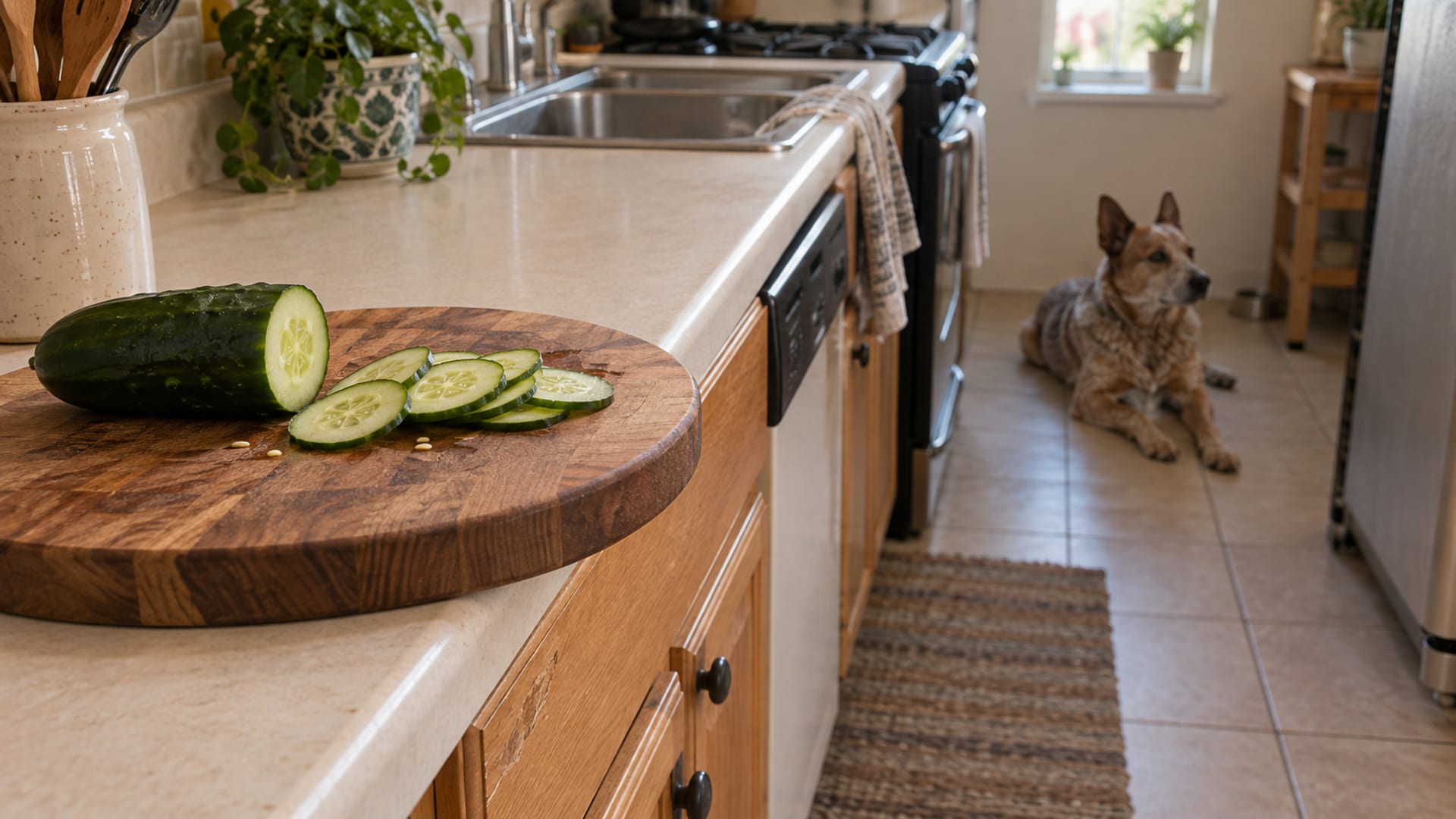
Yes. The ASPCA lists garden cucumber as non-toxic to dogs, and the AKC describes it as a low-calorie, water-rich treat that many dogs can have in small pieces. Wash it, slice it thin, and keep the portion small.
If your dog just crunched a few slices that fell off the cutting board, there is nothing to do. A whole cucumber swallowed by a small dog, a jar of pickles, or cucumber mixed into a seasoned salad calls for a closer look, and the table below covers each of those.
Key takeaways
Tap a card to bring it forward.
- Plain garden cucumber is non-toxic to dogs, raw or cooked.
- Skin and seeds are fine. Wash the cucumber and cut it to fit your dog's mouth.
- A whole cucumber or a big chunk can choke a dog or get stuck in the gut.
- With pickles and cucumber drinks, the worry is what was added: salt, onion, garlic or xylitol.
- Start with a few slices and keep all treats to a small share of your dog's daily food.
Your dog already ate cucumber: what happens now
Tap or hover a row to highlight it.
| What they ate | What to do |
|---|---|
| What they ateA few plain slices | What to doNothing. Carry on as usual. |
| What they ateA lot of plain cucumber | What to doSome gas or a loose stool may follow. Call your vet if vomiting or diarrhea keeps going. |
| What they ateA whole cucumber or a large chunk, especially a small dog | What to doWatch for gagging, coughing, repeated vomiting, belly pain or trouble keeping food down. Call your vet if you see any of them. |
| What they atePickles, relish or a seasoned dish | What to doCheck the jar or recipe for onion, garlic, a lot of salt or xylitol. If any of those are in it, call your vet or a poison line. |
| What they ateStore-bought cucumber water or a flavored drink | What to doRead the label for xylitol, sugar or alcohol, and call if you find them. |
| What they ateA very bitter or wild cucumber from the yard | What to doCall your vet. Several wild plants share the cucumber name and are different species. |
When you call, have the product name, the ingredients, roughly how much, when it happened and your dog's weight ready. The ASPCA's advice for anything you think could be toxic is to contact your vet or its poison control center right away.
Get help immediately, whatever the cucumber was, if your dog is choking, struggling to breathe, collapses, keeps vomiting, seems in real pain, turns weak or has a seizure.
Skin, seeds, cooked and pickled: which forms are fine
Tap or hover a row to highlight it.
| Form | Okay for dogs? | Why |
|---|---|---|
| FormRaw flesh | Okay for dogs?Yes, in small pieces | WhyListed as non-toxic by the ASPCA |
| FormSkin or peel | Okay for dogs?Yes, washed | WhyThe AKC calls it generally safe |
| FormSeeds | Okay for dogs?Yes | WhyThe AKC calls them generally safe |
| FormPlain cooked or steamed | Okay for dogs?Yes | WhyPet Poison Helpline says it can be fed raw or cooked |
| FormPickles and relish | Okay for dogs?Skip | WhySalt, vinegar, spices, and often garlic or onion |
| FormStore-bought cucumber water | Okay for dogs?Check the label | WhySome products may contain xylitol, according to PetMD |
| FormDried cucumber, powders, supplements | Okay for dogs?Ask your vet first | WhyStrength and added ingredients vary |
| FormA whole cucumber or big chunks | Okay for dogs?No | WhyChoking and blockage risk |
Sources: Pet Poison Helpline, PetMD.
One more thing to know about taste. PetMD notes that cucumber plants can make cucurbitacin, a bitter compound, and that small amounts can end up in the fruit. If a cucumber tastes unusually bitter to you, keep it away from your dog. Plants with names like bitter cucumber or exploding cucumber are separate wild species, so the ASPCA's listing for the grocery cucumber does not cover them.
How much cucumber to give, and how to cut it
The AKC suggests starting with a few small slices and keeping treats of every kind to no more than 10% of your dog's daily calories. The ASPCA uses a tighter general guide for snacks: no more than 5%.
- Wash the cucumber first.
- Cut coins or sticks sized for your dog. Go smaller for small dogs, puppies and anyone who gulps.
- Serve it plain, with no salt, dressing, garlic or onion.
- Offer a little the first time and see how your dog's stomach handles it.
Because it is so low in calories, cucumber can stand in for a richer treat when a dog is on a weight plan. Pet Poison Helpline mentions fresh vegetables like cucumber as lower-calorie swaps. Use it inside whatever weight plan your vet has set. If your dog has diabetes, kidney disease, pancreatitis, food allergies or eats a prescription diet, ask your vet before adding any new treat, as the AKC advises.
Signs to watch for after too much cucumber or a big piece
Too much cucumber, or a dog who is not used to it, can bring on vomiting, diarrhea, gas, a sore belly or a dip in appetite, according to the AKC. These tend to show up while the food is being digested and usually settle. Call your vet if they keep going.
A big piece is a separate problem. Choking happens right away: gagging, coughing, trouble breathing. A piece that goes down but gets stuck shows up later as vomiting again and again, belly pain, weakness, or not keeping food or water down. Either one is a reason to call.
"My dog eats cucumbers straight off the vine"
Plenty of dogs do, and it usually goes fine. Cucumber is non-toxic, so a dog nibbling in the garden is not being poisoned. What makes one dog's habit a poor guide for another is everything around the cucumber:
- Piece size and dog size. A big dog that chews is in a different spot from a small dog that bolts a chunk whole.
- How much. A few bites is a snack. A whole cucumber can upset the stomach or block the gut.
- What form. A pickle or a dressed salad brings its own ingredients.
- The dog. The AKC notes that dogs differ in how well they handle new foods.
- The plant. A garden or yard can hold bitter or wild cucurbits that look similar.
Small pieces of plain cucumber keep the habit low-risk for most dogs.
Pickles, cucumber water and other cucumber products
- Pickles and pickle juice: heavy on salt and vinegar, and often made with garlic, onion or spices. Onion and garlic are unsafe for dogs, and can dogs eat onions? explains what to do if your dog ate some.
- Relish: the same concerns as pickles, plus sugar.
- Cucumber salads: check for onion, garlic and rich dressing before sharing a bite.
- Cucumber water and drinks: plain cucumber in plain water is fine. Bottled or flavored versions may carry xylitol, sugar or alcohol.
- Cucumber dog treats and powders: read the label. These are mixed products, so the ingredients decide the answer.
Check what you learned
Quick check
Questions about dogs and cucumbers
Can dogs eat cucumbers with the skin on?
Yes. The AKC says cucumber skin is generally safe. Wash the cucumber and cut it into pieces your dog can manage.
Can dogs eat pickles?
Better not. Pickles are cucumbers plus salt, vinegar and spices, and many recipes add garlic or onion. Stick to fresh cucumber.
How much cucumber can a dog eat?
Start with a few small slices. The AKC keeps all treats under 10% of daily calories, and the ASPCA's general snack guide is 5%.
Can puppies eat cucumber?
Yes, in very small pieces. Puppies are still learning to chew, so a thin, bite-sized piece is safer than a chunk.
Can dogs eat cooked cucumber?
Yes, if it is plain. Pet Poison Helpline lists cucumber among foods that can be fed raw or cooked. Leave out butter, salt, garlic and sauces.
Is cucumber safe for cats too?
The ASPCA lists garden cucumber as non-toxic to cats as well. The same care with piece size and seasoned products applies.
Sources
Checked September 24, 2026.
- ASPCA Animal Poison Control Center, Cucumber
- ASPCA, Sharing is Caring: Foods You Can Safely Share with Your Pet
- American Kennel Club, Can Dogs Eat Cucumbers?
- Pet Poison Helpline, Pet Friendly Human Food
- Pet Poison Helpline, Pet Obesity Is a Life or Death Matter
- PetMD, Can Dogs Eat Cucumbers?