

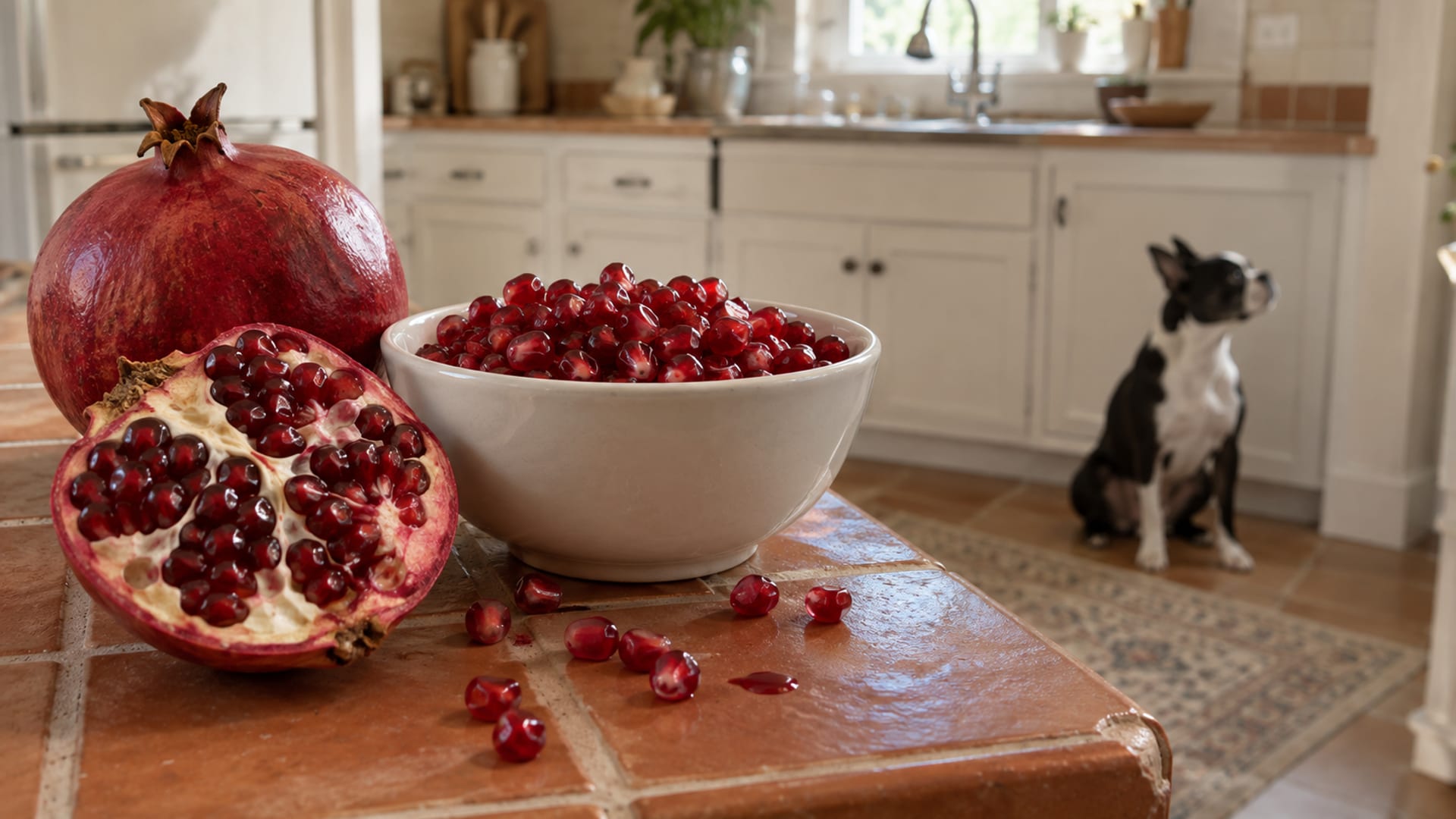
Pomegranate is not poisonous to dogs, according to Jerry Klein, the AKC's chief veterinary officer. The AKC still recommends not feeding fresh pomegranate, because the seeds can bring on vomiting and diarrhea, and the peel and stem can block a dog's gut, with small dogs most at risk.
A dog that snapped up one or two dropped seeds is very unlikely to have a problem; watch for a loose stool. If your dog chewed into a whole fruit, ate peel or stem, or got into a pomegranate snack or supplement, read the next section.
Key takeaways
Tap a card to bring it forward.
- Pomegranate is not a toxin for dogs, but the AKC advises against feeding the fresh fruit.
- One or two seeds are unlikely to cause serious harm.
- Peel, stem, the white pith or a whole fruit can cause a blockage, most of all in small dogs.
- Chocolate-covered pomegranate, juice blends and supplements can carry their own dangers.
- Call your vet for peel or stem, an unknown amount, or any vomiting, belly pain or tiredness.
What to do if your dog ate pomegranate
Tap or hover a row to highlight it.
| What they ate | What to do |
|---|---|
| What they ateOne or two seeds | What to doWatch for vomiting or a loose stool. No call needed if your dog stays normal. |
| What they ateA good handful of seeds | What to doWatch closely, and call your vet if vomiting or diarrhea starts |
| What they atePeel, rind, stem or white pith | What to doCall your vet now, even if your dog seems fine |
| What they ateA whole pomegranate, or you do not know how much | What to doCall your vet now |
| What they ateChocolate-covered pomegranate | What to doCall now. Chocolate is its own emergency. |
| What they ateJuice, syrup, gummies or a supplement | What to doCheck the label for xylitol, grape juice, alcohol or caffeine, and call if any are listed |
For anything that might be hazardous, the ASPCA's poison control center is plain about timing: "Even if your pet is acting normal, don't wait." Gather what your dog ate, roughly how much, and your dog's breed, age, weight and health, then call your vet or a poison line.
If your dog is unconscious, having trouble breathing, bleeding or having seizures, the ASPCA says to go straight to a vet clinic.
Seeds, peel and pith: which parts are the problem
People say "seeds" for two things: the juicy red sacs, called arils, and the small hard seed inside each one. A dog eating the arils swallows both.
Tap or hover a row to highlight it.
| Part | Risk for dogs | Why |
|---|---|---|
| PartArils and the seeds inside | Risk for dogsLow for a few, higher for more | WhyCan cause vomiting, diarrhea and, in larger amounts, a blockage (AKC) |
| PartPeel or rind | Risk for dogsAvoid | WhyPieces can block the gut, especially in smaller dogs (AKC) |
| PartWhite pith between the arils | Risk for dogsAvoid | WhyFibrous and hard to digest |
| PartStem | Risk for dogsAvoid | WhyNamed by the AKC as a blockage risk |
| PartWhole fruit | Risk for dogsKeep out of reach | WhyA dog eats peel, pith, stem and arils all at once |
| PartPlain juice | Risk for dogsNot needed | WhyNo seeds or peel, but sugary, and blends may hold grape juice or sweeteners |
The worry with pomegranate is physical. A blockage in the stomach or intestine can become life-threatening if it is not treated, the Merck Veterinary Manual says, through repeated vomiting, dehydration, damage to the gut wall and shock. That is why peel and stem call for a vet visit even when your dog seems happy.
How much is a concern
There is no pomegranate amount that is known to be safe or known to cause trouble, and dog size changes the picture. For one or two arils, PetMD describes serious harm as unlikely. The AKC links vomiting, diarrhea and blockage to moderate or larger amounts.
What that means for you: a couple of seeds, watch. A handful or more, watch closely and call if anything changes. Any peel, stem, whole fruit or unknown amount, call now. If your dog is a puppy, a small breed or already unwell, call sooner.
Signs to watch for, and how long to watch
Stomach upset usually looks like vomiting, diarrhea, a sore belly, drooling or a dog that skips a meal.
A blockage can build more slowly. According to the Merck Veterinary Manual's guide for dog owners, signs of an intestinal obstruction include vomiting, tiredness, loss of appetite, diarrhea, belly pain or swelling, dehydration and shock. Pomegranate has no set timeline, and signs depend on where the material lodges and how completely, so keep watching for a day or two after peel or a large amount.
"My dog ate pomegranate seeds and was fine"
That is very believable, and it probably tells you the amount was small. A few arils are a different thing from a torn-open fruit with peel and stem. Size matters too: the AKC singles out smaller dogs for peel and stem blockages. Dogs vary in how their stomachs handle new food, and a blockage can take time to show. One good outcome is a real result for that dog on that day. It does not make the next whole pomegranate on the counter a safe bet.
Juice, extracts, chocolate-covered pomegranate and look-alikes
- Chocolate-covered pomegranate: the chocolate is the bigger danger. Can dogs eat chocolate? explains what to do.
- Pomegranate juice: plain juice is sugary and not needed. Juice blends can include grape juice, which is a kidney risk for dogs. Can dogs eat grapes? covers that.
- Pomegranate molasses and grenadine: concentrated syrups, mostly sugar, and grenadine may only be pomegranate-flavored.
- Dried pomegranate and anardana: dried arils pack more sugar and fiber into each bite. Best skipped.
- Extracts, powders, gummies and capsules: read the label for xylitol, caffeine and alcohol. A research study by Jose and colleagues gave six dogs a lab-made pomegranate peel extract at 50 mg per kilogram for 30 days to study digestion, which says nothing about how safe a human supplement or raw peel is.
- Dog foods and treats with pomegranate: a food made for dogs is assessed as a whole product, by its full ingredient list, and is a different thing from a dog eating fresh fruit.
Check what you learned
Quick check
Questions about dogs and pomegranates
Is pomegranate toxic to dogs?
No. The AKC's chief veterinary officer says pomegranate is not toxic to dogs. The AKC still advises against feeding it because of stomach upset and blockage risk.
My dog ate one or two pomegranate seeds. Is that okay?
It is very unlikely to cause serious harm. Watch for vomiting or diarrhea, and call your vet if signs appear or you are unsure how many were eaten.
Is pomegranate peel dangerous for dogs?
Yes, as a blockage risk. The AKC says pieces of rind and stem can obstruct the gut, particularly in smaller dogs. Call your vet if your dog ate some.
Can dogs drink pomegranate juice?
It is not needed. Plain juice is sugary, and many bottles are blends that can include grape juice or sweeteners. Check the label and skip it.
Can dogs have pomegranate extract or supplements?
Not without your vet. A small research study used a standardized peel extract under controlled conditions, which does not cover human supplements, powders or gummies.
What should I do if my dog ate a whole pomegranate?
Call your vet now, even if your dog seems fine. A whole fruit means peel, pith and stem, the parts most likely to cause a blockage.
Sources
Checked September 24, 2026.
- American Kennel Club, Can Dogs Eat Pomegranates?
- ASPCA Animal Poison Control Center, What to Do if Your Pet Is Poisoned
- Merck Veterinary Manual, Gastrointestinal Obstruction in Small Animals
- Merck Veterinary Manual, Disorders of the Stomach and Intestines in Dogs
- PetMD, Can Dogs Eat Pomegranate?
- Jose et al., Journal of Nutritional Science, Nutrient digestibility, hindgut metabolites and antioxidant status of dogs supplemented with pomegranate peel extract