

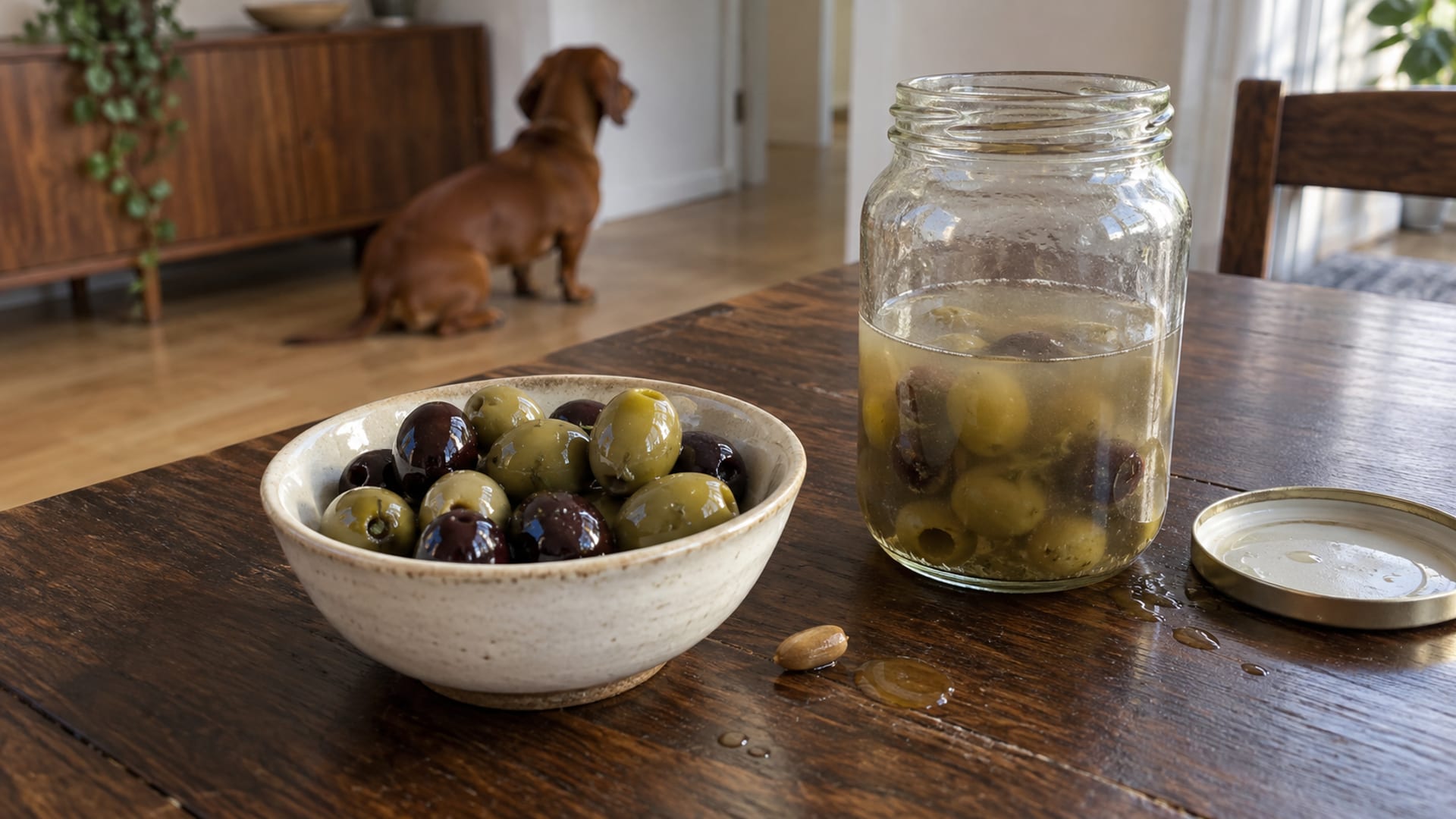
Olives are not toxic to dogs, and a plain olive with the pit removed rarely causes a problem, according to the American Kennel Club. What makes olives a poor treat is everything around the fruit: a pit that can choke a dog or crack a tooth, brine that carries a lot of salt, and fillings or marinades that may include garlic, onion or alcohol.
If your dog snatched one pitted olive off the counter, fill the water bowl and carry on. If they swallowed pits, ate a pile of olives, lapped up the brine, or got into stuffed or marinated olives, the steps below tell you when to call.
Key takeaways
Tap a card to bring it forward.
- The olive fruit itself is not toxic to dogs. One plain, pitted olive is unlikely to cause harm.
- Pits can cause choking, a blocked gut or a broken tooth, most of all in small dogs.
- Canned and jarred olives sit in salty brine. A lot of olives, or the brine itself, is a salt problem.
- Garlic, onion or chive stuffing and olives soaked in alcohol are reasons to call your vet.
- Olive oil, oleander and Russian olive are different things with different answers.
Your dog ate olives: what to do next
Start with what they ate, then how much.
- Look at the jar or the plate. Were the olives pitted? Stuffed? Marinated in oil, garlic or herbs? Soaked in a cocktail? Keep the label for the call.
- Count what is missing, roughly, and note your dog's weight.
- Put down fresh water. The Merck Veterinary Manual says salt poisoning is unlikely in a healthy dog that has fresh water to drink.
- Call your vet or a pet poison line if your dog swallowed a pit, ate a large amount, drank brine, or ate olives with garlic, onion, chives or alcohol. The ASPCA asks owners to note how much was eaten when they call.
- Skip home remedies. Leave the olive oil in the cupboard, because the ASPCA warns that olive oil can cause greasy stools and pancreatitis in pets.
Get help right away if your dog is gagging, choking or struggling to breathe, or if you see stumbling, tremors, seizures, collapse or vomiting that keeps coming back.
Which olives are the problem
Tap or hover a row to highlight it.
| What your dog ate | Concern | What to know |
|---|---|---|
| What your dog ateOne plain olive, pit removed | ConcernLow | What to knowNot toxic; a single one is fine for most dogs |
| What your dog ateWhole olives with pits | ConcernHigher | What to knowChoking, a blocked gut or a cracked tooth (AKC) |
| What your dog ateCanned or jarred olives in brine | ConcernDepends on the amount | What to knowBrine is salt water; several olives add up fast for a small dog |
| What your dog ateOlive brine or "olive juice" | ConcernHigher | What to knowSalt with no fruit to dilute it |
| What your dog ateStuffed with pimento, almond or cheese | ConcernCheck the label | What to knowFillings vary by brand |
| What your dog ateStuffed with garlic or onion, or marinated in garlic | ConcernCall your vet | What to knowOnion-family plants damage red blood cells |
| What your dog ateOlives soaked in vodka, gin or a cocktail | ConcernCall your vet | What to knowAlcohol poisons dogs |
| What your dog ateTapenade and olive spreads | ConcernCheck the label | What to knowUsually oil, garlic and salt together |
Green and black olives come from the same tree, *Olea europaea*, and the difference is ripeness and curing. Many canned black olives start out green and darken during processing, according to the USDA Economic Research Service. For your dog, the color matters less than the pit, the salt and what else is in the jar.
The USDA's standard for green olives lists pimento, onion, almond and celery among the materials used to stuff them. The ASPCA names garlic, onion and chives as foods that can damage a dog's red blood cells. If the label lists any of them, call. Can dogs eat garlic? explains how that damage shows up days later.
How much olive is too much?
With olives, the trouble comes from the salt, the pit and the add-ins more than from the fruit itself. The AKC's guidance is small quantities, now and then.
Salt is where the numbers exist. Merck reports that signs of salt poisoning can start at about 2 to 3 grams of salt per kilogram of body weight. The salt in one olive changes from brand to brand, so that figure cannot be turned into a safe number of olives. Read the sodium line on the jar when you call, and let the vet do the math. Can dogs eat pickles? sets out the salt figures by dog weight, since pickles raise the same brine question.
If you do want to share, give a piece of one plain, pitted olive, rinsed of brine, with no garlic, herbs or oil. A small dog gets a sliver.
Signs to watch for, and when
- Right away: gagging, pawing at the mouth, coughing or trouble breathing after a pit. This is an emergency.
- Within several hours: vomiting, diarrhea, weakness, wobbly walking, tremors or seizures after a large dose of salt. Merck and Pet Poison Helpline both describe this pattern.
- Over the next day or two: a swallowed pit that is stuck can show up as vomiting again and again, belly pain, not eating or straining without passing stool.
- Days later: weakness or pale gums after garlic or onion stuffing, as the red blood cell damage catches up.
Olives packed in oil can bring on greasy stools. Vomiting with belly pain after an oily dish is a reason to call, because of the pancreatitis risk the ASPCA describes.
"My dog has eaten olives for years with no trouble"
That can be true, and for that dog it has gone fine. It is not a rule for every dog or every jar. A big dog handles the salt in a few olives far better than a Chihuahua does. Pitted olives are a different food from whole ones, and plain olives are a different food from garlic-stuffed ones. A dog with a full water bowl copes with salt better than one without. And a pit that passed without fuss before can still lodge the next time, with the first sign showing up a day later. Keep olives pitted, plain and rare.
Olive oil, oleander and other look-alikes
- Olive oil: a concentrated fat, which the ASPCA links to greasy stools and pancreatitis in pets. Do not give it as a remedy.
- Oleander: a garden shrub with a similar name and no relation to olives. It is highly toxic to dogs, and a case report in the Journal of Medical Toxicology describes a dog poisoned by it. If your dog chewed oleander, call now.
- Russian olive and autumn olive: *Elaeagnus* shrubs, a different plant from the olive tree, listed separately in the ASPCA plant list.
- Olive leaf extract and supplements: not the same as the fruit. Ask your vet before giving one.
- Pizza, salads and pasta with olives: check the whole dish for garlic, onion, fatty cheese and salt.
Check what you learned
Quick check
Questions about dogs and olives
Are black olives bad for dogs?
Plain black olives are not toxic, and the same goes for green. Canned black olives are packed in salted liquid, so rinse one, remove any pit, and keep it to a small piece.
What happens if a dog swallows an olive pit?
It may pass without trouble, especially in a large dog. It can also lodge in the throat or the gut, or crack a tooth, according to the AKC. Call your vet, and watch for choking, repeated vomiting, belly pain or not eating.
Can dogs eat kalamata or Castelvetrano olives?
The variety does not change the answer. What matters is whether the pit is out, how salty the brine is, and whether it was marinated with garlic or herbs.
Can dogs drink olive brine?
It is best kept away from them. Brine is mostly salt and water, and a dog that drank a jar's worth needs a call to the vet and plenty of fresh water.
Can puppies eat olives?
A tiny piece of plain, pitted olive will not hurt a puppy, but puppies choke more easily on hard pieces and gain nothing from the salt. Choose a plain treat instead.
Sources
Checked September 24, 2026.
- American Kennel Club, Can Dogs Eat Olives? Are Olives Bad for Dogs?
- Merck Veterinary Manual, Salt Toxicosis in Animals
- ASPCA, People Foods to Avoid Feeding Your Pets
- ASPCA, Is It Ever Safe to Induce Vomiting?
- ASPCA, Toxic and Non-Toxic Plant List: Dogs
- Pet Poison Helpline, Salt Is Toxic to Pets
- USDA Agricultural Marketing Service, U.S. Standards for Grades of Green Olives
- USDA Economic Research Service, California's olive processing industry shifts from canning to crushing
- Page C and Murtaugh RJ, Hypoglycemia associated with oleander toxicity in a dog, Journal of Medical Toxicology, 2015